A New Study of the Shroud of Turin
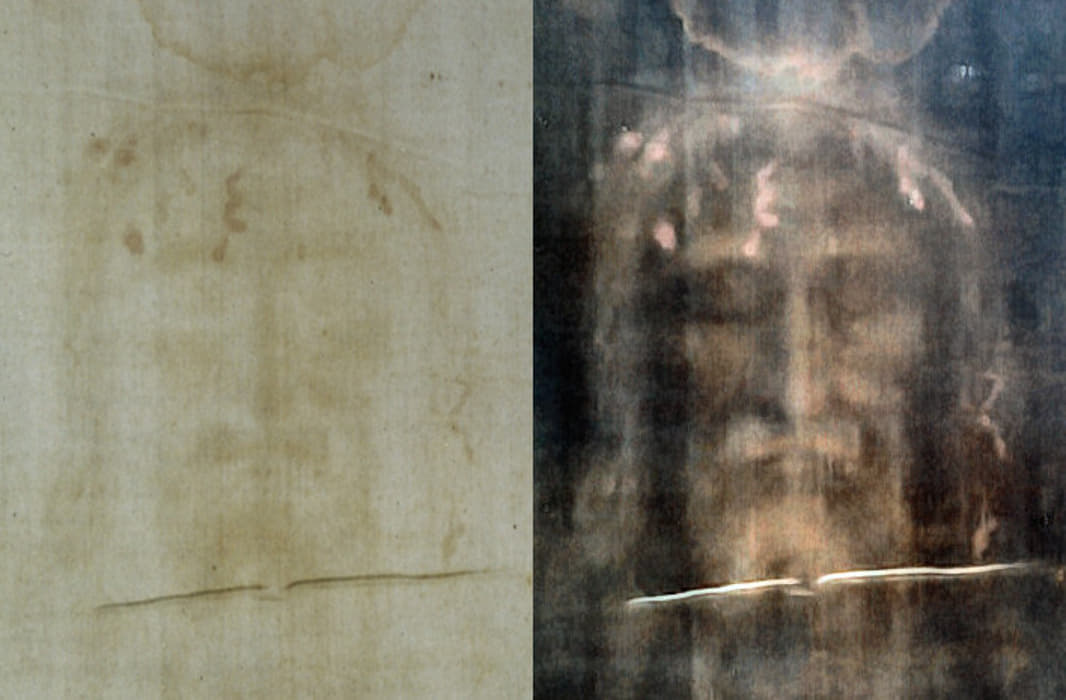
A new study by Professor Giulio Fanti, the University of Padua, finds that the stains on the Shroud of Turin give evidence both of flagellation and of the crucifixion.
After a critical revision of the main results obtained on the hematic material of the Holy Shroud in Turin, the paper given in full below presents details of both a macroscopic and microscopic nature.
At a macroscopic level, news regarding the directions and position of blood and the probable presence of pulmonary fluid are discussed. Also, the bloodstains on the left arm are examined to try to distinguish different kinds of hematic fluid.
At a microscopic level, three different types of blood are evidenced. Hypotheses have been formulated to distinguish pre-mortem and post-mortem blood and to distinguish erythrocytes on the basis of their different sizes. The presence of fibrin, earthy material, creatinine typical of a tortured person, and the stacking of erythrocytes is also discussed along with their Beta-activity and fluorescence. Finally, the physical conditions relating to Jesus are discussed from a medical point of view which could explain all the news of the hematic material taken from the HST and are consistent with the tortures of Jesus Christ described in the Holy Bible.
The paper follows: