American Ambitions to Take Canada: A Brief History
For more than two centuries, the United States has cast a covetous eye northward. Yet the story of American designs on Canada is not, as some might imagine, a tale of sustained campaigns to fracture the country from within—to encourage Quebec sovereignty, Western separatism, or other internal divisions. Rather, it is a record of failed invasions, political annexation proposals, cross-border raids, economic pressure, and military contingency planning. It is a story of repeated attempts at absorption and conquest that, paradoxically, helped forge the very nation they sought to swallow.
The historical record reveals no successful American effort to dismember Canada. What it does reveal is something perhaps more instructive: a pattern of expansionist ambition that consistently backfired, strengthening Canadian nationalism and political independence at every turn. From the frozen streets of Quebec City in 1775 to the tariff battles of the late nineteenth century, from Fenian raids across the border to secret war plans locked in Washington's filing cabinets, American pressure repeatedly persuaded Canadians that their survival as a distinct people required stronger institutions, deeper unity, and a deliberate distance from their southern neighbor.
This is the story of that long shadow—and of how Canada grew strong in it.
The Revolutionary Dream of Northern Conquest
The American Revolution planted the first seeds of annexationist ambition. In 1775, the Continental Congress authorized an invasion of British Quebec, hoping to bring the fourteenth colony into the revolutionary fold and deny Britain a northern base of operations. American forces under General Richard Montgomery and Colonel Benedict Arnold marched north, enduring brutal winter conditions. Montgomery captured Montreal before pressing on to Quebec City, where on the night of December 31, 1775, a coordinated assault collapsed in a snowstorm. Montgomery was killed, Arnold wounded, and the invasion shattered. A follow-up effort in 1776 likewise failed, and the dream of Canadian participation in the American Revolution died in the snows of a foreign land.
Yet the ambition persisted. Even as the war concluded, the Articles of Confederation contained a provision pre-approving Quebec's potential admission to the United States—a gesture that reflected revolutionary-era expansionist hopes rather than any accomplished plan. Quebec never joined, but the constitutional provision signaled that Americans viewed the northern colonies as natural future members of their union.
George Washington himself had appealed to Canadians in 1775 to join the American cause, framing expansion as the extension of liberty and republican government. The assumption—that Canadians would naturally embrace revolutionary ideals—would prove enduring and repeatedly wrong. It was a miscalculation rooted in ideology rather than understanding, and it would shape American policy from the Revolution through the late nineteenth century.
"A Mere Matter of Marching": The War of 1812
If the Revolution planted the seeds, the War of 1812 brought them to bloody fruition. By 1812, British North America had roughly 500,000 inhabitants while the United States boasted approximately 7.5 million. Many Americans, including Thomas Jefferson, concluded that conquest would be "a matter of marching." The logic seemed sound: Britain was distracted by Napoleonic France, and the United States hoped that seizing Canada would pressure Britain into concessions over maritime rights, impressment of sailors, and trade restrictions.
The United States launched a three-pronged invasion of British North America, hoping to capture Canada as leverage against Britain. The strategy involved multiple invasion routes—from Detroit toward Upper Canada, across the Niagara frontier, and along the St. Lawrence toward Montreal. American leaders expected that many settlers in Upper Canada, who were recent migrants from the United States, would welcome an invading army as liberators rather than resist it.
They were catastrophically wrong.
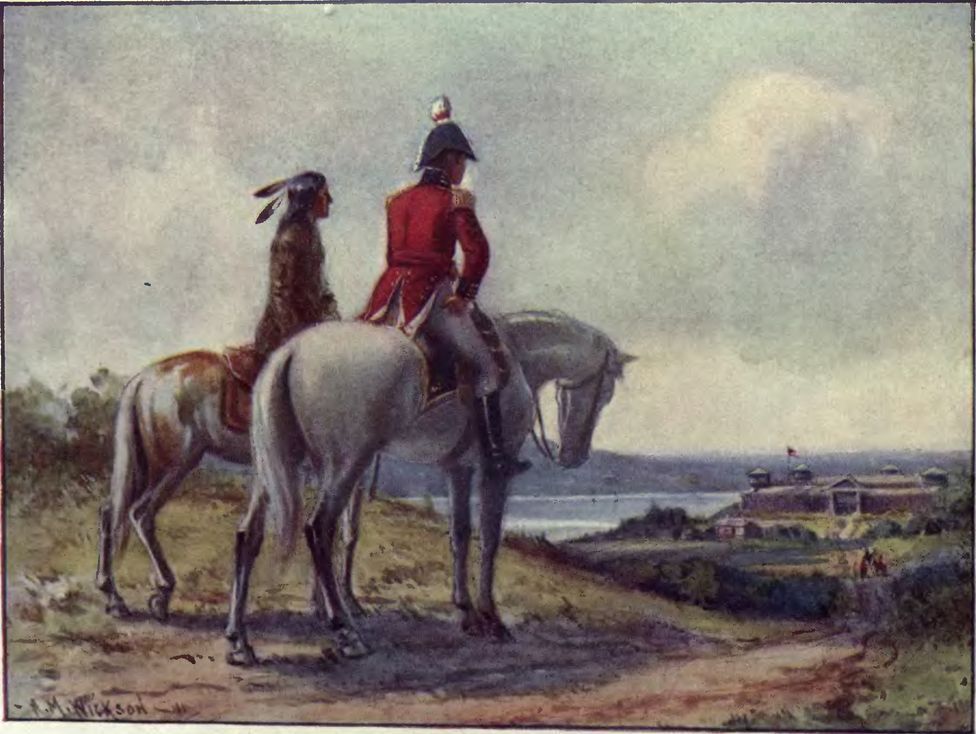
British, Canadian, and Indigenous forces repelled the invasions with fierce determination. U.S. forces surrendered at Detroit, and the war ended without American territorial gains in Canada. The conflict fixed the border in ways that endure to this day, but more importantly, it forged a nascent Canadian identity. The memory of invasion—of homes burned and communities threatened—helped spur the British North American colonies toward unity. The War of 1812 became a foundational myth not of American triumph, but of Canadian survival.
The Fenian Raids and the Fear of American Expansion
The decades following the War of 1812 saw continued tension. In 1837 and 1838, American sympathizers and Irish-American republicans supported the Upper Canada Rebellion and launched cross-border "Patriot War" raids. These raids were small, short-lived, and failed to detach Upper Canada from British rule, but they kept alive the fear of American meddling.
During the 1840s and 1850s, some republicans in Upper Canada and some American immigrants in Quebec favored joining the United States. U.S. expansionists also floated Canadian annexation alongside "Manifest Destiny"—the belief that continental expansion was both inevitable and divinely sanctioned. By the mid-nineteenth century, many Americans viewed Canada as the next logical acquisition after Texas and the Mexican cession. These annexationist movements remained minority currents, but they fed a growing anxiety in the British colonies.
The most serious flashpoint came in 1866. Representative Nathaniel P. Banks of Massachusetts introduced a House bill to annex the British North American colonies. The bill proposed four new states and three territories—Nova Scotia, New Brunswick, Canada East, Canada West, plus Selkirk, Saskatchewan, and Columbia territories. It also proposed buying the Hudson's Bay Company's lands—Rupert's Land—for $10 million and having the United States assume up to $85.7 million in provincial debts and liabilities. The bill offered infrastructure incentives: a railway from Bangor, Maine, to Saint John, New Brunswick, and a larger transcontinental railway route through the proposed western territories.
The Annexation Bill of 1866 emerged shortly after the U.S. Civil War, amid a powerful Union army, lingering Anglo-American tensions, Irish-American hostility to Britain, and the expansionist idea that British North America was destined to join the Union. Secretary of State William Seward was among the prominent annexationists of the era.
The bill never became law. It was introduced on July 2, 1866, referred to committee, and never received a House vote. It never reached the Senate. Its practical importance was less as legislation than as a political signal. Along with Fenian raids in 1866, it intensified fears of U.S. expansion and helped persuade British North American leaders that union was safer than remaining separate colonies.
Confederation: The Answer to American Pressure
Canadian Confederation followed in 1867—and it was, in no small measure, a response to American pressure. The memory of invasion, the Fenian raids, and the annexationist rhetoric from Washington all contributed to the conviction that the British North American colonies needed to unite for their own protection.
The United States had effectively given up on annexing Canada after the Treaty of Washington in 1871, which formally settled major Anglo-American disputes and implicitly recognized Canada as a separate Dominion. In 1870–71, some American officials had considered trading a settlement of the Alabama claims—Civil War damages caused by British-built Confederate raiders—for British Columbia, Nova Scotia, or the Red River colony. The idea collapsed because Britain stalled, U.S. commercial interests wanted a cash settlement, Canadian nationalism in British Columbia favored remaining in the empire, and Congress was focused on Reconstruction.
The resulting treaty resolved those disputes without annexing any Canadian territory. Historians treat it as the moment the United States stopped pursuing annexation as official policy. After 1871, annexation ceased to be a serious U.S. government objective.
Yet the pattern was already clear: American pressure had strengthened, not weakened, the Canadian state. Confederation created the Dominion of Canada, a more coherent political entity with stronger institutions and a clearer national identity. The throughline of Canadian history is that American expansionism repeatedly reinforced Canadian nationalism. The War of 1812 helped fix the border; Fenian raids and annexation talk helped drive Confederation in 1867; and later tariff battles reinforced Canadian political independence.
The Economic Version: "A Ripe Apple"
As military conquest became impractical and politically untenable, some Americans shifted to economic pressure. Secretary of State James Blaine argued in 1888 that high U.S. tariffs would make Canada, like a "ripe apple," seek admission to the Union. The logic was that Canada needed U.S. markets for lumber, pulp, grain, and other raw materials, while it wanted cheaper American manufactured goods and farm supplies. If the United States restricted access, Canadian businesses and voters might conclude that annexation was the only way to secure prosperity.
The McKinley Tariff of 1890 was intended to do exactly that—pressure Canadian producers and voters toward union with the United States. It excluded Canadian goods from favorable treatment, partly to pressure Canada toward union. The expectation was that Canada, dependent on U.S. trade for lumber, grain, pulp, and other exports, would find annexation preferable to economic isolation.
Instead, the policy backfired spectacularly. Canadian voters reelected Sir John A. Macdonald's Conservatives, who opposed annexation and favored retaliation and closer British trade ties. Canadian trade with Britain rose, Canadian nationalism strengthened, and the Republicans lost the presidency and Congress in 1892. Once the tariff strategy failed, Washington abandoned coercion as a route to union.
The 1911 reciprocal free-trade agreement followed a similar pattern. A U.S.-Canadian reciprocal free-trade agreement passed Congress, with opponents arguing it could draw Canada into the U.S. orbit. Canadian voters defeated the Liberal government supporting the deal; the agreement was rejected. This was economic integration pressure, not a breakup plan, but it reinforced the same dynamic: Canadian voters chose independence over integration when they perceived American intentions as threatening.
War Plan Red: The Secret Contingency
The most concrete modern plan for conflict with Canada was Joint Army and Navy Basic War Plan—Red, approved in 1930 and updated in 1934–35. It was a contingency plan for war with Britain, treating Canada as the likely British base for attacks on the United States. It was a hypothetical contingency plan, never executed, and was later shelved.
Its main elements were ambitious and specific: seize Halifax by joint Army–Navy assault to cut off British reinforcements and communications; disable or seize Niagara Falls power plants and other key infrastructure; invade on three fronts—from Vermont toward Montreal and Quebec, from North Dakota toward Winnipeg, and from the Great Lakes region toward Toronto, Windsor, and Ontario's nickel-mining region; take control of the Great Lakes and blockade Canada's Atlantic and Pacific ports; attack toward Vancouver from Bellingham, Washington, and blockade other Pacific ports; and hold captured Canadian territory "in perpetuity" and prepare it to become U.S. states or territories after a peace settlement.
War Plan Red was a secret interwar contingency plan, never carried out. It represented the most detailed surviving military plan for operations against Canada, but it was drafted for a hypothetical war with Britain, not a peacetime plan to attack Canada. It belonged to a category of military planning that all major powers engaged in during the interwar period—a contingency for a war that never came.
Why the Belief Was Plausible
Throughout the nineteenth century, Americans often believed Canada would "fall" because they assumed the British colonies were militarily weak, politically divided, economically dependent, and—crucially—populated by people who would prefer U.S. rule to British rule. That assumption was wrong, but it shaped U.S. policy from the Revolution through the late nineteenth century.
Several factors made the belief plausible to American eyes. Population and military imbalance were stark: in 1812, British North America had roughly 500,000 people while the United States had about 7.5 million. Many Americans concluded that conquest would be a "mere matter of marching." Britain looked distracted by European conflicts, and the United States hoped that seizing Canada would pressure Britain into concessions over maritime rights and trade. Some settlers in Upper Canada were recent migrants from the United States, and U.S. leaders expected them to welcome an invading army as liberators. Revolutionary ideology framed expansion as extending liberty and republican government, assuming Canadians would naturally join the revolutionary cause. By the mid-nineteenth century, Manifest Destiny made Canada appear like the next logical acquisition after Texas and the Mexican cession.
All of these assumptions proved wrong. Canadians and Indigenous allies resisted U.S. invasions. British imperial power remained substantial. And many Canadians saw U.S. pressure as a reason to build stronger Canadian institutions. The expectation ignored three decisive realities: the depth of Canadian attachment to British institutions, the willingness of Britain to defend its colonies, and the growing sense among Canadians that their distinct identity was worth preserving.
What Drove American Ambitions?
The American desire to annex Canada was never monolithic. It arose from several overlapping motivations. Security concerns loomed large: American leaders worried about British power in North America and sought to eliminate a potential base for British attacks. The War of 1812 was fought partly to address these concerns, and War Plan Red was a later expression of the same logic.
Economic interests also played a role. American businesses wanted access to Canadian resources—timber, grain, minerals—and markets for American manufactured goods. The tariff strategy of the late nineteenth century was designed to force Canada into economic dependence and, ultimately, political union.
Ideological fervor contributed as well. Manifest Destiny framed continental expansion as both inevitable and divinely sanctioned. Revolutionary ideology cast expansion as the extension of liberty and republican government. These beliefs made annexation seem not only practical but righteous.
Political ambition was another factor. Annexation offered the prospect of new states and territories, new congressional seats, and new opportunities for political advancement. The Annexation Bill of 1866 proposed four new states and three territories—a massive expansion of the American union.
Yet these motivations were never sufficient to overcome the obstacles. Military failure, Canadian resistance, British resolve, and shifting American priorities all combined to defeat annexationist ambitions.
Why the Idea Died
The decline of annexationist sentiment in the United States was gradual but decisive. Military failure played a crucial role. The invasions of Quebec in 1775–76 and Canada in 1812–14 showed that conquest would be costly and uncertain, not a "mere matter of marching." The lesson was learned slowly but thoroughly.
Canadian Confederation in 1867 created a more coherent political entity with stronger institutions and a clearer national identity. Canada became a Dominion—a self-governing entity within the British Empire—and Canadians increasingly saw themselves as a distinct people with their own destiny.
British resolve remained a significant factor. Britain was willing to defend its North American colonies and negotiate diplomatically on their behalf, making annexation a high-risk confrontation with a major power. The Treaty of Washington in 1871 formalized this reality, settling major Anglo-American disputes and implicitly recognizing Canada as a separate Dominion.
U.S. priorities also shifted. After the Civil War, Washington was absorbed by Reconstruction, industrialization, and later overseas expansion. Most Americans had little appetite for another continental war. The frontier was expanding westward; the Pacific coast beckoned; and the Caribbean and Pacific islands offered new frontiers for American ambition. Canada, it seemed, was no longer the prize it had once appeared to be.
Economic coercion failed as well. The McKinley Tariff of 1890 was intended partly to pressure Canada toward union. Instead, Canadian trade with Britain rose, Canadian nationalism strengthened, and the Republicans lost the presidency and Congress in 1892. The lesson was clear: economic pressure could backfire, strengthening Canadian resolve rather than weakening it.
The Final Diplomatic Turn
The Treaty of Washington in 1871 marked the end of serious official U.S. annexation efforts. The treaty resolved major Anglo-American disputes and implicitly recognized Canada as a separate Dominion. In 1870–71, some American officials had considered trading a settlement of the Alabama claims for British Columbia, Nova Scotia, or the Red River colony. The idea collapsed because Britain stalled, U.S. commercial interests wanted a cash settlement, Canadian nationalism in British Columbia favored remaining in the empire, and Congress was focused on Reconstruction.
The resulting treaty resolved those disputes without annexing any Canadian territory. Historians treat it as the moment the United States stopped pursuing annexation as official policy. Rather than trying to absorb Canada, the United States settled into a strategy of managing the border, expanding trade, and cooperating on security. The 1890 tariff episode was the clearest late example of attempted economic pressure; once it backfired, Washington abandoned coercion as a route to union.
By the late twentieth century, U.S. policy had shifted decisively toward trade integration and security cooperation, culminating in the Canada–U.S. Free Trade Agreement in 1989 and NAFTA. The relationship between the two countries had been transformed from rivalry to partnership.
The Modern Echo
Annexation rhetoric has periodically resurfaced—including modern "51st state" comments. In 2024 and 2025, then-President-elect Donald Trump and some supporters publicly proposed making Canada the "51st state," including through tariff pressure. This revived annexation rhetoric, but it did not constitute a formal U.S. government campaign to break up Canada.
The "51st state" comments were widely interpreted as provocative rhetoric rather than serious policy. They echoed the language of nineteenth-century annexationists but lacked the institutional backing and military muscle that had made earlier ambitions seem plausible. The modern United States has no appetite for conquering its northern neighbor; the relationship is too deeply embedded in trade, security cooperation, and shared values.
Yet the echo is instructive. It reminds us that the idea of Canada as a natural part of the United States—a "ripe apple" waiting to fall—has never entirely disappeared from American political culture. It persists as a rhetorical trope, a kind of political shorthand for American dominance, even when it has no basis in serious policy.
The Exceptional Case: Regional Pressures
Most historical episodes were aimed at absorbing Canada or parts of it into the United States, rather than deliberately encouraging Quebec sovereignty, Western separatism, or other internal fragmentation. The major exceptions were regional pressures—such as U.S. interest in the Red River Settlement—that Canada countered by bringing territories into Confederation.
In 1869–1871, calls arose in some northern U.S. states to annex the Red River Settlement, and Fenian raiders staged further raids in 1870 and 1871. Canada absorbed Manitoba in 1870, and the raids failed. The episode illustrated the pattern: American pressure at the regional level was met with Canadian expansion and integration, strengthening rather than weakening the Canadian state.
The Throughline: American Pressure and Canadian Strength
The throughline of this history is that American expansionism repeatedly strengthened Canadian nationalism. The War of 1812 helped fix the border. Fenian raids and annexation talk helped drive Confederation in 1867. The 1890 tariff backlash reinforced Canadian political independence. In each case, American pressure produced the opposite of its intended effect—not absorption, but a stronger, more unified, more independent Canada.
This is the central irony of the story. The United States never succeeded in dismembering Canada because its efforts were aimed at absorption rather than fragmentation—and those efforts, when they were serious, provoked a defensive response that strengthened Canadian identity. The specter of American expansion gave Canadians a reason to build their own institutions, to unite their colonies, to diversify their trade, and to assert their sovereignty.
The record of American efforts against Canada is, in the end, a record of failure. Failed invasions, failed bills, failed tariffs, failed contingency plans—each episode left Canada stronger and more determined. The long shadow of American ambition fell across the northern border, but it did not consume the nation it sought to absorb. Instead, it helped define that nation, giving Canadians a clear sense of who they were by showing them who they were not.
Conclusion: The Shadow and the Nation
What does this history teach us? It teaches us that national identity is often forged in opposition—that the presence of a powerful, ambitious neighbor can serve as a catalyst for unity rather than a cause of dissolution. It teaches us that military conquest, political annexation, and economic coercion are blunt instruments, more likely to provoke resistance than submission. And it teaches us that the assumptions we make about other peoples—that they are weak, divided, economically dependent, or secretly eager for our rule—are often profoundly wrong.
The American belief that Canada would "fall" was based on a misreading of Canadian society, British resolve, and the power of national identity. It was a belief that shaped policy for more than a century but never produced the results its adherents expected. Instead, it produced a stronger Canada—a country that learned to defend itself, to govern itself, and to define itself against the shadow of its southern neighbor.
That is the legacy of American efforts against Canada: not a fractured nation, but a fortified one. Not a broken union, but a strengthened confederation. Not a fallen apple, but a rooted tree. The shadow remains, but the nation that grew in it has proven remarkably resilient—a testament to the truth that the best defense against external ambition is internal unity, and that the strongest nations are sometimes those that have been tested by the ambitions of others.
In the end, the story of American efforts against Canada is not a story of American success but of Canadian survival—and of the strange, unintended ways that pressure from without can build strength within. It is a story that continues to shape the relationship between the two countries, a relationship now built on partnership rather than rivalry, but still marked by the memory of a time when the northern border was not a line on a map but a contested frontier. The long shadow remains, but Canada stands in it—not as a victim, but as a nation that learned to thrive in the face of American ambition.