Anatomy of Brutality: The Individual and the State
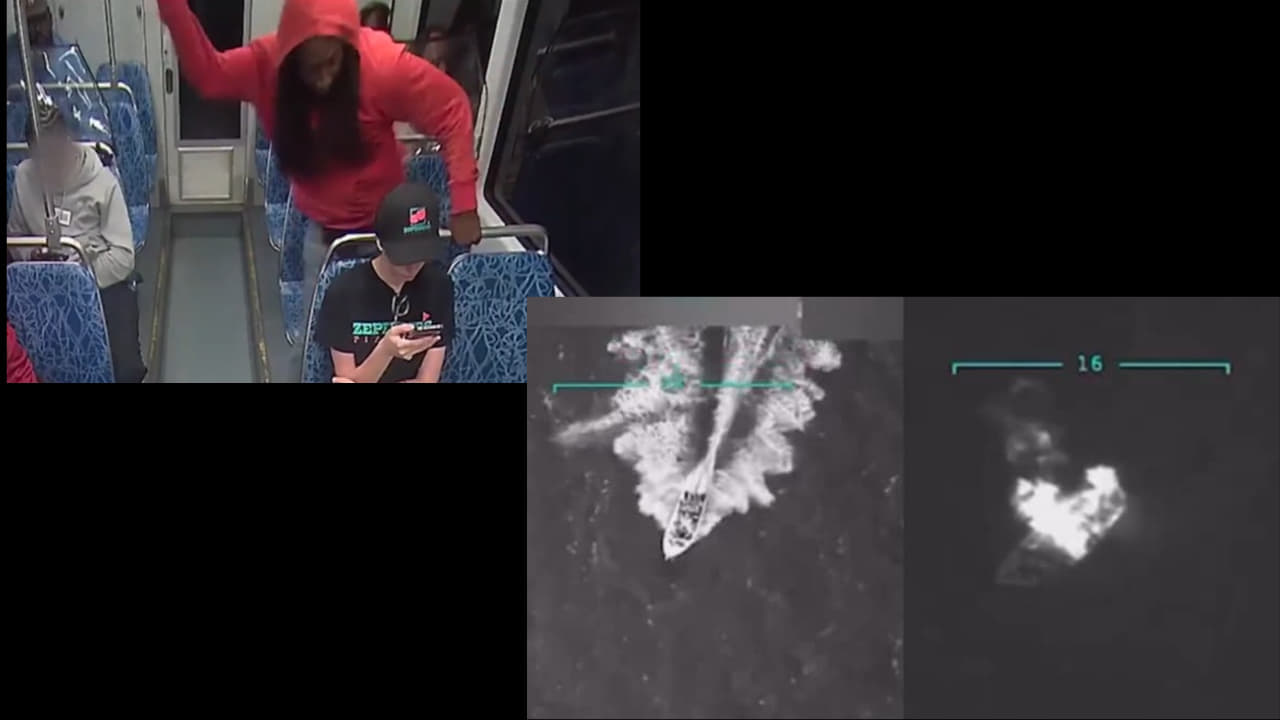
American brutality is not a monolithic act but a pervasive language. It is a grammar of power that constructs justification through dehumanization and executes violence through the arbitrary assignment of identity. The murder of Iryna Zarutska, a Ukrainian refugee, by Decarlos Brown Jr. on August 22, 2025, and the state-sanctioned killing of eleven Venezuelan men by order of President Donald J. Trump on September 2, 2025, though seemingly disparate, are grammatical expressions of the same violent sentence. One was an act of individual psychosis, the other an act of calculated state policy. Yet both are united by a foundational American logic: the victim is first stripped of his/her/their humanity through a label—be it “mind-reader” or “narcoterrorist”—and thus their destruction is rendered, in the perpetrator’s mind, permissible. These two tragedies, eleven days apart, form a diptych of American violence, illustrating how from the street corner to the Situation Room, the machinery of brutality operates on the same fuel of fabricated justification.
The most immediate and horrifying parallel between these acts is the arbitrary and baseless nature of the labels assigned to the victims. In both cases, a complex human being with a history, aspirations, and inherent worth was reduced to a simplistic, invented category that served only to rationalize their extermination. Iryna Zarutska was not killed for anything she did, but for what her killer, in the labyrinth of his own mental illness, believed her to be: a telepathic threat. Her identity as a refugee, a survivor, a woman, was erased and replaced with a terrifying fiction. She became an object upon which Brown Jr. projected his own demons, and her death was, to him, a defensive act against a phantom. The label was entirely self-referential, born of internal chaos, yet it had the most externally final of consequences.
President Trump’s labeling of the eleven Venezuelan fishermen as “narcoterrorists” operates on an eerily similar principle, albeit with the cold efficiency of state power. The term itself is a politically potent portmanteau, designed to elicit maximum fear and justify maximum force. By combining the war on drugs with the war on terror, it creates a legal and rhetorical justification for extrajudicial action. Yet, as with Brown’s accusation, it was presented without evidence, without trial, and without due process. These men, likely seeking economic refuge or simply pursuing their livelihood in the waters between Venezuela and Trinidad, were transformed by a presidential utterance into imminent threats to national security. Their true identities—fishermen, fathers, sons, victims of the very economic and political turmoil the U.S. often decries—were irrelevant. They were reduced to a caricature, a label that served a political purpose: to project strength, to signal ruthless border enforcement, and to feed a base steeped in nativist anxiety. The violence, in both cases, was preceded by an act of ontological erasure. The victim must cease to be human before they can be made a corpse.
To understand these events as isolated would be a critical error. They are instead the latest entries in a deep and bloody American archive of justification through labeling. This is a national tradition, a recurring tactic used to navigate the chasm between the nation’s professed ideals and its brutal practices. The genocide of Native Americans was justified by labeling them “savages”—obstacles to Manifest Destiny whose humanity was denied to sanctify their displacement and annihilation. The institution of chattel slavery depended on the label of racial inferiority, a pseudo-scientific and religious fiction that transformed people into property. The internment of Japanese Americans during World War II was predicated on the label of “enemy alien,” a blanket suspicion based solely on ancestry that overrode their citizenship and their rights.
This pattern extends to foreign policy, where the language of dehumanization facilitates military intervention with minimal domestic dissent. The Vietnam War was sustained by the label “gook” or “VC,” which homogenized a diverse population into a faceless communist enemy, making the atrocities at My Lai and elsewhere psychologically possible. The “War on Terror” unleashed a new lexicon: “militant” became a frequently used catch-all term that often masked the deaths of innocent civilians, statistically erasing their lives in official reports. The labeling of millions of Iraqis and others as collateral damage is perhaps the ultimate bureaucratic expression of this phenomenon—a label that acknowledges death while simultaneously denying its human significance. Trump’s “narcoterrorist” label is a direct descendant of this tradition, a modernized, politically expedient term designed to achieve the same old goal: making certain lives appear killable.
While the mechanism of labeling is consistent, the distinction between individual and state violence is crucial to understanding the full spectrum of this brutality. Decarlos Brown Jr.’s actions represent the privatization of this American impulse. His violence was micro, born of personal trauma, mental instability, and a culture that often fails to provide adequate care or intervention. It is the brutality of the fractured individual, acting on a twisted internal logic that mirrors the larger societal logic of scapegoating and fear. He is a symptom of a sick society, a stark reminder that the rhetoric of dehumanization, when it saturates the public consciousness, can find fertile ground in the most vulnerable minds.
President Trump’s violence, by contrast, is macro, systematic, and institutional. It is the brutality of the state, wielded with the immense power of the military and the authority of the office. His order was not a spontaneous outburst but a calculated policy decision, one that likely involved advisors, legal justifications, and the deployment of state assets. This form of violence is far more dangerous because it is laundered through the apparatus of law and order. It sets a precedent, creates a policy blueprint, and signals to the apparatus of enforcement that such actions are not only permissible but encouraged. The individual act of violence shocks the conscience; the state act of violence rewrites the conscience, seeking to normalize the unthinkable. One is a spark of chaos; the other is a controlled demolition of ethical norms.
Ultimately, both acts perfectly encapsulate American brutality because they reveal its core truth: in the American narrative, violence is rarely presented as violence for its own sake. It is always framed as necessary, defensive, or righteous. This requires a narrative, and the narrative requires a villain. The creation of that villain, through the arbitrary application of a label, is the essential first step. Iryna Zarutska and the eleven Venezuelans were not killed for who they were, but for who they could be made to represent in the minds of their killers. For Brown, Zarutska represented a supernatural threat to his autonomy. For Trump, the eleven Venezuelans represented a political threat to his narrative of border insecurity and his image as a strongman.
This is the anatomy of American brutality. It is a process of creation and destruction. First, a threatening identity is created ex nihilo, woven from the threads of psychosis, political expediency, or historical prejudice. Then, the human being who has been forced to wear that identity is destroyed, their death framed not as a tragedy but as a neutralization. The murder of Iryna Zarutska and the execution of the eleven Venezuelan fishermen are tragic, stark illustrations that this process is not confined to history books or distant battlefields. It is alive, it is pervasive, and it speaks in a language that is as fluent in the whispers of a troubled individual as it is in the commands of a president. To recognize this connection is not to equate the mentally ill individual with the powerful state leader, but to sound an alarm about the cultural and political ecosystem that produces such eerily similar justifications for ending human life. Until America confronts this ingrained habit of inventive dehumanization, its brutal grammar will continue to dictate stories that end in the same terrible, final period.