Christ the King and the Ordering of All Things
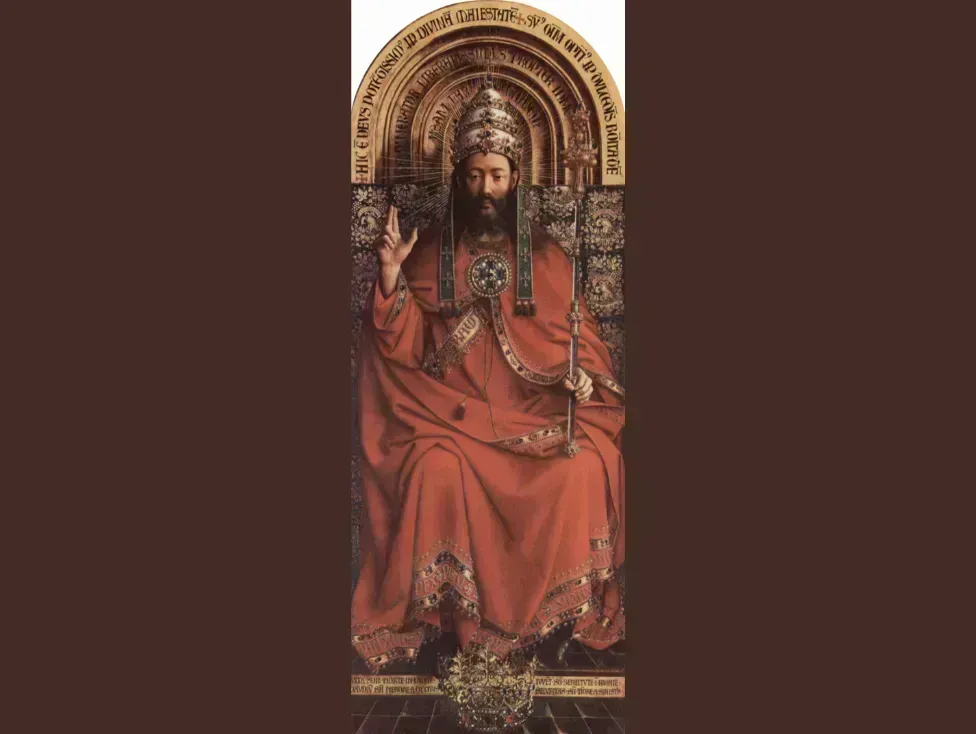
The Solemnity of Our Lord Jesus Christ, King of the Universe arrives each year as the liturgical calendar draws to its close, not as a triumphant crescendo of earthly power, but as a strange and unsettling proclamation. On this final Sunday of Ordinary Time, the Church does not present a monarch robed in splendor and surrounded by courtiers. She places before the faithful a man hanging upon a cross, mocked by soldiers, abandoned by friends, dying between criminals. Above his head hangs a placard that names his crime and his title in the same breath: “This is the King of the Jews” . To call this figure “King of the Universe” is either the height of irony or the deepest truth the world has ever been asked to accept. The Church insists it is the latter, and in that insistence lies a revolution more radical than any political upheaval.
Pope Pius XI instituted this feast in 1925 with the encyclical Quas Primas, and the historical circumstances of its birth illuminate its purpose. The pontiff looked upon a world emerging from the Great War, a world in which nationalism had hardened into idolatry and secularism had confined faith to the private sphere. He saw that “attempting to thrust Jesus Christ and his holy law out of public life would result in continuing discord among people and nations” . The feast was not merely a devotional addition to the calendar but a doctrinal corrective, a liturgical assertion that Christ’s authority extends over every domain of human existence—over families and governments, over economies and cultures, over the hidden movements of the heart and the grand sweep of history . Pius XI understood that the Church’s greatest temptation in the modern age was not outright persecution but a polite marginalization: the granting of Christ a small, respectable corner of life while the rest of the world is governed by other lords.
What makes this solemnity so compelling, and so dangerous, is the particular kind of king it reveals. The Gospel chosen for the final Sunday in Cycle C, from Luke’s Passion narrative, presents the kingship of Christ entirely through the lens of his humiliation. The rulers sneer, the soldiers jeer, and one of the condemned reviles him with the same logic that governs the world: “If you are King of the Jews, save yourself” . The taunt is not irrational. It presumes a definition of kingship that everyone present understands: a king is one who exercises power for his own preservation, who commands and is obeyed, who saves himself and perhaps, if it pleases him, saves others. By that measure, the man on the cross is no king at all. He is a failed pretender, stripped of every external mark of authority.
Yet the second criminal, the one tradition calls the Good Thief, speaks a different language. He does not ask to be saved from his cross. He asks only to be remembered: “Jesus, remember me when you come into your kingdom” . In the midst of his own agony, he perceives what the powerful cannot see: that this dying man possesses a kingdom not of this world, a reign that begins precisely where earthly power ends. And Christ’s response—“Today you will be with me in Paradise”—reveals the nature of his sovereignty. He does not descend from the cross to prove his authority. He exercises his authority from the cross, opening the gates of Paradise to a condemned sinner with the effortless ease of one who has always been Lord .
This is the paradox at the heart of the solemnity: Christ reigns most fully at the moment he appears most defeated. The Church does not celebrate a king who merely endured suffering as a prelude to glory, but a king whose glory is made manifest in suffering itself. The cross is not the interruption of his reign; it is the throne from which he reigns. This is why the feast is placed at the end of the liturgical year, after the long months of Ordinary Time have traced the pattern of Christ’s life, teaching, and miracles. The year culminates not in a display of raw power but in the self-emptying love that St. Paul describes in the second reading to the Colossians: Christ is “the image of the invisible God, the firstborn of all creation,” and yet this cosmic Lord is the one through whom God was pleased “to reconcile all things for him, making peace by the blood of his cross” . The blood of the cross is not a regrettable necessity overcome by the resurrection; it is the very instrument of reconciliation, the means by which the universe is drawn back to its creator.
To grasp the scope of this kingship, one must attend to the readings the Church places alongside the Passion. In Cycle A, the Church reads the parable of the Last Judgment from Matthew 25, in which the Son of Man comes in glory and separates the nations as a shepherd separates sheep from goats. The criterion of judgment is startlingly concrete: feeding the hungry, welcoming the stranger, clothing the naked, visiting the sick and imprisoned. “In so far as you did this to one of the least of these brothers of mine, you did it to me” . The King of the Universe is not found only in the splendor of the liturgy or the silence of contemplative prayer, though he is there. He is also, and inseparably, found in the distressing disguise of the poor and abandoned. This is not a sentimental addition to the feast but its logical consequence. If Christ is truly king of all creation, then no creature is outside his concern, and no act of mercy toward the least is outside his reign. The sovereignty of Christ and the dignity of the human person are bound together so tightly that to neglect one is to deny the other.
The second reading for Cycle A, from First Corinthians, extends this vision to the end of history. Christ “must be king until he has put all his enemies under his feet,” and the last enemy to be destroyed is death . Here the feast reveals its eschatological dimension. The kingship of Christ is not a static reality to be admired from a distance; it is an active campaign, a conquest unfolding across time. Every act of faithfulness, every refusal to despair, every work of mercy is a skirmish in this campaign. And the outcome is assured. The one who reigns from the cross will reign until death itself is swallowed up, and then he will hand over the kingdom to the Father, “so that God may be all in all” . The Solemnity of Christ the King is therefore not merely a retrospective celebration of a title long ago conferred. It is a forward-looking proclamation of a victory already won but not yet fully manifested, a victory in which the faithful are not spectators but participants.
This participation demands a response that Pius XI articulated with uncompromising clarity. Christ “must reign in our minds,” the pope wrote, “which should assent with perfect submission and firm belief to revealed truths and to the doctrines of Christ. He must reign in our wills, which should obey the laws and precepts of God. He must reign in our hearts, which should spurn natural desires and love God above all things, and cleave to him alone” . The language is demanding, even severe, and it is meant to be. A king who reigns only in the abstract, who is acknowledged with the lips while the heart is governed by other loyalties, is not truly a king at all. The solemnity asks the faithful to examine where their allegiance actually lies. Do we truly believe that Christ’s teaching on mercy, on wealth, on forgiveness, on the dignity of every human life is authoritative? Or do we quietly exempt ourselves, granting him a ceremonial kingship while reserving the real governance of our lives for the spirit of the age?
The placement of this feast at the very end of the liturgical year is theologically precise. The liturgical year is not a mere calendar but a participation in the mystery of Christ, a annual journey through his life, death, and resurrection. To end that journey with the feast of Christ the King is to declare that all of history, including the history of our own souls, finds its terminus and its meaning in him. The year does not simply stop and reset; it is gathered up and presented to the one who is “before all things, and in him all things hold together” . The Church, having walked with Christ through Advent’s longing, Christmas’s joy, Lent’s repentance, and Easter’s triumph, now looks upon the whole sweep of that mystery and says: this is the Lord of history. This is the one to whom every moment of every age is accountable.
And then, almost immediately, the cycle begins again. Advent returns, and with it the cry that the heavens might tear open and the King might come down. There is a profound humility in this rhythm. The Church does not tire of the story because the story is not merely a story; it is the truth about reality. Christ is King not because the Church has declared him so but because reality itself is constituted by his word. To celebrate his kingship is to align oneself with the way things actually are, beneath all the distortions and deceptions of fallen powers. The rulers who sneered at the cross, the soldiers who mocked, the criminal who reviled—they were not seeing reality more clearly than the Good Thief. They were seeing less. They mistook the veil of humiliation for the whole truth, while the dying man beside them recognized the king.
The Solemnity of Christ the King is, in the end, an invitation to see as the Good Thief saw. It asks the faithful to look upon the crucified Lord and to recognize, in that apparent defeat, the exercise of a sovereignty that no earthly power can rival and no human sin can thwart. It asks them to live as citizens of that kingdom, which means allowing his reign to extend into every corner of their minds, wills, and hearts. And it asks them to wait with hope for the day when every knee shall bow and every tongue confess that Jesus Christ is Lord, to the glory of God the Father. Until that day, the Church repeats the thief’s prayer: “Jesus, remember me when you come into your kingdom.” And she trusts that the answer, spoken from the throne of the cross, is already yes.