Christian Zionism in South America
Introduction: The Shofar in São Paulo
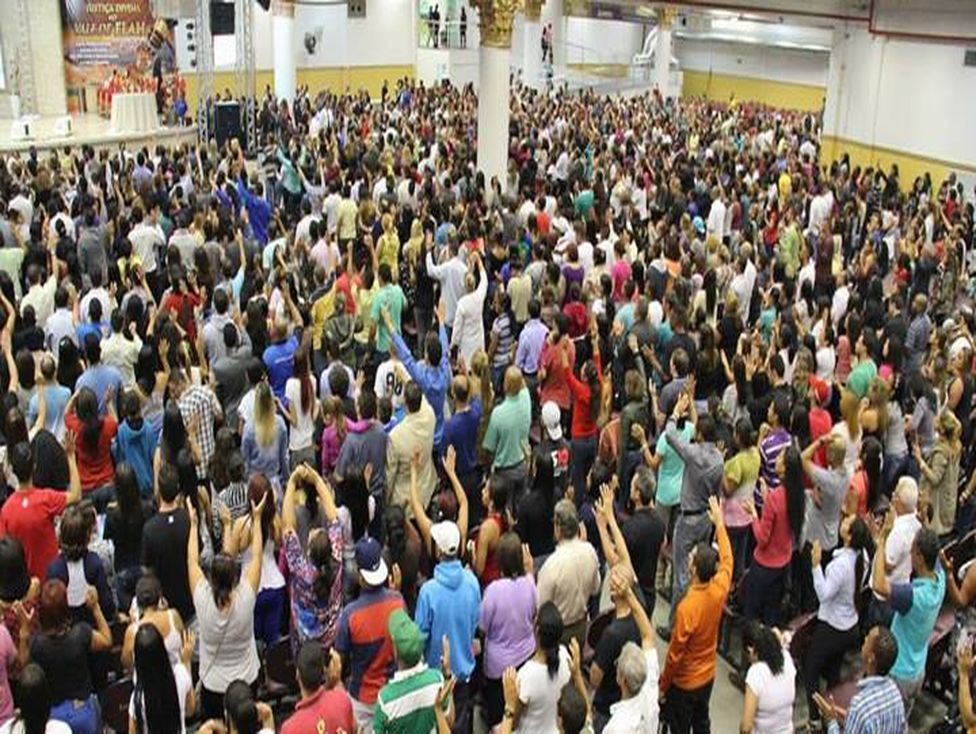
On a Sunday morning in 2024, in a Pentecostal megachurch in São Paulo built to seat thousands, worshippers waved Brazilian flags alongside Israeli flags as the low blast of a shofar echoed under the dome. From the pulpit, the pastor declared: those who bless Israel will be blessed, and those who curse Israel will be cursed. In the crowd were city councilmen in suits, small-business owners, and new middle-class families who had just moved out of the favelas into apartments. They were being told that their personal financial breakthroughs and their nation's destiny alike depended on political loyalty to a distant Middle Eastern country.
This is no isolated scene. Across South America—from Rio de Janeiro to Guatemala City, from Buenos Aires to Bogotá—a theological-political complex imported from the United States is taking root at unprecedented speed. Its name is Christian Zionism. On the surface, it is a matter of faith concerning biblical prophecy and the Holy Land; in substance, it is becoming a precision instrument for sustaining American ideological hegemony in Latin America, containing leftist movements, and advancing geopolitical interests.
To understand this phenomenon, one must first see its vehicle. Over the past half century, Latin America has undergone a seismic shift in its religious map. The centuries-long monopoly of Roman Catholicism has been rapidly eroded, and Evangelical and Pentecostal populations have surged from roughly 4 percent in the 1970s to 20–30 percent by the mid-2020s, with Evangelicals in Brazil accounting for roughly 27–31 percent of the population. Christian Zionism resides precisely within these expanding Charismatic and Pentecostal churches. In other words, the demographic growth curve of Protestantism directly determines the ceiling of Zionist political mobilization.
Yet demographics are only fuel; what ignites it is theology. South American Christian Zionism theologically inherits, almost wholesale, Anglo-American premillennial dispensationalism: the modern State of Israel is seen as the literal fulfillment of biblical prophecy and a necessary precursor to the Second Coming. Within this framework, supporting Israel is not a political position open to debate but an incontrovertible prophetic duty. More critically, this theology has been seamlessly grafted onto prosperity theology in South America. The verse in Genesis 12:3—"I will bless those who bless you"—is interpreted as a transactional spiritual economy: personal financial breakthrough, church growth, and even national economic revival are all said to depend on "blessing Israel" politically and spiritually. In Brazilian Charismatic circles, this idea penetrates continuously through The Midnight Cry magazine, RecordTV's biblical dramas, and various media channels.
If this remained merely theological, it would be nothing more than an exotic religious phenomenon. What gives it geopolitical significance is its deep embedding within right-wing political machinery. As Evangelical churches gained immense electoral weight, they organized into voting blocs and political parties, and Christian Zionism became a central pillar of the region's neoconservative political architecture. In Brazil, Jair Bolsonaro successfully weaponized Zionist rhetoric to consolidate his Evangelical base. His logic mirrors that of the American Christian Right: defending Israel serves as moral shorthand for Western values, anti-communism, and traditional family structures. The result has been concrete policy moves—the promise to relocate Brazil's embassy from Tel Aviv to Jerusalem, which ultimately ended in a trade office in Jerusalem, but the political signal was sent nonetheless.
Here one must ask a question that mainstream narratives deliberately avoid: who is funding and steering all of this? The answer points to transnational faith-diplomacy networks. Christians United for Israel (CUFI), headquartered in the United States, and the International Christian Embassy Jerusalem (ICEJ) systematically build institutional roots across South America. The Israeli government itself is deeply involved: successive Israeli governments, recognizing the political leverage of the global Evangelical boom, have targeted funding for influential South American pastors, politicians, and media figures to take "solidarity immersion trips" to Israel, embedding pro-Israel lobbying directly into the leadership fabric of South American churches. This is a chain of funding and ideology running from Washington to São Paulo, from Jerusalem to Bogotá, managed with a precision no less sophisticated than any multinational corporation's supply chain.
The Historical Blueprint: Cold War Religious Engineering
Zooming out, South American Christian Zionism is no isolated phenomenon but the latest chapter in an American religious strategy in Latin America dating back to the Cold War. Declassified archives and scholarly research have long revealed that during the Cold War, U.S. foreign policy institutions—including the CIA and USAID—collaborated with conservative Vatican forces, investing money and social capital to suppress liberation theology while cultivating an Evangelical Protestantism that emphasized personal salvation and personal prosperity while avoiding structural critique. Liberation theology insisted that poverty is a political problem and that faith without structural change is empty; Evangelicalism emphasized individual sin and individual salvation, aligning neatly with Cold War and neoliberal interests. This was a conscious spiritual engineering project: replacing a theology that mobilizes the poor with one that tames them.
The historical record is more damning than many care to admit. During the 1960s and 1970s, as liberation theology swept through Latin American seminaries and base communities, claiming that God preferentially optioned for the poor and that Christians had a duty to confront structural injustice, Washington viewed this movement with undisguised alarm. Liberation theologians like Gustavo Gutiérrez in Peru, Leonardo Boff in Brazil, and Jon Sobrino in El Salvador were producing a theology that made the Church a potential ally of revolutionary movements. The response was multifaceted: the CIA funded conservative Catholic organizations, USAID channeled development money through Evangelical NGOs that combined material aid with anti-communist indoctrination, and the Agency for International Development's Office of Public Safety trained Latin American police forces in counterinsurgency techniques that would later be turned against priests and nuns deemed "subversive."
The 1968 Medellín Conference, where the Latin American bishops' conference formally adopted the preferential option for the poor, marked a turning point. Conservative forces within the Vatican and the United States immediately recognized the threat. The subsequent decades saw a systematic campaign to marginalize liberation theology within the Catholic Church itself—a campaign that culminated in the 1984 and 1986 Vatican condemnations of liberation theology under Cardinal Joseph Ratzinger, later Pope Benedict XVI. Simultaneously, American Evangelical missionaries and organizations flooded the continent, offering a different gospel: one that emphasized personal conversion, individual morality, and spiritual salvation while explicitly avoiding any critique of structural inequality.
This was not incidental. The Chilean economist and theologian Franz Hinkelammert documented how the theology of prosperity and individual salvation functioned as a "theological counterpart" to neoliberal economics: just as the market promised that individual effort would yield individual reward, Evangelical theology promised that individual faith would yield individual blessing. Both systems located the source of poverty in personal failure rather than structural injustice, and both therefore absolved the powerful of responsibility for the suffering of the poor. The theological and economic "software" were designed to run on the same operating system.
The Theology of Empire: Dispensationalism and Prosperity
Christian Zionism is the upgraded version of that project. Liberation theology attributed the suffering of the poor to oppressive social structures and called believers to challenge an unjust order; Zionism redirects believers' attention to the prophetic clock over Jerusalem, shifting political energy away from local land reform, labor rights, and wealth redistribution toward spiritual loyalty to a distant holy land. When a resident of a Brazilian favela is told that his economic hardship can be solved by "blessing Israel," he stops asking why land is concentrated in the hands of 1 percent of the population, stops asking why the public healthcare system is collapsing. He is handed an alternative political agenda—one with no physical connection to his daily life, yet perfectly aligned with the geopolitical strategies of Washington and Tel Aviv.
The theological architecture of this displacement deserves careful examination. Premillennial dispensationalism, the system of biblical interpretation that undergirds most Christian Zionist thought, divides history into distinct "dispensations" or eras in which God deals with humanity in different ways. According to this framework, the modern State of Israel is not merely a political entity but the fulfillment of biblical prophecy—the "fig tree" of Matthew 24 that signals the nearness of the end times. The establishment of Israel in 1948, the capture of Jerusalem in 1967, and the ongoing expansion of settlements are all read as signs that the prophetic clock is ticking toward the final dispensation, which will culminate in the Battle of Armageddon, the conversion or damnation of the Jews, and the Second Coming of Christ.
Within this framework, supporting Israel becomes not just politically useful but cosmologically mandatory. To oppose Israel is to oppose God's prophetic plan; to "bless" Israel is to align oneself with the forces of cosmic good. The political implications are profound: any criticism of Israeli government policy, any sympathy for Palestinian suffering, any call for a negotiated solution that would compromise Israeli control of the land is not merely politically incorrect but theologically heretical. The Christian Zionist is not merely a supporter of a foreign country; he is a soldier in a cosmic war whose outcome has already been determined.
This theological framework has been seamlessly grafted onto the prosperity gospel, a movement that originated in American Pentecostalism in the mid-twentieth century and has spread with remarkable speed across the Global South. The prosperity gospel teaches that God's will for believers is material abundance—health, wealth, and success in worldly endeavors. Faith is not merely a matter of spiritual salvation but a tool for unlocking material blessings. Sowing "seed faith" in the form of financial donations to churches or ministries is believed to produce a harvest of material reward.
When these two theologies merge, the result is a powerful transactional spirituality: giving money to Israel, supporting Israeli political causes, and visiting the Holy Land become investments in one's own material prosperity. The Genesis 12:3 promise—"I will bless those who bless you, and whoever curses you I will curse"—is interpreted not as a historical promise to Abraham's descendants but as a cosmic law of spiritual economics. Brazil's own prosperity, individual believers' financial breakthroughs, and the growth of the church are all said to depend on the nation's relationship with Israel.
This theological fusion has been amplified by a sophisticated media ecosystem. In Brazil, RecordTV—owned by the powerful Universal Church of the Kingdom of God—produces biblical dramas that present Israel in heroic terms and portray its enemies as demonic forces. The Midnight Cry magazine, a glossy publication distributed in Brazilian churches, mixes prophetic speculation about current events with testimonies of believers who received financial blessings after donating to pro-Israel causes. Social media amplifies these messages exponentially, creating a feedback loop in which users are bombarded with content that reinforces the link between Zionist loyalty and personal prosperity.
The Political Machine: From Pews to Ballots
If this remained merely theological, it would be nothing more than an exotic religious phenomenon. What gives it geopolitical significance is its deep embedding within right-wing political machinery. As Evangelical churches gained immense electoral weight, they organized into voting blocs and political parties, and Christian Zionism became a central pillar of the region's neoconservative political architecture.
The numbers tell part of the story. In Brazil, the Evangelical caucus in Congress—the so-called "Bancada Evangélica"—has grown from a handful of deputies in the 1980s to over 200 representatives and senators in the current legislature, making it one of the most powerful voting blocs in the country. In Guatemala, Evangelical Christians dominate the political class to a degree unmatched anywhere else in Latin America; both recent presidents, Jimmy Morales and Alejandro Giammattei, were closely aligned with Evangelical churches. In Colombia, Evangelical pastors wield significant influence in local politics and have successfully blocked attempts to advance LGBTQ+ rights and gender equality legislation. Across the region, Evangelical churches have become electoral machines, mobilizing their congregations behind candidates who promise to defend "biblical values."
In Brazil, Jair Bolsonaro successfully weaponized Zionist rhetoric to consolidate his Evangelical base. His logic mirrors that of the American Christian Right: defending Israel serves as moral shorthand for Western values, anti-communism, and traditional family structures. The result has been concrete policy moves—the promise to relocate Brazil's embassy from Tel Aviv to Jerusalem, which ultimately ended in a trade office in Jerusalem, but the political signal was sent nonetheless.
Bolsonaro's strategy was not merely opportunistic; it reflected a deep ideological affinity between Brazilian Evangelicalism and American Christian nationalism. Bolsonaro's close relationship with the Trump administration, his adoption of Trump-style rhetoric about "fake news" and "the deep state," and his embrace of Israeli Prime Minister Benjamin Netanyahu as a model of strong leadership all signaled his alignment with a transnational right-wing movement that uses Israel as a touchstone of political legitimacy. When Bolsonaro raised the Israeli flag at Evangelical rallies, he was doing two things at once: consolidating domestic power and sending a loyalty signal to Washington.
The political machinery extends beyond Brazil. In Argentina, the evangelical community—though smaller than in Brazil—has become increasingly vocal in its support for Israel, particularly during the presidency of Javier Milei, who has declared his intention to move Argentina's embassy to Jerusalem and has forged close ties with the Jewish community. In Chile, Evangelical churches have pushed back against left-wing governments and have mobilized in support of Israeli military operations. In Colombia, the Evangelical base has been crucial to the political survival of right-wing forces, and Israeli counterinsurgency technology has been deeply embedded in the Colombian military's operations against guerrilla movements.
This political infrastructure has been carefully cultivated by international organizations. Christians United for Israel (CUFI), founded by the Texas megachurch pastor John Hagee in 2006, has grown into one of the largest pro-Israel lobbying organizations in the world, with millions of members and significant influence on American foreign policy. CUFI has expanded its operations into Latin America, building partnerships with South American churches and training local pastors to become "watchmen on the walls" for Israel. The International Christian Embassy Jerusalem (ICEJ), founded in 1980, has established branches throughout South America and organizes annual "Feast of Tabernacles" celebrations that bring thousands of Latin American believers to Jerusalem each year.
The Israeli government itself is deeply involved. Successive Israeli governments, recognizing the political leverage of the global Evangelical boom, have targeted funding for influential South American pastors, politicians, and media figures to take "solidarity immersion trips" to Israel. These trips are transformative experiences for many participants: they visit the sites of biblical events, meet Israeli officials, and return home as passionate advocates for Israeli causes. The Israeli Ministry of Foreign Affairs has a dedicated department for Christian affairs, and the Ministry of Strategic Affairs has funded campaigns to combat the Boycott, Divestment, and Sanctions (BDS) movement, often working through Evangelical partners in Latin America.
This is a chain of funding and ideology running from Washington to São Paulo, from Jerusalem to Bogotá, managed with a precision no less sophisticated than any multinational corporation's supply chain. The money flows through a network of foundations, NGOs, and church associations; the ideology flows through media, conferences, and personal relationships. The result is a political infrastructure that operates below the radar of traditional diplomacy but has profound effects on the political trajectories of nations.
The Erasure of Palestine: Theological Orientalism
One must also point out the other side of this theological-political complex: its systematic erasure of the real suffering of Palestinians. The Palestinian Christian theologian Mitri Raheb characterizes Christian Zionism as a form of theological Orientalism—one that shares the same cognitive structure as the secular Orientalism critiqued by Edward Said: the East is seen as inferior and in need of conquest, with the only difference being that the instruments of conquest have shifted from scholarship and colonial administration to biblical prophecy and political lobbying. Raheb further argues that Christian Zionism supplies the ideological "software" while Western military support supplies the "hardware," and together they make settler colonialism on Palestinian land possible. South American Zionist believers may not know this layer, but their political donations, voting behavior, and public statements are providing legitimacy for that hardware.
The theological Orientalism of Christian Zionism operates on multiple levels. First, it denies Palestinian Christians their identity. The indigenous Christian communities of Palestine—Greek Orthodox, Latin Catholic, Lutheran, and other denominations—have lived in the Holy Land for two millennia. They are the descendants of the first followers of Jesus, and their presence in the land is a living testimony to the continuity of Christian faith. Yet Christian Zionism, with its focus on the modern State of Israel as the fulfillment of prophecy, effectively erases these communities from the theological map. Palestinian Christians are either ignored, treated as obstacles to prophecy, or dismissed as "nominal" Christians who do not possess true faith.
Second, Christian Zionism dehumanizes Palestinians by casting them as the enemies of God's plan. In the dispensationalist framework, the "nations" that oppose Israel are destined for judgment. This theological framework has been used to justify indifference to Palestinian suffering, support for Israeli military operations that kill civilians, and opposition to any political solution that would require Israeli concessions. When an Israeli military operation kills hundreds of Palestinian civilians, Christian Zionist leaders often defend it as a necessary step in the fulfillment of prophecy or as a defensive response to terrorism.
Third, Christian Zionism provides theological cover for settler colonialism. The claim that God gave the land to Abraham's descendants is used to justify the displacement of Palestinians, the expansion of Israeli settlements, and the denial of Palestinian rights. The theological narrative transforms a political conflict over land, resources, and sovereignty into a cosmic struggle between good and evil, in which one side has God's unconditional favor and the other side is demonic.
This erasure has profound consequences for South American believers. When they wave Israeli flags and sing songs about the restoration of Zion, they are participating in a theological narrative that renders invisible the suffering of Palestinian Christians and Muslims. They are unaware that the land they pray for is a land of dispossession, where Palestinian families have been uprooted from their homes, where Christian communities have dwindled from 10 percent of the population to less than 2 percent, and where the daily reality is one of occupation, checkpoints, and violence.
The South American Zionist believers may not know this layer, but their political donations, voting behavior, and public statements are providing legitimacy for that hardware. They are, in effect, contributing to a project that has displaced millions of people and continues to deny them their rights. Their sincerity does not absolve them of this complicity; it only makes their role more tragic.
The Geopolitics of Faith: Washington's Long Game
The rise of South American Christian Zionism therefore cannot be simply understood as a natural result of religious pluralism, nor romanticized as a "Global South" spiritual awakening. It is a carefully laid pipeline that channels the money of the American Evangelical right, Israel's diplomatic resources, and South American local political ambitions into a single stream, ultimately serving a clear objective: maintaining a pro-Western, anti-left, unconditionally Israel-friendly political map in Latin America.
To understand this geopolitical dimension, one must situate Christian Zionism within the broader context of American foreign policy toward Latin America. Since the Monroe Doctrine of 1823, the United States has claimed a special role in the Western Hemisphere, and throughout the twentieth century, it has intervened repeatedly—through military force, economic pressure, and covert action—to prevent the rise of governments it considered hostile to its interests. The Cold War provided the ideological framework for these interventions: any government that challenged American economic and political dominance was labeled "communist" and subjected to destabilization, sanctions, or invasion.
The end of the Cold War did not end this pattern; it merely changed its ideological justification. In the 1990s, the Washington Consensus imposed neoliberal economic policies on Latin American countries, and when these policies produced inequality, poverty, and social unrest, the United States blamed "populism" and "authoritarianism" rather than the policies themselves. The rise of left-wing governments in the early 2000s—Hugo Chávez in Venezuela, Luiz Inácio Lula da Silva in Brazil, Evo Morales in Bolivia, Rafael Correa in Ecuador—was seen in Washington as a threat to American interests, and a new campaign of destabilization was launched.
Christian Zionism fits neatly into this campaign. It provides a theological framework that aligns with American geopolitical interests: support for Israel, opposition to "communism," and defense of traditional values. It also provides an organizational infrastructure—the Evangelical churches—that can mobilize voters and influence public opinion in ways that traditional diplomacy cannot. When American policymakers look at Latin America, they see a continent where Evangelical churches are growing rapidly, where left-wing movements have deep roots, and where opportunities for influence are abundant. Christian Zionism is a way to build alliances with these churches and to channel their political energy toward American goals.
This is not a conspiracy theory; it is a documented history. The relationship between the American Christian Right and the Israeli government is a matter of public record. Organizations like CUFI, the American Israel Public Affairs Committee (AIPAC), and the Republican Jewish Coalition have worked closely with Israeli officials to shape American foreign policy. The same organizations have expanded their activities into Latin America, building partnerships with local churches and political leaders. The result is a transnational network that links American Evangelical donors, Israeli diplomats, and Latin American politicians in a shared project of political influence.
The geopolitics of faith are not merely about Israel, however. They are also about the internal politics of Latin American countries. When Bolsonaro raises the Israeli flag, he is not only signaling his loyalty to Washington; he is also signaling his opposition to the left-wing Workers' Party, which he accuses of being soft on "terrorism" and hostile to "Western values." When Evangelical pastors preach that those who bless Israel will be blessed, they are not only promoting a theological doctrine; they are also promoting a political identity that defines itself in opposition to liberation theology, to left-wing movements, and to any discourse that centers structural inequality.
This identity has profound effects on democratic politics in Latin America. It creates a polarized landscape in which political choices are framed as choices between good and evil, between divine blessing and demonic curse. It makes compromise difficult, because compromise with the "enemies of Israel" is not merely political defeat but theological betrayal. It contributes to the erosion of democratic norms, because the theological framing of politics as spiritual warfare encourages the use of any means necessary to defeat the "enemy."
Conclusion: The Empire's Invisible Hand
When the shofar sounds in a São Paulo church, few realize that the resonance frequency of that sound matches, with precision, the strategic tempo of Washington and Jerusalem. Prophecy has been preached as faith, faith has been organized into votes, and votes have been cashed in as foreign policy. At the end of all this stands the empire—and it does not even need to be present in person.
The empire operates through the invisible hand of faith. It does not need to send troops or impose sanctions; it only needs to support the growth of a theological movement that does its work for it. It does not need to bribe politicians; it only needs to create a political base that will reward those who follow its line. It does not need to control the media; it only needs to foster a religious ecosystem in which pro-Israel messages are amplified and anti-imperial messages are drowned out.
This is the genius of Christian Zionism as a hegemonic instrument: it produces consent rather than coercion. The believers who wave Israeli flags in São Paulo churches are not being forced to do so; they are doing so because they believe it is God's will. They are not being paid to support Israel; they are giving their own money because they believe it will bring them blessings. They are not being manipulated by foreign agents; they are responding to a theology that has taken root in their churches and their communities.
But consent can be engineered, and theology can be weaponized. The history of American religious strategy in Latin America demonstrates that the United States has long understood this. From the Cold War campaigns against liberation theology to the contemporary cultivation of Christian Zionism, American policymakers have recognized that religious beliefs can be powerful tools for shaping political behavior. They have invested money, built institutions, and cultivated leaders to ensure that the religious landscape of Latin America aligns with American interests.
The South American believers waving the blue-and-white flag are, for the most part, sincere. Their faith is real, their zeal for the Bible is real, and their desire for a better life is real. But it is precisely this sincerity that makes them pawns in a game they were never invited to help design. They are told that their blessings depend on Israel, and so they give their money and their votes to support Israel. They are told that their nation's prosperity depends on blessing Israel, and so they support politicians who promise to do so. They are told that the enemies of Israel are the enemies of God, and so they turn against left-wing movements that might address the structural causes of their poverty.
This is a tragedy of faith. The God of the Bible is a God of justice, who demands that his people care for the poor, the widow, the orphan, and the stranger. The prophets of the Hebrew Bible are relentless in their condemnation of those who oppress the poor and neglect the vulnerable. Jesus himself, the Jewish teacher from Nazareth, announced that he had come to bring good news to the poor and liberation to the oppressed. Yet the theology of Christian Zionism has turned these central biblical themes upside down. It has made support for a wealthy, powerful state into the highest spiritual virtue, and it has made concern for the poor a distraction from prophecy.
The consequences are devastating. Across South America, the poor are told that their poverty is their own fault, or that it can be solved by spiritual means rather than political struggle. The left-wing movements that might have addressed structural inequality are weakened. The political leaders who might have pursued land reform, labor rights, and wealth redistribution are defeated. The churches that might have become voices for justice become instead instruments of a theology that serves the powerful.
This is not to say that all South American Evangelicals are Christian Zionists, or that all Christian Zionists are unaware of the political implications of their beliefs. There are Evangelical voices in Latin America that challenge the Zionist narrative, that speak of Palestinian suffering, and that call for justice in the Holy Land. There are churches that resist the prosperity gospel and its transactional spirituality. There are movements that seek to recover the prophetic dimension of Christian faith and to apply it to the struggles of the poor. But these voices are often marginalized, underfunded, and drowned out by the powerful media machines and political organizations that promote Christian Zionism.
The task of resistance is urgent. It requires a theological critique of Christian Zionism that exposes its roots in dispensationalist ideology and its complicity with settler colonialism. It requires a political critique that names the geopolitical interests that Christian Zionism serves and that organizes against the forces that promote it. It requires a pastoral commitment to accompany the poor in their struggles for justice, rather than offering them a false hope of prosperity through spiritual transactions.
The shofar that sounds in São Paulo churches is a call to battle—but not the battle the preachers imagine. It is a battle for the soul of Christianity, for the integrity of the gospel, and for the dignity of the poor. The empire that seeks to use faith as its instrument will not be defeated by faith alone, but it cannot be defeated without a faith that refuses to be co-opted. That faith must speak truth to power, must stand with the oppressed, and must never allow prophecy to become empire.
Author's Note: This essay has drawn on the work of scholars including Mitri Raheb, Franz Hinkelammert, Walid Khalidi, Naim Ateek, and Daniel Wilkinson, as well as investigative reporting by journalists and researchers who have documented the connections between American Evangelical organizations, Israeli government agencies, and Latin American political movements. The analysis of contemporary events is based on publicly available information, though the full extent of financial flows and organizational networks is often obscured from public view.