Desperados United in the UAE
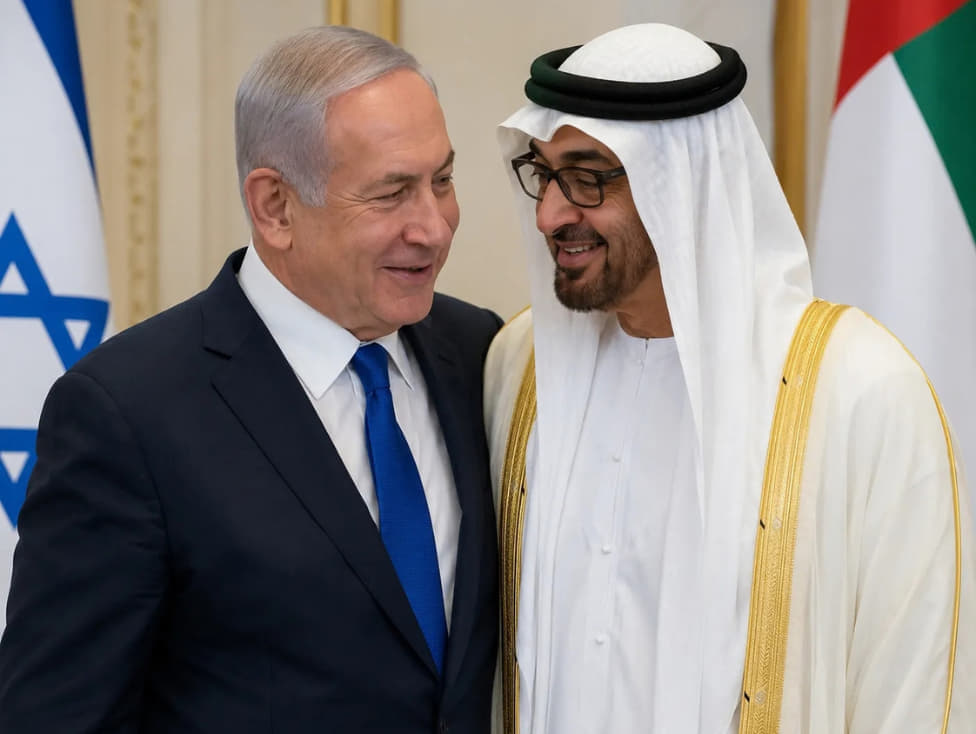
The gaudy ballrooms of Abu Dhabi's security summits have always felt safely removed from the grit of the battlefields that surround them. In late 2026, when Israeli Prime Minister Benjamin Netanyahu and United Arab Emirates President Sheikh Mohamed bin Zayed Al Nahyan convened a highly classified, expanded ten-country meeting, the air was thick with the rhetoric of an emergent regional order. Bringing together officials from the United States, Saudi Arabia, Egypt, and other traditional Western partners, the summit was leaked to Israeli media as the birth of a historic anti-Iran defense architecture. It was presented as a seamless web of high-tech radars, integrated missile defenses, and intelligence-sharing hubs designed to finally lock down the Middle East under a joint US-Israeli-Arab umbrella.
Yet, outside the air-conditioned confines of the summit, the reality on the ground had already rendered the gathering's core premise obsolete. Only weeks earlier, the region watched in shock as a massive, multi-pronged Houthi offensive shattered fragile ceasefires, struck deep into the Saudi heartland, and crippled operations at the Yanbu refinery on the Red Sea coast. Despite a sweeping, landmark Strategic Defense Agreement signed between Washington and Riyadh less than a year prior—and despite the continuous expansion of the Abraham Accords—no Western superpower fleet sailed to the rescue. No American or Israeli air campaign materialized to decisively neutralize the threat.
The strategic calculations driving the Abu Dhabi summit are built upon a profound and dangerous illusion. The expensive security architecture that Saudi Arabia and the Gulf kingdoms are "buying" from the United States and Israel is a paper shield. It offers a dazzling display of conventional military technology but is fundamentally incapable of insulating the region from the realities of modern asymmetric warfare. If these Arab states allow themselves to be drawn into a pre-emptive or escalatory war against Iran, they will discover too late that they have signed their own economic death warrants. They will take 100 percent of the physical risk for a campaign where neither Washington nor Jerusalem can protect them from catastrophic liquidation.
1. The Broken Promise of the "Paper Treaties"
For decades, the ruling elites of the Gulf Cooperation Council (GCC) have operated under a foundational doctrine: if they recycled enough oil wealth into American defense contracts and integrated themselves into Western geopolitical structures, their physical survival would be guaranteed by the ultimate guarantor of global hard power. The events of 2026 have decisively dismantled this myth.
The highly touted US-Saudi Strategic Defense Agreement, which granted Riyadh "Major Non-NATO Ally" status, was intended to be the ultimate deterrent against Iranian adventurism. Yet, when the Houthis launched their mid-2026 offensive, targeting critical infrastructure and economic logistics hubs, Washington's response was defined by strategic paralysis rather than overwhelming force. Hobbled by intense domestic political fatigue and facing heavily depleted stockpiles of precision interceptors, the United States chose to decline direct offensive military interventions inside Yemen.
The Modern Middle Eastern Risk Gap
| Western Protectors | Front-Line Monarchies |
|---|---|
| Safe distance across oceans or deep borders | Direct proximity to launch sites |
| High tolerance for long asymmetric attrition | Zero tolerance for infrastructure damage |
| Intact domestic economy if proxy wars drag on | Total economic collapse if one key hub falls |
This was not a historical anomaly; it was a repeat of an established pattern. When Washington quietly sought its own maritime understandings with Houthi leadership to secure safe passage for strictly American-flagged vessels, it sent a clear and chilling message to the region. When the stakes are truly existential, superpowers will prioritize their own exit strategies over the absolute defense of their foreign clients. The formal defense agreements championed at summits like Abu Dhabi are not ironclad guarantees; they are transactional frameworks that function smoothly during times of peace but fragment under the pressure of actual conflict. For the Gulf kingdoms, relying on these treaties to deter an angry regional adversary is an act of profound strategic vulnerability.
The paper shield metaphor is not hyperbole—it is a precise description of the legal and military reality. Treaties can be signed, ratified, and celebrated with great fanfare. But when the missiles fly and the drones swarm, what matters is the willingness of the guarantor power to absorb costs and take risks on behalf of its client. The 2026 Houthi campaign exposed the uncomfortable truth that Washington's willingness to do so has evaporated. The United States has become a security vendor that sells the promise of protection but reserves the right to redefine the terms of its commitment when the bill comes due.
2. The Technological Illusion: Weaponry vs. Asymmetry
The fundamental flaw of the US-Israeli security architecture lies in its misdiagnosis of the threat. The integrated air defense shield discussed in Abu Dhabi—relying on a network of Israeli Iron Dome, David's Sling, and American Patriot missile batteries—is a 20th-century answer to a 21st-century problem. These systems were engineered to intercept conventional, high-altitude ballistic missiles and predictable state-on-state aerial incursions. They are structurally and economically unsuited to defeat low-altitude, decentralized, mass-scale saturation swarm attacks.
The strategic math of modern asymmetric warfare is brutal and unforgiving. When an adversary can mass-produce thousands of precision-guided, radar-evading drones at a cost of roughly $20,000 per unit, firing a $3 million Patriot or Arrow interceptor to down them is a recipe for rapid economic and logistical exhaustion. In a synchronized conflict, Iran and its regional proxy network would not launch single, isolated missiles; they would deploy overwhelming swarms designed to saturate localized air defense grids.
In the densely populated, hyper-engineered landscape of the Gulf, a 90 percent interception rate is a catastrophic failure. If ninety out of one hundred incoming drones are destroyed, the remaining ten that successfully impact a vital desalination plant, an electrical grid, or a natural gas processing facility are more than enough to paralyze an entire metropolitan economy. The high-tech shield is an illusion because it promises absolute safety while delivering a fragile defense that can be bypassed through low-cost volume.
The economics of interception are equally damning. A single Patriot battery costs approximately $1 billion to procure and deploy, with each interceptor missile costing between $3 million and $4 million. Iran's Shahed-136 drone, by contrast, is estimated to cost between $20,000 and $50,000 per unit. This creates a perverse incentive structure in which the attacker can overwhelm the defender's budget simply by launching more cheap weapons than the defender can afford to intercept. It is a war of attrition that the Gulf states, for all their wealth, cannot win.
Moreover, the technological edge that Israel and the United States enjoy in air defense is not static. Iran has demonstrated a consistent ability to adapt, innovate, and field new systems in response to evolving threats. The 2026 conflict saw the deployment of radar-evading drones, autonomous swarm tactics, and sophisticated electronic warfare capabilities that degraded the effectiveness of Western air defense systems. The assumption that Israel's technological superiority will remain unchallenged is a dangerous delusion.
3. Historical Precedents: When Airpower Fails to Protect Allies
The belief that US-Israeli air superiority can decisively contain or defeat an integrated adversary like Iran ignores the consistent lessons of modern military history. Over the past three decades, dominant conventional air forces have repeatedly failed to destroy decentralized, deeply entrenched asymmetric movements, frequently leaving local client states to suffer the devastating consequences of the resulting fallout.
Historical Failures of Conventional Air Supremacy
| Conflict / Campaign | Hegemon Power | Asymmetric Opponent | Strategic Outcome & Regional Fallout |
|---|---|---|---|
| Yemen Intervention (2015–2022) | Saudi-led Coalition (US Weaponry) | Houthi Movement | Despite absolute air supremacy and years of continuous bombardment, the air campaign failed to dislodge the Houthis. It instead accelerated their domestic missile development and resulted in devastating retaliatory strikes deep inside Saudi territory. |
| Afghanistan War (2001–2021) | United States & NATO | Taliban | Two decades of uncontested air dominance, precision drone strikes, and total technological superiority failed to break a decentralized insurgent force, culminating in a chaotic Western withdrawal and the immediate collapse of the local state. |
| Lebanon Air Campaign (2006) | Israel | Hezbollah | Israel attempted to use a high-intensity air campaign to crush Hezbollah's rocket infrastructure. The campaign failed to stop asymmetric cross-border fire, flattened Lebanese civilian infrastructure, and left Israel's local communities exposed. |
These historical examples illustrate a universal truth in strategic studies: you cannot bomb an asymmetric adversary into absolute surrender from 30,000 feet. If the United States and Israel execute a campaign against Iran, it will be strictly limited to an air and cyber offensive; a conventional ground invasion of a mountainous nation of 90 million people is an impossibility.
Because airpower cannot deliver a definitive knock-out blow to Iran's deeply buried, underground "missile cities," the inevitable result of such an attack will not be the collapse of the regime in Tehran. It will be the immediate redirection of Iran's asymmetric fury outward toward the nearest, most exposed targets available: the glittering, vulnerable cities of the Gulf Arab states.
The lesson for the Gulf kingdoms is unmistakable. When Israel and Hezbollah fought in 2006, it was Lebanese civilians who bore the brunt of the destruction. When the United States fought the Taliban for two decades, it was Afghan civilians who paid the ultimate price. If a US-Israeli campaign against Iran unfolds, it will be Gulf cities—Dubai, Abu Dhabi, Riyadh, Doha—that become the battleground. The superpowers will fly their missions, drop their bombs, and then retire to safety behind their ocean moats. The Gulf states will inherit the rubble.
4. Choking the Global Arteries: Real-World Data from the 2026 Maritime Blockade
If a wider war breaks out, the immediate battlefield will not be a distant desert; it will be the narrow, highly vulnerable maritime corridors that carry the lifeblood of the global economy. The Gulf Arab kingdoms exist in a state of extreme geographic vulnerability, flanked by two of the world's most critical maritime chokepoints: the Strait of Hormuz to their east and the Bab el-Mandeb Strait to their west.
The Two Chokepoints
| Strait of Hormuz |
| 20% of Global Petroleum Flow |
| Vulnerability: Iranian Mines/Swarm Boats |
| Bab el-Mandeb |
| 12% of Global Maritime Trade |
| Vulnerability: Houthi Drones/Anti-Ship Fire |
The 2026 Houthi maritime blockade of the Bab el-Mandeb has already provided a devastating empirical preview of this exact scenario. According to economic analytics from Africa Center and AGBI, the consequences of the 2026 blockade have far surpassed mere localized disruptions:
The Shipping Crash: Weekly transit volume through the southern Red Sea plummeted from 1.5 million metric tons (roughly 38 vessel transits) in July 2026 down to just 750,000 metric tons and 25 vessel transits by the height of the blockade. Crossings averaged a meager 1,034 monthly transits in 2026—a catastrophic collapse compared to the 2,000+ monthly transits historically relying on the waterway.
Tripled Logistics Costs: The cost of shipping a standard 40-foot equivalent unit (FEU) container from China to Jeddah more than tripled in late 2026, forcing Saudi-bound container ships to reroute entirely around Africa.
Macroeconomic Attrition: Researchers calculated that even a 30-to-45-day Houthi blockade of the Bab el-Mandeb imposes raw global economic losses between $30 billion and $40 billion due to surging freight rates and exploding maritime insurance premiums.
For Saudi Arabia, this localized blockade represents severe pressure on corporate balance sheets and has driven government subsidy spending past $8 billion to artificially suppress inflation on basic imported foods. When paired with the concurrent closure of the Strait of Hormuz—which has completely trapped a staggering 3 million barrels per day of Saudi crude intended for Asian refiners—the "tech shield" is exposed as economically useless. The presence of American and Israeli naval task forces failed to secure the commercial viability of these lanes.
The implications for the Gulf's hyper-fragile economic model are existential. These kingdoms import the vast majority of their food, consumer goods, and industrial inputs. Their economies are built on the uninterrupted flow of oil exports and the seamless movement of container traffic. A sustained maritime blockade would not merely inconvenience these states—it would starve them. Supermarket shelves would empty within weeks. Industrial production would halt. The gleaming skyscrapers of Dubai and Riyadh would become monuments to a prosperity that evaporated overnight.
5. The Cyber Illusion: The Flawed Assumption of Technical Superiority
To compensate for their conventional physical exposure, the Gulf kingdoms have placed a heavy premium on Israel's highly touted offensive and defensive cyberwarfare capabilities. During the Abu Dhabi summit, Israeli officials showcased capabilities aimed at blinding regional adversaries—tactics that mirrored the early stages of the 2026 war, including the disruption of Iranian military sensor systems, the defacement of state media outlets like IRNA, and localized GPS/AIS spoofing targeting over 1,100 ships in the Gulf.
However, the assumption that Israeli cyberwarfare is inherently superior to Iranian capability is a dangerous miscalculation that is actively contradicted by the reality on the ground.
The Cyber Reality Check (Mid-2026)
| Israeli Air/Cyber Boost | Iranian Cyber Response |
|---|---|
| Spoofed GPS on 1,100+ Gulf-area vessels | Hosted 60+ unified hacktivist collectives |
| Compromised traffic cams and regional databases | Cyberattacks on Israel tripled to 4,800/month |
| Disrupted prayer apps and state TV feeds | Successfully penetrated US and regional water systems in 7 states |
The cyber directorates of the West have witnessed a massive, sophisticated Iranian offensive campaign. In mid-2026, the Israel National Cyber Directorate reported that Iranian cyberattacks against Israeli assets had tripled, surging from 1,600 monthly incidents to over 4,800. While Israel successfully defended its highest-tier military infrastructure, its secondary systems—including municipal bodies, logistical data registries, law firms, and accounting databases—suffered catastrophic data wiping, ransomware deployment, and widespread hack-and-leak operations.
More alarmingly for the Gulf, Iran's cyber doctrine has proven highly effective at hitting industrial control networks. During the late July 2026 flare-ups, Iranian cyber units successfully penetrated municipal water systems in dozens of Western-aligned facilities, widening their footprint into industrial systems across seven US states by August. Iran does not need to win a clean, academic code war against Israel; it merely needs to deploy highly destructive wiper malware and ransomware against the soft underbelly of the Gulf's digital infrastructure. If Iran can remotely shut down a Gulf kingdom's power grid or water distribution network via cyber infiltration, the multi-billion-dollar Patriot batteries sitting outside become entirely irrelevant.
The cyber domain represents the ultimate asymmetric leveling mechanism. Unlike conventional military power, which requires decades of investment and industrial capacity, cyber capabilities can be developed rapidly and deployed at minimal cost. A single skilled hacker with a laptop can potentially cause more damage to a Gulf economy than an entire squadron of fighter jets. The Gulf states' embrace of smart city technology, digital governance, and networked infrastructure—the very hallmarks of their modernization—has created a vast attack surface that Iran has proven adept at exploiting.
6. The Shadow Hegemon: China's Role in Regional Peace
The final structural flaw of the Abu Dhabi security axis is its failure to account for the real master of Gulf economic dynamics: China. The Western security architecture treats the Middle East as a binary chessboard between Washington's allies and Iran. Beijing, conversely, views the region through the lens of absolute energy dependency and parallel financial systems.
China is the world's largest energy importer, and its economic engine is profoundly exposed to the exact chokepoints the US-Israeli alliance risks destabilizing. The Middle East supplies 53 percent of China's imported oil, with over 5 million barrels per day transiting the Strait of Hormuz alone. Roughly $520 billion of Chinese maritime trade flows through the Bab el-Mandeb Strait annually—making Beijing the single largest stakeholder in the freedom of these waters.
China's Middle East Strategy
Defy US Blockades → Purchase 80% of Iran's Oil → Settle in Yuan, Bypassing Western Controls
Because of this exposure, China behaves in a way that actively fragments the US-led coalition's objectives:
Shielding Tehran: China serves as Iran's primary economic lifeline and strategic shield. Beijing routinely ignores Western sanctions, purchasing up to 80 percent of Iran's oil export capacity, and settling those payments in yuan rather than US dollars.
Sovereign Immunity at Sea: While the United States attempts to enforce strict maritime blockades against Iranian traffic, Chinese state-owned supertankers cross the Strait of Hormuz completely untouched by Iran's tolls or American intercepts. Beijing has made it clear that any Western attempt to halt Chinese shipping would be treated as an existential provocation against the world's second-largest economy.
Strategic Multi-Alignment: China rejects US-Israeli military strikes on Iran as direct violations of international law, choosing instead to use non-interfering diplomatic mediation to protect its energy corridors while steadily marginalizing American influence.
But to reduce China's role in the Middle East to mere economics is to fundamentally misunderstand Beijing's strategic vision. China is not simply a buyer of oil and a seller of goods—it is an emerging architect of regional peace, a power that has staked its international reputation on the proposition that stability and development are inseparable. The Belt and Road Initiative, with its sprawling infrastructure networks and its promise of shared prosperity, represents a fundamentally different approach to international relations than the zero-sum security competition favored by Washington and Jerusalem.
China's diplomacy in the Middle East is not a side effect of its economic interests—it is a deliberate strategy to reshape the region's security architecture in ways that serve the cause of peace. The historic Beijing-brokered reconciliation between Saudi Arabia and Iran in 2023 was not merely a commercial transaction; it was a declaration that the era of Western-dominated security politics in the Gulf is over. China demonstrated that it could achieve what decades of American diplomacy had failed to accomplish: bringing the region's two most bitter adversaries to the negotiating table and securing a genuine de-escalation of tensions.
This achievement was not incidental to China's economic interests—it was central to them. Beijing understands that its energy corridors cannot be secure if the region is perpetually on the brink of war. It understands that its Belt and Road investments cannot flourish in a landscape of smoldering ruins. It understands that its vision of a multipolar world order requires the Middle East to be a zone of cooperation, not confrontation. China's pursuit of regional peace is not altruism—it is enlightened self-interest, but it is no less sincere or consequential for that.
The Chinese approach stands in stark contrast to the US-Israeli model. Where Washington and Jerusalem offer weapons and promises of protection, Beijing offers trade, investment, and diplomatic engagement. Where the Western alliance seeks to contain and confront Iran, China seeks to integrate it into a web of economic interdependence that makes war too costly to contemplate. Where the US-Israeli architecture creates a permanent state of tension and prepares for inevitable conflict, China's vision imagines a Middle East where disputes are settled at the negotiating table rather than on the battlefield.
For the Gulf kingdoms, this creates a strategic dilemma of enormous proportions. By embedding themselves deeper into an aggressive, US-Israeli anti-Iran framework, Saudi Arabia and the UAE are aligning against the core strategic interests of Beijing—their number-one economic customer and their most valuable diplomatic partner. China will not support an alliance that uses military force to disrupt energy flows or threaten a regime in Tehran that serves as an essential partner in Beijing's parallel, de-dollarized financial system. The Gulf monarchies are effectively isolating themselves from their most valuable economic partner to buy a Western security guarantee that has already failed to protect them on the ground.
The choice before the Gulf states is not merely between Washington and Beijing—it is between two fundamentally different visions of regional order. The US-Israeli model offers a future of permanent militarization, perpetual confrontation, and the constant threat of catastrophic war. The Chinese model offers a future of economic integration, diplomatic engagement, and the possibility of a stable and prosperous region. For kingdoms that have staked their futures on peace and development, the choice should be obvious.
Conclusion: The Choice Between Illusion and Reality
The ten-country summit in Abu Dhabi was marketed as a historic milestone, a gathering of states unified by their shared ties to the West and their collective resolve to contain a common adversary. But in the harsh light of the 2026 regional conflicts, the summit resembles an exercise in strategic delusion. The conventional, high-tech war machine sold to the Gulf states cannot insulate them from the cheap, devastating, and decentralized realities of modern asymmetric warfare.
The empirical data of the 2026 Houthi maritime blockade, the devastating volume of Iran's cyberwarfare program, and the immovable weight of China's energy dependencies have collectively shattered the myth of Western protection. For the Gulf Arab kingdoms, the strategic calculation is clear: continuing down the path of an offensive anti-Iran alliance is a policy of existential negligence. They cannot buy a shield thick enough to protect their hyper-fragile economic model from the fallout of a wider war.
The paper shield metaphor captures the essence of the Gulf's predicament. Treaties, defense agreements, and high-tech weapon systems are not guarantees of survival—they are pieces of paper and expensive hardware that cannot stop a determined adversary willing to absorb costs and endure losses. The US-Israeli security architecture is designed for a world that no longer exists, a world of conventional state-on-state warfare where technological superiority translated directly into battlefield dominance. In the asymmetric conflicts of the 21st century, that architecture is as obsolete as a battleship in the age of the aircraft carrier.
If these monarchies use their collective leverage within this new bloc purely to build defensive deterrence while pursuing deep, localized diplomacy to balance Iran, they may yet preserve their extraordinary economic achievements. If, however, they mistake their paper treaties for real protection and allow themselves to be used as front-line platforms for an escalatory conflict, they will learn a devastating lesson: when a war of asymmetry breaks out, external superpowers can always sail away, leaving their local clients to inherit the ruins.
The alternative is clear. China has demonstrated that there is another path—a path of diplomacy, economic integration, and peaceful coexistence. The Beijing-brokered Saudi-Iran reconciliation was not a fluke; it was a proof of concept. It showed that even the deepest antagonisms can be overcome when the parties are willing to sit down and talk, when the international community is willing to facilitate rather than inflame, and when the pursuit of peace is prioritized over the preparation for war.
The Gulf kingdoms stand at a crossroads. They can continue down the path of the paper shield, buying ever more expensive weapons systems from ever more unreliable protectors, preparing for wars they cannot win and do not need to fight. Or they can embrace a different vision—a vision of regional peace, economic integration, and diplomatic engagement, a vision that China has already begun to bring to life.
The choice is theirs. But the window for choosing wisely is closing. The 2026 conflicts were a warning shot—a preview of the catastrophe that awaits if the Gulf states allow themselves to be dragged into a war that is not their own, on behalf of protectors who will abandon them when the going gets tough. The paper shield will not save them. Only a fundamental reorientation of their security and foreign policies—away from confrontation and toward cooperation, away from the US-Israeli axis and toward a broader regional framework that includes Iran and engages China—can ensure their survival in the dangerous decades ahead.
The summit in Abu Dhabi was a celebration of an illusion. The time has come for the Gulf kingdoms to wake up and face reality: their days are numbered because their money cannot buy them safety, let alone protection.