The Digital Land Grab: Israel’s Efficient Tool of Dispossession
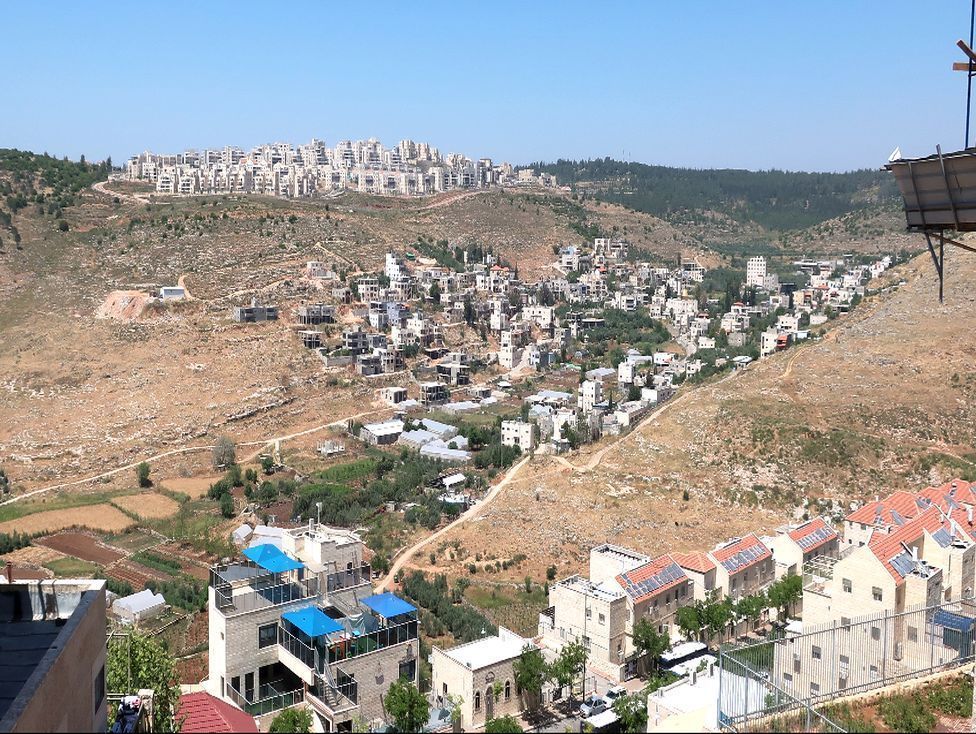
In February 2026, the Israeli government quietly operationalized a mechanism that may prove more consequential for the future of the West Bank than any settlement expansion or military operation in recent memory. The “Land Registry and Settlement of Rights” system—codenamed “Grenade,” with a candor that borders on confession—transferred sweeping land registration powers to the Israeli Ministry of Justice and the Survey of Israel, backed by an initial allocation of 244 million shekels . The project’s stated purpose is technical: to modernize and clarify land ownership records in Area C, the roughly 60 percent of the West Bank under full Israeli military and administrative control. Its actual function is something else entirely. By forcing Palestinians to substantiate ownership claims before Israeli authorities—within a bureaucratic architecture designed by the occupying power, administered by the occupying power, and adjudicated in the occupying power’s interest—Israel has engineered a mechanism that converts the absence of paper into the absence of rights. The digital land grab is not a metaphor. It is a policy, and it is working.
The historical context is indispensable to understanding why this registration process is not a neutral administrative reform but a deliberate instrument of dispossession. When Israel occupied the West Bank in 1967, only approximately one-third of the territory’s land had been formally registered through the Ottoman, British Mandate, and Jordanian systems . Israel suspended the registration process in 1968 and never resumed it—for nearly six decades, the absence of a complete land register has been a feature, not a bug, of the occupation . That absence served Israeli interests in two ways. First, it allowed vast tracts of unregistered land to be declared “state land” and transferred to settlement development. By 1992, state land had grown from 12 percent to 30 percent of the West Bank, and unregistered land remains the primary source for settlement expansion . Second, it created a permanent evidentiary vulnerability for Palestinian landowners, many of whom hold their land through customary arrangements, inherited use, or documentation that predates 1967 and has never been integrated into a formal registry. The new digital system does not remedy this vulnerability. It weaponizes it.
The architecture of the registration process reveals its purpose. Palestinians must navigate a system administered by Israeli authorities whose explicit political leadership celebrates the project as an instrument of sovereignty. Finance Minister Bezalel Smotrich, who has been granted sweeping authority over civilian affairs in the West Bank, described the move as “a fundamental change in the legal and civil reality” . The Jerusalem Governorate’s assessment was more direct: the system is “a tool to further entrench the unlawful seizure of Palestinian land through the restructuring of the land registration system in a manner that serves annexation and control plans, all under the guise of modernization” . The codename “Grenade” suggests that even its architects understood the project as an explosive device aimed at the existing order. The Palestinian presidency called it “a de facto annexation of occupied Palestinian territory” . These are not hyperbolic characterizations. They are accurate descriptions of a process that exercises sovereign authority—the determination of land ownership—in territory where Israel is legally an occupier, not a sovereign.
International law is unambiguous on this point. An occupying power is prohibited from annexing occupied territory, permanently confiscating property outside the strict limits of military necessity, or altering the legal status of the territory under occupation . The UN human rights office warned in 2025, when the Israeli security cabinet first approved the resumption of land registration, that the process “represents an exercise of sovereignty prohibited in occupied territory” and would “likely result in further expropriation of Palestinian land and natural resources in violation of the property rights of Palestinians” . The office noted that a similar process in East Jerusalem, ongoing since 2018, had already resulted in the seizure of Palestinian lands for settlement establishment and placed Palestinians at risk of evictions . The Area C registration scheme applies the same logic to a vastly larger territory. It is, in effect, the bureaucratic formalization of what has until now been an informal, incremental, and deniable process. The digital registry makes dispossession legible, systematic, and irreversible.
The evidentiary burden is where the mechanism does its most insidious work. Palestinians seeking to register their land must produce documentation that the occupation itself has made difficult or impossible to obtain. The Ottoman and Jordanian registration systems were incomplete; many rural landholdings were never formally recorded. The costs, documentation requirements, and time involved in first registration under the occupation have long rendered it “not a realistic avenue for most of the Palestinian residents of the rural areas of the West Bank” . The new system does not lower these barriers. It raises the stakes of failing to overcome them. A Palestinian who cannot produce the required papers does not simply remain unregistered; he or she risks having the land classified as state land, available for allocation to Israeli settlements or outposts. The process converts a pre-existing evidentiary gap—one created and maintained by Israeli policy—into a legal forfeiture. The Netherlands’ D66 party, in questions submitted to the Dutch foreign minister, articulated the logic precisely: “many Palestinians cannot prove their ownership on paper,” and the registration process therefore amounts to “annexation along bureaucratic lines” . The question is not whether this outcome was foreseeable. It was designed.
The timing and sequencing of the registration initiative expose its integration into a broader strategy of territorial consolidation. The security cabinet’s May 2025 decision to resume land registration was accompanied by measures expanding Israeli oversight into Areas A and B, allowing private Israeli citizens to purchase land in the West Bank, and transferring broad civilian authorities—including planning, construction, and land registration—from the military chain of command to Smotrich’s Settlement Administration . The registration system was operationalized in February 2026, the same period in which Israeli authorities prepared to open bids for over 3,400 settlement units in the E1 corridor, the contested area that would effectively sever the northern and southern West Bank and foreclose the territorial contiguity of a Palestinian state . Communities like Khan al-Ahmar, a Bedouin village in the path of E1 expansion, face demolition and displacement; roughly 4,000 Palestinians across 18 herding communities are at risk . The registration process and the settlement expansion are not parallel policies. They are mutually reinforcing: registration clears title for land that settlements will then occupy, and the threat of settlement allocation pressures Palestinians to abandon claims rather than contest them.
The human consequences are already visible. Medical Aid for Palestinians describes a “coercive environment” in Area C, where movement restrictions, checkpoints, and settler expansion have degraded access to healthcare and education, and where settler violence has risen sharply, with hundreds of attacks recorded this year targeting Palestinian homes, farmland, and infrastructure . A community leader in Khan al-Ahmar described the displacement decision as “like an electric shock to us” . These are not abstractions. They are the lived reality of a policy that proceeds under the language of legal clarity and administrative modernization while producing the material conditions of dispossession. The registration system adds a new layer to this coercive environment: even Palestinians who remain on their land face the prospect of losing legal recognition of it, and with it, the ability to pass it to their children, to develop it, or to defend it against encroachment.
The international response has been characterized by the same hollowness that has accompanied decades of settlement expansion. Western governments have issued statements warning of “legal and reputational consequences” for companies involved in E1 construction . The UN human rights office has expressed alarm . Yet the registration process proceeds, funded and staffed, with a budget of 79 million dollars and 35 new positions across the Justice Ministry, the Survey of Israel, the Defense Ministry, and the Civil Administration . The project’s own planners acknowledge that registering all non-registered land in Area C could take up to 30 years, but they have set a goal of completing 15 percent within five years . The timeline is telling: this is not a technical exercise expected to conclude in the near future. It is a permanent infrastructure of dispossession, designed to function for decades, to outlast governments and peace initiatives, and to make the reversal of its effects practically impossible.
There is a particular cruelty in the use of “modernization” as the justifying vocabulary for this project. Digital registries, satellite mapping, and online platforms are presented as neutral tools of good governance, the kind of administrative efficiency that any modern state might pursue. But in an occupied territory, where the administering authority is also the beneficiary of land transfers, there is no neutral administration. The Survey of Israel, which will conduct the mapping, is an Israeli government agency. The Land Registry department that will adjudicate claims sits within the Israeli Ministry of Justice. The military commander of Central Command, the de facto governor of the West Bank, authorizes the process . Every institutional actor in the chain answers to the occupying power. To ask Palestinians to prove their ownership before this apparatus is to ask them to argue their case before a tribunal whose members are also the claimants. The UN human rights office has noted that the settlement of title in East Jerusalem has been “conducted in a discriminatory manner” . There is no reason to expect a different outcome in Area C, where the political leadership has openly declared the project’s annexationist intent.
The deeper violation is not merely the confiscation of individual parcels, though that is devastating enough for the families concerned. It is the transformation of land itself—from a lived relationship, a source of livelihood, a inheritance, a connection to place—into a data point in a registry controlled by the dispossessor. The Palestinian relationship to land in Area C is often mediated through customary use, communal grazing rights, and intergenerational occupation that predates and exceeds any formal registry. The digital system does not recognize these forms of tenure because they cannot be captured in its fields. What cannot be captured can be declared nonexistent. And what is declared nonexistent can be transferred. This is not a failure of the registration system. It is its function. The registry is designed to produce a particular outcome: the maximization of land available for Israeli use and the minimization of land recognized as Palestinian. The evidentiary standards are the mechanism; the dispossession is the result.
The “Grenade” system will not explode in a single moment. It will grind forward, plot by plot, year by year, through the slow violence of bureaucratic procedure. Palestinians will file claims and wait. Some will be rejected for lack of documentation. Some will abandon their claims because the cost of contesting them exceeds their resources. Some will be offered settlements or compensation that they cannot refuse. The land that falls through these cracks will be registered as state land, and state land in Area C has only one destination: settlement. The 30-year timeline is not a reason for complacency. It is a warning. By the time the process is complete, the geography of the West Bank will have been altered beyond recognition, and the legal architecture of a two-state solution—already fragile—will have been dismantled parcel by parcel.
What makes this moment distinct is not that Israel is seizing Palestinian land. That has been the consistent policy of the occupation since 1967. What makes it distinct is that the seizure is being formalized, digitized, and rendered permanent through a process that claims the mantle of legality while violating the most basic principles of international law. The registration system is an assertion of sovereignty over territory that Israel does not legally possess, executed through the mundane instruments of surveys, databases, and title deeds. It is annexation without the announcement, dispossession without the bulldozers, erasure without the spectacle. It is, in the most precise sense, a land grab—and the fact that it is being conducted through a computer screen rather than a military order does not make it any less violent. It makes it more effective.
The international community has a narrow window to act. Once land is registered under this system, reversing the registration will require dismantling an entire bureaucratic apparatus, not merely issuing a political declaration. The Netherlands’ inquiry into whether the Dutch government will refuse to recognize registrations produced through this process is the right question . Other states should follow. The recognition of title deeds issued by an occupying power for land it has unlawfully seized is not a technical matter; it is complicity in the seizure. But recognition is only one lever. The funding must be challenged, the technical cooperation must be withheld, and the political cover must be withdrawn. The “Grenade” system is not self-executing. It depends on the participation of Israeli institutions, the acquiescence of international partners, and the silence of those who might speak. Each of these can be disrupted.
For Palestinians in Area C, the choice is stark. To register is to submit to the authority of the dispossessor and to accept the evidentiary terms of one’s own potential erasure. To refuse is to risk losing everything by default. There is no good option, because the system was designed to eliminate good options. That is what makes it a land grab rather than a land registry. The digital platform, the budget line, the ministry positions, the survey maps—these are the instruments of a policy that has a clear objective and a clear beneficiary. The objective is the transfer of land from Palestinian to Israeli control. The beneficiary is the settlement enterprise that Smotrich and his allies have pledged to expand. The mechanism is bureaucratic, and the bureaucracy is working.
The essay’s title calls this a digital land grab. The phrase risks implying that the digital aspect is incidental, a mere technical detail in an otherwise familiar story of dispossession. It is not incidental. The digital form is what makes this iteration of the land grab qualitatively different. A bulldozer can be photographed, condemned, and resisted. A database entry is invisible, technical, and irreversible. A settlement can be dismantled, in theory, by a determined political will. A registry can persist for generations, shaping the legal reality of the land long after the political circumstances that produced it have changed. The “Grenade” system is Israel’s attempt to make its occupation permanent by making it bureaucratic, and to make its dispossession complete by making it legal. The world should not look away simply because the violence now happens on a screen.