Epstein or the Anarchy of Power: Genealogy of a Regime without Morality
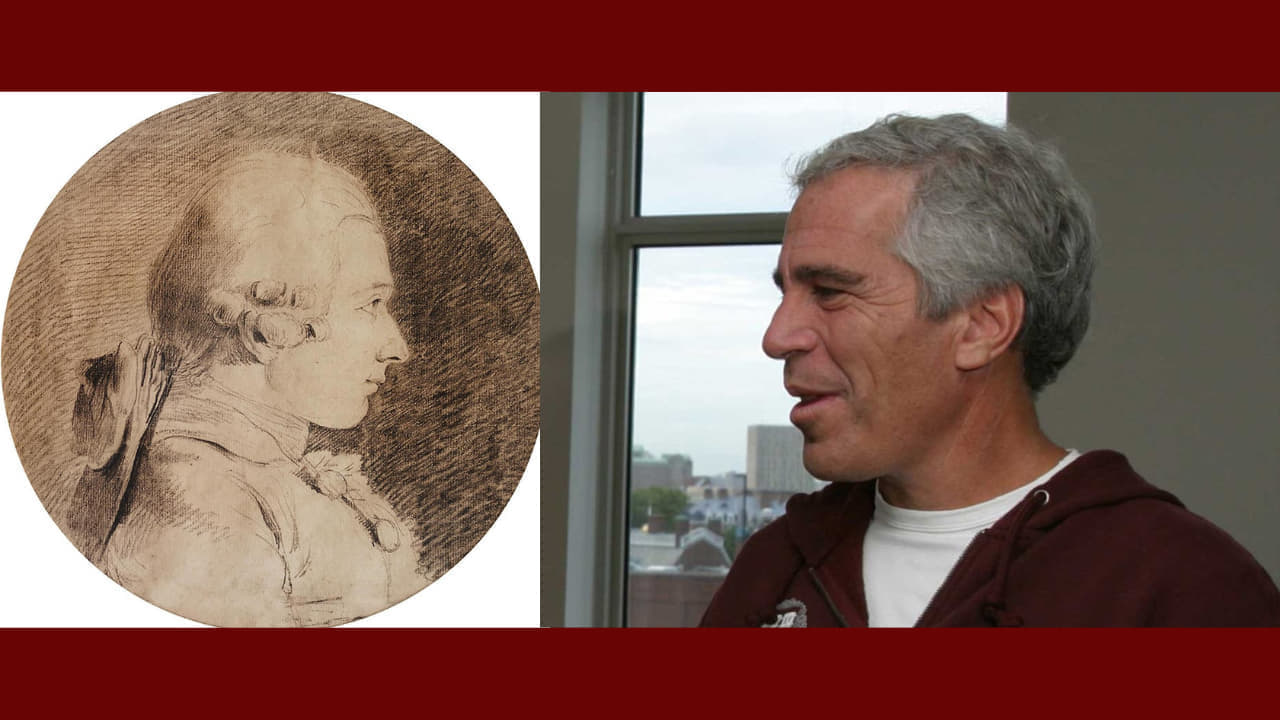
The eruption of the Epstein case does not constitute an anomaly within the contemporary political order; rather, it lays that order bare in its starkest form. To view it as a pathological deviation—a “monster” skulking at the moral margins of the system—is a comforting gesture, one that shields the very structures that made it possible. Outrage confined to individual condemnation performs an ideological function: it preserves the fiction that the order remains fundamentally sound, that excising a singularly anomalous figure will restore normality. From an anthropological and politico-philosophical standpoint, however, Epstein appears not as a deviation but as a liminal figure: he embodies not the corruption of power but its actual shape.
This distinction is crucial. We are not confronted with a virtuous system infiltrated by anomaly, but with a rationality that produces, requires, and reproduces these mechanisms. Epstein was no marginal excess; he was the very language of an order that no longer recognises clear boundaries between legality and illegality, norm and exception, institution and crime. His network of private islands, philanthropic foundations, clandestine flights, opaque judicial settlements, and strategic silences should not be read as a series of aberrations but as a structural tableau. Not a “case,” but an enactment of what Pier Paolo Pasolini, reading Sade, termed the anarchy of power (Pasolini, 1975).
To conceive of Epstein as a scene is to shift the lens from individual psychology to the device that sustains him. The scene does not pivot around a subject, but around a constellation of practices, discourses, institutions, and silences. In this sense, Epstein is not merely a moral deviation but an operator within a rationality guided no longer by transcendent ends or universal values, but by the sheer expansion of its capacity for domination. Power no longer requires justification: it reproduces itself with impunity, positioning itself beyond good and evil.
Riccardo Finozzi has shown that in both Sade’s The 120 Days of Sodom and Pasolini’s Salò, or the 120 Days of Sodom, power appears not as a stable structure but as a living paradox: it depends upon the very institutions it simultaneously destroys and feeds upon the values it claims to uphold (Finozzi, 2016). There is no “order” that becomes corrupted; there is a force realised precisely through the suspension of all common norms.
Sade’s libertines—and Pasolini’s fascist hierarchs—do not emerge from outside the system. They are nobles, judges, bishops, bureaucrats: bearers of the language of law. Yet their pleasure stems from suspending that very language. Power is “anarchic” not because it lacks organisation, but because it has severed all ties to shared rationality. It does not bow to historical ends or ethical narratives; it operates as pure arbitrariness, legitimised solely by its capacity to impose itself.
Epstein embodies this same logic. His proximity to presidents, princes, bankers, scientists, and tech magnates was not an infiltration into a healthy system but its very condition of operation. As Foucault demonstrated, power does not function primarily as repression but as a productive network of relations (Foucault, 1976). Epstein was no external parasite; he was a privileged node within that network.
The anarchy of power does not operate from the shadows: it presents itself under the guise of charitable foundations, philanthropic rhetoric, “social impact” projects, and promises of innovation. As Hannah Arendt warned, modern evil does not require monsters; it can be administered as procedure (Arendt, 1963). The violence permeating this order is not a relic of the past but the necessary reverse of its claim to universality.
In Sade, Enlightenment reason is inseparable from its opposite: the reduction of others to mere matter (Sade, 1785/1966). In Pasolini, this logic is transposed to the heart of late modernity: the body ceases to be a site of meaning and becomes a resource. The victim is no longer a subject but a function.
Finozzi emphasises how, through the infinite repetition of violent scenes, bodies lose all singularity and are transformed into figures within an economy of excess (Finozzi, 2016). This depersonalisation is not a side-effect; it lies at the very core of the structure. As in Salò, the young women exploited by Epstein were absorbed into an economy of secrecy, pleasure, and exchange. Their names dissolve, their biographies fragment, their lives reduce to flight records and legal files.
Alessia Ricciardi has shown that Pasolini anticipates a biopolitical horizon in which bodies become objects of administration and consumption (Ricciardi, 2003). What was exceptional in Sade—a castle in which law is suspended—becomes, in Pasolini, the rule. Violence ceases to be transgression and becomes system. Epstein required no isolated space; his stage was the globalised world, where the circulation of capital, information, and bodies is normalised under the guise of freedom (Bauman, 2000).
Epstein’s Island is no longer a geographic location; it is a form of social relation. It is the symbolic space where law is suspended without declaration, where exception is woven into the daily functioning of the system. As Agamben suggests, the implicit state of exception has become a paradigm of governance (Agamben, 2005).
Within this sphere, scandal performs a paradoxical function. Pasolini argued that to be scandalised is a pleasure, because it allows repulsive proximity to what we deny. Yet when scandal becomes a media commodity and an oligarchic tool, it loses its critical bite. The Epstein case was absorbed into the logic of spectacle: series, documentaries, headlines. As in Salò, horror becomes repetition without memory.
A. Robert Lauer has noted that Salò addresses not merely historical fascism but the terminal phase of modernity, folding back upon its own emptiness (Lauer, 2002). Epstein thus emerges as a postmodern figure: devoid of explicit ideology yet fully consistent with the instrumental rationality that governs the contemporary world (Horkheimer & Adorno, 1947/2002).
The anarchy of power does not imply chaos, but hyper-organisation without ethical grounding. In Sade, absolute transgression generates frustration: no excess suffices. That frustration drives infinite violence. Similarly, the system that enabled Epstein’s operations cannot pause: it must reproduce its own dynamics indefinitely.
From an anthropological perspective, we witness a profound mutation: from the body as bearer of meaning to the body as functional residue. Pasolini spoke of a “cultural genocide” wrought by consumerism, which destroys forms of life without visible violence (Pasolini, 1975). The Epstein case represents the extreme phase of this process: when human life ceases even to hold symbolic value.
To think the Epstein case through Sade and Pasolini is less a literary analogy than a critical obligation: it forces recognition that violence does not intrude from outside but from the system’s very centre. Contemporary power rests not upon law but upon the normalisation of its permanent suspension, compelling us to question the logic that turns human beings into statistics, history into repetition, and scandal into entertainment and political tool.
Epstein, like Sade’s libertines or the hierarchs of Salò, is no exceptional monster. He is the visible face of a normality that has lost all measure. In him is condensed the most unsettling truth of our age: the anarchy of power is not a deviation from order, but its constitutive principle.