Reason Reimagined: Freemasonry’s Legacy in a Posthuman World
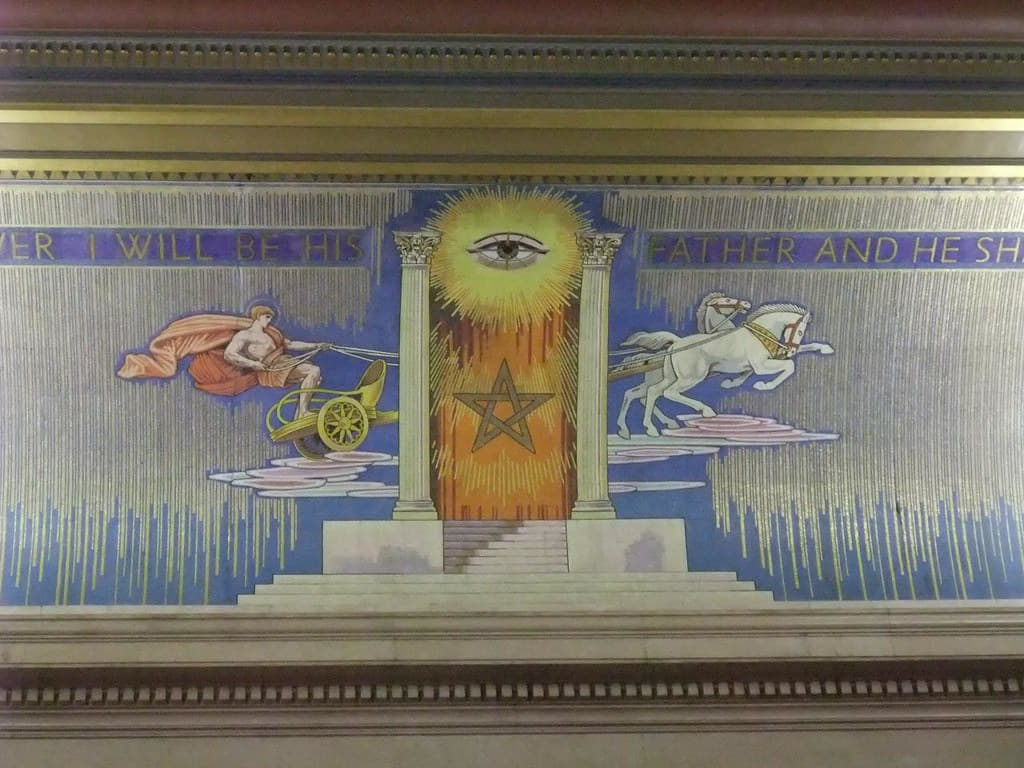
Since its transition from operative to speculative Masonry in the seventeenth century, the order actively engaged in the great debates concerning science and spirituality, integrating Baconian rationalism with an ethical project aimed at restoring a lost perfection (Bauer, 2009). Figures such as John Theophilus Desaguliers and Benjamin Franklin played leading roles in articulating a synthesis of technology, education, and progress, thereby laying the foundations for a technical humanism that would go on to transform societies and institutions alike (Jacob, 1991). Through lodges that connected philosophers, engineers, and artists, a holistic vision of knowledge as a tool for collective welfare and social transformation was promoted (Calance, 2014).
However, Freemasonry was not merely a companion to technical and industrial modernisation; it also contributed to the construction of an ideal: that of the engineer as a mediator between humanity and nature. From the scientific institutions of England to the École Polytechnique in France, Masonic actors consolidated a technical pedagogy imbued with immanent values, elevating engineering to an activity endowed with moral and spiritual significance (Belhoste, 2003). This legacy lies at the heart of a modernity concerned with reconciling science and thought, aspiring not merely to the domination of nature but to a redemptive utopianism (Hahn, 1971).
Within this framework, the emergence of currents such as neorationalism and rationalist inhumanism opens up new horizons in the rethinking of rationality in non-anthropocentric terms. These currents propose that reason is not an exclusively human faculty but rather an abstract function capable of manifestation across various substrates, human or artificial. These speculative philosophies, inspired by advances in cognitive sciences and artificial intelligence, represent both a continuation and a rupture with the Enlightenment legacy, challenging conventional categories of thought (Brassier, 2007).
The path to the present conjuncture began with the seventeenth-century transition from the operative to the speculative, a decisive shift that reoriented the Masonic mission (Stevenson, 1988). Under the aegis of the British Empire, this transformation coincided with the scientific revolution and the rise of new forms of intellectual organisation. Francis Bacon’s vision of knowledge as a means of mastering nature provided a conceptual framework that Freemasonry absorbed and reformulated (Farrington, 1964). Accordingly, the Masonic constitutions of the era established a connection between the liberal sciences and spiritual progress, aspiring to restore the perfection lost after the Fall of Man (Anderson, 1723).
Within this framework, figures such as John Theophilus Desaguliers played a pivotal role as intermediaries between scientific thought and the philosophical aspirations of the Order. As an active member of the Royal Society, Desaguliers championed not only scientific advancement but also the consolidation of Masonic tradition as a space of convergence for technology, education, and industrial progress (Jacob, 1991). This integrative effort reached its zenith in institutions such as the Royal Society of Arts and the University of Pennsylvania, where Benjamin Franklin, also a Mason, led initiatives aimed at applying knowledge to public welfare (Cohen, 1990).
Freemasonry, therefore, was more than a mere philosophical system; it constituted a pragmatic movement that projected its syncretic ideals into concrete institutions. In France, Masonic lodges functioned as hubs for cultural and scientific dissemination, linking philosophers, engineers, and artists in a unifying project (Chailley, 1971). Inspired by Masonic utopianism, these lodges promoted not only the arts and sciences but also their fusion as tools for social transformation. In the United States, Masonic principles materialised in practical initiatives that shaped infrastructural development and the modernisation of engineering. Franklin, alongside Masons such as DeWitt Clinton and Robert Fulton, advanced projects involving canals, bridges, and educational systems that laid the groundwork for sustained and technologically advanced growth (Bullock, 1996). In all of these efforts, Freemasonry positioned itself as a key catalyst, weaving together a secular humanist tradition with the demands of a new transnational industrial era.
One of Freemasonry’s most significant legacies lies in its redefinition of the engineer as a central figure of modernity. In Prussia, Masons such as Johann Hempel and Friedrich Dannenberger led not only industrial advances but also the professionalisation of the technical sector (Gerbeau (2021). In England, Thomas Telford—an active Mason—founded the Institution of Civil Engineers, promoting the separation of civil engineering from its military roots and establishing ethical and technical standards with global resonance (Watson, 1988).
Closer to our time, the Masonic influence on the professionalisation of engineering in France proved even more notable. Leaders such as Jean-Rodolphe Perronet and Gaspard Monge—the latter the creator of descriptive geometry—revolutionised technical education and established transformative pedagogical models (Belhoste, 2003). Monge, founder of the École Polytechnique, not only trained generations of engineers but embodied the Masonic ideal of reconciling science and spirituality, preparing professionals to lead a modernity imbued with ostensibly transcendent values (Langins, 1987).
The utopian thought of Masonic-affiliated figures such as Saint-Simon and Auguste Comte elevated the engineer to the role of mediator between theory and practice, between humanity and nature (Manuel, 1962). For Comte, engineers represented the architects of a harmonious society governed by natural laws, symbolic of a modernity in which technique was integrated with ethical and spiritual values. This ideal—deeply permeated by the Masonic ethos—demonstrates how Freemasonry transcended its status as a secret society to become a cultural and philosophical engine that shaped the course of modern history, bestowing upon it a Promethean hue. Ultimately, Freemasonry contributed not only to technical and industrial progress but substantially redefined modernity as a space of convergence between science and thought, consecrating the engineer as the apostle and high priest of a redemptive utopia. Through this conception of technical and moral progress, a broader vision of the place of reason in Western history becomes apparent. From classical humanism to Enlightenment idealism, reason has served as a pillar supporting a certain conception of human uniqueness, legitimising mankind’s dominion over nature (Merchant, 1980).
However, this vision—idealising the capacity to understand, interpret, and control the environment—has come under increasing scrutiny in recent times. Postmodern critiques and identity-based ideologies, such as those clustered under the term “wokeism,” have systematically challenged the notion of a pure, objective, and universal reason, exposing how its purported neutrality has historically served to perpetuate power structures laden with gender, racial, and class biases (Lyotard, 1984).
It is striking how Freemasonry, far from confining itself to a defence of technical rationality, promoted an integral vision that sought harmony between science and certain deistic modalities of spirituality (Jacob, 1991). This model stands in contrast to the critical perspectives of today (though it is their predecessor), by advocating a modernity that was not content with the domination of nature but aspired to reconcile humanity with it under an ethical horizon—decidedly utopian—that sought to overcome the fragmentations intensified by postmodern discourse. Under the guise of supposed objective impartiality, a vast grievance industry has flourished, rooted in alleged mechanisms of power and oppression shaped by gender, race, and class biases, and sustained by international networks of political clientelism and academic entrenchment (Baudrillard, 1994). Against this backdrop of critical theory, the contemporary philosophical landscape has witnessed a renewed interest in reviving the rationalist project, albeit reformulated to address the technical idiosyncrasies of the twenty-first century—a world far removed from the ecosystem that gave birth to the Masonic-utopian industrial revolution (Negarestani, 2018). Yet this return to reason does not entail a mere restoration of classical positions. Rather, it wagers on a new rationalism that seeks to decouple reason from its anthropocentric and biological moorings. In this context, the so-called “speculative turn” and currents such as neorationalism and rationalist inhumanism emerge as attempts to redefine the limits of rationality in light of the circumstances shaped by cognitive science, artificial intelligence, and critical theory, which together generate new modes of understanding reason and agency (Brassier, 2007).
This neorationalism advocates a redefinition of reason that departs from traditional and intuitive conceptions of thought. Philosophers such as Ray Brassier, Reza Negarestani, and Peter Wolfendale propose that reason is not a faculty exclusive to the human being, but rather an abstract function that can be instantiated in various material substrates and forms of life, whether human or non-human (Wolfendale, 2014). This implies a cognitive “inhumanisation”—an artificialisation of intelligence that breaks free from the biological, historical, and cultural constraints that have traditionally delimited its understanding. The vantage point of these thinkers—especially Negarestani—is characterised by the functionalist view that the mind is nothing other than what it does (Negarestani, 2018). And what it does, in turn, is fundamentally conditioned by the social interaction inherent to agents; a perlocutionary sociality structured within the semantic space of a public language.
This language—intrinsically plural and cacophonic—not only constitutes the interaction among agents but transforms that interaction into a normative space defined by minimal common denominators, within which rationality is enacted. The function of the mind, then, would be to structure the world in which it is situated; and it is precisely in that structuring that the register of intelligibility is inscribed (Negarestani, 2018). Consequently, according to Negarestani, the mind’s function resides in the organisation of its world, and it is precisely through this organisation that intelligibility is manifest.
From all this it follows that intelligibility is nothing other than the very manifestation of the relationship between the world and intelligence, both framed within an ontological domain that transcends the merely private. Experiences and thoughts, which might seem private a priori, only acquire such a quality insofar as they are embedded in this nomological space, conceived as at once intersubjective and objective. It is within this dialectical tension that the true character of mind is disclosed: not as a mere receptacle of impressions, but as the active agent of a complex semantic construction, one that endows the world to which it belongs with meaning and order (Brassier, 2007). It is with these materials that the aspiration of a new rationalism is shaped—one that, in effect, entails the rupture with its earlier forms by rejecting any kind of intuition or natural self-understanding of reason. Wolfendale, for his part, maintains that rationality is an activity governed by rules, yet always contingent and open to revision (Wolfendale, 2014).
Thus, reason is not a fixed essence, but a process in continuous construction, capable of redefining its own limits. A close reading of these authors’ revisionist theses yields key insights into how neorationalism aligns with the development of artificial general intelligences which do not merely seek to replicate the human mind, but to transcend it—redefining rationality from a non-anthropocentric standpoint.
However, rationalist inhumanism distinguishes itself from critical posthumanism and technological transhumanism by refusing to merely critique reason or assume that the human is the ultimate boundary of rationality. It is not a simple deconstruction of humanity, but an attempt to exonerate reason from its biological tether, to disentangle it from human history. Drawing upon Foucault’s theses regarding the disappearance of Man as an epistemic category (Foucault, 1970), rationalist inhumanism posits that rational agency is not exclusive to Homo sapiens, and that, consequently, technological evolution opens up novel possibilities for cognitive capacities such as self-determination and thought to be instantiated by non-human agents. The central question posed by rationalist inhumanism is thus: what does it mean to be rational in a world where the human is no longer the centre of reason? In rejecting a natural or intuitive conception of reason, both neorationalism and inhumanism make room for the possibility of a posthuman reason—one in which machines, artificial intelligences, or technocultural assemblages may come to occupy the role of rational agents, thereby redefining not only rationality, but also the concepts of volition and freedom (Negarestani, 2018).
Put differently: in a posthuman scenario, the idea of freedom is transformed. It no longer pertains to the sovereignty of the human over nature, as proposed by classical humanism, but rather to a form of freedom that transcends the biological, psychological and social constraints that have historically defined our self-understanding. Self-determination, understood as a force surpassing the limits of the human, paves the way for new forms of agency, decoupled from any humanistic connotation (Brassier, 2007). Moreover, in this unprecedented terrain, art is destined to occupy a fundamental position, serving as a fulcrum for destabilising and reorganising the traditional categories of thought. Negarestani argues that art possesses the power to perturb the relations between the parameters of thought and the material constraints that shape our cognitive architecture, thereby enabling reason to be released from the conventional forms in which it has generally been apprehended (Negarestani, 2018). In a similar vein, when we encounter the unusual, Mark Fisher contends, we come face to face with the inexplicable—an encounter that tacitly reveals that our conceptual categories are in need of rethinking (Fisher, 2017).
Ultimately, the speculations of the rationalist inhumanist programme do not entail a rejection of the idea of humanity, but rather a sublimation of the Enlightenment project—one that liberates it from its original anthropocentric anchoring. Rather than returning to a conception of reason bound to the human, it speculates on the potential for a rational agency which, stripped of its biological and cultural characteristics, might reconfigure the world in purely functional terms. This process, however, carries with it certain risks: the disappearance of Man, foretold by Foucault, might lead not to liberation but to a new form of alienation (Foucault, 1970).
The question remains whether we shall be capable of confronting this radical revision of our condition, or whether, in the end, we will be overtaken by a metacapitalist farce—one oriented towards the generation of value through technology and the primacy of digital infrastructure, in convergence with posthumanist ideals. In this domain, the centrality accorded to automation, artificial intelligence and digital networks—at the expense of human labour—drives a transition towards intangible assets and greater efficiency, in line with the overcoming of human limitations through technology. In this way, the integration of machines and digital systems reconfigures economic and social structures, signalling a trend towards the progressive dissolution of the boundaries between the human and the technological—redefining agency and volition in the digital age, now starring artefacts beyond our control, in the manner of Philopseudes or The Lover of Lies (Φιλοψευδὴς ἢ Ἀπιστῶν) by Lucian of Samosata (Land, 2011).
But this profound shift towards a rational agency disentangled from human particularities inevitably calls into question the metaphysical foundations upon which traditional conceptions of humanity and agency have rested. As technology and automation advance, transforming not only economic and social structures but also the very parameters of volition and intentionality, we find ourselves at a crossroads where the classical assumptions about reason and freedom no longer suffice. It is within this unsettled terrain that metaphysical postulates—although indemonstrable—reassert their significance, offering competing visions of human existence and the cosmos that seek to make sense of the emerging posthuman condition. Thus, the discourse turns towards enduring questions, such as the nature of freedom and the status of agency, which are now complicated by the technological mediation of consciousness and the rise of reductionist interpretations that challenge long-held beliefs about free will and autonomy. By definition, metaphysical postulates are indemonstrable; yet, each opposing stance may be rationally supported by appealing to its congruence with a broad and coherent vision of human being—and, by extension, of the universe. Such an endeavour, however, proves futile if one fails to avoid conflating metaphysics with other branches of human knowledge (Meillassoux, 2008).
In this context, the concept of freedom has engendered a multitude of recurrent debates, predominantly revolving around an ostensibly irresolvable polar tension between determinism and indeterminism. In recent times, the question of free will has resurfaced, propelled by a chorus of renowned scientists advocating a form of reductionism whose central thesis posits that both consciousness and agency are mere illusions (Dennett, 2003).
In any philosophical discourse, it is common for debates to arise from terminological ambiguities leading to semantic conflicts, as exemplified by the term 'being', which may refer either to what something is (its substance, essence, or nature) or to the very act of its existence (the process through which a reality manifests as such). The thematisation of determinism is not immune to this issue; thus, arguments often transgress, so to speak, certain categorical boundaries, thereby engendering more confusion than clarity (Kane, 1996).
This phenomenon becomes evident when, from scientistic positions, reductionism is employed to equate free will with rationality—a process culminating in the reduction of reasoning to mere computation. Such a stance, in turn, enables computer scientists to conceptualise computation as a logical machine, which, ultimately, is reduced by the physicist to atoms and molecules, while the mathematician subjects it to a mathematical theory grounded in Hilbert spaces. In this manner, the notion of free will is ultimately reduced to a set of functions operating over an ordered system of numbers (Penrose, 1989).
This approach to an intrinsically metaphysical subject is inevitably drawn into ontological sophistry through the use of mathematical language. Succumbing to the temptation to identify mathematical structures with reality itself constitutes a first-order logical error—a misstep already committed by Stephen Hawking in his utilisation of the imaginary number i (the square root of -1) in his formulation of black hole radiation (Hawking, 1975).
Through this artifice, by transposing into the ontological realm what is merely a mathematical construct, a fundamental categorical confusion arises between the plane of formal abstraction and that of effective existence. Such confusion permits its proponents to assert the unreality of free will, grounding their claim on the premise that it entails the capacity to choose among possible futures (Dennett, 2003). According to their view, the natural laws we have formulated—and which are confirmed with sufficient precision—do not permit such choice: everything that transpires would have been predetermined since the Big Bang, save for contingencies arising from quantum fluctuations (Hooft, 2002).
Naturally, this assertion constitutes a fallacy, refutable by invoking Aristotle's distinction between the necessary and the contingent (Aristotle, 1984). We know from Aristotle that the necessary pertains to that which cannot be otherwise—such as the natural laws governing the cosmos—whereas the contingent encompasses that which admits variation, like human decisions, situated within the domain of freedom. This distinction operates within a causal universe that, nonetheless, is not defined per se as absolutely deterministic but rather compatibilist, thereby allowing space for indeterminacy and human agency (Kane, 1996).
The application of these reflections to concepts such as quantum indeterminacy and downward causation elucidates certain aspects of the phenomenon of agency without altering its ontological foundations. Yet, quantum indeterminacy, insofar as it implies neither control nor volition, proves ineffective in significantly underpinning an explanation of free will. Conversely, downward causation (i.e., from the macro to the micro) demonstrates how macrostructural patterns—such as intention and volition—can influence microphysical processes without contravening the fundamental laws of nature (Ellis, 2008).
Consistent with the aforementioned Aristotelian stipulations, both fundamental physics and neurobiology, though essentially deterministic, are insufficient to account for higher phenomena such as deliberation and human decision-making. Just as the emergent properties of complex systems transcend the characteristics of their individual components, cerebral organisation gives rise to intentional behaviours that open horizons of possibility exceeding the limitations imposed by physical laws at subatomic scales (Sperry, 1980). In other words, mental states possess genuine causal power that is not reducible to mere epiphenomenality, coexisting harmoniously with physical explanations. Thus, causal relations would simultaneously operate at physical and mental levels, justifying the role of the latter within the framework of human action (Davidson, 1970).
Therefore, causal relations would simultaneously operate at physical and mental levels, justifying the role of the latter within the framework of human action. It is thus possible to defend the reality of free will without contradicting the laws of physics, as an expression of the immaterial power of the human being to choose based on sentient intelligence. This aligns with our intuitions and, consequently, with the archetypes found in religious texts and myths (Ricoeur, 1967). As stated at the outset of this essay, controversies surrounding free will and determinism have been recurrent throughout the history of Western thought. Hence, beyond novel technicalities and cultural trends, the core of the debate has changed little over time, which aids in better understanding the dangers that the current apologetics of determinism—riding on the back of digital metacapitalism—pose to being as such (Meillassoux, 2008).
A paradigmatic example of these implicit risks is found in the condemnation of Averroist theses in 1277, promoted by Bishop Étienne Tempier—a decisive milestone in the history of Christian thought (Hissette, 1977). Primarily, this condemnation expresses a radical rejection of determinism, understood as the conception whereby every event is necessarily determined by prior causes.
This determinism, integrated into Greco-Arabic philosophy by thinkers such as Averroes, denied the possibility of contingency, of the unpredictable and inexplicable by necessary causes. In contrast, Christianity, according to Tempier, maintains that the world must be free, for only in a free universe can the true divine will manifest (Gilson, 1955).
The rejection of determinism, both in its medieval context and today, is not merely a philosophical issue but also a theological one: the freedom of God, who has created and ordered the world, must be reflected in the freedom of the world itself. If God is free concerning the world—even regarding its very existence—then the world must manifest that freedom. The very existence of the world cannot be understood as the result of inescapable necessity but as a free, contingent act and, therefore, susceptible to the unpredictable (Grant, 1996). Within this framework, Christian freedom is not reduced to a capacity for choice but implies a direct expression of divine freedom in its creative action. The act of existing—the fact that something 'is'—is, in itself, a fundamental act of freedom. Thus, Christian freedom manifests not only in the capacity to act but in the very possibility of being (Gilson, 1955).
This notion of freedom extends beyond the human being, encompassing the entire cosmos, from matter to spirit. Although matter may seem subject to necessary laws, it ultimately is also a manifestation of divine freedom. Human freedom, however, is notable for its spiritual dimension: the human body is subject to natural laws, but the human spirit accesses a deeper freedom, enabling autonomous decision and action within the limits of its nature (Ricoeur, 1967).
Consequently, to be and act freely, the human being must first be a contingent being. This assertion, seemingly tautological, reveals a profound truth: only through the contingency of its being can the human being be truly free. Freedom, therefore, is not an external faculty granted to man but inherent to his very being. The capacity to choose, to act, to influence the world is possible because the human being accesses an ontologically fundamental principle of freedom—a direct reflection of divine freedom. Ultimately, the Christianity represented by Tempier understood freedom not as a mere faculty of choice nor as an isolated attribute of the will but as a transcendental principle structuring human existence (Hissette, 1977).
Indeed, this radical concept of freedom transcends the banal notion of freedom of choice, manifesting as a dynamic permeating all dimensions of the human being. Such freedom reveals itself in its relation to the future, whereby, instead of reducing the future to a mere unfolding into the present, freedom maintains it as an open and indeterminate horizon (Ricoeur, 1967).
This capacity not to fix the future, not to reduce it to an already consummated fact, underscores that the ontological freedom defended by Tempier extends not only to the present but also to time in its entirety—as a continuous process of becoming and not as a linear succession. Hence, freedom is understood as the discontinuity of beginnings, a principle of rupture with the pre-established that manifests as a principle of creation and reinvention—a continuous breaking with the given that allows for the opening to new possibilities of being (Grant, 1996).
The radical onticity of these principles leaves no doubt regarding the ultimate motivation behind the Bishop of Paris's condemnation of Averroes's deterministic doctrine.
Nevertheless, the propositions of the Muslim philosopher were later taken up and reformulated by Spinoza, for whom nature and God are not separate entities but merge into a single reality—a unique and infinite substance unfolding through its attributes and modes (Spinoza, 1677). This ontological monist approach, denying the duality between the divine and the natural, inexorably leads to absolute determinism, wherein all phenomena, from the simplest to the most complex, are necessary manifestations of divine nature, governed by the immutable laws that regulate the unique substance. This interrelation, in Spinoza's work, gives rise to a conception of determinism not limited to the physical world but also as a manifestation of a universal necessity permeating all reality—a necessity that pertains not only to the material order but extends to the totality of being (Nadler, 2006).
The influence of Averroes on Spinoza is thus manifest in the thought of the Sephardic philosopher. Averroist doctrines, transmitted through scholastic and Renaissance traditions, provided the intellectual foundations enabling Spinoza to construct his own philosophy. Both thinkers share a deterministic vision that transcends the mere description of natural causality, suggesting an intrinsic connection between the divine and the natural. This interrelation, in Spinoza's work, gives rise to a conception of determinism not limited to the physical world but also as a manifestation of a universal necessity permeating all reality—a necessity that pertains not only to the material order but extends to the totality of being (Della Rocca, 2008).
In Spinoza's ontology, the fundamental distinction between substance and modes defines a framework wherein being unfolds totally and infinitely, without particular limitations. The substance, identified with God or nature, is self-caused, eternal, and independent; its existence depends on nothing outside itself, conferring upon it an absolute singularity within his philosophical system (Spinoza, 1677).
Modes, in turn, are finite and particular manifestations of this infinite substance. Completely dependent on it for their existence, modes lack ontological autonomy and present themselves solely as expressions determined by the nature of the substance. Thus, modes possess no substance of their own but are modes of being of a single and eternal substance (Nadler, 2006). The notion of being in Spinoza must be understood through a fundamental distinction: being itself, which constitutes the absolute and self-caused foundation, differs ontologically from particular beings—modes—which are expressions or modifications of this singular substance. In this structure, being does not present itself as a property equally shared by all entities; rather, substance and modes occupy different ontological statuses. Substance, or God/Nature, is self-existent and infinite, while modes are finite and contingent, entirely dependent on the substance for their existence (Della Rocca, 2008).
Consequently, the Spinozist conception entails a complete rejection of contingency, since all that exists necessarily follows from the nature of substance. Nothing can be otherwise than it is; every event, thought, and action is determined through a causal chain extending from the essence of the infinite. Thus, freedom understood as contingency, or as the capacity to initiate new causal chains, is abolished (Spinoza, 1677). Spinoza’s metaphysical system epitomises the apex of determinism, leading to a worldview where freedom is recast, if at all, as an intellectual understanding of necessity, rather than as an agentive power capable of transcending causal laws. Freedom is reduced to an enlightened acceptance of the eternal order rather than to a real capacity for choice (Nadler, 2006).
In this light, Spinoza’s monism represents the ultimate metaphysical alternative to the freedom affirmed by Christian tradition and its Aristotelian-Thomistic legacy, as embodied in the radical rejection of determinism by Étienne Tempier (Gilson, 1955).
It is precisely this rejection that continues to resonate in contemporary philosophical and theological debates on freedom and determinism. The tension between a metaphysical order that permits contingency and a deterministic cosmos that denies it remains a central axis of discussion (Kane, 1996). From a contemporary standpoint, the reductionist trend, often driven by scientific naturalism and computational metaphors, tends toward Spinozist determinism, stripping the human being of genuine agency. By contrast, the classical Christian-Aristotelian tradition, revitalised by thinkers such as Tempier, insists on the ontological freedom intrinsic to existence itself, affirming a metaphysics that grounds human freedom in the very act of being (Grant, 1996).
To conclude, the question of freedom cannot be settled merely by empirical or scientific considerations. It requires a profound metaphysical reflection on the nature of being, causality, and contingency. Recognising the ontological foundations of freedom enables us to appreciate its indispensable role both in human self-understanding and in the broader cosmic order (Ricoeur, 1967). Only through such a metaphysical grounding can freedom be truly conceived as an irreducible and active principle—one that neither contradicts the laws of nature nor dissolves into illusory voluntarism, but rather constitutes the very condition for authentic human existence and moral responsibility.