George Saliba: Revolutionary Scholarship
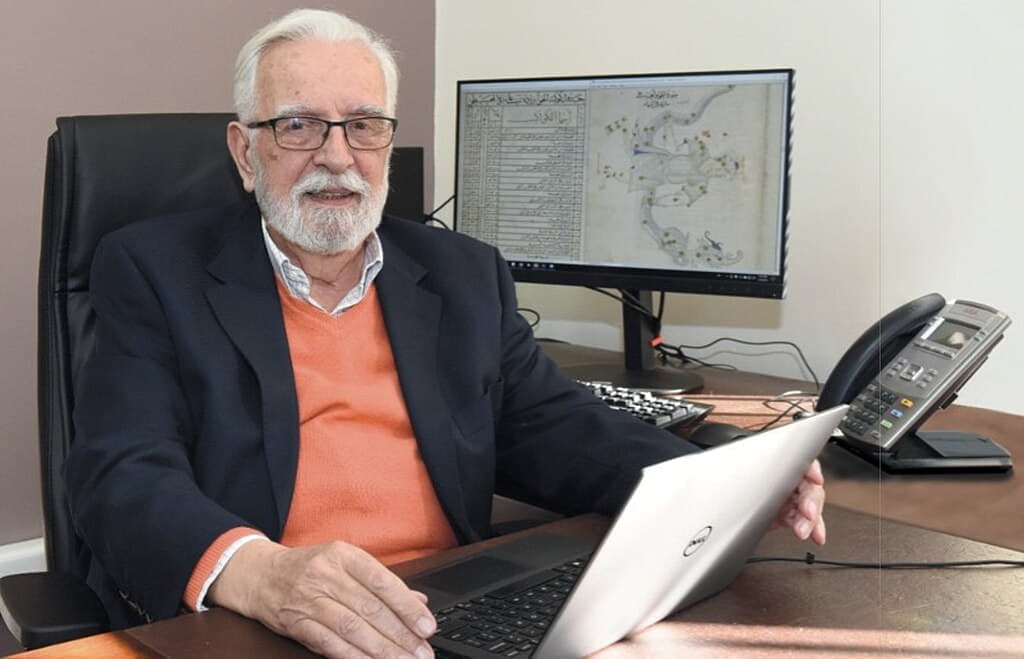
The historiography of science has long been dominated by a grand, yet deeply problematic, narrative: that the torch of intellectual progress was passed from the Greeks to the Europeans, with the Islamic world acting as a mere, if somewhat competent, custodian. In this telling, the "Golden Age of Islam" was a period of preservation and transmission, a darkroom where the negatives of Greek thought were kept safe until they could be developed into the bright picture of the European Renaissance. It is a narrative that implicitly relegates an entire civilization to a passive role and frames its scientific endeavors as derivative and ultimately stagnant. It is against this entrenched orthodoxy that the work of George Saliba, Professor of Arabic and Islamic Science at Columbia University, stands as a monumental and revolutionary corrective. Through a meticulous, philologically rigorous, and historically nuanced analysis of primary sources, Saliba has systematically dismantled this Eurocentric narrative, replacing it with a dynamic and compelling story of continuous, innovative scientific development within the Islamic world that not only preserved Greek knowledge but fundamentally reformed and transcended it, directly enabling the European Renaissance and the Scientific Revolution. By examining his seminal books—Islamic Science and the Making of the European Renaissance, A History of Arabic Astronomy, The Arts of Fire, and The Crisis of the Abbasid Caliphate—alongside a pivotal article on the astronomer al-‘Urdi, one can trace the contours of Saliba’s lifelong project: to restore Islamic science to its rightful place at the very heart of the history of global scientific thought.
The Foundational Thesis: A Continuous Scientific Tradition
Saliba’s magnum opus, Islamic Science and the Making of the European Renaissance (2007), serves as the most comprehensive and accessible synthesis of his arguments. The book’s title itself is a direct challenge to the old paradigm; it posits Islamic science not as a precursor but as a fundamental cause of the European Renaissance. Saliba’s central thesis is that the scientific tradition in the Islamic world was not a short-lived "Golden Age" followed by centuries of decline, but rather a continuous, evolving, and critically self-reflective enterprise that lasted for at least half a millennium, from the ninth to the sixteenth centuries and beyond.
He begins by attacking the very terminology of "Islamic science," preferring "Arabic science" to denote the linguistic medium of this scientific activity, which was often conducted by individuals of various faiths—Muslims, Christians, Jews—within the Islamicate civilization. More importantly, he refutes the externalist explanations for the rise of this tradition, such as the simplistic notion that it was spurred solely by the translation of Greek texts. Instead, Saliba proposes a sophisticated internalist model. He argues that the initial impetus came from the practical needs of the early Islamic empire, particularly the state-sponsored project of hisba—the moral and administrative regulation of the marketplace. This required solving complex problems in astronomy for timekeeping (mīqāt) and prayer direction (qibla), and in mathematics for inheritance law (‘ilm al-farā’id). These were not abstract, philosophical pursuits but concrete, state-sanctioned challenges that demanded scientific solutions of a high order. The Greek texts were then sought out not out of a general curiosity, but as a resource to solve these pre-existing, internally generated problems.
The most devastating blow Saliba delivers to the traditional narrative is his analysis of the so-called "decline." He argues that what is often perceived as decline is, in fact, a misreading of the historical record. The scientific revolution did not simply migrate from the Islamic world to Europe; it was actively transported through specific, traceable channels. Saliba meticulously documents how, from the thirteenth century onward, European patrons and scholars in centers like Toledo, Sicily, and Byzantium systematically sought out the most advanced Arabic scientific texts, which represented the current state of the art, not archaic relics. They translated works by astronomers like Nasir al-Din al-Tusi and Ibn al-Shatir, whose models were far more sophisticated than anything available in contemporary Europe or the ancient Greek world. The European Renaissance, therefore, was not a "rebirth" of pure Greek learning, but rather the assimilation of a millennium of scientific progress that had been achieved within the Islamic world. In this framing, Copernicus’s debt to his Islamic predecessors is not a matter of vague influence but of direct mathematical and theoretical lineage.
The Technical Core: Deconstructing Ptolemy in A History of Arabic Astronomy
If Islamic Science and the Making of the European Renaissance presents the grand narrative, then A History of Arabic Astronomy: Planetary Theories During the Golden Age of Islam (1994) provides the dense, technical backbone. This work is a testament to Saliba’s methodological rigor. He does not rely on secondary summaries or generalities; he delves deep into the mathematical intricacies of the original Arabic astronomical manuscripts to demonstrate the specific ways in which Islamic astronomers critiqued and reformed the Ptolemaic system.
The book centers on the profound internal crisis within Islamic astronomy sparked by the work of the second-century Alexandrian astronomer Claudius Ptolemy. While Ptolemy’s Almagest was a monumental achievement, it contained deep philosophical and physical contradictions that were unacceptable to the Aristotelian-minded natural philosophers of the Islamic world. Saliba masterfully outlines these problems, such as the equant point (tāʿaddul al-markaz), a mathematical device that allowed for uniform angular motion around a point that was not the center of the circle. This violated the fundamental Aristotelian principle of uniform circular motion around a central point. For Islamic astronomers, this was not merely an aesthetic objection; it pointed to a physical impossibility in the Ptolemaic model of the universe.
Saliba’s great contribution in this book is to trace the history of this critique, which he terms the "Arabic planetary hypothesis," from its early, philosophical expressions in the ninth and tenth centuries to its full mathematical resolution in the Maragha School of the thirteenth and fourteenth centuries. He details the work of astronomers like Mu’ayyad al-Din al-‘Urdi, Nasir al-Din al-Tusi, and Qutb al-Din al-Shirazi, who developed a series of innovative geometrical theorems to generate non-Ptolemaic models that preserved uniform circular motion while accounting for the observed planetary positions. The most famous of these is the "Tusi-couple," a mathematical device that allows a point on the circumference of a small circle rolling inside a larger circle to oscillate in a straight line. This mechanism was crucial for eliminating the equant and for producing the observed variations in planetary latitudes and longitudes.
By presenting this as a coherent, centuries-long research program, Saliba demonstrates that Islamic astronomy was not a slavish commentary on Ptolemy but a vibrant, critical, and progressive scientific tradition. It was a tradition driven by a fundamental desire to create a physically coherent, mathematically precise model of the cosmos—a goal that would later become the hallmark of the European Scientific Revolution.
A Case Study in Innovation: The Article on al-‘Urdi
Regis Morelon's and Saliba’s article, "The Astronomical Work of Mu’ayyad al-Din al-‘Urdi: A Thirteenth Century Reform of Ptolemaic Astronomy," can be seen as a microcosm of the arguments laid out in A History of Arabic Astronomy. Focusing on a single, pivotal figure from the Maragha observatory, Saliba provides a granular examination of how theoretical reform was actually achieved. Al-‘Urdi, an engineer and astronomer, was a key architect of the new planetary models.
The article meticulously analyzes al-‘Urdi’s major work, Kitāb al-Hay’a (The Book of Astronomy), highlighting his specific geometrical innovations. Saliba shows how al-‘Urdi developed his own "lemma" (a geometrical proposition) that functioned as an alternative to the Tusi-couple, achieving similar results in rectilinear motion. More importantly, Saliba details al-‘Urdi’s comprehensive reconstruction of Ptolemy’s models for the upper planets (Saturn, Jupiter, and Mars), the moon, and Mercury. In each case, al-‘Urdi replaced the physically problematic Ptolemaic devices with new configurations of epicycles and deferents that adhered strictly to the principle of uniform circular motion around central points.
This is not dry, antiquarian history of mathematics. Saliba consistently connects these technical innovations to their profound historical significance. He demonstrates that the planetary models developed by al-‘Urdi and his colleagues at Maragha were not intellectual curiosities that died in Persia. Through a detailed comparative analysis, he presents overwhelming evidence that these very models, with their distinctive non-Ptolemaic features, appear in the work of Copernicus nearly three centuries later. The geometrical structures, the specific arrangements of circles, and the solutions to the problems of planetary motion are, in many cases, mathematically identical. Given the unlikelihood of independent discovery, Saliba builds a powerful, albeit circumstantial, case for the transmission of these models from the Islamic East to Renaissance Europe, possibly through Byzantine or Italian intermediaries. The article on al-‘Urdi thus serves as a crucial piece of evidence, a specific and undeniable link in the chain of scientific influence that Saliba’s larger project seeks to establish.
Beyond the Celestial Sphere: Material Culture in The Arts of Fire
While Saliba is best known for his work on astronomy, his scholarship extends to other domains where the transmission of knowledge and technology is evident. The Arts of Fire: Islamic Influences on Glass and Ceramics of the Italian Renaissance (2004), co-authored with Stefano Carboni, represents a fascinating expansion of his thesis into the realm of material culture. This beautifully illustrated volume shifts the focus from abstract mathematical astronomy to the tangible, chemical, and aesthetic technologies of glassmaking and ceramics.
The book argues that just as Europe imported advanced scientific theories from the Islamicate world, it also imported crucial industrial and artistic technologies. During the late Middle Ages and the Renaissance, Islamic glass and ceramics, particularly from Syria and Egypt, were highly prized luxury goods in Europe. But it was not just the finished products that were imported; it was the knowledge of how to make them. Saliba and Carboni trace the transmission of specific techniques, such as the production of zaffera (cobalt blue pigment) for glass staining, the art of gilding and enameling on glass, and the development of lustreware on ceramics—a technique that gave pottery a brilliant, metallic sheen.
This work is significant for Saliba’s overall project for several reasons. First, it demonstrates that the flow of innovation was not confined to elite, scholarly texts but permeated all levels of culture, from the observatory to the artisan’s workshop. Second, it reinforces his model of active appropriation. Italian Renaissance artisans in centers like Venice did not simply imitate Islamic wares; they assimilated the technologies and then adapted them to create distinctively European products, such as Venetian cristallo glass. This process mirrors exactly what Saliba argues happened in astronomy: European scholars took the advanced "finished products" of Islamic planetary theory and reworked them into a new, heliocentric framework.
Finally, The Arts of Fire provides a powerful counter-argument to any lingering notions of a "clash of civilizations." The history it reveals is one of intense commercial and cultural exchange, where technological knowledge flowed freely across political and religious boundaries, enriching the material and artistic life of Europe. It shows that the Renaissance, in all its facets, was fundamentally a hybrid, global phenomenon, deeply indebted to the artistic and scientific prowess of the Islamic world.
The Socio-Political Context: The Crisis of the Abbasid Caliphate
To fully appreciate Saliba’s intellectual framework, one must also consider his earlier work, The History of al-Ṭabarī. The Crisis of the Abbasid Caliphate (1985), a translation and study of the historical chronicles of al-Ṣābiʾ and Ibn al-Athir covering the turbulent period of the Buyid dynasty in the tenth and eleventh centuries. While this book is a work of political history, not history of science, it is foundational to his later arguments.
In this volume, Saliba immerses the reader in the complex political, military, and social world of the Abbasid caliphate during a time of fragmentation and crisis. The caliphs in Baghdad had become figureheads, with real power wielded by Shi’ite Buyid amirs. This context is crucial for understanding the environment in which science was practiced. Saliba’s deep familiarity with this period allows him to reject simplistic correlations between political centralization and scientific flourishing. Science did not grind to a halt during times of political crisis; in fact, the decentralization of power often meant that patronage became more diversified. Scholars could find support from various regional courts, military commanders, and wealthy merchants, not just the caliph in Baghdad.
This historical insight underpins the argument in his later works. The scientific tradition was resilient because it was embedded in a sophisticated and networked society with multiple centers of patronage—from the Buyid courts in Baghdad and Shiraz to the Fatimids in Cairo, the Samanids in Bukhara, and later the Seljuks and the Mongols who established the Maragha observatory. By grounding his history of science in a nuanced understanding of its political and institutional context, Saliba avoids the pitfall of presenting scientific ideas as disembodied abstractions. He shows that the "Golden Age" was not a single, monolithic period of calm, but a dynamic and often chaotic process that unfolded across a vast and politically diverse landscape.
The Saliban Reformation
The scholarship of George Saliba constitutes nothing less than a reformation in the field of the history of science. Through a powerful combination of technical mastery of Arabic astronomical texts, a broad command of Islamic political and social history, and a willingness to challenge the deepest assumptions of his field, he has forced a fundamental re-evaluation of the global history of science. His work demonstrates that the scientific revolution was not a European miracle but the culmination of a long, continuous, and international process of inquiry, critique, and innovation.
The books and article reviewed here form a coherent and mutually reinforcing intellectual project. Islamic Science and the Making of the European Renaissance provides the overarching thesis; A History of Arabic Astronomy and the article on al-‘Urdi supply the technical proof; The Arts of Fire extends the argument to material culture and technology; and The Crisis of the Abbasid Caliphate provides the essential socio-political grounding. Together, they paint a picture of a civilization that was not a passive vessel but an active, critical, and relentless engine of scientific progress.
Saliba’s legacy is twofold. First, he has restored the agency and creativity to the Islamic scientific tradition, revealing it as a dynamic, self-correcting, and progressive enterprise. Second, and perhaps more importantly for a global audience, he has fundamentally rewritten the origin story of modern science. By meticulously tracing the lineage of ideas from Damascus and Maragha to Krakow and Padua, he has shown that the intellectual roots of the modern world are profoundly multicultural. The cosmos of Copernicus, Kepler, and Galileo was, in large part, a cosmos first conceived and mathematically refined by the astronomers of the Islamic world. In reorienting our understanding of the past, George Saliba has not only corrected the historical record but has also provided a more inclusive and accurate foundation for understanding the shared, collaborative nature of human scientific achievement.