Relationship of the Gospel according to Saint Luke and the Acts of the Apostles to the Synagogal Calendar
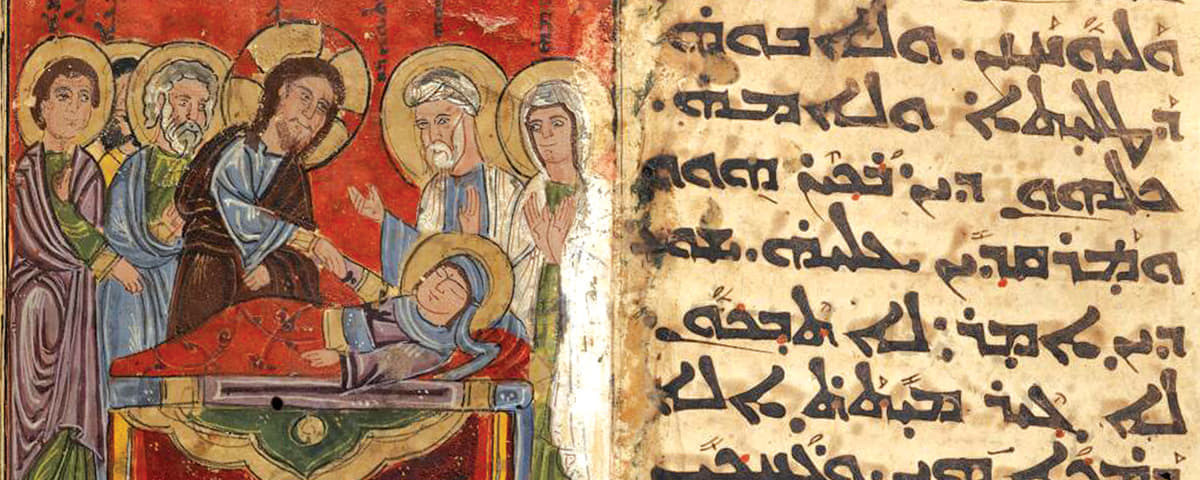
This work offers, with its commentary, a complete translation of the Gospel according to Saint Luke from the Aramaic (or Syriac) of the Pshitta. It is not only a question of taking into consideration the language that was that of the apostles, but also the oral civilization that was theirs. The two go together: knowledge of the language makes it possible to see the composition.
As in all oral civilizations, composition is done orally, in the composer's head, but at the same time in a community dimension. It is a matter of testimony. The community asks the witness of an event to tell it.
The witness knows that his account will be the only reliable record, provided it is easy to memorize. Thus, he composes his testimony with the appropriate means of rhythm, assonance, gestures, etc.
The Gospel of Luke is a “pendant,” with a necklace counter introducing threads of orality, each forming a coherent whole, linked to the pearl that introduces it. This necklace counter has eight pearls ranging from the Annunciation to the temptations of Christ in the desert (Lk 1:26 to 4:15). Thus, the Annunciation to Mary introduces a thread of orality where we find the Yes of Peter, the Yes of Levi, and the Yes of the Twelve. The Visitation introduces a thread where, before the resurrection of the son of the widow of Nain, the people exclaim: God has visited his people! While the Magnificat echoes the beatitudes and the “woes to you!” And, thus, it continues until the pearl of Jesus' temptations in the desert, which introduces the Passion of Christ, during which the invectives hurled at Jesus echo Satan tempting Jesus in the desert. As for the accounts of the Resurrection, they form the “final seal.”
The Jewish liturgical year begins in autumn with Genesis.
In the synagogue, there are two types of readings:
• The Parasha is a reading from the Torah, the Pentateuch: Genesis, Exodus, Leviticus, Numbers, Deuteronomy.
• The Haftara is a reading from the Prophets, Joshua and other writings.
It is not realistic to propose a fixed correspondence between a gospel and the annual calendar of synagogue readings because the latter changes from one year to the next because of the variable lengths of the months and especially the number of months (12 or 13): the number of shabbats in a year varies from 48 to 54.
It is therefore appropriate to show an overall link between a thread of orality and one of the books of the Pentateuch.
The Gospels of Matthew and Luke are liturgical lectionaries that end at Easter and resume after Easter; they are linked to the synagogue reading, which begins in autumn with the book of Genesis.
Thus, the beginning of the Gospels is linked to the book of Leviticus, and the end of the gospels echoes the book of Exodus.
The same is true of the book of the Acts of the Apostles, which does not extend the lectionary of the Gospel of Luke (for example, for the summer months, as was imagined) but as an accompaniment throughout the liturgical year (a kind of 2nd reading).
Leviticus and the First Two Strands of Oral Tradition
The first strand of oral tradition (Luke 1:26-38 and Luke 4:16 to 6:16) is carried by the story of the Annunciation.
The child that Mary will conceive “will be holy [qaddīša]” (Lk 1:35); God is holy [qaddīša],
also says the book of Leviticus (Lv 19:2).
Later, by recognizing himself as a “sinner” and asking Jesus to distance himself (Lk 5:8), Simon Peter has a reflex typical of Leviticus where divine holiness cannot be approached in just any old way (Lv 16:2-3).
Then, it is much better to heal a leper (Lk 5:13) than to isolate him and ”expel any leper from the camp” (Lv 13:45-46).
In Lk 5:17-26, the forgiveness of sins fulfills the purpose of the Yom Kippur ritual (Lv 16), the centerpiece of Leviticus.
In Lk 5:27-32, the very name of the one called, Levi, evokes Leviticus, whereas the evangelist
could have called him Matthew.
Other remarks can be made on the second strand of orality (Lk 1:39-80 and Lk 6:17 to 8:56).
Numbers and the Third Strand of Orality
The book of Numbers recounts the march of the Hebrews with YHWH present in the tent in the middle of the encampment of Israel. After the census of the twelve tribes, the book of Numbers explains their organization and the duties of the Levites (Numbers 2–4). Echoing such a synagogal reading, the third oral strand (Lk 2:1-21 and Lk 9:1-62) begins by showing the twelve Apostles setting out, and the task incumbent upon them (Lk 9:1-6).
To a man who wants to follow Him, Jesus tells him “not to look back” (Lk 9:62). This is a temptation that is well illustrated in the book of Numbers, when Israel in the desert murmured: “Ah! What memories! The fish we ate for nothing in Egypt, the cucumbers, the melons” (Nb 11:5), which triggered divine anger (Nb 11:10).
To another, Jesus said: “Follow me!… Let the dead bury their dead” (Lk 9:59-60). The synagogal reading of Numbers allows us to understand this abrupt word as the call of a Nazirite, of whom it is said: “During the entire time of his consecration to the Lord, he shall not approach a dead person; nor for his father, nor for his mother, nor for his brother, nor for his sister shall he make himself unclean if they die, for he bears on his head the consecration of his God” (Numbers 6:6-7); after a special time of consecration with Jesus, this disciple will go to honor his deceased.
Deuteronomy and the Fourth Oral Strand
The fourth strand of orality (Lk 2:1-21 and Lk 9:1-62) begins with the calling of the 70 (or 72), who are a multiplier of the mission (12x6 = 72), and this whole strand is punctuated by the growth of the crowd (Lk 11:29; Lk 12:1). The beginning of Deuteronomy resonates: “The Lord your God has multiplied you” (Dt 1:10) and the end: “The Lord brought you out of Egypt… so that you might multiply more than your fathers” (Dt 30:5).
The call to happiness is another recurring theme in Deuteronomy. And when Jesus tells his disciples to “rejoice rather that your names are written in heaven” (Luke 10:20), the promise of Deuteronomy resonates: “you will take possession of this happy land” (Deut. 4:22), the happy land having become “heaven.”
Jesus corrects Martha, who is worried and agitated “about many things” (Lk 10:41). She must be unified within herself: “Hear, O Israel: The Lord [YHWH] our God, the Lord [YHWH], is one [ḥd]” (Deut 6:4).
Jesus taught us to pray by calling God “Our Father” (Lk 11:1), a title found in Deuteronomy (Dt 8:5; Dt 32:6).
The exorcism of a deaf-mute is followed by seven comments from Jesus (Lk 11:14-36); Deuteronomy, for its part, spoke of visible enemies, who “by seven ways shall flee before you” (Dt 28:7).
Genesis and the Fifth and Sixth Stands of Oral Tradition
Jesus' severity: “If you do not repent… you will perish” (Luke 13:3, 4) can be understood in the biblical context of Genesis, where death is the consequence of sin (Genesis 2:17). Jesus heals on the Sabbath (Luke 13:10-21), that is to say, according to the book of Genesis, the day on which God completed his creation (Genesis 2:1).
By acting on the Sabbath, Jesus placed himself among the divine prerogatives: “By the seventh day God had finished the work he had been doing; so on the seventh day he rested from all the work he had done” (Genesis 2:2). And they “were ashamed, all who rose against him” (Lk 13:17), ashamed like Adam and Eve after listening to Satan (Genesis 2:25). The Serpent of the origins generated accusation (Genesis 3, 12-13) and was called the Accuser. Jesus freed the bent woman from the hold of this “Accuser [ᵓāḵelqarṣā]” (Luke 13, 16). The background to the synagogal reading of Genesis is eloquent. The Creator had ordered to “cultivate [plḥ]” the garden (Gen 2:15); the “cultivators [root plḥ] of imposture” are excluded (Lk 13:27). “Abraham, Isaac and Jacob”, to whom God had promised a land (Genesis 50:24), are now in the kingdom (Luke 13:28).
Now the kingdom is hard won: the seed of Abraham will “conquer” the gate of his enemies (Genesis 22:17), and during Rebecca's blessing, it is said: “May your descendants conquer the gate of their enemies!” (Genesis 24:60). Jacob knew of “a house of God and the gate of heaven!” (Genesis 28:17) and he fought with someone before crossing the ford to enter the promised land (Genesis 32:25). As for Jesus, he declared: “Strive to enter through the narrow gate!” (Luke 13:22).
Other Passages are Enlightening
In Jesus' reply to Herod, the expression “on the third day I will be martyred!” (Lk 13:32) is echoed in Genesis in Joseph interpreting the dream of the chief cupbearer: “In three days Pharaoh will lift up your head and restore you to your office” (Gen 40:13) then the dream of the chief baker: “In three days Pharaoh will lift up your head and hang you on a gallows, and the birds will eat your flesh from above” (Gen 40:19). The timing of Jesus' martyrdom will have the opposite meaning for his disciples and for his adversaries.
In Genesis, we see Abram counting his followers before going to war (Gen 14:13-16). But above all, says Jesus, “let him lay aside all his possessions”, that is to say his false securities, for example that of family ties (Lk 14:26) as Abraham had done (Gn 12:1), otherwise our works are only human works. Taking the example of a tower to be built (Lk 14:28-29), Jesus explains that it is therefore necessary to think carefully, otherwise it will not be completed, which is reminiscent, in Genesis, of the Tower of Babel, which remained unfinished.
In the parable of the lost coin (Lk 15:8-10), the total number is “ten”: it recalls, in Genesis, the number of righteous people in the city for whom the Lord would not have destroyed Sodom (Gn 18:32); hence the care taken to search for the missing element! Other echoes can be found in the 6th oral tradition (Lk 3:1-20 and Lk 16:16 to 18:30).
Exodus and the Seventh Oral Strand
In the seventh oral strand (Luke 4:1-15 and Luke 22:1 to 23:56), the crowd cheering Jesus on Palm Sunday (Luke 19:28-38) is comparable to the people of the Exodus who ”believed and rejoiced that God had visited the Israelites and seen their misery” (Ex 4:31). On the other hand, Jesus wept over Jerusalem: “you did not recognize the time of your visitation!” (Lk 19:44).
Jesus' gesture of driving out the sellers before teaching must have been of modest proportions because neither the Temple police nor the Roman squad raised an eyebrow (Luke 19:45-46). Quite simply, Jesus loved the Temple as a sacred, very sacred place. The Temple is in fact the great work described in the book of Exodus, echoing the creation of the world: “Thus were finished all the work of the tabernacle, and of the tent of the congregation” (Ex 39:32, cf. Gen 2:1).
In the parable of the homicidal tenants, the tenants “put out” the servants and the master's son (Lk 20:12, 15); the verb “to put out [npaq]” is the root of the word “Exodus [mapqānā]”: these bad tenants carry out a counter-Exodus.
The great shocks [root zwᶜ] of the end of time (Lk 21:11) recall various passages from Exodus: after the crossing of the sea, Moses says that the people hear and “tremble [root zwᶜ]” (Ex 15:14), at Sinai, the fear of God makes the people tremble [root zwᶜ] (Ex 19:16) and the divine revelation makes the mountain tremble [root zwᶜ] (Ex 19:18). Jesus also speaks of “deadly plagues [mawtāne]” (Lk 21:11), a term that is used for the 5th plague of Egypt (Ex 9:3 - cattle plague), the 8th plague (Ex 10:17, locusts) and the 10th plague (Ex 12:13, death of newborns), these deadly plagues [mawtāne] prompted Pharaoh to let the Hebrews leave.
Much more important than the Greek pun, “plague and famine [λοιμοι και λιμο]”, the allusions to the book of Exodus make it clear that difficult events play a role equivalent to the plagues of Egypt: to escape the oppression of Evil.
Jesus says that there will be signs in the sun, moon and stars (Lk 21:25), and the word sign [āṯā] is a refrain in the book of Exodus.
We will see “the shaking [root zwᶜ] which will make people come out [mappeq same root as the word Exodus] because of the fear of what is to come upon the earth” (Lk 21:26). The verse does not say that people will die of fright but that they will come out; it does not say where; fear will act as a stimulus to get out of corruption.
But the terror [tawhṯā] will be such that people will be too stunned to know what to do: there will be “trembling of the hands” (21:26). Then we will see the Son of Man coming on “the clouds”, with power and “great glory” (Lk 21:27).
“When these things begin to take place, stand up and raise your heads because your deliverance [pūrqānā] is near at hand!” (Lk 21:28). The word deliverance [pūrqānā] is a key word in the book of Exodus (Ex 14:13; 21:30; 30:12), where we also find the word redeemer [pārūqā] (Ex 15:2) and very often the verb to deliver [praq].
The disciples of Jesus did not await the End of the world, nor judgment, nor individual death; they awaited the coming of the Son of Man, which would be a deliverance, a redemption that is obviously not the individual salvation for which death is sufficient, but which is the salvation of the world, its liberation from the grip of evil.
The Acts of the Apostles and the Synagogue Calendar
The book of the Acts of the Apostles is also structured like a pendant, with a counting necklace (where Peter is of great importance) that introduces five threads of oral tradition.
The book of the Acts of the Apostles does not extend the lectionary of the Gospel of Luke (for example for the summer months as was imagined) but accompanies it throughout the liturgical year as a kind of second reading.
In connection with Leviticus, the first thread (Acts 6:1 to 8:40 introduced by Acts 1:12 - 2:13) The book of Leviticus mentions the “Tent of Meeting” 44 times (Lev 1:1, 3, 5, etc.). Stephen's speech culminates in the reminder of the “tent of testimony” (Acts 7:44) questioned by the prophet Nathan: “What house will you build for me, says the LORD, and where will my resting place be? Has not my hand made all these things?” (Acts 7:49-50).
The sin of Simon the sorcerer (Acts 8:9-25) can be summarized as an attempt to capture the Holy Spirit, which the counter necklace presented to us as a flame, a Pentecostal fire. This sin can thus be compared to that of Aaron's sons, Nadab and Abihu: “They each took their censer and offered before YHWH an irregular fire that he had not prescribed. Then a flame leapt out from before YHWH and devoured them, and they perished in the presence of YHWH” (Lev 10:1-2).
In connection with the book of Numbers (Acts 9:1 to 12:24 introduced by Acts 2:14-47) The death of Herod is very peculiar. The people of Tyre and Sidon listened to him, saying, “This is a god who speaks!” But Herod did not correct them. “At that very moment, the Angel of the
Lord struck him down, because he had not given glory to God; and he was eaten by worms and died” (Acts 12:23).
His death reproduced that of Korah, who wanted to impose himself as a priest and lead the community in his revolt: the “glory” of the Lord appeared to the whole community and brought Korah and his followers down alive to Sheol (Num 16:19-33). Eloquent confirmation of the synagogal reading of the Acts of the Apostles echoing the book of Numbers.
In connection with the book of Deuteronomy (Acts 12:25 to 14:28 introduced by Acts 3:1 to 4:22)
- In his speech, Peter presents Jesus as the prophet foretold by Moses (Dt 18:18).
- In his speech, Paul makes two references to Deuteronomy (Acts 13:18 // Dt 32:10 and Acts 13:19 // Dt 7:1-2).
Later, when Paul and Barnabas turn away the crowd who want to offer them sacrifices as if to gods (Acts 14, 11-18), they respond to the injunction of Deuteronomy against idolatry (Dt 4, 9-24).
In connection with the book of Genesis (Acts 15:1 to 19:20 introduced by Acts 4:23 to 5:16) - Ananias and Sapphira tell a lie for money (Acts 5:2, 8) analogous to the original sin, we find the figure of Satan, a couple, the lie to God, the final expulsion and death (Gen 3).
- The words that the Lord addresses to Paul “in a vision”: “Do not be afraid. … I have many people in this city” (Acts 18:9-10) are reminiscent of those that the Lord addressed “to Abram in a vision: 'Do not be afraid, Abram!... 'Look up at the sky and count the stars if you can count them' and he said to him: 'So shall your descendants be'. Abram believed in YHWH, and it was counted to him as righteousness” (Genesis 15:1-6).
In connection with the book of Exodus (Ac 19, 21 to 28, 30 introduced by Ac 5, 33-42 ) By specifying that Paul left Philip “by sea after the days of unleavened bread” (Ac 20, 6), the narrator could make the night of Passover resonate, when the Hebrews consumed the lamb
with the unleavened bread (Ex 12:8), before crossing the sea (Ex 15).
Paul journeys, guided by the Holy Spirit, from stage to stage, in a similar way to the Hebrew people of whom it is said, at the end of the book of Exodus: “At every stage of their journey, when the cloud rose above the Dwelling, the Israelites would set out” (Ex 40:36). And it is highly significant that the book of Acts ends with this vision, because the Exodus will only end when humanity, having finally fulfilled the creative plan, is carried away into heavenly glory.
Conclusion
Establishing the relationship with the synagogal calendar has a twofold advantage:
1) Without getting distracted, we can find the keys to interpretation more accurately. We have seen the example of the disciple considered a nazir, or the example of the ten drachmas in connection with the ten righteous.
2) The Church generally teaches that Christians should not read the Old Testament without the New, but thanks to this study, we are guided.
Featured: Pshitta, Luke 8: Jesus raises the daughter of Jairus (13th century).