How Iran Will Win
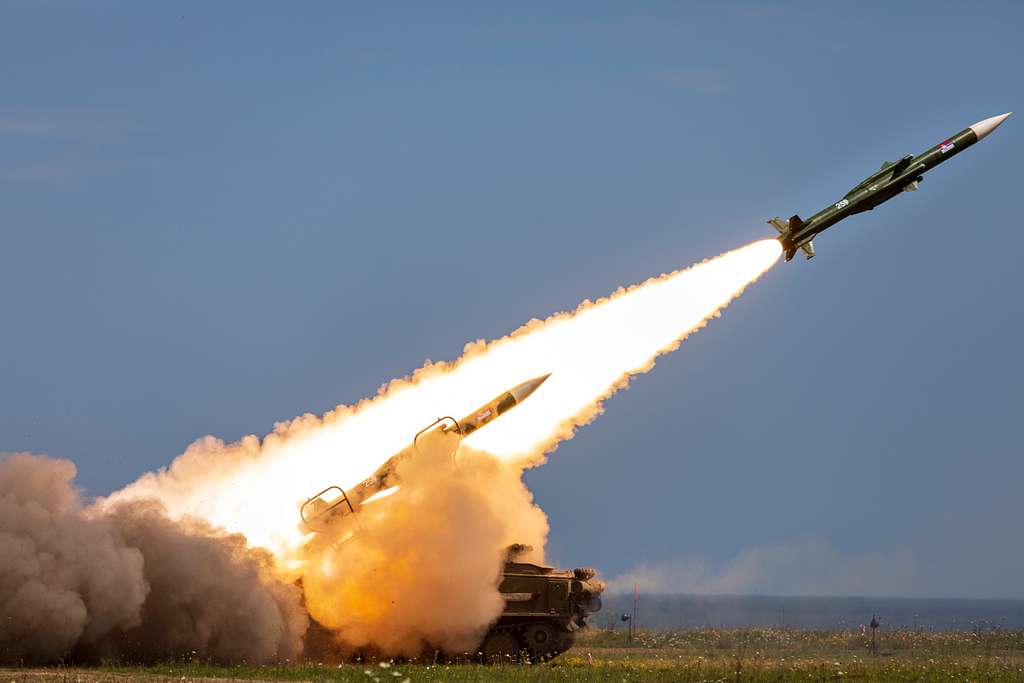
The geopolitics of thirst and hunger. Understanding Iran's asymmetric warfare doctrine through infrastructure targeting.
Introduction
In the complex landscape of Middle Eastern geopolitics, Iran has developed a military strategy that transforms regional geography and infrastructure vulnerabilities into weapons of mass disruption. This strategy—targeting desalination plants across the Gulf states, Saudi Arabia, and Israel while simultaneously threatening to block the Strait of Hormuz—represents a sophisticated application of asymmetric warfare designed to defeat America and its allies without winning a single conventional battle. By exploiting the fundamental environmental reality that the Arabian Peninsula and Israel are water-scarce regions utterly dependent on energy-intensive desalination, Iran has identified the Achilles' heel of its adversaries. This essay examines the strategic logic, operational mechanisms, and likely execution of this approach, arguing that it represents a coherent doctrine of "hydraulic warfare" that could achieve strategic objectives through economic coercion and infrastructure paralysis rather than military victory.
The Strategic Logic: Asymmetric Warfare and Geographic Leverage
Iran's military doctrine has undergone a significant evolution, particularly following the June 2025 war with Israel and the subsequent escalation of tensions with the United States. Defence analysts characterize this shift as moving from a primarily defensive posture to an aggressive asymmetric approach designed to ensure the Islamic Republic's survival through what is termed "asymmetric endurance." This doctrine accepts initial damage while maintaining second-strike capability through dispersed command structures, hardened missile infrastructure, and the strategic employment of proxies and economic warfare.
The Strait of Hormuz represents the geographic linchpin of this strategy. Through this narrow 21-mile chokepoint passes approximately one-fifth of the world's oil consumption—roughly 20 million barrels daily—along with a similar proportion of global liquefied natural gas trade . Iranian military planners have spent years transforming this waterway from a simple shipping lane into what analyst Juan Cole describes as "the world's most expensive dare"—an economic booby trap engineered to make the cost of confrontation appear greater than the cost of concession . This is not a strategy designed to defeat the United States Navy in battle, but rather to make the exercise of American power prohibitively expensive.
The architectural components of this threat are formidable. From the disputed islands of Abu Musa and the Tunbs, Iran has positioned drone swarms capable of reaching targets within minutes, a fleet of more than twenty mini-submarines, and an estimated stockpile of 6,000 naval mines . Chinese surveillance vessels operating nearby provide real-time targeting data, closing the intelligence gap that American forces have historically enjoyed. None of these assets could win a conventional naval engagement, but all are designed to make commercial shipping through the Strait unthinkably dangerous during a crisis.
The Water Vulnerability: Desalination as Strategic Achilles' Heel
The genius of Iran's strategy lies in its targeting of desalination infrastructure—a vulnerability so profound that its destruction would render entire countries unlivable. The Gulf states and Saudi Arabia have invested massively in desalination to overcome their natural water scarcity, creating a dependence that Iran can exploit. Kuwait operates eight desalination plants providing 93% of its drinking water for 5 million people. Qatar has built 109 plants supplying 48% of water for its 3 million residents. The United Arab Emirates operates 70 plants providing 42% of water for 11 million people. Saudi Arabia, the world's largest producer of desalinated water, maintains 30 "super plants" that provide more than half the drinking water for its 34 million citizens .
Pierre Razoux, director of studies at the Mediterranean Foundation for Strategic Studies, captures the strategic significance succinctly: "Without this infrastructure, these hot desert countries risk becoming unlivable." In a region where summer temperatures regularly exceed 45 degrees Celsius, the destruction of desalination capacity would create a humanitarian crisis within days, not weeks. Populations would face impossible choices between dehydration and evacuation, governments would confront collapse, and the economic infrastructure supporting global energy markets would grind to a halt.
Iran's understanding of this vulnerability is sophisticated. A June 2025 analysis in Chinese media noted that Israeli desalination centers represent a similarly critical target, observing that "Israel is a severely water-scarce country" where desalination technology serves as the "lifeline" supporting most domestic water demand . The destruction of these facilities would create conditions in which "the domestic situation will inevitably descend into chaos," potentially achieving strategic objectives without the international condemnation that might follow strikes on civilian populations directly .
The Operational Mechanism: Multi-Layered Pressure
Iran's likely strategy combines three interconnected operational components designed to create compounding pressure on adversaries. The first involves direct missile and drone strikes on desalination facilities themselves. The Islamic Revolutionary Guard Corps has demonstrated its capacity to reach targets across the region, having fired missiles at the Al Udeid US military base in Qatar during the June 2025 conflict . The same intermediate-range ballistic missiles capable of striking American bases can target the coastal desalination plants that line the Gulf shoreline.
The second component involves cyber attacks against the control systems governing desalination and water distribution networks. Iranian cyber forces have already demonstrated this capability, with Iranian Islamic scholar Rahim Mahdavipour publicly claiming in November 2025 that Iran had carried out two cyber attacks against Israeli targets—the first targeting desalination plants and the second disabling power plants . Cyber attacks offer the advantage of deniability and can create cascading failures that compound physical damage. Disabling the power grids serving desalination facilities can be as effective as destroying the plants themselves, and potentially easier to execute.
The third and most consequential component involves the physical blockade or severe disruption of the Strait of Hormuz. Even a partial or temporary closure would send oil prices surging from roughly $64 to between $120 and $130 per barrel by most credible estimates . Global strategic reserves could buffer the shock for perhaps two months, but alternative pipelines through Saudi Arabia and the United Arab Emirates can divert only about eight million barrels daily—less than half the volume that transits the Strait . The economic impact would cascade through global markets, creating precisely the kind of pressure Iran seeks to apply.
The Economic Warfare Dimension: Starvation Through Disruption
Beyond the immediate water crisis, Iran's strategy encompasses the disruption of food supplies to the region. The Middle East depends heavily on food imports, much of which passes through the Strait of Hormuz. During the June 2015 US military operation against Iran, entire shipments of rice destined for the region were blocked in India when shipping companies suspended operations . The current conflict has already triggered similar disruptions, with major shipping companies including Denmark's Maersk and France's CMA CGM suspending transits through both the Strait of Hormuz and the Suez Canal, forcing vessels to circumnavigate Africa—a detour of several thousand kilometers .
The insurance implications compound the disruption. Insurers have significantly increased rates for ships transiting the Middle East, making navigation prohibitively expensive for many cargo vessels . Emirati analyst Hussein Al-Amzi notes that disruptions would raise marine insurance premiums and shipping costs while delaying the arrival of grains, oils, frozen meats, and dairy products . The experience of the 1990-1991 Kuwait crisis demonstrated how quickly transport route disruptions translate into local market shortages and price spikes.
Fertilizer shipments face particular risk, with approximately 33% of global sulfur and ammonia transiting the Strait of Hormuz . Loaded onto cargo ships in Qatar, Saudi Arabia, and the United Arab Emirates, these fertilizers supply agricultural markets from India and China to Brazil and Africa. Disruption of fertilizer shipments would create secondary agricultural impacts far beyond the immediate region, compounding global food insecurity and price pressures. As Kpler analysts note, "There are no viable alternatives" to Gulf shipping, as "land routes are limited by pipeline and trucking capacity."
The Israeli Dimension: Hydraulic Vulnerability in the Levant
Israel's inclusion in this targeting strategy reflects both its acute water vulnerability and the broader regional logic of Iran's approach. Israel has addressed its natural water scarcity through world-leading desalination technology, with five major plants providing approximately 80% of the nation's drinking water . This concentration of critical infrastructure creates a target set that, if destroyed or disabled, would bring the country to its knees without requiring the penetration of its formidable air defense systems.
Analyses of Iranian targeting calculations note that Israeli desalination centers represent "troublesome targets" that Tehran approaches with caution precisely because of their strategic importance . The destruction of these facilities would trigger international condemnation and Israeli retaliation of devastating proportions, yet this very sensitivity makes them valuable as deterrent threats and escalation options. Iran's cyber attacks against Israeli desalination and power infrastructure in 2025 suggest a pattern of probing and preparation that could precede more destructive actions during a full-scale conflict.
The integration of Israeli targeting with Gulf operations reflects Iran's understanding of its adversaries as an interconnected system. Striking Israeli desalination simultaneously with Gulf facilities would create multiple simultaneous crises, overloading the response capacity of both regional states and their American protectors. It would also demonstrate that no US ally in the region enjoys immunity from Iran's hydraulic warfare capabilities.
The Paradox of Gulf Response: Fear of Strike and Fear of Collapse
The sophistication of Iran's strategy is evidenced by the paradoxical response it has elicited from Gulf states. These countries should, in theory, welcome American action against their Iranian adversary—a regime that has "turned interference in its neighbors' affairs into a method of governance" and "openly threatens the regional order." Yet precisely as Washington weighs military options, "unusual warnings are being heard from Riyadh, Doha and Muscat." Qatar joined Saudi Arabia and Oman in urging the Trump administration to postpone strikes on Iran .
This paradox reflects the success of Iran's deterrent strategy. Gulf states understand that "even a 'limited' Iranian response could be devastating" to their concentrated coastal infrastructure . They also harbor a "no less profound concern: the collapse of the Iranian regime," which could "ignite broad instability: internal succession struggles, the disintegration of governing institutions, the rise of even more extreme actors, potential refugee flows and, above all, the loss of a clear address for managing crises."
Dr. Yoel Guzansky of Tel Aviv University's Institute for National Security Studies captures the strategic calculation: "The Gulf states yearn for a change in Iranian behavior. They fear a strong, revolutionary Iran, but also a disintegrating one. In the final analysis, they prefer a weakened, restrained but functioning Iran to an injured, enraged and unpredictable Iran." This preference creates exactly the deterrent effect Iran seeks—adversaries who oppose its actions but fear the consequences of confronting it more than they fear the regime itself.
The Global Dimension: China's Role and the Iron Triangle
Iran's strategy benefits from the convergence of interests among what some analysts term the "Iron Triangle" of Iran, Russia, and China . This is not a formal alliance but a "convergence of interests designed to reshape the terms on which American power operates in the region." China's role is particularly significant, given that approximately 84% of the oil and LNG moving through the Strait of Hormuz is bound for Asian markets, with China alone depending on the passage for roughly a quarter of its total energy supply .
The presence of Chinese destroyers patrolling alongside Iranian forces reflects not revolutionary solidarity but "an act of national interest—a move to protect supply lines Beijing cannot afford to lose, while simultaneously raising the diplomatic and military costs for Washington of any military action." China's stake in Gulf stability creates implicit constraints on US escalation options, as American military action risks disrupting energy supplies vital to the Chinese economy. This interdependence gives Iran additional protection, as Washington must calculate not only the direct consequences of its actions but also the secondary effects on US-China relations and global economic stability.
The Limits of American Power: Military Superiority Versus Strategic Vulnerability
The United States retains overwhelming military superiority in the Gulf region. American forces "retain the capacity to destroy Iranian naval assets, neutralize drone swarms, clear mine fields, and keep the Strait open by force." Yet this military capability does not translate into strategic invulnerability. As one former senior Pentagon official observed privately, "A naval fleet is a weapon of offense—not a hedge against global market volatility."
The deeper challenge Iran has constructed is conceptual rather than military. Tehran has forced Washington into a strategic trap where the question is not whether the United States can strike Iran, but "whether striking Iran would leave the United States and the world economy worse off than the alternative: a negotiated arrangement, however imperfect and however unsatisfying, that constrains Iranian ambitions while preserving the flow of oil that keeps global markets functioning."
This trap draws on historical precedents that Iranian strategists have studied carefully. In 1956, Britain and France discovered at Suez that military capability and geopolitical leverage are distinct—that an army can win every engagement and still lose the war that matters. In 1973, OPEC demonstrated that oil could accomplish what no tank division could, bringing Western economies to their knees without firing shots across recognized borders . Iran has synthesized these lessons into a doctrine wagering that "the spectre of inflation, energy disruption, and market instability will concentrate American minds more effectively than any ballistic missile.".
Conclusion: The Strategy of Thirst as Coercive Diplomacy
Iran's strategy of targeting desalination plants and blocking the Strait of Hormuz represents a sophisticated application of asymmetric warfare designed to achieve through economic pressure what cannot be achieved through military confrontation. By exploiting the fundamental environmental vulnerability of Gulf states and Israel—their absolute dependence on desalinated water—Iran has identified pressure points where limited military action can produce catastrophic effects. The blockade or disruption of the Strait of Hormuz adds an economic dimension that extends far beyond the region, threatening global energy markets and the economies of major powers including China.
This strategy reflects a clear-eyed assessment of the balance of forces. Iran cannot defeat the United States militarily, nor can it protect its own territory from American air power. But it can make the costs of American victory so prohibitive that Washington chooses negotiation over confrontation. The paradox of Gulf state opposition to US strikes demonstrates the strategy's effectiveness—America's own allies prefer accommodation with Iran to the dangers of conflict.
The historical echoes are neither subtle nor accidental. Like the OPEC embargo of 1973, Iran's strategy weaponizes resource dependence to achieve political objectives. Like the Suez crisis of 1956, it demonstrates that military superiority does not guarantee strategic victory. And like countless asymmetric conflicts throughout history, it shows that the weak can defeat the strong not by matching their capabilities but by exploiting their vulnerabilities.
In the end, the Strait of Hormuz strategy represents a form of coercive diplomacy that achieves its effects through the credible threat of unacceptable damage rather than through the actual infliction of that damage. The desalination plants remain standing, the oil continues to flow, and the water continues to sustain life in the desert—but all exist at Iran's sufferance, a fact that fundamentally reshapes the strategic calculations of every nation in the region. Whether Washington can think its way out of this trap, or whether it will reach for the military tools it knows best, may determine not only the future of the Gulf but the character of twenty-first-century warfare itself.