How the IDF Militarized American Policing
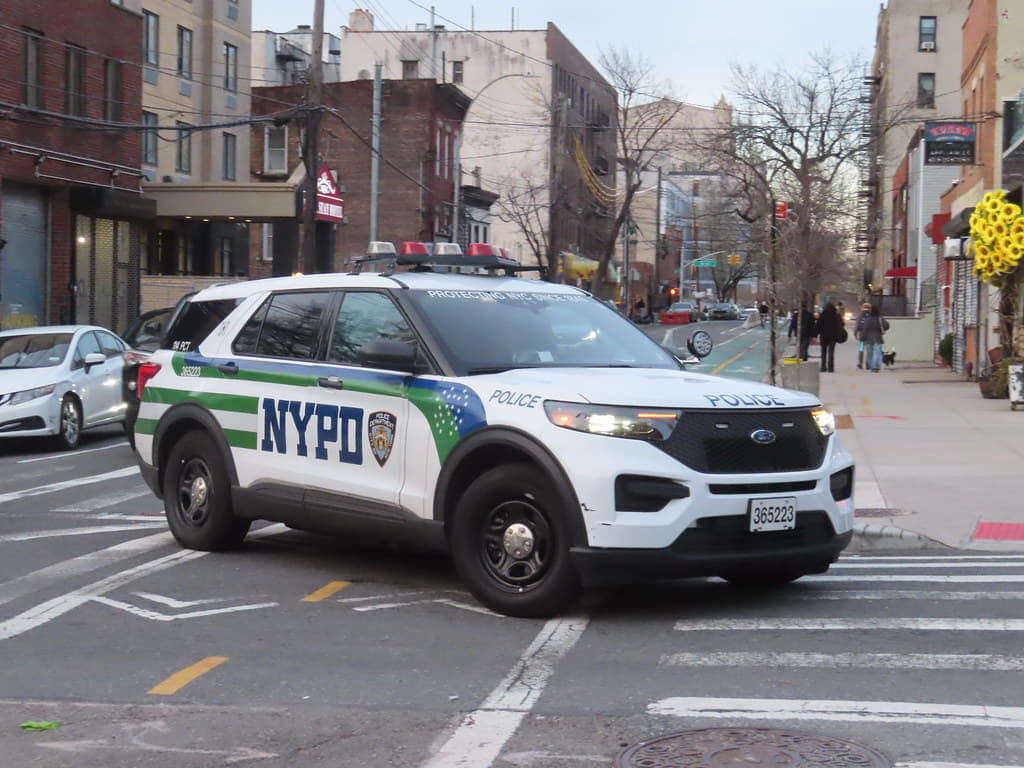
The transnational training relationship between the Israeli Defense Forces (IDF) and American police departments, particularly the New York Police Department (NYPD), represents a profound and deeply troubling convergence of state violence. This partnership is not a simple exchange of "best practices" in public safety, but rather the systematic export of militarized policing techniques and a security ethos developed in a context long criticized as settler-colonial, apartheid-like, and genocidal in its oppression of Palestinians. The specific tactics, technologies, and, most insidiously, the underlying ideologies perfected by the IDF in the occupied Palestinian territories have been deliberately imported, adapted, and normalized within American policing. Through detailed case studies of the NYPD’s surveillance apparatus, its adoption of "broken windows" and stop-and-frisk, and its militarized crowd control, this analysis will demonstrate how this exchange has directly shaped a domestic policing culture that systematically targets and represses marginalized communities in the United States, particularly Black, Latino, and Muslim populations. This relationship, sustained by a powerful network of political and financial interests, effectively transplants the logic of military occupation onto American streets, eroding civil liberties, suppressing dissent, and perpetuating cycles of racialized violence.
The Foundations of a Dangerous Liaison: Context and Ideology
The strategic alliance between the U.S. and Israel, long a cornerstone of American foreign policy, provided the fertile ground from which this law enforcement partnership grew. Following the 1967 war, Israel began to be framed in U.S. policy circles not only as a democratic ally but as a "laboratory" for counterinsurgency and counter-terrorism tactics. The September 11, 2001 attacks acted as a potent catalyst, unleashing a wave of Islamophobic sentiment and creating a perceived urgency for a new, pre-emptive, and intelligence-driven domestic security paradigm. Israel, with its decades of experience in managing a restive Palestinian population under the rubric of "counter-terrorism," was positioned as the world’s foremost expert.
The training exchanges began in earnest in the early 2000s, facilitated and funded by organizations like the American Jewish Committee’s Project Interchange and, crucially, the Anti-Defamation League (ADL). These programs, often billed as "counter-terrorism seminars," brought thousands of senior U.S. law enforcement officials—including chiefs, sheriffs, and FBI agents—to Israel for training with the IDF, the Israel National Police, and Shin Bet (the Israeli internal security service). Simultaneously, high-ranking Israeli officials were embedded with American agencies like the NYPD and the FBI. This created a dense network of personal and professional relationships that facilitated the uninterrupted flow of tactical knowledge.
The ideological core of this exchange is what critical security scholars refer to as the "enemy-centric" or "population-centric" counterinsurgency model. In the Israeli context, this manifests as a doctrine where the entire Palestinian civilian population in the occupied territories is viewed as a potential threat, a "sea" in which militants "swim." This justifies pervasive surveillance, collective punishment, pre-emptive strikes, and the use of overwhelming force to control and demoralize the population. The transfer of this ideology to the American context required a simple, yet devastating, substitution: the "Palestinian" was replaced by the "Muslim," the "Black radical," or the "immigrant." Communities of color in the U.S. were thus re-imagined as internal frontiers, hostile populations to be managed, controlled, and pacified through tactics of occupation.
Case Study I: The NYPD’s “Demographics Unit” and the Architecture of Racialized Surveillance
The most explicit and damning example of this ideological and tactical transfer is the NYPD’s now-infamous Demographics Unit, later rebranded as the Zone Assessment Unit. Established in the early 2000s, its creation followed a decade of intensive, high-level exchanges between the NYPD and Israeli security forces. The unit’s chief architect was Deputy Commissioner of Intelligence David Cohen, a former CIA officer, and its operations were heavily influenced by the department's close relationship with Israel.
The unit’s mandate was straight out of the IDF’s playbook in the West Bank: to conduct pervasive surveillance of "ethnic communities" based on their perceived religious and national identity. As detailed in the Pulitzer Prize-winning Associated Press investigation, the Demographics Unit mapped entire Muslim communities in New York and beyond, including New Jersey and Connecticut. It placed undercover officers and informants in mosques, student associations, cafes, and bookstores. It monitored imams, recorded license plates at prayer services, and catalogued businesses—not because of any evidence of criminal activity, but simply because they were Muslim. Everyday, constitutionally protected behaviors—changing one's hairstyle, quitting smoking, talking about politics—were logged as "potential indicators of terrorism," a direct import of the profiling techniques used by Israeli forces against Palestinians.
This approach mirrors the Israeli military’s system of racialized surveillance and collective punishment in Hebron or Gaza, where an entire population is deemed suspect and subjected to constant monitoring, checkpoints, and restrictions on movement. The NYPD unit operated on the same logic, treating American Muslim communities not as citizens with rights, but as a fifth column to be infiltrated and controlled. The unit’s own reports, obtained by the AP, contained no leads to terrorist activity, proving its profound ineffectiveness as a counter-terror tool. Its true purpose was one of intimidation and social control, creating a climate of fear and distrust that alienated the very communities whose cooperation is essential for genuine public safety.
The unit was eventually disbanded in 2014 following public outcry and lawsuits from civil rights organizations, including the ACLU and the CLEAR project at CUNY School of Law, which resulted in landmark settlements imposing restrictions on the NYPD's intelligence-gathering activities. However, the damage was done. The Demographics Unit stands as a stark monument to the successful importation of an occupation-style intelligence apparatus into a major American city, with the explicit goal of criminalizing a religious minority. It exemplifies how the IDF’s practices, developed in a context of statelessness and dispossession, were normalized to justify aggressive and discriminatory policing within the constitutional framework of the United States, a framework it severely undermined.
Case Study II: The Vicious Cycle of “Broken Windows” and Stop-and-Frisk
The transnational exchange of oppressive tactics is not a one-way street; it operates as a pernicious feedback loop. This is vividly illustrated by the cross-pollination of "quality-of-life" or "broken windows" policing and the stop-and-frisk tactic. "Broken windows," a theory popularized in the 1980s, posits that visible signs of disorder (like broken windows) encourage more serious crime. Under Commissioner William Bratton in the 1990s, the NYPD weaponized this theory into a strategy of aggressive enforcement against low-level, "non-violent" offenses, arguing it would prevent more serious crime.
The primary tool for executing this strategy was stop-and-frisk. The NYPD conducted millions of street stops over the following decades, the vast majority targeting Black and Latino men. At its peak in 2011, the NYPD recorded over 685,000 stops, nearly 90% of which involved innocent people. This practice was the epitome of racial profiling, creating a regime of state-sanctioned harassment that traumatized a generation of young men of color and eviscerated trust in the police.
As the NYPD was facing a crescendo of public criticism and a federal class-action lawsuit, Floyd v. City of New York (2013), which would eventually rule the practice unconstitutional and a form of "indirect racial profiling," a delegation of top Israeli police officials was in New York studying these very tactics. In a stunning display of the feedback loop, the same techniques being legally challenged in the U.S. for their racist application were being lauded by Israeli officials as a potential model for policing Palestinian citizens of Israel and Palestinians in the occupied territories. Israeli officials explicitly expressed interest in adopting a "New York-style" stop-and-frisk model to enhance their control over minority populations.
This cyclical exchange demonstrates a mutual reinforcement of racialized policing paradigms. The NYPD provided a "proven" model for the hyper-policing of marginalized groups, which Israel, a state founded on maintaining Jewish demographic supremacy, was eager to adopt. Conversely, the Israeli endorsement of these tactics provided a veneer of international "counter-terrorism" legitimacy to what was, in essence, a system of local racial control. The partnership, facilitated by organizations like the ADL, created a transnational echo chamber where oppressive strategies were validated and refined. The deployment of surveillance technology further intensified this loop. The same ADL-funded seminars that brought NYPD leadership to Israel also promoted advanced surveillance systems, biometric identification, and data-mining software—technologies often field-tested on Palestinians—further embedding a militarized, high-tech surveillance culture within American policing.
Case Study III: Militarized Crowd Control and the Suppression of Dissent
The militarizing influence of IDF training is perhaps most visually dramatic in the context of crowd control and protest suppression. Over the past two decades, the NYPD’s response to mass demonstrations has evolved from a model of facilitating protest to one of overwhelming, militarized confrontation. This shift bears the unmistakable imprint of Israeli tactics used against Palestinian demonstrations in the West Bank and Gaza.
Reports from human rights observers and investigative journalists have detailed how NYPD officers, trained through Israeli programs, have employed tactics and equipment that mirror IDF operations. During the Occupy Wall Street protests in 2011, the Black Lives Matter uprisings following the murders of Eric Garner and Michael Brown in 2014 and beyond, and the more recent pro-Palestinian demonstrations, the NYPD has deployed paramilitary-style units with disproportionate aggression. The use of "kettling" (corralling protesters into confined spaces), mass arrests, LRAD (Long Range Acoustic Device) sound cannons, and a ready resort to less-lethal munitions like rubber bullets and pepper spray reflects a doctrine of escalation and domination, not de-escalation.
This approach is a direct import of the IDF’s doctrine for suppressing Palestinian resistance. In the occupied territories, protests are not seen as legitimate political expression but as "riots" or "security threats" to be crushed with overwhelming force. The NYPD’s adoption of this mindset means that dissent, particularly from marginalized groups challenging state power, is framed not as a democratic right but as an insurgency. The protestor—whether demanding racial justice, economic equality, or an end to genocide—is re-cast as the "enemy combatant."
This was starkly evident during the 2020 George Floyd protests, where the NYPD’s aggressive tactics, including driving SUVs into crowds and indiscriminately beating protesters, were condemned by human rights groups. The department’s response mirrored the IDF’s suppression of the "Great March of Return" in Gaza in 2018-2019, where snipers were ordered to shoot unarmed demonstrators, resulting in hundreds of deaths and thousands of injuries. While the level of violence is not equivalent, the underlying logic is the same: the use of calibrated violence to deter future challenges to authority. This militarized response to protest contributes significantly to the erosion of civil liberties and the right to assembly in the U.S., transforming public space into a securitized zone and reinforcing the systemic oppression of those voices deemed most threatening to the status quo.
The Broader Ecosystem: GILEE and the Nationalization of Militarized Policing
While the NYPD serves as a prominent case study, this dangerous relationship is embedded in the broader fabric of U.S. policing culture. Programs like the Georgia International Law Enforcement Exchange (GILEE), co-founded by a former Israeli military officer, have facilitated the training of thousands of law enforcement officers from agencies across the United States in Israel. GILEE and similar programs in states like Florida, California, and New Jersey have created a national network of police leaders indoctrinated in the Israeli model.
This nationalization has had concrete consequences. In 2020, during the Black Lives Matter protests in cities like Philadelphia and Los Angeles, police departments with documented ties to Israeli training used tactics criticized as excessively militaristic. The "strategic intelligence" gathering on activist groups, the use of facial recognition technology, and the coordination of responses through joint command centers all bear the hallmarks of the intelligence-driven, counter-insurgency model taught by Israeli advisors.
Furthermore, the flow of technology is a critical component of this ecosystem. Israeli firms like NSO Group (maker of the Pegasus spyware), Cellebrite (digital forensics), and Elbit Systems (border surveillance) have become major players in the U.S. law enforcement and homeland security market. These companies market technologies that have been tested and proven in the surveillance and control of Palestinians. The adoption of these tools by American police not only militarizes their capabilities but also deepens the institutional and financial ties between U.S. law enforcement and the Israeli security state, creating a powerful lobby with a vested interest in maintaining and expanding this partnership.
Ethical Contradictions and the Specter of Complicity
The sustained and extensive cooperation between American police and the IDF raises profound ethical and legal concerns that cannot be ignored. The IDF and the Israeli state have been systematically condemned by major international human rights organizations—including Amnesty International, Human Rights Watch, and B’Tselem—and subject to numerous UN investigations for widespread human rights abuses. These are not isolated incidents but a documented pattern of conduct that includes:
- Apartheid: B’Tselem and Human Rights Watch have published exhaustive reports concluding that Israel’s rule over the Palestinian people, from the river to the sea, constitutes a single regime of apartheid, designed to maintain the systematic oppression and domination of one racial group over another.
- War Crimes and Crimes Against Humanity: The IDF’s conduct in military assaults on Gaza, such as Operations Cast Lead (2008-09), Protective Edge (2014), and the ongoing genocidal war beginning in October 2023, have been repeatedly investigated for disproportionate force, targeting civilian infrastructure, and indiscriminate attacks, leading to accusations of war crimes and crimes against humanity from the International Criminal Court and the International Court of Justice.
- Extrajudicial Killings and Torture: The use of targeted assassinations, the killing of unarmed protesters, and the widespread torture of Palestinian detainees, including children, are well-documented practices.
By adopting the methods of such a force, American police departments are not merely importing "tactics"; they are absorbing the logic and ethics of a system built on racial supremacy and colonial violence. This creates a relationship of complicity. When U.S. officers are trained by an army accused of genocide, and when they deploy the very same crowd-control weapons and surveillance technologies used to enforce a siege on Gaza, they become functionally complicit in the normalization and whitewashing of that genocide. It implicitly endorses a state apparatus responsible for what leading UN experts, scholars, and the South African case at the ICJ have argued constitutes acts of genocide, including killing members of the group, causing serious bodily or mental harm, and deliberately inflicting conditions of life calculated to bring about its physical destruction.
This partnership fundamentally challenges the legitimacy of American policing. A institution purportedly dedicated to "protect and serve" cannot ethically partner with a military engaged in the brutal oppression of an entire people. This relationship reveals that the true function of modern policing, as shaped by this exchange, is not public safety but social control—the management and suppression of populations deemed undesirable, both abroad and at home.
Conclusion: Severing the Ties and Reimagining Safety
The case studies of the NYPD’s Demographics Unit, the transatlantic exchange of stop-and-frisk, and the militarized suppression of protest provide compelling evidence of a deeply entrenched and destructive partnership. The NYPD, as a flagship American police department, has served as a primary conduit through which IDF-inspired tactics—rooted in surveillance, racial profiling, paramilitary aggression, and an enemy-centric worldview—have infiltrated and transformed American policing culture. The consequences have been devastating for marginalized communities in the United States, who find themselves living under a domestic version of a military occupation, their neighborhoods treated as hostile territories, their bodies subject to constant scrutiny and control, and their political dissent met with overwhelming force.
This transnational exchange has perpetuated cycles of violence, institutionalized racial bias, and systematically suppressed the fundamental rights to privacy, assembly, and equal protection under the law. It has corroded the very possibility of community-based public safety, replacing it with a paradigm of permanent counter-insurgency. The ethical contradictions are insurmountable; a policing system cannot claim legitimacy while it is umbilically tied to a military force accused of apartheid, ethnic cleansing, and genocide.
Therefore, a radical reorientation is necessary. This requires, first and foremost, a complete and immediate severance of all training and exchange programs between U.S. law enforcement agencies and the IDF, the Israel National Police, and all other Israeli security forces. Legislation at the local, state, and federal levels, such as the proposed "End the Deadly Exchange" acts, must be passed to prohibit the use of public funds for such programs.
But divestment is only the first step. The deeper task is one of abolitionist reimagination. It demands a fundamental shift away from the militarized, punitive model of policing and toward a vision of public safety rooted in investment in communities—in housing, healthcare, education, and mental health resources. It requires dismantling the surveillance architectures built to monitor Muslim and Black communities and establishing robust civilian oversight with the power to hold police accountable. The goal must be to build a society where safety is not a product of armed domination and racial control, but of collective well-being, justice, and mutual trust. The ties that bind the NYPD to the IDF are a chain linking American cities to a project of oppression; breaking that chain is a necessary act of solidarity with Palestinians and a crucial step toward liberation for us all.