The Icon Salus Populi Romani
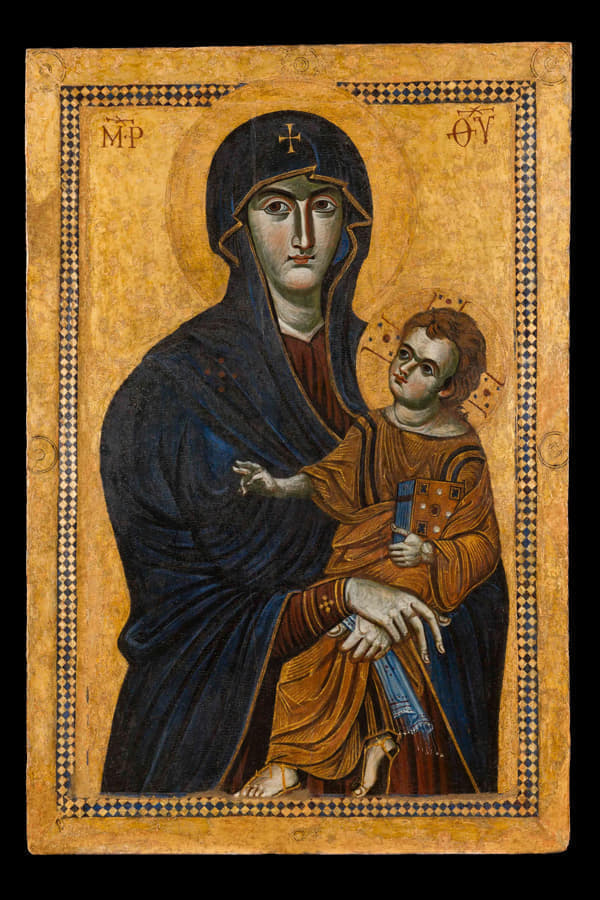
Pope Francis had a special devotion to one particular icon, Salus Populi Romani ("Protectress of the Roman People"), which is in the Papal Basilica of Saint Mary Major (Santa Maria Maggiore), in Rome, where he is now buried.
The Basilica on the Esquiline Hill is an outstanding spiritual and artistic gem, considered the most important Marian church in the city, playing a central role in Christianity. It uniquely combines centuries-old tradition, impressive architecture, and valuable works of art.
Saint Mary Major is the oldest Marian church in Rome and the only one of the four papal basilicas that has largely retained its original early Christian appearance. Founded in the 5th century, it symbolizes Rome's transformation from a pagan metropolis to the Christian capital.
On the night of August 5, 358 AD, the Virgin Mary appeared to the childless Roman patrician John and his wife. She promised them that their wish for a son would be fulfilled if they built a church in honor of Mary on the spot where snow would lie the next morning—in the middle of summer. On August 5, there was indeed snow on the Esquiline Hill in Rome. Pope Liberius, who had had the same dream, then laid the foundation stone for the church that later became Saint Mary Major.
The feast of Our Lady of the Snows (Latin: Sancta Maria ad Nives, Italian: Madonna della Neve) is celebrated annually on August 5 and is dedicated to the consecration of the Basilica, which was consecrated in 432 AD.
On August 5, solemn masses and vespers are held in the Basilica, during which the miracle of the snow is symbolically reenacted by white rose petals falling from the ceiling. Pope Francis personally attended this celebration in 2024 and emphasized the symbolic meaning of snow as a sign of grace that is received as an undeserved and unexpected gift. The Miracle of the Snow also shows the impossible made possible through divine assistance.
The Basilica impresses with its monumental size (79 m long, 35 m wide, 18 m high) and its magnificent furnishings. Particularly noteworthy is the gilded coffered ceiling from the time of Pope Alexander VI Borgia, which was decorated with gold from the New World. The 5th-century mosaic panels in the nave and the famous 13th-century mosaic in the apse by Iacopo Torriti are masterpieces of early Christian art. The Natività by Arnolfo di Cambio, one of the oldest nativity scenes with statues, is also a unique work of art that enriches the Basilica.
The Basilica houses important relics, including the bones of Saint Matthew the Apostle. His relics are kept in an urn on the altar of the basilica, alongside those of other ancient martyrs and Saint Jerome.
The Basilica also houses relics of the Holy Crib (the Manger of Jesus) and is thus considered the “Bethlehem of the West”—and it was the site of the first Christmas Mass ever celebrated.
One of the most important treasures of the Basilica is the icon Salus Populi Romani, “Protectress of the Roman People.” Pope Francis placed his apostolic journey under the protection of this icon and venerated it regularly.
This icon was painted by Saint Luke the evangelist, during the lifetime of the Blessed Virgin, and shows Mary as a dignified, royal mother with the infant Jesus in her arms. It is painted on a cedar panel. It is considered the oldest Marian icon. In it, the Virgin wears a dark blue mantle trimmed with gold over a purple tunic. The infant Jesus holds the Gospel in his left hand and gives a blessing with his right. The icon was brought to Rome by Saint Helena, mother of Emperor Constantine. It is regarded as a miraculous image with a long history of intercessory power during times of famine, war, and crisis.
Originally, the icon was located above the door to the baptistery of the Basilica and was later moved to the nave. From the 13th century, it stood in a marble tabernacle before being moved to the Cappella Paolina in 1613, where it stands to this day.
The icon emphasizes the Blessed Virgin’s role as patroness and spiritual mother of the Romans. Pope Gregory I (590–604) prayed before the icon to ask for an end to a plague in Rome, underscoring the close connection between the icon and the city's salvation in times of crisis.
Over the centuries, numerous popes have presented the icon with precious crowns and jewelry to implore her intercession in times of challenges such as epidemics, wars, and political upheavals. Pope Paul V had the Cappella Paolina built specifically to provide a fitting setting for the icon, and the solemn procession to transfer the image is still celebrated today. Pope Pius XII also honored the icon with a solemn coronation in 1954.
The icon is associated with several significant miracles. For example, during the reign of Pope Gregory the Great (590–604 AD), Rome was devastated by a plague. Pope Gregory led a solemn procession carrying the Salus Populi Romani icon from Saint Mary Major to Castel Sant'Angelo. During this procession, a vision of Saint Michael the Archangel sheathing his sword appeared, signaling the end of the plague. The people then sang the Regina Caeli.
Then, on the Feast Day of the Miracle of the Snow, 1716, the Hapsburg Prince Eugene of Savoy won the Battle of Peterwardein (Petrovaradin), against a much larger Ottoman army commanded by Grand Vizier Damad Ali Pasha. This victory ensured that the Ottomans would never be able to invade Central Europe.
And In 1944, as Nazi forces threatened Rome, Pope Pius XII prayed to the Salus Populi Romani for the city's protection. Shortly afterward, Allied forces liberated Rome. In gratitude, Pope Pius XII granted the icon a papal coronation and ordered public religious processions during the Marian year of 1954.
As noted, Pope Francis had a a profound and enduring devotion to this Marian icon. His devotion began immediately after his election as pope on March 13, 2013, when he visited the Basilica the very next day to pray before the icon and entrust his papacy to the Blessed Virgin Mary.
Over the course of his twelve-year papacy, Pope Francis prayed before the Salus Populi Romani icon 126 times, often visiting it before and after every apostolic journey and during his hospitalizations. He even had the icon brought to St. Peter’s Square for a special prayer service during the COVID-19 pandemic lockdown in March 2020. His visits to the icon became a hallmark of his pontificate, reflecting his deep Marian devotion.
Pope Francis chose to be buried near the Salus Populi Romani icon in the Basilica, making him the eighth pope to be interred there, a testament to his special devotion to this miraculous icon, and the Basilica itself.
In this final gesture, Pope Francis showed his trust in the Blessed Virgin Mary as the Protectress of the Roman people and the Church.