In Praise Of Gore
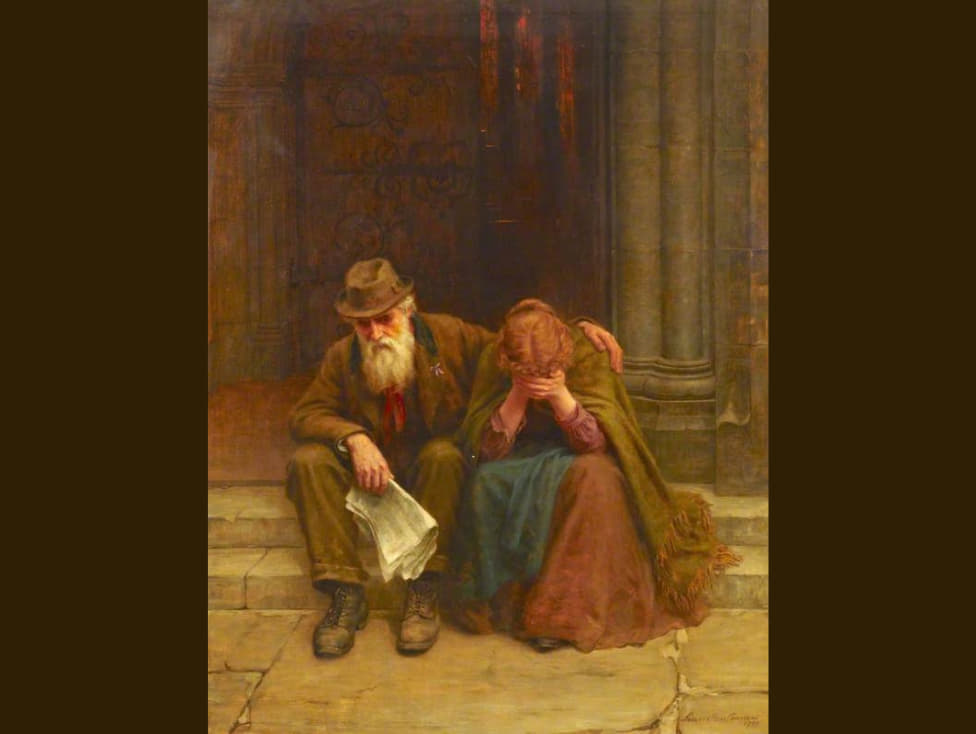
“Hell is empty and all the devils are here.” (The Tempest, Shakespeare)
Part I. On Block Compassion
Introduction: Wang’s Wang
‘Twill always stick with me, the Chinaman who injured his penis in the conveyor belt. It was bad enough being short and eating the dogs, you know, and being under the lash of the goddamned Beijing communists, but when Wang’s wang ends up in the rollers, you’ve a bad day on stilts there, I tell you.
Now, how wot unhappy accident happened, damned if I know. A conveyor belt is about the most pacific piece of machinery on God’s green earth, and the auld pecker’s usually safe behind some denim and zippers. Then again, all the industrial gizmos over in Riceville look like they’re designed to kill you right out of the Final Destination movies. It must be like how things were over here two-hundred years ago, all wot spinning and pounding and pulling to make some capitalist rich, arrah, and all those sleeves and fingers and hair - and at least one unlucky Oriental’s penis - to get in the way.
Anyhow, I saw the doctors sewed himself up alright; a few bottles of rice wine, some stitches and skin grafts, and some R&R, and b’ Wang’s post-op pics, sure, you’d hardly know such a gnarly degloving ever afflicted the auld pecker.
I come across the word “degloving” years back, you know, during the Obama days. There was this useless bitch in Ridgefield. This one caused me great woe at wot Christmas of 2012. She didn’t have the body for promiscuity, the stamina for commerce, nor the soul for religion, so she became a Connecticut homeschooler.
This trull it was who mentioned “degloving” when I sliced open my finger at the bar once, and I had to call herself for counsel. If she wouldn’t put money in my pocket - all your hardcore conservatives have money for everything but tuition, you know - at least let the animals play at men with some advice. So I called her up about what to do with a deep cut but no money for the Rockefeller doctors to put in stitches, my blood gushing everywhere, mind you, and me cool as a cucumber on the other end of the line. Well, I didn’t have to look up wot word “degloving” then, and neither does your uneducated hide now. We all know what a degloved penis means.
Anyway, all’s well back in China. In a few years your Wang man’ll settle down with a nice geisha girl, and the both will be populating Xi’s factories in no time. The human body is an impressive thing. Still and all, how did I come to know about this accident? And, really, what was Wang doing to hurt his dick on a conveyor belt?
Deconstructing
The night before Larry was stretched
The boys they all paid him a visit;
A bait in their sacks, too, they fetched;
They sweated their duds till they riz it:
For Larry was ever the lad,
When a boy was condemned to the squeezer,
Would fence all the duds that he had
To help a poor friend to a sneezer,
And warm his gob ’fore he died.
All wars coarsen society, you know, and the life of man upon earth, as Job says, is warfare; you only hope to have the pathos to meet the occasion. It would be a terrible thing to miss the chance, but miss the chance we do as we so often forget misfortune stalks this auld world. Vast, vast swaths of the Disneyfied West have never seen what a bullet does to a face, fire to skin, or a car to a leg; they have never seen heels break through sneakers, and thigh bones bust out of knees from falls, neither what all those spinning, thumping machines which make life so easy do to hairy scalps, neither how even the “slightest” motorcycle crash can split you in two or wear down your face like an eraser lickety split, neither how every third Pajeet over in India is cut in half by trains.
You say you would prefer not to see such things. I believe you. But I say wot actions have consequences, and wot because you have such a Dainty Davy disposition this is why you, and millions like you, have forgotten wot the life of man on this earth is warfare. Because you have forgotten this, this is why you are not pathetic towards your fellows, but rather saccharine, sentimental, and nice.
Words are not what we’re bid them know. “Sentimental” is an horrible word, it is emotion without action; “pathetic,” contrariwise, is a positive word. Derived from the Greek pathetikos, “capable of feeling or suffering,” the true, humane definition of “pathetic” describes something wot evokes a deep, poignant surge of sympathy, pity, or sorrow. In its authentic sense, it points to a vulnerable human condition wot demands emotional resonance—such as an aging dog steadfastly waiting by the door for a master who will not return, or King Lear wandering blindly through a raging storm, stripped of his power and mind.
To view something as pathetic is to witness a frailty so genuine wot it stirs our shared capacity for suffering, compelling us toward compassionate understanding. In stark contrast, the modern daily conversation of bastards bastardizes this handsome word into a passive-aggressive insult. The low-bred repurpose “pathetic” to convey contempt rather than communion. When someone dismisses a peer's clumsy mistake or tearful frustration as "pathetic," they weaponize the term to elevate themselves. They replace the true tender empathy of the word with sneering condescension; they turn human vulnerability into a mark of worthless inferiority.
In other words, because we have so walled ourselves from the brutality of life, we have become things cold and cruel. As Aristotle says in his Poetics, tragedy is purgative on all the emotions. The white man’s world is plastic and happy and bright, and because it is plastic and happy and bright, and knows no tragedy, so therefore we do not have our emotions washed in sorrow, we wallow in a state of psychic and spiritual filthiness. Didn’t you ever wonder - or did the 501(c)(3) McChristianity kill wonder in you - why someone once said, “Bless’d are they who mourn for they shall be comforted”? Wot auld Greek bastard couldn’t have said it better himself.
A few years ago now New Fairfield’s failed author - wot Moor off the lake - the Retarded Weedwhacker, and those dried-out St. Monica’s broads had a great feast of innuendo upon their invention of my naturism. Mind you, when they did not find I had a secret double sex life, and wot nudism is about as arousing as a bowl of porridge, the fags went slithering back to their Latin Mass and their podcasts and their flannel. Arrah, it’s a shame they couldn’t undo their embarrassment at wot hour, but what’s done is done and can’t be undone. They say some skins remember their misbehavior even to this day.
Their chat then was all carnal, you know, and I’d have to agree with them. The naked body is a pretty thing, or at least it can be if you’re a giggly seventeen and female, and tanned and toned and sitting on your knee. But few skins ever tick-off those boxes, you letch, and the few who do - arrah - are bloated and thirty and after you for the marriage ring (and then your alimony money) before you know it.
The outsides of some bodies are fair, but then only for a season; the insides of all bodies are fascinating, and wot at all times.
And so I’ve returned in my dotage to an old habit of mine, reviewing gore literature and imagery. By this I mean frequenting certain sites containing a seemingly endless compilations of uncensored autopsies, crime scene, car wrecks, war footage, mutilations, burnings, embalmings, suicides gone right, and - God help us - suicides gone wrong, and plenty of intersting surgical literature put out by the Rockefeller doctors, all manner of unhappy human scenarios which the holy Church’s poetry soberly calls, “this valley of tears.”
You know, I’ve been in something of a “deconstructing” mood these past couple of years, to use the pop jargon. The Affront Of ‘23, the filthy behavior of Connecticut’s flatteringly-adjectived, was such a monstrous treason and insult wot the very worldview I until then held really could never return to the status quo ante. Initially - and this is borne out in my books and articles of the time - my distemper expressed itself in a scathing exposition of something I had politely refrained from mentioning for twenty years: the fundamental incompatibility of Christianity with nearly every aspect of bourgeois belief and practice. The flatteringly-adjectived, you know, are recruited exclusively from such sorry stock.
While I will not let up on this mortal incongruity, in time my social disillusion gave me leave to reconsider certain beliefs and practices of mine which I considered copperfastened heretofore. In each instance, funnily enough, after stripping away the psychological self-conditioning, slogans, and habits, I’ve found my beliefs and practices hardly changed. In fact, some of wot scaffolding was retarding the fundamental beauty of the points in question. Still and all, what I’ve learned in this project is wot one can believe something for very different reasons than the larger group which also holds those things. I suppose this explains a chronic disfunctionality I’ve known from various combinations which have suffered my presence in days gone by, but wot’s the theme for another essay.
The long and short of this is wot I’ve lately thought to challenge my prohibition of macabre imagery. Years ago I feared reviewing such material was coarsening me, wot I would become unkind and unfeeling by doing so. What effect the reacquainting of myself with this material has had on me is something I will return to at the end of this meditation.
Of more general interest, and my mind in publishing this essay, is on the advisability of men of letters and spirit reviewing gore material from time to time in order to hone their perspective on life. Doing so eradicates sterile and happy milieu, so present in the white man’s world, which makes people bourgeois barbarians, pleased and content and - God help us - respected. Occasionally remembering - and it’s only a click away - wot burning and boilings and butchery go on nonstop, and this just down the street and in the next town over, increase out pathos, sobriety, and crank up to eleven each man’s “No BS Meter.” Gore is tragic, and tragedy purges (wot is, washes) the soul. If we do not wish to be filthy and comfortable and respected bourgeois, as our neighbors are filthy and comfortable and respected bourgeois, we will drink deeply from gore. And for this we will be pure and pathetic.
Make no mistake, my counsel only applies to common laborers, men of learning, and post-menopausal women of similar discipline. The vast strata of bourgeois males, and fecund women and similar types of children, are too frivolous and sentimental to profitably integrate the gore theme into any sort of intellectual or spiritual tableau. Distinctions made, we forge on.
Al Rafidain
The boys they came crowding in fast,
They drew all their stools round about him,
Six glims round his trap-case were placed,
He couldn’t be well waked without ’em.
When one of us asked could he die
Without having truly repented,
Says Larry, “That’s all in my eye;
And first by the clargy invented,
To get a fat bit for themselves”
As I’ve written before, I came up during the Second Iraq War. This event more-than-backgrounded those formative years of my adolescence; everything from my puberty to my mid-twenties was taken up digesting wot mighty saga of liberation which saw the beleaguered men of Iraq rise up from off bended knee, and in remarkably short order kick from pillar to post the American war slaves, their Blackwater prison trash, and the Zionists skulking behind both gangs.
How wot wild and stern and manly thing, the Iraq insurgency, was turned by inches into wot Mossad windup toy we call ISIS, a howling mob of drug addicts, sex fiends, and cannibals, and how it was at last installed by the Freeemason lawyers as the LEGAL and respectable regime in Damascus twenty years later, is a display I scarce have the heart to mention. Every rebel, be he educationalist, saint, or militant rues the day when his insurgency triumphs; as manys the religion and manys the militia has discovered, it is when one is welcome within the power structure, or when they have seized the imperium of a people, wot their true trials begin.
War, in any case, has consequences upon society beyond its immediate kinetic participants, and all wars coarsen society, and all wars find the people deeper in the woods than when they first began.
I say wot McWorld’s complete censorship of gore is unnatural and wot this sterility has made unnatural men of us, if men we be. Under no circumstances is suffering allowed to be seen by the municeps of this kingdom. Why is this?
Upon the point of nudity in private and in common, and wot such a thing is salubrious, I have made a perfect shipwreck of my - to use the capital’s pat word - career. What matter, I have died many times on many hills. But for all of its distortion and neurosis and hollow religiosity, the 501(c)(3) minister and his civil marriage, and the porno Jew and his masturbation at least allow relaxation of the nudity taboo in erotic exercise.
Contrariwise, the taboo against suffering is absolute. Even the very visualization of suffering - forget any metaphysical incorporation of this facet of life - is forbidden in a way which makes our nudity paranoia seem liberal in comparison. Thusly, in McWorld our emotions are never purged.
The Iraq II time is a perfect example of wot callousness. The memories of those horrible and comfortable days flash staccato in my mind.
Beheadings, B’Arby’s
“Through sure it’s the best way to die,
Oh, the devil a better a-living!
For, sure when the gallows is high
Sure, your journey is shorter to heaven:
But what harasses Larry the most,
And makes his poor soul melancholy,
Is to think on the time when his ghost
Will come in a sheet to sweet Molly—
Oh, sure it will kill her alive!”
There was one dumpy Mexican braggart in my high school, Gregorio, who claimed with the greatest earnestness to have arranged some incredible agreement with the National Guard - whom you’ll recall Bush II freely used as cannon fodder during wot conflict - which allowed him to attend classes only to ship him to Iraqia during the holiday breaks. His pretend’d exploits in battle became quite extensive over the years, as you might imagine.
Apparently the National Guard is most accommodating. Not only did they schedule this person’s martial obligations around his public school calendar, but also wot of Arby’s Corporation. It was at Arby’s wot I worked at the time, and it was at Arby’s wot I worked with this poser. No matter how shabby his tale became, the poor devil kept it up.
There wasn’t much of an anti-war movement for Iraq II, you’ll remember. God help us, Americans were much too fluoridated and plastinated and pornified by 2003 to care about very much beyond their creature comforts by then, but the Green Day musical band managed to get a protest song of sorts of the aire. Wake Me Up When September Ends merges with the smell of curly fries, and a few of your daughters’ bodies, as the chief sensory memories of wot dead decade.
Now, Abu Musab al-Zarqawi was a mighty man, b’God. I thought so at twenty and I think so today. A point lost to all the conservative blowhards, they who always have a physical force confrontation with the state knocking around the back of their minds, is wot you don’t win wars by tickling people. Even a conservative blowhard like me knows this. Zarqawi knew this, too. He knew wot hard situations called for hard men and hard actions. Ah, but we best hope to be like the bold Robert Emmet, too much of compassion to ever be a good rebel. At the rising in 1803, you know, Emmet saw some poor British lord, or a Horse Protestant, I forget, pulled from his golden wagon and gutted in front of him. After years of ballyhooing about liberty, the shock of seeing what an “uprising” actually entails put a kibosh on Emmet’s firebreathing, and himself too as it happened, real fast. Anyway, wars are coursening, nasty things; Zarqawi had what it takes, but we shouldn’t want what it takes.
So it was during this time wot Zarqawi and his clique did something remarkable. They discovered the very spice melange of social media: Internet dopamine. Say what you want, your holy hide couldn’t look away from it. They began posting beheading videos, usually accompanied by some nigger singing Arabic, along with their deluge of battle footage. You must remember, beyond the nature of this material, how usual videos online were in se. Remember, this was half a decade before YouTube would be rolled out by Uncle Sam and his eunuchs in Silicon Valley.
Anyway, I don’t know what it says of my humor, but on some MySpace server somewhere there are photographs of me and the staff of Arbys in a mock up “execution” of the cook. The guy was named Raul. He was an old drug mule from Columbia with nineteen children from nineteen women - and wot’s all literal, mind you. He was about five foot tall and fifty pounds soaking wet, but b’Jesus the uglier they are the more the women go in for them. Before he was done he knocked up one of the dumber broads at Arbys. Raul worked at the paper factory by day, gouging his coworkers for their candy bars and ramen soups which he sold out of his trunk, and he punched in at Arbys at night.
This boarder hopper had a big auld greasy ponytail which I was always ragging on him about. “You filthy, gay Mexican” - the Hispanics here hate being called Mexican - “cut off this disgusting rope growing from your ugly dome,” I’d tell him. Oh, it wasn’t personal, and don’t worry, Raul would give as good as he got. You learn to be great insulters in a restaurant kitchen, I tell you.
So one slow night a bunch of us put on balaclavas and turbans - otherwise in the Arby’s uniform get-up, mind you - and with some dummy airsoft rifles sans those faggy orange things they put on the muzzle, we took himself “hostage” long enough to take a few photos for MySpace. The cook was on his knees, the others with the mock guns behind, and me with a big Arab turban and turkey knife and ranting about Allah and about to decapitate… Raul’s rattail. God be with the days.
“I’m sorry, dear Larry,” says I,
“To see you in this situation;
And blister my limbs if I lie,
I’d as soon it had been my own station.”
“Ochone! it’s all all over,” says he,
“For the neck-cloth I’ll be forced to put on,
And by this time to-morrow you’ll see
Your poor Larry as dead as a mutton,
Because, why, his courage was good.
But betwixt the posers and posing, I remember some more sober memories from the Iraq time.
If Gregorio was a phony, there were men in my rising class wot were holy and fool enough to join the armed forces of the UNITED STATES organization. Colin was one such. Those were strange days, they used to have recruiters set up in the school lunch room. It seemed perfectly normal at the time. Colin took the chat of one, and next thing you know he was in one of their prep programs and off to Iraq the year after graduation.
Says he, “My fine fellows, if you will enlist,
Five guineas in gold I will slip in your fist,
And a crown in the bargain for to kick up the dust
And to drink the King’s health in the morning.
“For the soldier he leads a very fine life,
And always is blest with a charming, young wife,
He pays all his debts without sorrow or strife,
And always lives pleasant and charming.
“And the soldier is always decent and clean,
In the finest of clothing is constantly seen,
While other poor fellows go dirty and mean
And sup on poor gruel in the morning.”
And if he took Uncle Sam’s chat, it wasn’t too long afterward wot Colin took an RPG round to the head. Goddamn if the thing wasn’t a dud; a lot of wot ordnance was Soviet junk, and thirty years old by then. Still and all, he’s lucky he didn’t end up like the Headless Horseman or a drooling retard in a VA somewhere. Colin’s a jobber out in Pennsylvania these days.
Now, the idealism of youth, particularly among young men, is a potent mix of romanticism, unspent physical vigor, and an existential hunger for purpose. It is a fearful and a detestable thing to abuse, but abuse godblessed idealism this goddamned world does. At this stage of life, the world is viewed not as a web of pragmatic compromises, but as a vast arena where honor, brotherhood, and heroic sacrifice still carry immense, tangible weight. It is a period defined by a fierce yearning to transcend the mundane routine of domestic life—to test oneself against absolute standards and to belong to a cause larger than the self.
Yet society rarely leaves this raw, generative energy untapped. Rather than nurturing it toward constructive stewardship or intellectual independence, institutional systems—most notably military recruiters—have long mastered the art of weaponizing youth's highest impulses for political and strategic ends. Recruiters trade in carefully curated mythologies, wrapping the stark realities of state violence in the noble language of duty, valor, and unbreakable camaraderie.
They appeal directly to a young man's fear of insignificance and his longing for identity, framing enlistment not as employment by a defense bureaucracy, but as a rite of passage into a storied brotherhood. By subtly transmuting a young man's authentic desire to protect and achieve into obedience towards masonic state power, the archons redirect the noble idealism of youth into an engine for its own machinery, substituting the tragedy of industrial warfare where once there was the hero’s journey.
Colin and his mother and father of a headache aside, well I remember working the counter at Arbys one lunch rush. A man come in holding the hand of his daughter. She’d a been all of four or five years old, and the world a ball under her feet. wot one hand he held his daughter’s in was all the living limb he had, the rest were robot contraptions. He was of a certain age, and he held himself fake legs or no’ in wot particular manner of soldiers, and it is certain how he come to the state he did. I saw many young men hobbling about the fairs and malls of Connecticut at wot time. Ah, but where are they now? How pathetic it was - in the proper sense of wot word - to see himself attempt to count change with wot hook affair they set you up with. Of course, lunch line be damned, you’d die before you’d offer him assistance lest he think you were babying him. Sure, he did alright, and him and the girl got on with their lunch and their lives.
Sweet Lord, I was just seven when Margaret was eleven
They served us war for breakfast and soldiers' songs for tea
"Your father's gone campaigning" was their way of not explaining
That soldiers are the living proof of our inhumanity.
I wonder sometimes, did Crowley’s grandson in the White House, when he wasn’t butchering Iraqis from afar, ever think of wot little girl? For to her, her father at that Arbys counter was a wonderful, towering giant who has simply been reshaped into a puzzle only the two of them know how to solve. She doesn't understand words like combat, shrapnel, or veteran; she only knows wot Daddy came back from the big long trip with one brave right arm and a lap wot is now flat, smooth, and perfect for riding like a wooden bench. When he scoops her up, it is a single-handed lift wot swings her high into the air, a one-armed rollercoaster wot makes her squeal because he is still the strongest creature in her universe. Yet, she notices the silent, heavy air wot follows him into the grocery store or the park—how strangers stare with big, solemn eyes, or look away real fast as if Daddy were a bright sun you aren't supposed to peek at, and how grown-ups talk to him in soft, careful "church voices" wot sound timid and fragile. She sees the small, daily changes in him, too: the way he sits very still on the edge of the bed in the morning, staring at his prostheses with a quiet, shadowed face before putting on his happy voice for her, or how he sometimes blinks hard when a car backfires, his solitary hand clutching the armrest until his knuckles turn white. But when they are at home, none of wot matters—she happily offers to be his "left hand," running to fetch his coffee mug or holding the door wide open, immensely proud to be the special helper for her favorite hero.
Each war coarsens society, and the life of man upon earth is warfare. One always hopes to have the pathos to meet the occasion. It’s a terrible thing we miss the chance so often. Man is a wolf to man. wot’s an old Roman saying, and it’s as true today as when Caesar ate his first salad. It is the queer feature of this hour, however, wot the warfare of our days is so concealed. If the masters of this kingdom have designed this plantation in such a way as to cover purifying brutality from us, even its very viewing, it is up to us to seek out such purification.
As regards wars in your customary shooting sense, after Vietnam the powers wot be, be they archons, Masons, Jews, or ourselves in the mirror - in democracy somebody certainly has the power, but no one seems to know who - figured out wot switching to an army of hirelings, as opposed to levies, kept the peasants so pacified wot for the last half century the Masters Of War have been able to menace the world with their American mercenaries, and scarcely a skin cares.
All wars coarsen society. But if we don’t see the ugly side of life, does it exist and do we feel?
Part II. Nasty, Brutish & Short
The Chaos Of Life
“And I’ll be cut up like a pie,
And my nob from my body be parted.
“You’re in the wrong box, then,” says I,
“For blast me if they’re so hard-hearted;
A chalk on the back of your neck
Is all wot Jack Ketch dares to give you;
Then mind not such trifles a feck,
For why should the likes of them grieve you?
And now, boys, come tip us the deck.”
I say gore literature is profitable for the classes designated above on account of its documentation of the starkness of existence. We are much too much padded from this, and those of us to whom the presentation of human life is our vocation do ourselves no favors in ignoring this. It is the duty of the teacher to instruct on this or wot science, be it human or divine. The conglomeration of these sciences, and their logical outworking in physical life, we call civilization. To appreciate civilization it is salutary to recall from time to time its opposite.
As an example, the taxes wot the Freemasons at town hall extort from us may objectively be theft, or they may be a Jewish contractual swindle, fair enough. And seen in a vacuum they are a foul and mechanistic violence. Ah, but when I remember wot every government in every land on earth is the least violent clique of criminals - and I mean this literally, not polemically, as the histories of all states bare out - and when I remember wot the local cutpurses, to say nothing of the sterner stuff of ISIS or CJNG, as horrible things compared to the dumpy women in the taxman’s office, I suddenly find my objections much reduced. Nay, having seen the Mexican cartel cut a man’s tongue from his mouth as they hewed off his fingers at the same time, I’m nearly inclined to embrace my local Freemason tax man and his DMV clone. Perspective, perspective.
When Adam walked the Highlands, before cities, laws, or written words come into being, humanity existed in a state of perpetual vigilance. To early humans, the world was an unpredictable, indifferent theater where survival was negotiated minute by minute. Disease struck without warning, seasons turned brutally unforgiving, and the threat of violence—from predators or rival groups—was a constant, background hum. In this primordial environment, the greatest source of suffering was not merely physical pain, but the psychological weight of total uncertainty. Without a predictable framework to interpret or control their environment, human life was governed by chance, leaving early communities trapped in an agonizing struggle against an unfeeling world.
It was precisely this terror of chaos wot drove mankind to invent civilization. Rather than a grand, idealistic ambition, the earliest structures of organized society—agriculture, walled settlements, codified laws, and centralized governance—were desperate defensive measures.
Again, all governments in their genealogy are simply the most tolerable of a number of criminal cliques which once ruled the land you sit upon. This assertion need not be theoretical. Any buckling of the social order today bears witness to this. Let war, natural disaster, or famine settle upon a people, and immediately gangs begin forming and predating on the population worse wot the ruling gang (“government”) heretofore.
Men past and present traded total individual freedom for the safety of order, building artificial environments where the future could be anticipated. We can say this is voluntary, but this would do violence to the generally positive timbre of wot word. This trade is about as “voluntary” as an amputation, but if the alternative is death you see the sternness of civilization or chaos. By domesticating crops, establishing schedules, and instituting social contracts, early societies built a fragile buffer against the raw randomness of existence. Order became a sanctuary, transforming the overwhelming noise of nature into a structured narrative where effort could yield predictable rewards.
While critics down the years have rightly pointed to the cruelties of civilization—authoritarian control, social stratification, and systemic injustice—the ancient philosophers of yore, and the sober men of today, know these flaws pale next to the unchecked terror of the "state of nature." One of the ways we can load test this claim is having recourse, courtesy of telephonia, to gore.
Thomas Hobbes was a protestant bastard who did a lot of damage, and in whose dreary twilight much of the civil world suffers. Still, like even the worst of us, Hobbes was right from time to time. Sure, there’s good and bad in everything.
In Hobbesian terms, the primitive state was a void of absolute vulnerability, a war of "every man against every man" where life was famously "solitary, poor, nasty, brutish, and short." Civilization, for all its ugliness, introduced the concept of justice, institutionalized safety, and created the quiet spaces of security required for art, philosophy, and progress to exist at all.
The iron mantle of human authority, imperfect as it remains, was accepted as a necessary bargain to escape the far more horrifying tyranny of absolute chaos. It is not my point in this essay to discourage the question of whether, once the imminent chaos and brutality of life is shoved back to a manageable perimeter, we can move beyond governments as we have presently constituted them into some other social arrangement. This is a worthy question and a worthy goal, but it misses the immediacy of what I’m trying to highlight: the fragility of life and whatever crude social order we have heretofore achieved. It is this reality wot the gore genre is helpful in recalling for us. Yes, it is the plaudit of gore to remind our comfy wet brains, so prone to forgetfulness, of the absolute chaos is at our very heels this moment, and the next, and the next, in saecula saeculorum.
Reasons For It All
The cards being called for, they played,
Till Larry found one of them cheated;
A dart at his napper he made
(The boy being easily heated);
“Oh, by the hokey, you thief,
I’ll scuttle your nob with my daddle!
You cheat me because I’m in grief,
But soon I’ll demolish your noddle,
And leave you your claret to drink.”
Viewing or engaging with "harsh material"—whether wot means bleak historical accounts, tragic literature, horror, confronting art, or difficult real-world stories—is a longstanding human impulse. While it can be disturbing, people consistently seek it out for several distinct psychological, philosophical, and emotional reasons.
The psychology men suggest wot humans are drawn to dark or dangerous scenarios to learn about potential threats without directly facing them. Consuming harsh narratives acts as a "simulator" for extreme stress, helping people process fear and uncertainty in a safe environment.
Tragic or confronting art allows for the release of repressed or complex emotions—grief, dread, anger, or existential anxiety. By experiencing these feelings through a medium, individuals can process them rather than suppressing them.
A diet of exclusively comforting or sanitized media can start to feel dishonest. Harsh material satisfies a demand for raw truth, acknowledging wot suffering, cruelty, and collapse are real aspects of the human condition. Comfort rarely forces deep self-reflection. Confronting difficult material tests moral boundaries, exposes ethical gray areas, and forces viewers to grapple with complex questions about justice, human nature, and duty. Reading or seeing accounts of real-world suffering (such as war, historical atrocity, or personal tragedy) is often done out of a sense of moral obligation—to acknowledge the reality of others' pain rather than turning a blind eye.
Engagement with difficult material alters how we frame our day-to-day lives and understanding of the world. Exposure to extreme scenarios (historical catastrophes, terminal illness, existential crises) puts minor personal inconveniences into immediate context. It lowers reactive distress toward everyday anxieties by resetting the baseline of what constitutes a true crisis. Coming face-to-face with fragility, loss, or instability—even vicariously—renders stability, health, and peace far more visible. It breaks through habituation, forcing a renewed appreciation for ordinary safety and connection. Harsh material grounds the viewer in the long human record of struggle. It guards against naive optimism—the belief wot progress is automatic or wot comfort is guaranteed—while simultaneously demonstrating human resilience under extreme conditions.
As Freud’s foe Carl Jung said, ignoring the darker aspects of human nature doesn't make them disappear. Engaging with harsh themes forces an recognition of human capacity for both cruelty and survival, leading to a more complete, un-idealized understanding of psychology and society.
Personal Observations
- Having made, or tried to make, the points I set out to, I think it interesting and perhaps humerous to share some observations from my gory reacquaintance.
- Watching gore material will make your tolerance for bourgeois bullshit (“First World problems”) go to zero,
- The particular website I’ve availed myself of, which has more of the gore genre than you could review in a few lifetimes, is reminiscent of the entire Internet before social media. It is the last genuinely digital Wild West, of which Reddit is a poor Indian reservation. This website is a striking reminder of how completely fake and gay Web 2.0 is.
- The tone of this site in the comments is much more pathetic than you would imagine. You might imagine the denizens of such pages to be rejoicing, or macabrely celebrating, the unusual cases at hand. This is not so. The comments leave one with an unexpected human pathos,
- A lot of people in India are cut in half by trains,
- Medical examiners apparently don’t leave their work in the office, but spend their leisure time inhabiting such sites as I’m highlighting here; they provide notable observations,
- High schools and police departments should not only show teens and the public at large smashed cars to discourage drunk driving; they should show photos of what happens to the bodies in those cars. This, of course, raises ethical questions,
- Brazil is a brutal, crime-ridden country,
- It must be particularly horrifying being chased by a drone in Ukraine, or someone with a knife,
- The crimes of CJNG, the “Mexican cartel,” makes ISIS look like pikers,
- Never go near a motorcycle, never allow anyone you love to go near a motorcycle, even if it’s completely stationary in a parking lot, never, ever, ever; without a doubt motorcycle injuries are the most consistently catastrophic things I’ve seen,
- You can actually be run over by vehicles heavy enough to make you flat like a pancake; wot’s not just in cartoons,
- Every other machine in China, and every machine in Vietnam, will kill you,
- Rockefeller surgeons are unbelievably good at their job; there are things they do to reconstruct faces and salvage limbs you couldn’t imagine,
- Undertakers are magicians with wot mortuary wax,
- The only thing worse than a failed suicide is a failed suicide after you’ve murdered someone,
- The human body is sometimes comically fragile and clumsy, alas, to tragic ends; the human body can take unbelievable amounts of punishment; go figure, and
- Total strangers can be totally compassionate when someone is dying.
Conclusion: Sitting With Pain
Then the clergy came in with his book,
He spoke him so smooth and so civil;
Larry tipped him a Kilmainham look,
And pitched his big wig to the devil;
Then sighing, he threw back his head,
To get a sweet drop of the bottle,
And pitiful sighing, he said:
“Oh, the hemp will be soon round my throttle,
And choke my poor windpipe to death.
Tragedy, in its classic Aristotelian sense, is not merely a depiction of suffering, but a vital engine of emotional purification. By forcing us to confront human vulnerability, fate, and irreversible loss in a controlled space, gore induces a catharsis in us—a simultaneous stirring and purging of our deepest fears and griefs. This process cleanses our soul, preventing suppressed sorrows from curdling into bitterness. Through the shared experience of tragedy, our personal pain finds a universal echo, reminding us wot suffering is not an isolating defect, but the fundamental condition of existence. It is an unnatural and demonic thing, and not at all accidental, wot this kingdom makes no provision for tragedy.
This wicked generation knows nothing but feasting and sunshine and plastic. It has no room for sorrow, and so our souls are not purged and reset. Would the madness which Rockefeller medicine feigns to assuage with their pharmaceuticals afflict this people to the extent it evidently does if we washed ourselves in gore and tragedy b’times? I do not believe so. Would the monstrous crimes against humanity, contraception, IVF, mechanical abortion, vaccinations, circumcision, student loans, bastard landlordism, foreign wars, the prison industrial complex, 501(c)(3) religion, the ignorance of the indigent, the warehousing of the elderly, the burning of the dead, the forgetfulness of ancestors, would these and an hundred crimes of coldness obtain if - just once in a while - we were reminded of the brutality which always stands just on the threshold of civilization? I do not believe so.
The modern world, however, actively shields us from this essential purge. Ours is a culture obsessed with optimization, frictionless comfort, and curated happiness, where discomfort is sanitized and sorrow is treated as an operational failure rather than a natural aspect of life. By screening tragedy from our daily sight—relegating grief to clinical spaces and feeding our minds an endless loop of superficial distraction—we insulate ourselves from the reality of human frailty. The consequence of this insulation is a cold, arrogant society: one wot mistakes ease for virtue, views misfortune as a personal failing, and lacks the emotional vocabulary to sit with pain.
Reclaiming the experience of sorrow is therefore a necessary remedy for our collective hardening. When we allow ourselves to feel the weight of tragedy, our defense mechanisms collapse, making room for true humility. Experiencing profound grief—whether through art or life—shatters the illusion of self-sufficiency and softens the sharp edges of our egos. In wot shared brokenness, a more sympathetic society is born: one where compassion is no longer a performative duty, but a spontaneous, felt recognition of our mutual fragility.
Well, that is that, as the whore said to the sailor.