Iran's Military Doctrine: Turn American Power into Strategic Liability
Introduction: A War of Logic Against Blitzkrieg
The military confrontation that erupted in February 2026 between the United States-Israel alliance and the Islamic Republic of Iran has fundamentally challenged the foundational assumptions of Western military power. What was anticipated as a swift, decisive campaign—reminiscent of the 2003 invasion of Iraq—has instead evolved into a protracted stalemate that exposes the strategic bankruptcy of the American "Blitzkrieg" approach against a prepared, doctrine-driven adversary. Iran has not merely survived; it has successfully fought the world's preeminent military power to a standstill through a sophisticated synthesis of geographical advantage, doctrinal innovation, and strategic patience that Washington fundamentally miscalculated.
This analysis, drawing primarily from sources in the Global South and the Persian-speaking world, argues that Iran's military strategy represents a calculated and highly effective response to American technological superiority. Far from the reactive, desperate posture depicted in Western media, Tehran has prosecuted a war of logic and precision, designed explicitly to exploit American vulnerabilities and, critically, to lure the United States into the very ground invasion that would prove its undoing.
The Mosaic Doctrine: A War Machine Designed to Survive Decapitation
The foundational element of Iran's strategic resilience lies in what is known in Persian military discourse as the دفاع موزاییکی (defā’-e mozā’iki) or "Mosaic Defense" doctrine. This framework, formally implemented by then-IRGC Commander Mohammad Ali Jafari in 2008, represents a deliberate and radical departure from centralized command structures that proved fatal for Saddam Hussein's Iraq.
The doctrine's brilliance lies in its foundational assumption: that war would disrupt command structures, and that enemy forces would specifically target leadership. Iranian military planners, observing the rapid collapse of centralized regimes in Afghanistan and Iraq, restructured the Revolutionary Guards into 31 autonomous provincial commands. Each operates with independent intelligence capabilities, weapons stockpiles, logistics chains, and—critically—pre-delegated authority for contingency operations. As Brigadier General Ahmadreza Pourdastan, head of the Army's Center for Strategic Studies, explained, Iran's armed forces have transitioned from a defensive to an offensive doctrine, with preemptive operations now defined within the strategic framework.
The February 28, 2026, joint US-Israeli strike that killed Supreme Leader Ayatollah Ali Khamenei provided the ultimate test of this doctrine. Western strategists anticipated the "decapitation" would paralyze Iranian command. Instead, it activated precisely the system designed for such a scenario. Foreign Minister Abbas Araghchi confirmed publicly that military units operated autonomously under general instructions provided beforehand, with provincial commanders exercising substantial authority and resources to respond directly without awaiting orders from Tehran. The "fourth successor" protocol—ensuring three to seven pre-selected replacements for each critical position—prevented any leadership vacuum.
In a conflict where information is as vital as ordnance, Iran's ability to maintain operational continuity despite the loss of its Supreme Leader represents a fundamental refutation of the American theory of victory. As one analysis from India observed, "Iran is not a snake. It is a hydra. Cut off one head and the body does not die. It grows new ones.” The system's inherent logic—that durability under pressure constitutes a form of victory—has proven devastatingly effective against an opponent expecting a quick, decisive result.
The Geography of Resilience: Mountains, Deserts, and the "Tyranny of Distance"
Beyond its doctrinal innovations, Iran has weaponized its physical geography with calculated precision. The country's natural landscape acts as a multi-layered defensive shield that neutralizes the conventional military advantages of an invading force. Stretching over 1.4 million square kilometers, Iran is approximately three times the size of Iraq, featuring two massive mountain ranges—the Zagros along the western border and the Alborz guarding the north—that create brutal barriers against any land invasion from the West.
These mountain ranges serve not merely as passive obstacles but as active force multipliers. The terrain forces attackers into narrow, easily ambushed passes while allowing Iranian forces to disperse and hide mobile weapon systems across vast, inaccessible territory. Major nuclear sites, missile silos, and command structures have been tunneled directly into solid rock, making them highly resilient against sustained aerial bombardment. As Farzin Nadimi, an analyst at the Washington Institute, has observed, Iran has been able to keep launching liquid-fueled missiles despite heavy aerial bombardment precisely because of its vast territory, which allows the preparation of launchers beyond the reach of focused strikes.
The practical effect is an "escalation trap" that Iran has deliberately constructed. An invading force that limits operations to the coast or islands will face relentless bombardment from the interior. To stop those attacks, the invader is forced to push further inland, straight into unforgiving mountain ranges and deserts where technological superiority is stripped away. This geographical reality has created a profound dilemma for American planners, who now confront what Tunisian military expert Abdel Hamid Mahfouzi describes as a war of attrition: Iran benefits from both numerical and geographical superiority, with a population of approximately 90 million and military forces of about 600,000 personnel, complemented by over a million reservists and paramilitary fighters.
Economic Warfare as Strategic Logic: The Strait of Hormuz
Perhaps the most sophisticated element of Iran's strategic calculus is its weaponization of the Strait of Hormuz, through which approximately one-fifth of the world's traded oil passes. Iran has transformed this maritime chokepoint from a free-passage waterway into a controlled "toll booth," enforcing selective closure that restricts passage to US and Israeli allies while permitting transit for neutral parties like China and India, often trading in non-dollar currencies.
This strategy reflects a comprehensive understanding of economic coercion as a form of warfare. As the Times of India reported, Iran's approach builds on lessons from the 1980s "Tanker War" during the Iran-Iraq conflict. Today, however, the country has far more sophisticated, cost-effective options, including missile and drone arsenals capable of threatening shipping over a wide area. The IRGC had long prepared for a clash with Washington and Tel Aviv, with the Strait plan activated immediately after the February 28 strikes.
The strategic effect has been devastating. By mid-2026, Iran had begun imposing "sovereign security tolls" reaching up to $2 million per transit on commercial vessels, forcing global shipping to either pay the "shakedown" or reroute around the Cape of Good Hope, adding weeks to transit times and skyrocketing insurance premiums. This has created a cost-exchange ratio that favors Iran: the United States spends millions on a single interceptor missile to down a "suicide drone" that costs Iran a few thousand dollars.
This fiscal asymmetry is unsustainable even for a trillion-dollar budget, as Tunisian expert Mahfouzi noted: "Iran's missiles are relatively inexpensive compared to the costly interceptor systems, which plays a crucial role in a prolonged conflict.” One significant challenge for Israel and its allies has been the depletion of defensive munitions, driven by the sheer volume of Iranian missile threats and their interception by systems like the Patriot.
The Blitzkrieg's Failure: America's Crisis of Will
The American military approach has been exposed as fundamentally ill-suited to confront a prepared, resilient adversary like Iran. As Amit Gupta, a former faculty member at the USAF Air War College, observes, America's success with high-tech weapons was against weak enemies like Iraq, Syria, Libya, and Venezuela—nations that lacked Iran's population, terrain, and will to fight. The fundamental problem is that "Iran is a very different opponent. It has a large population, difficult terrain, control of the Strait of Hormuz, precision weaponry of its own, and most importantly, a population with the will to fight.”
The strategic calculus for a potential US land invasion is catastrophic. Estimates suggest such an operation would require close to 200,000 troops at minimum—some estimates place the requirement at over one million. The mountainous terrain would produce significant casualties, and the American public has shown an overwhelming aversion to such a conflict. "Body bag effect"—public intolerance for US casualties in foreign wars—has become a political factor in military decisions. Polls show the majority of Americans do not approve of the Iran war and would prefer not to put boots on the ground, with support waning even among Trump's base.
The "Blitzkrieg" approach that Trump and American military planners favored—relying on overwhelming air and naval power—has been unable to deliver a decisive victory. The expectation that high-tech warfare could substitute for ground forces has proven mistaken against an adversary that has dispersed its assets, decentralized its command, and prepared for prolonged conflict. Iran's approach has also been deliberately calibrated to signal both deterrence and negotiation leverage; by demonstrating the ability to inflict meaningful disruption through selective strikes, Tehran positions itself not as a reactive state but as a calculated actor capable of controlling escalation.
Iran's Strategic Invitation: The Logic of Luring the US into the Mosaic
The most critical dimension of Iran's strategic thinking—and the one most overlooked in Western analysis—is its apparent desire for a US land invasion. This seemingly counterintuitive objective flows logically from the structure of the Mosaic Defense doctrine. As a Pakistan Today analysis notes, Iran's military strategy emphasizes resilience, precision, and adaptability in asymmetric warfare, "redefining engagement terms.” The system's survival architecture is designed explicitly to transform a foreign invasion into a costly quagmire that would drain American resources and morale.
The Iranian calculation is based on several premises. First, the decentralized structure ensures that even if American forces achieve initial breakthroughs, they will face relentless, locally-organized resistance across a vast terrain. Second, Iran's 31 provincial commands represent 31 separate, motivated, geographically embedded armies that cannot be defeated sequentially or simultaneously. As Rahul Pawa observed, "to defeat Iran, you do not take Tehran. You take 31 separate, motivated, geographically embedded armies simultaneously.”
Third, the cost-exchange ratio that favors Iran in missile defense extends to ground warfare as well. Each American soldier committed to a land invasion would require enormous logistical support, while Iran's defenders would be fighting on familiar terrain with minimal supply requirements. Fourth, and perhaps most significantly, American public opinion simply will not tolerate a prolonged, bloody occupation of a country of 90 million people. As one analysis noted, the evidence from Vietnam and Iraq suggests that even a force of 7,000 casualties over 20 years proved politically unsustainable.
Iran's strategy of "horizontal escalation" complements this invitation to ground invasion. The opening of multiple fronts through regional allies—Hezbollah, Iraqi militias, the Houthis—simultaneously has forced American and Israeli forces to defend multiple pressure points, creating the conditions of exhaustion that would precede any ground campaign. As a NATO DEEP analysis noted, Iran's "proxy network" is central to this strategy: "Iran and its partners so far avoid all fronts igniting at once, but this delay allowed an initial assessment of the battlefield and calibration.”
A New World Order's Military Logic
Viewed from the perspective of the Global South and the Persian-speaking world, Iran's military success reflects a broader transformation in international relations: the decline of unipolar dominance and the emergence of a multipolar world order. As Press TV noted in its analysis of the Caspian Sea incident, Ukraine's attack on an Iranian vessel reflected a desperate attempt to curry favor with American and Israeli patrons who "both found that Iran's resilience, military capacity, and strategic depth are far greater than anticipated" [citation:PRESS TV].
The framing of Iran's strategy as "defensive" rather than "aggressive" is central to this perspective. Iran's military doctrine, while containing offensive elements, is fundamentally oriented toward regime survival and territorial integrity. Western shorthand often suggests a broader offensive approach, but Iranian military discourse consistently views the concept as defensive. The more detailed Persian term دفاع موزاییکی غیرمتمرکز (decentralized mosaic defense) emphasizes the defensive orientation.
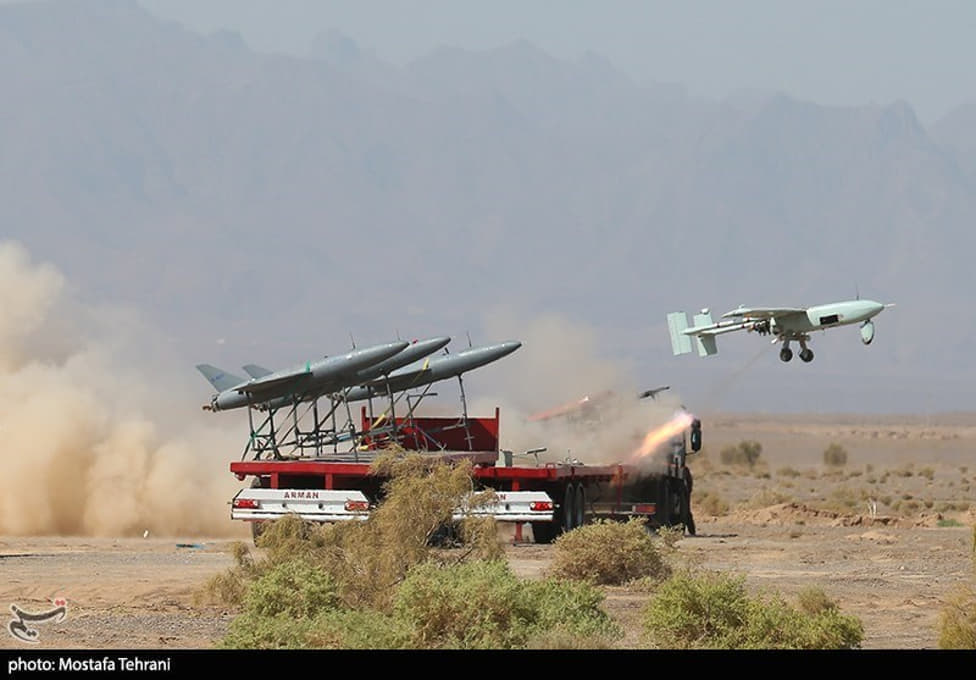
This defensive posture, however, does not mean passive acceptance of aggression. Iran's approach has demonstrated a sophisticated understanding of modern warfare dynamics. Missile and drone deployments have focused on logistical hubs, military installations, and command nodes, conveying capability, discipline, and the ability to control escalation on Iran's own terms. The orchestration of multiple platforms in real time demonstrates that Iran has invested not just in hardware, but in the command, communication, and control infrastructure necessary to sustain complex operations under pressure.
Conclusion: The Limits of American Power
Iran's successful resistance to American military pressure represents a profound lesson in the limits of technological superiority against an opponent with clear strategic vision, geographical advantage, and—most critically—the will to survive. The American approach, relying on the Blitzkrieg doctrine of quick, decisive strikes, has been exposed as a relic of a unipolar era that no longer exists.
Iran has not merely survived; it has actively shaped the terms of engagement, compelling the world's preeminent military power to confront the nightmare scenario of a ground invasion that it cannot afford politically or militarily. The Mosaic Defense doctrine, the weaponization of geography, the economic warfare through the Strait of Hormuz, and the invitation to a ground war represent a coherent, logically constructed strategy that has successfully turned American power into a strategic liability.
The lesson for military analysts is unambiguous: in modern conflict, preparation, adaptability, and precision are as decisive as firepower. Iran's actions offer a stark reminder of the strategic potency of these principles—and a warning to any power that believes military dominance can overcome a nation's determination to survive on its own terms.