Jacques Baud, Wars Against Iran
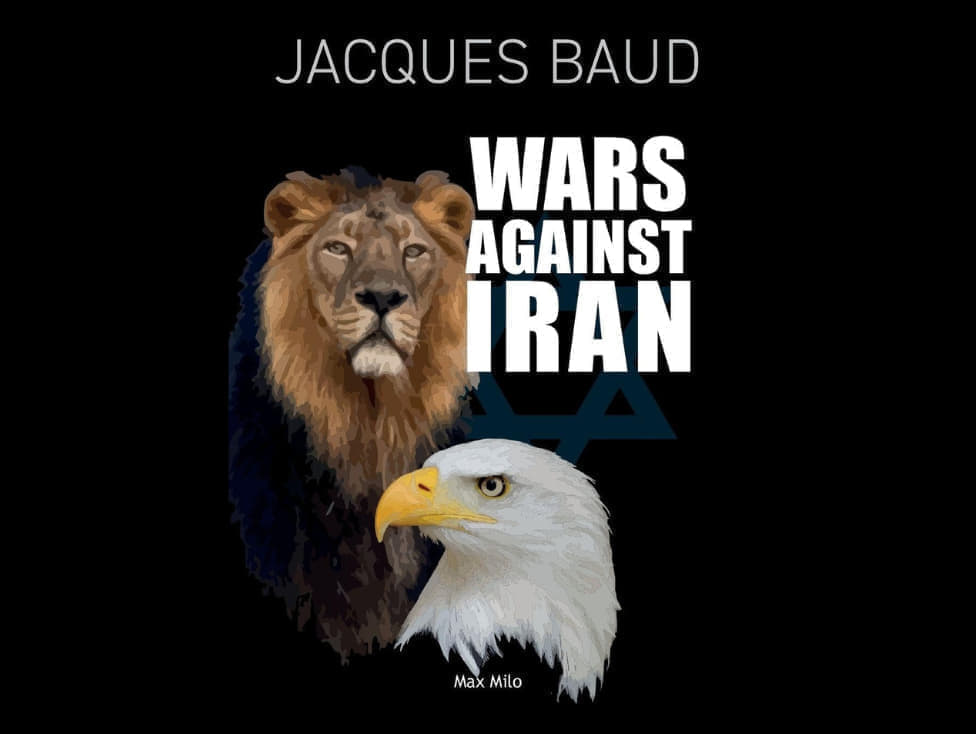
We are greatly honored to bring this generous excerpt from Jacques Baud's latest book, Wars Against Iran, through the kind courtesy of the publisher Max Milo. This is deeply informative book, showing great erudition and insight, as is the hallmark of Colonel Baud's approach. Wars Against Iran clarifies, explains and historically contextualizes President Trump's vain attempts to defeat Iran.
As we all know, Colonel Baud has been terribly mistreated by the European Union, with the cruelty of their sanctions against him. Please show your support by purchasing a copy of this essential book—and please ask all your family members and friends to buy a copy as well. Even the smallest action against tyranny is a great victory for all.
Iran is the oldest country in the world. It is the heir to a brilliant civilization whose cultural, architectural, and literary genius has endured to this day. With all due respect to uneducated conspiracy theorists, it is an essentially peaceful country that has not started a single war since the late 17th century, unlike all of its Western adversaries.
Iran is a country that has traditionally been rather favorable toward the West and has sought to build closer ties with it on numerous occasions. In 1979, the Shah of Iran—who had been installed following a coup d’état orchestrated by Great Britain and the United States, and who had ruled the country through a bloody dictatorship widely supported by Western democracies—was overthrown by the Iranian people.
In January 1979, the Shah went into exile, and the country was governed by a regency government led by Shapour Bakhtiar. In February, Ayatollah Khomeini, then in exile in France, returned to Iran at the invitation of the incumbent government. In March, following a referendum, 98% of Iranians approved the creation of the Islamic Republic.
This change was therefore not the result of a “Western-style” coup d’état, but rather of exasperation with a deeply flawed government supported by the West. It was driven by a widespread revolutionary sentiment that brought together all the country’s political factions, including terrorist movements such as the Marxist-aligned Mujahedin-e-Khalq (MEK).

As always, instead of adapting to the circumstances and attempting to reach a compromise with the new authorities, Western powers sought to overthrow the new government. Western propaganda portrayed the “mullahs’ regime” as a tyrannical dictatorship of the worst kind.
As a result, Iran has a disastrous image in Western public opinion. It took two figures who are particularly unpopular in the West—Donald Trump and Benjamin Netanyahu—to launch a war against the country to cast it in a more favorable light. Nevertheless, Western public opinion remains generally hostile toward Iran.
According to a Gallup poll conducted in February 2026 in the United States, Americans’ perception of Iran remains relatively stable, with about 13% holding favorable views and 79% holding unfavorable views3 . The generally negative reactions to the IsraeliAmerican aggression demonstrate both how far Iran’s image has come and the extent of the hatred toward Western leaders.
*****
Governance is probably one of the least understood and most misinterpreted aspects of Iran in the West. The propaganda repeated by our governments and media paints a picture of a pyramidal, tyrannical system (regime) heavily centralized around the religious figure of the Supreme Leader.
The reality is very different. Iran is obviously not a “Swiss-style” democracy, any more than France or Germany are. Every country has a system of governance that is steeped in its own traditions and culture. In July 2026, the massive gatherings of the Iranian people during Ayatollah Khamenei’s funeral demonstrated that power is likely closer to the people than in many Western countries.
While in both Sunni and Shia Islamic traditions, religious law (sharia) takes precedence over secular laws, Ayatollah Khomeini placed state laws above religious law. In doing so, he maintained the Supreme Leader’s central role as the guardian of the religious dimension (velayat-e faqih). In other words, decisions are made by the government, while the Supreme Leader ensures that they conform to the principles of the faith. In February 1979, in the New York Times, Richard Falk, a professor at Princeton University, wrote:
Thus, the image portrayed of [Ayatollah Khomeini]—as a fanatic, reactionary, and a man harboring crude prejudices— certainly and fortunately appears to be false. It is also encouraging to note that his inner circle of close advisors consists exclusively of moderate and progressive individuals.
Iranian governance is divided into several centers of decisi, which must be steered toward a common direction. Thus, in Iran— contrary to what we are told by “TV pundits” who know nothing about the country—power is not concentrated in the “Supreme Leader,” but is distributed and coordinated among various centers of power. This situation is not the result of chance, but of the experience of a country that has been under constant external threat. The aim was to prevent the weakening of power and the collapse of the country due to external actions, on the one hand, and due to the multiple factions that made up the wave of support for the new regime after the fall of the Shah, on the other.
In other words, decision-making mechanisms in Iran are extremely decentralized. This results in a certain slowness in decision-making. This situation was identified following the attacks against Iran in 2024 and led to a streamlining of decision-making and consultation processes in order to accelerate crisis decision-making.
*****
The Military and Security Apparatus
Faced with the constant threat of external destabilization, Iran has established extensive security structures. The country’s security rests broadly on two major pillars: the army (Artesh) and the Islamic Revolutionary Guard Corps (IRGC), or Pasdaran.
The Iranian army is intended for national defense in the event of a conflict similar to the one Iran experienced in the 1980s, when Iraq attacked it with the help of the United States and France. It is a conventional “mass” defense force, composed largely of conscripts. Indeed, the current Ayatollah Mojtada Khamenei served as a combatant against Iraq during that period.
The distinction between Artesh and the Pasdaran is important. Donald Trump has stated on numerous occasions that the United States destroyed the Iranian navy using conventional wars. However, Iran continues to maintain control over its territorial waters and the Strait of Hormuz. This is because control of the Strait is ensured by the Pasdaran Navy, which consists of a large number of small vessels that are difficult to combat and operate in swarms.
The IRGC was established on April 22, 1979. Its role is to protect the country’s institutions. It is organized as a territorial force, designed to counter destabilization attempts orchestrated by the United States and its European allies. The West exploits ethnic rivalries, particularly in the northwest of the country with the Kurds, in the west with the Arab movements in Ahwaz, and in the southeast with the Baluchi movements. Western powers support about twenty armed groups, mostly Sunni Islamists, who carry out chronic terrorist attacks in Iran.
This constant threat has led to the IRGC’s perpetuation and professionalization. The IRGC has thus become a sort of “crisistime army.” The emergence of Israel as a perceived threat to Iran has resulted in the IRGC being given responsibility for the country’s 23. Iran external defense. Thus, unlike Western countries, which have forces dedicated to national defense in the event of war and security forces for internal threats, Iran has gradually developed a force responsible for both external and internal defense. This is why the IRGC is also responsible for the deployment of ballistic missiles. Ultimately, due to the subversive actions of the United States, Israel, and France in particular, the IRGC has become of paramount importance in the national security architecture.
The proliferation of Western interference has made the IRGC the cornerstone of Iran’s internal and external security. The IRGC is a permanent structure endowed with the attributes of a Ministry of Defense. It has its own intelligence service, special forces, and, in addition to ground and naval forces, it possesses air forces equipped with drones and ballistic missiles.
*****
In the West, when an actor does not share the viewpoint of our leaders, he is ipso facto branded with every possible vice: money laundering, organized crime, terrorism, tax evasion, cybercrime, etc. This caricatured portrayal is intended to present our adversaries as absolute enemies, with the drawback of making us vulnerable to real threats.
The role of Iranian intelligence agencies in cyberwarfare is almost entirely fabricated. Western rhetoric regarding Iranian acts of “cyberwarfare” (one could just as easily use the adjectives “Russian” or “Chinese,” or even “Palestinian”) is invariably explained as an effort to “undermine voter confidence and sow discord”. As in Russia, Iranian intelligence agencies do not waste their time commenting on tweets by European leaders or stealing patient data from a hospital. This is Western disinformation, often promoted by the Iranian opposition in the West, in order to find grounds for sanctions and military strikes. The target of numerous cyberattacks—the most famous of which was STUXNET, the result of cooperation between Israeli intelligence and the U.S. National Security Agency (NSA) and Central Intelligence Agency (CIA)—Iran has established a cyberwarfare infrastructure. Although Iran’s capabilities are considerably more modest than those of U.S. and Israeli agencies, they have achieved some notable successes.
Iranian intelligence agencies are up against actors—such as the United States and Israel—who have mastered the art of carrying out attacks that perfectly mimic third parties.
In March 2017, WikiLeaks released several thousand CIA documents under the name “VAULT 7,” which show that the U.S. agency created an internal group, named OMBRAGE, tasked with developing a suite of cyber tools, such as MARBLE FRAMEWORK12, that enable cyberattacks to be carried out by implicating foreign countries (under a “false flag”), by simulating these activities in several languages (notably Chinese, Russian, Korean, Arabic, and Farsi13) as shown here. According to VAULT 7, this software was used in 2015 and 2016.
In other words, it is likely that a large portion of the cyberattacks attributed to Iran, Russia, or even China by our governments— which provide our authorities with a pretext to impose restrictions and control measures—actually originate from Israel or the United States.
*****
Designating Iran as a state sponsor of terrorism is nothing more than a ploy to justify violating international law in the name of combating terrorism. Let us recall here that the Islamist terrorism that has struck the West since the 1990s is linked to Sunni Islam and is a consequence of unjustified and unprovoked Western attacks against countries in the Middle East—and more specifically, the bombing of civilian populations—which sparked outrage that led to terrorism. Between 2015 and 2017, the French were surprised to find that their country was the one most affected by Islamist terrorism. But this is perfectly logical. France has been one of the most active states in the Middle East, and its elites—deeply steeped in racism—did not even consider that their own Muslim population might channel this outrage into terrorist fury. It can be shown that France is the country that has most contributed to terrorism on its own territory. The French government bears primary responsibility "for the terrorist attacks that have struck its citizens. With a more intelligent foreign policy, every victim of terrorism between 2015 and 2017 could have been spared.
In reality, the assertion that “Iran remains a major promoter of international terrorism” is purely baseless and serves Western propaganda. It is based exclusively on Iran’s ties to Hezbollah and the Shiite militias that have been operating in Iraq since the Western invasion of 2003. The starting point for this accusation is the attack on the French contingent and the U.S. Marines in Beirut on October 23, 1983. We will return to this later.
Nevertheless, words do matter. In its legal justification for Operation EPIC FURY in February 2026, the U.S. State Department cited a number of documents purported to justify an act of self-defense against Iranian terrorist attacks.
*****
The United States’ objectives for attacking Iran are unclear. On February 28, 2026, Donald Trump stated on his “Truth Social” account that the goal of his action was:
- Peace in the Middle East and around the world. On March 2, 2026, on the White House’s X account, he added four objectives:
- To destroy Iran’s ballistic missile capabilities;
- To neutralize the Iranian navy;
- To ensure that Iran can never acquire nuclear weapons;
- Ensure that the Iranian regime cannot arm, finance, or direct terrorist forces beyond its borders.
Later, other objectives were added to this list:
- Reopening the Strait of Hormuz (closed due to the war) (March 3, 2026);
- Regime change and Iran’s unconditional surrender (March 6, 2026).
Six weeks after the start of the conflict, none of these objectives had been achieved. To complicate matters, Donald Trump alternated between positive and negative messages to simultaneously justify his war and reassure the markets. This resulted in a confusing picture of his strategy and a loss of confidence in his policy. Moreover, his war contradicts his campaign promises not to engage in new, endless wars.
*****
Although aware of Iran’s capabilities following the clashes of 2024 and 2025, the Israelis and Americans were taken by surprise by Iran. As in the case of Ukraine, the narrative—which sought to disproportionately overestimate Israeli and American capabilities while equally disproportionately underestimating those of Iran and Russia—led to overconfidence.
Threatened for decades by military intervention and isolated by years of sanctions, Iran had to find its own solutions for its security. It was thus forced to acquire technologies that give it a decisive advantage.
Iran has sought to fortify its military and nuclear facilities. Solidfuel missile launchers are mobile and can be deployed very quickly. This is the case with the SEJJIL missile, which first appeared in 2008 but was used for the first time on June 18, 2025, during Operation SINCERE PROMISE 3, and then on March 28, 2026, during the 54th 208 Wars Against Iran wave of Operation SINCERE PROMISE 4. It is a two-stage solid-fuel missile whose warhead has a directional capability that has earned it the nickname “dancing missile.” Deployable within a very brief time window, it is difficult to detect, and its warhead is difficult to intercept.
More powerful missile systems (KHORRAMCHAHR, QIAM, EMAD, and QADR) use a combination of liquid propellants and oxidizers, which require 30 to 60 minutes to load before launch, during which time they are detectable and vulnerable. To address this issue, these missiles are therefore launched from deeply buried launch sites to evade detection and destruction.
*****
Operation NASR marks an intensification of Iran’s response, while employing the tactics of past offensives: combined salvos. The initial phase involves saturating radars and detection systems with drones or older-generation missiles, followed by striking those same systems with newer missiles. This tactic aims to reduce the adversary’s warning time to a few seconds.
Within a few days, dozens of U.S. sites and facilities are thus destroyed throughout the Middle East.
Iran has been using this strategy since 2024. It has succeeded in breaching Israeli air defenses (IRON DOME, DAVID’S SLING, and ARROW) as well as the U.S. THAAD527 and PATRIOT systems. Yet it seems that no one, neither in the United States nor in Israel, has drawn any conclusions regarding the design of their air defense systems.
Directly targeted, the Americans were suddenly taken by surprise by the power and precision of the Iranian strikes. So much so that Pete Hegseth stated that Iran is being aided by Russia and China.
The precision of Iran’s strikes quickly led to speculation that Russia was providing it with satellite intelligence. The information comes from an “official familiar with the matter,” but has never been confirmed. While this is obviously not out of the question, commentators have overlooked the fact that Iran has its own observation satellites.
Iran has designed its own satellites, such as the KAYYAM, developed by the Iranian Space Agency and launched with Russian assistance in 2022, and two NOUR satellites, developed by the IRGC’s aerospace forces. The first NOUR-1 satellite530 was intended more for experimental purposes. Placed in a low orbit (425 km), it completed its mission in April 2022. It was followed by NOUR-2 in March 2022531, in a slightly higher orbit (500 km), and then, in September 2023, by NOUR-3532, in a low orbit (450 km). The NOUR satellites are microsatellites whose specifications are not well known. Their small size suggests relatively low ground resolution, similar to that of the European SPOT satellites.
They are launched by Iranian-designed QASSED rockets, which the United States and France consider to be potential intercontinental ballistic missiles. That is why these countries have accused Iran of attempting to destabilize the region with these launches. Once again, the French foreign minister is spreading disinformation. According to the Atlantic Council, a media outlet generally sympathetic to the American “hawkish” camp, the technology used for the QASSED rockets is very different from that of intercontinental ballistic missiles, and their design appears to be consistent with official Iranian statements.
Finally, Iran also possesses a TEE-01B missile, designed and launched by China and purchased by Iran. Although ground-based resolutions remain closely guarded secrets, it is likely that this observation satellite is the most advanced in Iran’s fleet, with a resolution of 50 cm.
These satellites enable Iran, for example, to precisely locate U.S. naval task forces beyond the Persian Gulf.
Drones
On December 4, 2011, the IRGC’s aerospace forces seized control of an RQ-170 Sentinel drone. Manufactured by Lockheed Martin, this high-tech stealth drone had entered Iranian airspace to gather intelligence. By spoofing the GPS signal, the Iranians managed to land it intact near the city of Bardaskan. The IRGC then set about analyzing it and reverse-engineering it.
The American drone was coated with a special paint and equipped with a high-resolution, long-range, long-focal-length camera and a synthetic aperture radar (SAR). These features, combined with its flying-wing design, made it one of the most advanced drones in the world.
In 2014, the IRGC announced that a copy of the American drone, as well as experimental models scaled down to 15% and 40% of the original size, had flown. In November 2014, a video of the successful flight of this aircraft was released. According to General Hajizadeh, commander of the IRGC Aerospace Force, these drones could be armed with missiles. On January 1, 2015, the Shahed 171 SIMORGH (Phoenix) made its maiden flight."
Finally, Shahed Aviation Industries has designed a family of drones based on the RQ-170: the Shahed 171 SIMORGH drone, with variants scaled down to 60% (Shahed 181 and Shahed 191 SAEQEH) and variants scaled down to 40% (Shahed-141 and Shahed 161). The SAEQEH drone is also produced in a civilian version, designed to induce rainfall using silver iodide.
Apparently, the Americans damaged a Shahed 191 SAEQEH during a strike in March 2026.
*****
Since the end of the Cold War, the West has been engaged in a process of perpetual war, dominated by the United States and largely supported by Europeans, to the detriment of their own interests. The fact that the Americans deliberately lied before the United Nations Security Council by claiming that Iraq possessed weapons of mass destruction is now confirmed by all analysts.
Lying to achieve a national security objective—even if it is fallacious—is fair game, if not moral. What is more puzzling is the way in which European countries, which had all the evidence needed to refute the American accusations, failed to do so. The war in Iraq was both unjust and illegal, but that did not prevent all European countries from joining it. France resisted under Chirac but gave in under Hollande, deliberately causing the deaths of French citizens between 2015 and 2016.
In 2026, we are seeing exactly the same pattern. The U.S. accusations against Iran are completely baseless, but Europe is following along without a word. It will take the courage of Spain to push the cowards to react.
The role the United States has assumed in the world implies a thorough understanding of the situation. But this is true only if the goal is to solve the world’s problems. Yet that is not the case: U.S. interventions are primarily linked to its domestic policy and its own economy. The result is that the United States is willing to destabilize—or even permanently destroy—countries, cultures, economies, and populations, solely to satisfy its own interests and short-term objectives.
It is evident that the decisions made by U.S. presidents over the past quarter-century have completely ignored the consequences of their own actions. This stems from an incomplete understanding of the situation and the causal relationships between the various issues. According to the American media outlet NBC, it appears that Donald Trump is briefed on the situation through short, two-minute daily videos682. The interface between intelligence agencies and policymakers is an issue that has long concerned U.S. intelligence agencies, but one that remains all the more difficult to resolve because policymakers either do not have the time to stay informed or are unwilling to read.
The situation has been exacerbated by the fact that our policymakers are uneducated and often ignorant. In France, for example, some Members of the European Parliament were unable to locate Iran on a map683! In other words, these are individuals who base their decisions not on facts, but on perceptions.
By launching a war against Iran, the United States and Israel have placed themselves in an asymmetrical situation. This is a conflict in "which Iran is fighting for an existential cause, while Israel is fighting for domestic political reasons and the United States is attempting to fulfill an old fantasy. In other words, the stakes are critical for Iran. Beyond its sovereignty, it is the very survival of the state—and indeed of its entire society—that is at stake. Recall that Donald Trump threatened to annihilate Iranian “civilization.” This threat drew no condemnation from Jean-Noël Barrot, the French Minister of Foreign Affairs, for example.
In early April 2026, the U.S. government decided to revoke the residency permits of the niece and grandniece of the late General Qassem Soleimani, who was assassinated by Israel and the United States in January 2020. What is interesting about this case is that the decision was made following the publication of false claims by Laura Loomer, a Jewish political activist, on social media, regarding their family ties to the late General Soleimani. In reality, it appears that the young women are not related to the Iranian general at all. As we’ve already seen with Donald Trump, the U.S. administration makes its decisions based on allegations and misinformation circulating on social media. France is no better off, since Jean-Noël Barrot, the Minister of “Strange” Affairs, also makes his decisions based on rumors, tweets, and unconfirmed information, as we’ve seen.
Regarding the war against Iran, our governments have clearly underestimated Iran’s ability to resist—and then retaliate against— the Israeli-American attack. They have underestimated its ability to block (or threaten to block) the Strait of Hormuz, as well as the economic repercussions on the price of hydrocarbons and, indeed, on the price of fertilizers.
Somewhat counterintuitively, the U.S. military appears to be aware of this weakness. Thus, during the special operation to rescue a pilot in Iran, the Chairman of the Joint Chiefs of Staff had the courage to exclude Donald Trump from the operations room.
For the first time in contemporary history, the United States has had to halt its operations due to a lack of ammunition and weapons. This tells us two things. First, the hysterical nature of this conflict within the American political fantasy, which has led to a reckless use of weapons (inefficiency). Second, the inability to align the objective being pursued with the energy expended (inefficiency). As in all the conflicts we wage, we squander public funds to gain absolutely nothing in return. This phenomenon is not new, but it previously manifested only through the terrorist acts that have affected us—all of which were provoked by our own governments. What sets the conflict with Iran apart is that Iran is fighting back. The extent of the damage inflicted on Israel is poorly understood due to the draconian censorship imposed by the government, but it is certain that the toll on Israel is disastrous. This is why Israel is keeping a low profile for the moment after attempting to vent its rage on southern Lebanon.
In other words, our leaders do not know what they are doing. Intoxicated by a destructive madness, they lie to cover up their inability to anticipate problems.
*****
The track record of the Israeli-Americans is rather meager. They wanted to subjugate Iran, but Iran has emerged stronger, more powerful, and more respected than before. The conflict began over the nuclear issue and the overthrow of the government, and it is ending around the Strait of Hormuz. The United States and Israel led the world to believe that the “regime” was hated, but the Iranian people have shown the greatest display of loyalty to their leader in the history of humanity. We can already predict that none of today’s Western leaders will witness such a display at their own funerals!
Incompetence has become the true driving force behind the West.