Judaizing Abya Yala
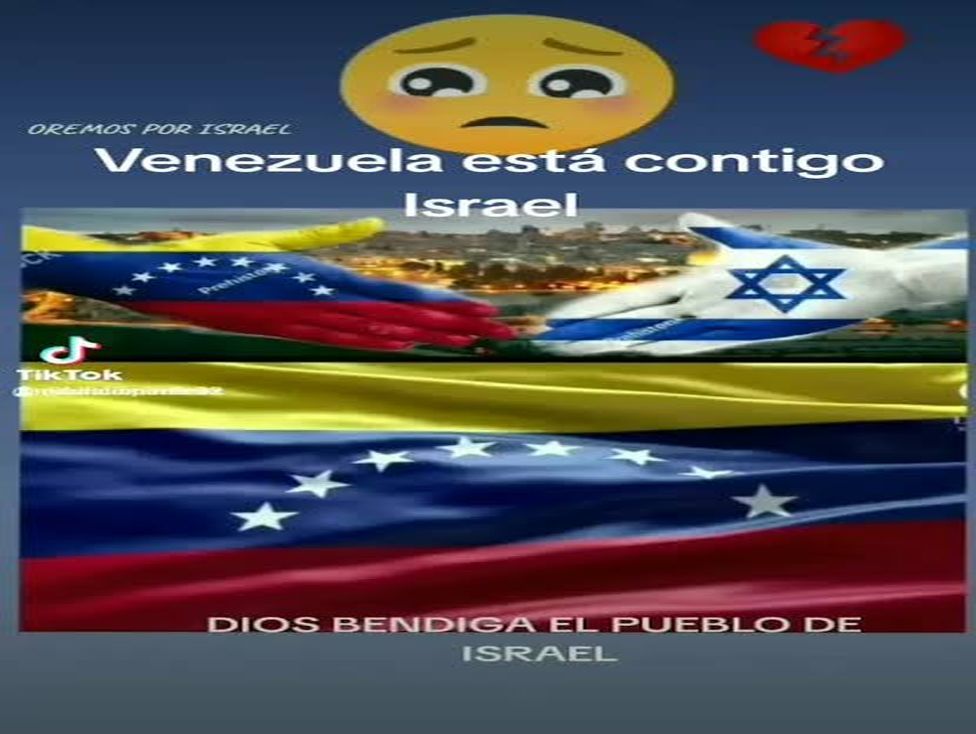
SÃO PAULO, BRASILIA, GUATEMALA CITY — The shofar sounds not in a synagogue, but from the pulpit of a neo-Pentecostal megachurch in São Paulo. An Israeli flag, taller than the pastor, stands beside the communion table. In the Brazilian Congress, a parliamentary bloc invoking the covenant of Genesis 12:3 pushes for diplomatic alignment with a foreign government, while in Guatemala, municipal councils rename public squares “Jerusalem, Eternal Capital of Israel.” This is not a fringe phenomenon. It is the visible surface of a deep, systematic, and profoundly troubling transformation: the “Judaizing” of South America, driven by a militant form of Christian Zionism that is reshaping the religious, cultural, and geopolitical identity of an entire continent.
This process, while drawing on theological currents with roots in the United States and Europe, has taken on a distinct and virulent life of its own in Latin America—or Abya Yala, as Indigenous and decolonial movements call it. It is a phenomenon that instrumentalizes Jewish symbols and trauma to sanctify a modern political project, while simultaneously hollowing out the core of Christian tradition and undermining the sovereignty of Latin American nations. The evidence, gathered from sociological research, congressional records, and on-the-ground reporting, reveals a movement that is less about spiritual affinity with Judaism and more about a radical, right-wing political realignment that serves to normalize occupation, dispossession, and imperial alignment .
The Theologico-Political Machine
To understand how this happened, one must trace the pipeline. The dominant theology fueling this trend is dispensationalism, a 19th-century interpretive framework that divides history into distinct eras and assigns the modern State of Israel a central, divinely ordained role in the end-times. In this worldview, “blessing Israel” is not merely a moral stance; it is a transactional requirement for personal and national prosperity . This theology, imported largely through American missionary networks, found fertile ground in the rapidly expanding Pentecostal and neo-Pentecostal churches of Brazil and Guatemala.
However, as researchers Maria das Dores Campos Machado and Brenda Carranza have documented, the older dispensationalist framework has increasingly been supplanted or fused with the “Theology of Dominion.” This militant strand, popularized by the New Apostolic Reformation (NAR), mandates that Christians take control of the “seven mountains” of society—religion, family, education, government, media, arts, and business—to establish the Kingdom of God on Earth . In this context, support for Israel becomes a template for a broader project of political and cultural conquest. The Israeli state is reframed not as a Middle Eastern nation, but as a “strategic mentor” and a model of technological and military resilience that “blessed” Christian nations should emulate .
The institutional architecture of this movement is transnational and well-funded. The International Christian Embassy Jerusalem (ICEJ), founded in 1980, serves as a crucial node, with its Latin American representation led by Brazilian pastor Renê Terra Nova. Terra Nova, who has been decorated by the Israeli government and hosts the Israeli ambassador in his church, exemplifies the fusion of charismatic authority and geopolitical lobbying . This is soft power exercised with religious fervor, transforming embassies and church halls into spaces where foreign policy is sanctified.
The Guatemalan Blueprint: From Decree to Doctrine
Guatemala offers the most stark and alarming case study of this process translated into state policy. With Evangelicals comprising roughly 45% of the population, their political influence is immense . In 2018, the Congress passed Decree 12-2018, officially establishing May 14 as the “National Day of Friendship between Guatemala and Israel.” This was not a mere symbolic gesture. It was the culmination of a concerted campaign by the Parliamentary League of Friendship Guatemala-Israel, a body dominated by evangelical deputies .
The consequences are concrete. As reported by Le Monde Diplomatique Brasil, this legislative victory has cascaded into a broader project of symbolic and territorial colonization. In over 10% of Guatemalan municipalities, streets, squares, and monuments have been renamed with the title “Jerusalem, Eternal Capital of Israel.” More insidiously, the national school curriculum has been mandated to include the teaching of Israeli culture, effectively outsourcing a portion of civic education to a foreign nationalist narrative .
This is not diplomacy; it is the installation of an ideological infrastructure. The historical figure of Jorge García Granados, the Guatemalan diplomat who supported the 1947 UN Partition Plan, is constantly invoked to provide a veneer of secular legitimacy to what is, at its core, a theological project. The result is a nation that, at the municipal and educational level, has enshrined a foreign state’s narrative as a foundational element of its own national identity, a process that critics rightly identify as a form of neocolonial subjugation .
Brazil: The Congressional Crusade and the Telenovela Altar
Brazil, with the largest Catholic and Evangelical populations in the world, represents the grand prize. Here, the movement is larger, more sophisticated, and deeply embedded in the highest levels of power. The academic consensus is clear: Brazilian Christian Zionism is a highly politicized force that combines prophetic, prosperity-driven, covenantal, and cultural dimensions to shape parliamentary and diplomatic alignment with Israel .
The most visible manifestation is the Evangelical Parliamentary Front (FPE), a powerful bloc in the National Congress. During the Bolsonaro administration (2019-2022), these legislators acted as a reliable vanguard for Israeli interests, pushing for the relocation of the Brazilian embassy to Jerusalem and opposing resolutions critical of Israeli military actions . This lobbying extends to the current government. When President Lula da Silva compared Israel’s actions in Gaza to the Holocaust in 2024, evangelical congressional blocks were among the most vociferous in condemning him, echoing the Israeli government’s declaration of him as persona non grata .
But the battle for hearts and minds is waged far beyond the corridors of Brasília. It is fought in the living rooms of millions of Brazilians through the medium of the telenovela. The network Record TV, owned by the powerful Universal Church of the Kingdom of God (IURD), has produced a series of high-budget biblical epics. Researcher Manoela Carpenedo’s analysis reveals how these productions, such as Apocalypse, are not mere entertainment. They are vehicles for “political spiritualities,” normalizing philo-Semitic and Christian Zionist views for a mass audience . By romanticizing ancient Israelite culture and weaving dispensationalist tropes into prime-time drama, these media products create a cultural backdrop where unconditional support for the modern State of Israel feels not just natural, but divinely mandated. It is propaganda, delivered with the emotional resonance of a family saga.
The “Judaising” of the Soul: Ritual, Identity, and Erasure
Beyond the political and media spheres, a more intimate, grassroots transformation is underway. In congregations across Brazil, the adoption of Jewish ritual objects—the shofar, the tallit, the Star of David—has become commonplace. But in some communities, this goes far beyond symbolic borrowing. Ethnographic research by Carpenedo documents the rise of “Judaising Evangelical” groups that have taken the logic to its extreme conclusion .
These are former Charismatic Evangelical communities that, in a radical rejection of what they perceive as the materialism and moral permissiveness of their former churches, have begun to strictly observe rabbinic Jewish law. Members have placed mikvoth (ritual baths) in their backyards; men and boys undergo circumcision; families adopt kosher diets; and women adhere to Jewish laws of family purity (Taharat Ha-Mishpacha). They construct elaborate genealogies linking themselves to Bnei Anussim—Jews forcibly converted during the Iberian Inquisition—to claim an ethnic, as well as religious, Jewish identity .
This phenomenon is profoundly revealing. On one hand, it represents a genuine spiritual search for authenticity and discipline in a region where prosperity gospel excesses have left many disillusioned. On the other, it is a form of theological and cultural self-erasure. It replaces a universalist Christian ethic with an ethno-nationalist identity, effectively sacralizing a concept of chosenness that has devastating implications when mapped onto contemporary geopolitics. It is a fundamentalist revival that, in seeking the “authentic roots” of Christianity, has abandoned its core message of radical inclusion in favor of an exclusionary, law-based tribalism .
The Opposition: Liberation Theology and the Palestinian Christ
This “Judaizing” tide does not go unchallenged. From the slums and base communities of Latin America, a different theological voice emerges. Liberation Theology (TLL), which emerged in the 1960s and 70s as a response to systemic poverty and oppression, stands as the intellectual and spiritual antithesis to Christian Zionism. For liberation theologians, the gospel is not a blueprint for end-times geopolitics, but a mandate for justice for the poor and oppressed .
The critique from this perspective is searing. Christian Zionism, they argue, is a heresy that weaponizes scripture to legitimize colonial land dispossession and military occupation. It allies the Church with the powerful against the powerless, turning a blind eye to the suffering of Palestinians—many of whom are themselves Christians. The Palestinian liberation theology movement, articulated by figures like Rev. Naim Ateek, draws direct parallels between the suffering of Palestinians under occupation and the suffering of Christ on the cross. In this view, the “Judaizing” of Latin American churches is a betrayal of the gospel’s preferential option for the poor, substituting a philo-Semitic ideology for a genuine commitment to justice .
This counter-narrative, however, lacks the financial resources, media access, and political patronage of the Zionist movement. Mainstream and critical theologians also point out the profound anachronism at the heart of the project: superimposing a modern, secular political-national ideology (Zionism) onto ancient sacred texts, while sidelining two millennia of Christian ecclesiology and ethics . The “Judaizing” is, in this sense, profoundly un-Christian, a form of theological cosplay that serves a political agenda.
The Geopolitical Fallout: A Continent Aligned
The ultimate stakes of this process are geopolitical. The Judaizing of South America is not occurring in a vacuum; it is the cultural and religious soft power dimension of a broader realignment. The expansion of Christian Zionism in the Global South is a strategic asset for the State of Israel, helping to shift the balance of opinion in international forums and neutralize criticism of its policies .
This was starkly demonstrated after the attacks of October 7, 2023. Israeli embassies across Latin America, particularly in Brazil and Guatemala, intensified their outreach to evangelical legislators, providing them with briefing materials and talking points to counter criticisms of their military campaign in Gaza . The result is a situation where the foreign policy of major Latin American nations is being held hostage by a domestic religious constituency that answers to a theological vision, not a national interest.
When President Lula da Silva speaks of genocide in Gaza, he is not just expressing a diplomatic position; he is challenging a powerful domestic religious lobby that has made support for Israel a defining feature of its political identity. The evangelical blocks in Congress are, in effect, a fifth column for a foreign power, motivated not by a nuanced understanding of Middle Eastern history, but by a literalist reading of Genesis and a desire to hasten the Second Coming .
Conclusion: A Crisis of Identity and Sovereignty
The “Judaizing” of South America is a crisis of identity. It is the substitution of an authentic, contextualized Latin American Christianity—one born of struggle, syncretism, and a passion for justice—with a manufactured, imported ideology that serves the interests of empire. It replaces the cross with the Star of David, the Sermon on the Mount with the Iron Dome.
This is not a story of spiritual enrichment or interfaith dialogue. It is a story of colonization. The same colonial logic that extracted resources and erased Indigenous cultures is now operating on a theological plane, replacing the continent’s spiritual heritage with a narrative that sanctifies dispossession and warms the engines of a distant war machine. The shofar blowing in a São Paulo megachurch is not a call to ancient Jerusalem; it is a siren song of political domination, drawing Abya Yala into a conflict that is not its own, under a banner that is not its own.
The struggle against this phenomenon is, therefore, a struggle for the soul of the continent. It is a struggle for a theology that liberates rather than oppresses, for a Christianity that stands with the crucified peoples of the earth—Palestinian and Latin American alike—and for a sovereignty that refuses to be mortgaged to a foreign flag waving above a communion table. The alternative is a continent that has traded its gospel for a geopolitical fantasy, its justice for a prophecy of empire, and its soul for a piece of real estate in a land it has never known.