Faith and Power: The Judeo-Christian Tradition as Geopolitical Grammar
One of the ideological expressions that has enjoyed the greatest success, propagating through mimesis across successive generations, is the fabrication of the “Judeo-Christian civilization.” The foundations of this cultural paradigm can be traced back to the thesis advanced by the German theologian and historian Ferdinand Christian Baur in 1831, regarding the schism between the Petrine and Pauline Churches, manifested in a fundamental conflict between Peter and Paul and their respective communities during the earliest phases of Christianity (Baur, 1831). Baur maintained that Peter embodied the Judaic and rigorist tradition, whereas Paul represented an ecclesiastical vision that was less legalistic and more universalist. The triumph of Paul's doctrine facilitated the expansion of the Catholic Church (καθολικός, universal), and confined Judaism to the realm of ethnicity, with both religions pursuing divergent, if not antagonistic, paths: the Israeli Orthodox Jewish theologian Eliezer Berkovits went so far as to declare that “Judaism is Judaism because it rejects Christianity, and Christianity is Christianity because it rejects Judaism” (Berkovits, 1975).
It was not until the mid-twentieth century that the concept of a “Judeo-Christian tradition” gained some currency, emerging into the political arena in the United States of America at the height of the Cold War, whereupon it became part of its terminology (Herberg, 1955). Post-Second World War American leaders employed it as an allegory for a shared religious heritage, in order to define the pre-eminent role of the United States. Truman and Eisenhower characterized the Cold War as a confrontation between religious freedom and democracy on one hand, and atheistic Marxism on the other, asserting that Judeo-Christian values guided the United States in promoting liberty, democracy, peace, and tolerance against communism (the motto “One Nation Under God” was not added to the Pledge of Allegiance until 1954) (Kruse, 2015). The term “Judeo-Christian tradition”—which became perennial in the discourse of the American right—resurfaced with vigour under the aegis of Straussian neoconservatives following the attacks of 11 September 2001, transforming into a political metaphor for the friend-enemy dialectic and the explicit “clash of civilizations.”
In our own day, the expression “Judeo-Christian tradition” has become eponymous with 'Western values', insofar as it synthesizes the legacy of Judaic ethics of justice and the Christian moral heritage of love, according to Habermas (Habermas, 2008). As such, the term has transcended the confines of Anglo-Saxon politics, incorporating itself into the political lexicon of Catholic and Orthodox countries.
However, although prima facie the confluence between Jewish and Christian doctrine appears politically neutral, drawing upon generic affirmations concerning monotheism and Creation, the notion of the “Judeo-Christian tradition” has evolved into a myth that overlays with a thin veneer of sophistic varnish the profound eutaxic distinctions deriving from Judaism and Christendom, respectively.
Myths, nevertheless, are significant, inasmuch as, as the English philosopher Anthony Everett contends, even though fictional entities do not exist, they must be regarded as referential, which confers upon them a certain existence, given that, if we all think of Hamlet, it may be inferred that we have all apprehended the same object (Everett, 2014). This holds crucial sociopolitical relevance. As structuralism has eloquently explained, cultural elements such as myths, symbols, and rituals converge in complex networks of signification, wherein there exist highly differentiated levels of reality, requiring languages of another order, capable of granting cognitive access to planes of reality that could not otherwise be apprehended.
Put differently, myths open new levels of meaning in internal realities that correspond to emergent levels of external realities, and consequently, myths are efficacious for a group owing to its internal situation, with the question of their positive truth or falsity being secondary; it is for this reason that the ingenious syllogism of the late 'professional atheist' Christopher Hitchens—"that which can be asserted without evidence can also be dismissed without evidence”—is inconsequential (Hitchens, 2007).
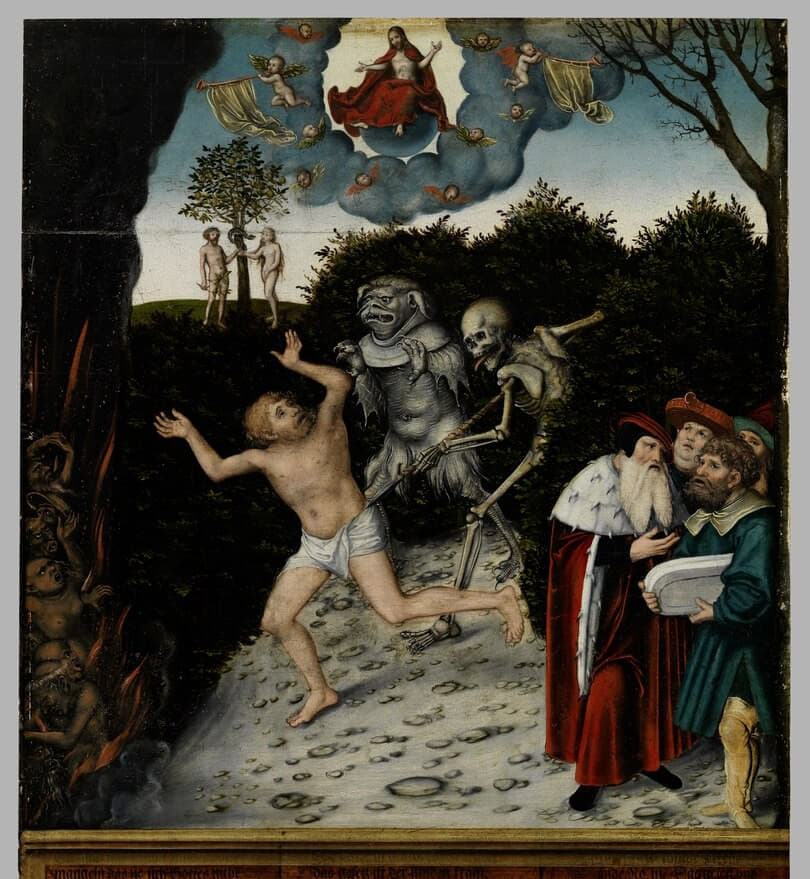
From the Testament of Moses
Whether the historical Jewish myths possess a basis in verifiable historical roots, from which Christianity sprang, is irrelevant to the ethos and even the pathos of one religion or the other, for what matters in myths is that they serve as a cohesive signification for the group. That a religious narrative is not factual cannot be employed as an argument from authority to discredit a rival religion for its purported inconsistencies, because, in fact, no religious narrative is immune to historical scrutiny. What is truly significant in mythic narratives, as we see, is the formation of collective identity and the articulation of shared beliefs and values, which provide a powerful mechanism of legitimation for political action, by framing it within a shared referential system from which civil rights emanate, such as that of allodial land.
Possibly, the epitome of this is the Jewish nation, whose will to be finds its roots in the figures of Abraham first, and Moses thereafter. The pivotal relevance of Abraham to the three branches of the Abrahamic religions is absolute. However, it is as puerile to grant historical veracity to the patriarch of the Abrahamic faiths as it is to deny his archetypal function in the collective unconscious. Similarly, the pretension that pure religions exist, unsullied by syncretism to a greater or lesser degree, is untenable.
This is readily verifiable in the case of the Abrahamic religions: we know from the Hebrew Tanakh that a Sumerian named Abram came to be called Abraham around the nineteenth century BCE, and entered into a covenant with the god Jehovah, whereby God promised Abraham and his prolific descendants' perpetual inheritance of the land of Canaan. The account of this covenant is found in the Bereshit (Book of Genesis in the Christian Bible) of the Tanakh, and bears notable narrative parallels with the Eridu Genesis, an ancient Sumerian text from the eighteenth century BCE, which recounts the creation of the world and Man, a paradisiacal garden, and narrates how the god Enki warns Ziusudra of an impending flood, instructing him to build a boat to carry his family along with seeds of all species, surviving a deluge of seven days and seven nights that ends life on Earth (Kramer, 1961).
Where the Eridu Genesis and the subsequent Jewish Book of Genesis radically differ is in the latter's pivot towards monotheism, reflecting the process of amalgamating a plurality of Canaanite gods (the Elohim, sons of El and his consort Asherah) into a singular deity. According to the biblical account, it was one of these Elohim (YHWH) who appeared to the aged Abraham to forge the covenant that impelled him to journey to Canaan with his equally elderly wife Sarah, settling in the Canaanite village of Salem, where Abraham paid tribute to the Canaanite king and high priest Melchizedek, and witnessed the birth of one of the sons promised by Jehovah, who was named Jacob until he was given the name Israel after wrestling with God.
According to this narrative, the unification of the twelve tribes of Israel, descendants of Abraham's son, formed the United Kingdom of Israel circa 1050–931 BCE, under the successive leaderships of Saul, David, and Solomon. Following the latter's death around 931 BCE, the kingdom split between the Kingdom of Israel in the north and the Kingdom of Judah in the south. This fragmentation was not merely political; even though both kingdoms shared the same religious roots, the Kingdom of Israel, encompassing ten of the twelve tribes, frequently deviated from exclusive worship of Jehovah, tolerating pagan religious practices, including the adoration of idols and foreign gods, which fostered widespread apostasy. In contrast, the Kingdom of Judah, comprising the tribes of Judah and Benjamin in the south, remained more faithful to Jehovah, worshipping him in the Temple of Jerusalem.
Abraham did not live to see the fulfilment of Jehovah's covenant promise, that he would be the father of a great nation and his descendants would inherit dominion over the promised land of Canaan. This was realized only much later, necessitating a solution of continuity in the promises made to Abraham, with the emergence of the figure of Moses, demonstrating the power of myths to act as vectors of history by extending through time.
As in the case of his predecessor Abraham, we also find in the story of Moses narrative elements that lend plausibility to the influence of Sumerian culture on the construction of the Mosaic account: unlike Moses, the existence of Sargon of Akkad is supported by written sources from ancient Mesopotamia, the most renowned record being the Legend of Sargon of Akkad, a document from the twenty-fourth century BCE that details Sargon's military campaigns, his victories over other kingdoms and cities, and his ability to unify and govern a vast territory.
Beyond historical records, we know of legendary aspects that constructed a mythology around Sargon sharing notable narrative similarities with that of Moses: Sargon's mother placed him in a basket and set him adrift on the Euphrates River, just as Moses' mother did with him on the Nile. Both Sargon and Moses were found and adopted by royal figures. Sargon was discovered by a gardener and then raised by a royal priestess, while Moses was found by the daughter of an unnamed pharaoh and raised as a prince in the royal palace. Both have become associated with the promulgation of laws and the liberation of their peoples, and conceptual parallels can be drawn between the Sumerian “Tablets of Destiny” (ṭuppi šīmāti) and the Hebrew Tablets of the Law (luchot ha'brit), as both are objects connecting the divine with the human. It is also straightforward to trace expressions of retributive justice, such as the law of talion, in Sumerian codes like that of Ur-Nammu, dating from around 2100–2050 BCE and originating from the Sumerian city of Ur (Abraham's homeland).
This suggests a certain degree of “sociocultural osmosis” during the years of Hebrew captivity in Babylon, which occurred from the destruction of the Temple of Jerusalem in 586 BCE by the Babylonian king Nebuchadnezzar until the edict of the Persian Cyrus the Great, which permitted the Jews to return to Judea and rebuild the Temple some seventy years later.
The plausibility of adding multiple layers of traditions, experiences, and Mesopotamian memories to the biblical narrative is reinforced by noting the lack of evidence supporting the events recounted in the Shemot (Exodus) of the Torah. There is no proof substantiating the enslavement of the Jews in Egypt, nor are there official records, primary sources, or archaeological remains supporting the trek of 600,000 men on foot, plus women and children, across the Sinai desert. Egyptian records make no mention of the sudden emigration of a quarter of their population, nor are there indications of the expected economic effects from such a massive demographic decline.
It seems reasonable to suppose that the Exodus does not recount a strict historical event, nor is it arbitrary fiction, but rather an anachronistic amalgamation of diverse traditions to construct a foundational myth, possibly related to retrospective references to the exodus appearing in the prophetic chapters of Hosea and Amos from the eighth century BCE, and to historical events such as the three waves of Jewish return to their homeland following the aforementioned Edict of Cyrus (recorded in the Cyrus Cylinder), which occurred in three stages between 538 and 457; the first led by Zerubbabel, the second by Ezra, and the last by Nehemiah.
Many details of the biblical narrative fit better into a later period in Egyptian history, around the seventh and sixth centuries BCE, the era when the biblical history as we have it was written. Some biblical scholars, such as Richard Elliott Friedman, argue that the principal redactor who gave final form to the five books of Moses was Ezra, who is specifically described as “a scribe of the law of the God of heaven” (Ezra 7:21), (Friedman, 1987).
Nevertheless, the core of the testament left by Moses consists in a covenant whereby Jehovah extends His agreement with Abraham, promising the Jewish nation dominion over humanity in exchange for remaining hermetically separated from other nations; strictly obeying divine laws; and rendering exclusive worship to the God of Israel.
The stipulations of the covenant proliferate especially in Deuteronomy (e.g., 2:25, 7:6, 7:16, 12:2–3, 26:17–19, 28:1, 28:12), but are found throughout the Torah. This abundance of legalisms contrasts notably with the paucity of eschatological metaphysics; the absence of a clear doctrine on the afterlife in the Pentateuch, as Sigmund Freud highlighted (Freud, 1939).
It is noteworthy that this focus on the relationship between Jehovah and His chosen people—minutely centred on practical aspects of nation-building and pietism—resulted in an immanent anthropology, emphasizing the idea of reward or punishment in this life based on being sufficiently ḥaver (חָבֵר), and containing elements of a group evolutionary strategy deeply rooted in the collective mentality of the Jewish people, which has shifted attention away from eschatological speculations towards moralism in everyday life. This manifests in a kind of substitution mechanism, granting immortality to the Jewish people as a whole, such that each individual continues to live through membership in the collective soul of the Jewish people, and will continue to do so as long as it endures.
On the Problem of Evil
The lack of an explicit soteriological doctrine (that is, a transcendental anthropology) in the Pentateuch leaves unresolved the problem of true justice, because, paraphrasing Thomas Aquinas, perfect and complete justice cannot exist in this life, as often the good suffer and the wicked prosper; therefore, a future life is necessary in which each may receive according to their works, achieving true and complete justice. In other words, if there is no Final Judgement, anything goes in the earthly world, and good and evil become arbitrary. As Kant maintained, the traditional theodicy, applied to the god of the Mosaic Law, is a case where the defence is worse than the accusation.
It appears that the authors of the Book of Job, composed over several centuries as wisdom literature (ḥokmah), and placed after the Book of Exodus in the biblical canon, anticipated Kant's conclusion, addressing both the problem of God's relation to evil and Man's relation to God in the face of injustice. Recall that the biblical account revolves around divine apparent indifference to human suffering: Job, a just, prosperous, and God-fearing man, is subjected to various extreme trials and sufferings after Satan challenges Jehovah regarding Job's integrity, daring God to prove that Job's loyalty and piety do not stem from his good fortune. God accepts the challenge and permits Satan to test Job, subjecting him to tremendous misfortunes, such as the loss of his possessions, the death of his children, and illness. Despite his ordeal, Job remains faithful to Jehovah and refuses to repudiate Him.
Nevertheless, overwhelmed by anguish, he eventually doubts divine justice; he laments God's apparent indifference to his sufferings and demands a direct response. But God rejects Job's challenge, pointing to the numinous, and avoids saying anything that could be interpreted as a theodicy capable of persuading Job that his suffering obeyed a theological purpose. However, in Job's final resignation, it may be inferred that he clings to the theodicy arising from rationalizing his suffering as the price paid to understand that God is not conditioned by Man's mental limits.
The symbolic force of this conclusion is so terrifying (“the darknesses of God are our own darknesses;” Redfearn 1992) that it prompts us to surmise the imperative to develop a mythology of hope; a faith in true justice. The god in the Book of Job's account presents a divine image, a representation of God that was relevant for a certain time, place, and people, and as such, is a projection of the individual and collective self at that juncture; thus, it was necessary to overcome the limitations, deficiencies, and lack of consciousness reflected in that god's image, to radically transform the conception of God's image, and with it the archetype of Man and his destiny.
Something of this sort can only arise from a new religious experience, auspiced by a new kind of prophet capable of mediating between God and Man. As we noted earlier, we need myths because they unveil new dimensions of meaning in internal realities that relate to emergent levels of external realities. The myth of Job is no exception: Clement of Alexandria, the first Doctor of the Catholic Church, offered an exegesis of Job's piety as a prophetic act heralding the Messiah's arrival. Carl Jung also interpreted the Job narrative from analytical psychology in a Christological key, creating a profound allegory wherein Job's confrontation with Jehovah demonstrates the plasticity of God's image, which develops, modifies, and responds through dialogue with Man (Jung, 1952). Although Job ends awestruck and silenced, he preserves his dignity to the point of compelling God to examine His own conscience.
In Jung's metaphorical interpretation, from this critical introspection emanates the need to humanize Man's image of God, incarnating as mortal to become conscious of human suffering. In this way, the figure of Jesus Christ presents itself as a symbolic and existential response to Job's question, gestating a new relationship between God and humanity. The archaic tribal God—wrathful, jealous, and vengeful—is transformed through Jesus into Love (1 John 4:8, “Whoever does not love does not know God, because God is love”), and reconciles with the Divine Wisdom that ancient scribes had blurred in their zeal to portray an unconditioned god. According to Jung, this occurs at the intersection of two planes: while Jesus, through his death, resurrection, and soteriological promise, becomes a symbol of hope and liberation from suffering and injustice, Mary symbolizes the mother's unconditional love, for which it suffices merely to be, without need for justification. Mary also occupies the theological space of Wisdom from the Book of Proverbs, as an essential element of divinity, though not divinity itself.
Jung thus echoes the sophianic theology of the Russian Orthodox Church, whose primary aim is the study and contemplation of Divine Wisdom as an attribute of God. Sergei Bulgakov, following in the footsteps of other Russian thinkers such as Vladimir Solovyov and Pavel Florensky, conceptualizes Sophia as the divine feminine principle (Jung's Anima archetype); the Divine Wisdom that integrates the Persons of the Trinity to incarnate the Word in the earthly world through Mary (Bulgakov, 1937). He likewise emphasizes the Virgin's principal participation in the Messiah's redemptive work, essential for comprehending the fullness of Revelation, and forming an image of the divine pleroma that enables us to understand that, from the unity in difference between the Father and the Son, lies the very nature of Creation—that the Trinitarian God, who is Love, is intimately connected with creative Wisdom, by virtue of God's own nature.
Hence, Christmas intertwines with the archetype of the child-god, symbolizing innocence, vulnerability, and transformative capacity. In the figure of the child Jesus resides the promise of a new beginning, and dwells the hope of a better future, underscoring the importance of keeping alive faith in the possibility of change and renewal. Accordingly, Christmas affirms the role of maternal love as a symbol of divine love, where Jesus' birth through Mary represents an act of God's unconditional love towards humanity. This maternal love personifies divine surrender, protection, and care expressed through His son, reflecting the closeness and intimate bond that God seeks to establish with humanity.
All and each of these elements are addressed organically in the Sermon on the Mount, the authentic Rubicon in overcoming the archaic cultural idea that History repeats in recurrent patterns within an eternal cycle of birth, death, and rebirth. By contrast, Christianity, by emphasizing salvation and redemption throughout History, inaugurates a new conception of time, viewing history as a linear narrative with purpose, which will culminate when God judges humanity and establishes the City of God as the eternal abode of the righteous. With the Sermon on the Mount, the concept of Person also emerges, as an individual with inherent dignity and rights, which was likewise unknown in antiquity.
From Christianity arises the notion that all individuals are created equal before God, reflecting the belief in each person's innate dignity (persona significat illud quod est perfectissimum in tota natura, scilicet subsistens in rationali natura) as valuable and worthy of consideration. Jesus' teachings in the Sermon on the Mount emanate from the nature of the divine Persons of the Trinity, and emphasize the importance of agapic love and social justice, recognizing the dignity of every human being. This idea of the person as unique and precious contrasts with the notions of ancient civilizations, where individuals were treated based on their utilitarian value, with their consideration, privileges, and obligations determined by their function and contribution to society.
From the Testament of the Messiah
In the Gospel according to Saint Matthew, the Twelve Apostles are summoned and named after Jesus descends from the mountain where he has just delivered a sermon that may be qualified as paraenesis; the testamentary exhortation of one who foresees his end. The sermon is structured in a format familiar to Jews, based on Shavuot, the Hebrew festival celebrated seven weeks after the Jewish Passover, on the sixth day of the month of Sivan. Shavuot marks the giving of the Torah on Mount Sinai, commemorating the event in which the Jewish people accepted God's teachings and commandments. In this celebration, the people participated in a twenty-four-hour vigil, divided into eight segments of three hours each, during which Psalm 119 provided praises of the Torah for each segment. The psalm itself comprises one hundred and seventy-six verses, distributed across twenty-two sections, each assigned one of the twenty-two letters of the Hebrew alphabet.
The evangelist employed this structure to transcribe the Sermon on the Mount, as observed when comparing the eight Beatitudes in Matthew 5:3–10 with Psalm 119:1–8. The sermon then proceeds with glosses on each of the Beatitudes, but in reverse order, beginning with the last: “Blessed are those who are persecuted for righteousness' sake, for theirs is the kingdom of heaven.”
The Sermon on the Mount is, in fact, a dialectic between Jesus and Moses, though the latter is never cited. From the outset, the sermon establishes Jesus' legitimacy (Matthew 5:1–2), and with this authority, he offers a vision of Blessedness in which Jesus preaches by example. Jesus came to fulfil the Mosaic law. He signalled his perfect union with the divine will, and fulfils the law in its entirety—he abrogated some non-biblical traditions, corrected some erroneous interpretations, but did not abrogate the legal mandates of the Mosaic law. Jesus understands the true nature of the law as God's law: the law is not God itself, nor is God the law. He knows that the law's true nature lies in its connection with God, and publicly defends the divine authority of the law, emphasizing that God is the giver and Lord of the law; that only in communion with God is the law fully fulfilled. And for this he was crucified; not without first warning those who would listen of the instrumentalization of God (replacing Him with the law), and the danger of falling into antinomian temptation.
It is exceedingly difficult to follow Jesus' personal example. Difficult to attempt, as in love for the enemy and genuine charity; difficult to practice, as in pacifism and chastity, but even more difficult to conceptualize as a framework for earthly coexistence. Although the golden rule (Matthew 7:12) provides a broader scope for coexistence than the specific principle of non-violence, the only thing encompassing all the precepts and prohibitions of the sermon is eschatological-soteriological. We know, with Niebuhr, that morality is insoluble with institutions, but practicable by the individual (Niebuhr, 1932).
However, the eschatological perplexes both individuals and institutions alike, and thus, what some find hostile in the Sermon on the Mount is not its morality, but its eschatology. Many others regard these teachings as arduous and unattainable, and though they view them as noble ideals, they ignore them as utopian, thereby facilitating the prevalence of particular interests, and reducing morality to normative codes.
The Sermon on the Mount is intelligible only in the light of the principle of agapic love. Matthew highlights that love outweighs rites and legalisms: “…you have neglected the weightier matters of the law: justice and mercy and faithfulness. These you ought to have done” (Matthew 23:23). But love is not sentimentality, but doing good. The religious terms used by the evangelist—Mishpat, Chesed, Emet (מִשְׁפָּט, חֶסֶד, אֱמֶת)—evince that Jesus does not prescribe a morality of rules and obligations to be rigidly fulfilled for salvation; nor an ascetic ethic for saints or hermits, but a universal justice to establish a new humanity united in Christ, including the Gentiles (Ephesians 2:11–22, Colossians 3:11, Acts 10:34–35).
Unlike Judaism's self-referentiality and its existential anthropology, in which Man is his life, Jesus presents a transcendental anthropology, in which Man lives to be, beyond his existence. The Jesus of the Sermon on the Mount is truly God and truly human, without possible confusion or division of the two natures. And thus, God is not a noun to be defined, but a Verb to be lived. Jesus speaks not of feelings, but of our personal relations with the unfortunate and the different, with whom Jesus identifies, because it is those relations that reveal who we truly are. The sermon's teachings thus contain an implicit rejection of the notion of a chosen people associated with a tribal religion demanding superiority and exceptionalism, because that limited and exclusionary vision impedes understanding the sacred incarnate in the universal Messiah.
It is impossible, in sum, to detach Christianity from the symbolic force of the full celebration of Jesus, from cradle to cross, from Christmas to Holy Week, without emptying it of theological content. It is precisely for this reason that the use and abuse of the term “Judeo-Christian tradition” is a religious frivolity that holds some sense only for the Pharisees of the “rules-based world order.”