What Happens to International Institutions When Major Powers Stop Cooperating?
Introduction: The Unraveling of a Post-War Consensus
The question of what happens to international institutions when major powers cease cooperation is not merely an academic inquiry; it is the defining geopolitical challenge of the contemporary era. The international order established in the aftermath of the Second World War was predicated on a fundamental premise: that the great powers, having witnessed the catastrophic consequences of unbridled rivalry, would subordinate a portion of their sovereignty to shared institutions in order to avert another global conflagration. The United Nations, the Bretton Woods institutions, and the constellation of multilateral agreements that emerged from 1945 onward represented an audacious experiment in managed cooperation among the most powerful states on earth.
Yet history offers sobering precedents. The League of Nations, the first major incarnation of this ideal, "languishes when she fails to lead," as British politician Philip Noel-Baker observed in 1933. The League's collapse was not attributable to any single cause but rather to "the lack of interest the great powers showed in supporting the goals of the League to prevent war and settle disputes by negotiation." When major powers withdraw their commitment, the institutional architecture designed to constrain their behavior begins to crumble—not necessarily through formal dissolution, but through a more insidious process of atrophy, irrelevance, and the proliferation of parallel structures.
Today, as the post-Cold War unipolar moment gives way to a more contested multipolar landscape, we are witnessing this process unfold in real time. The shift from unipolarity to multipolarity "increases the preference for heterogeneity in the international system and, by implication, the degree of discord among (major) states." The normative consensus that underpinned liberal internationalism has evaporated, and with it, the foundations upon which international institutions rest. What follows is an examination of the institutional consequences of great-power non-cooperation, tracing the mechanisms through which multilateral institutions decay, adapt, or are supplanted when the major powers that created them cease to play by the rules.
Institutional Paralysis: When Formal Structures Gridlock
The most immediate and visible consequence of great-power non-cooperation is the paralysis of formal intergovernmental organizations (FIGOs). These institutions, designed to facilitate collective action through established rules and procedures, become gridlocked when their most powerful members pursue divergent interests. The United Nations Security Council provides the starkest illustration of this phenomenon: "Since 2011, Russia and China have cast 28 vetoes combined, while the United States has cast 14 vetoes since 2020, mostly on Israel-Palestine issues." Each bloc now routinely blocks the other's priorities, creating gridlock across multiple theatres of conflict.
This paralysis is not a technical failure but a structural one. The Security Council's "power rests not on force, but on consent." When non-permanent members' economies develop and they become major geopolitical players, "they gain the will and ability to ignore what the UNSC says." The veto power, originally designed to prevent the Council from acting against the interests of the permanent five, now operates symmetrically to prevent action when rising powers feel excluded. The result is "authority without compliance"—the institutional trappings of legitimacy divorced from the reality of effective governance.
The consequences extend beyond the Security Council to the broader UN system: "Whether it is the war in Ukraine, the war in Gaza, and the broader Israeli–Palestinian conflict, or the recent tensions between India and Pakistan, the UN is no longer able to prevent wars, impose lasting ceasefires, or restore peace." Resolutions painstakingly negotiated are "often blocked, stripped of their substance, or ignored on the ground," transforming the UN from an instrument of conflict resolution into "a mere spectator of the tragedies it was meant to help stop, if not prevent."
The causes of this gridlock run deeper than mere political disagreement. Formal intergovernmental organizations feature a "strong status quo bias because they contain few mechanisms for 'orderly gradual change.'" Treaty amendment procedures require "extraordinarily high hurdles (such as the requirement for consensus or a heavily qualified majority), which makes the (timely) adaptation of the rules and procedures of FIGOs to a new political environment and new governance challenges virtually impossible." When the geopolitical environment shifts dramatically—as it has with the rise of China, the resurgence of Russia, and the relative decline of the United States—the institutions designed for a different world find themselves unable to adapt.
This institutional rigidity produces what scholars term "drift"—"the changed impact of existing rules due to shifts in the environment." The UN Security Council's composition, reflecting a 1945 power distribution, "not a 21st-century one," has become increasingly detached from geopolitical reality. As emerging powers "do not trust the UNSC's legitimacy, they will gradually ignore it and revert to unilateralism and regional bloc politics." This is not a future prospect but a present reality, manifesting in everything from the proliferation of ad hoc coalitions to the increasing reliance on parallel institutions outside the UN framework.
The Legitimacy Crisis: When Institutions Lose Authority
Beyond operational paralysis, major-power non-cooperation precipitates a deeper crisis of legitimacy. International institutions derive their authority not from coercive power but from the perception that they represent a fair and impartial framework for managing international affairs. When major powers use these institutions as instruments of their own interests—or withdraw from them when they fail to serve those interests—the legitimacy that underpins their authority erodes.
This legitimacy deficit is particularly acute in the Global South, where "governments believe the international system applies its principles inconsistently." The frustration over Security Council reform has "accumulated for decades, while institutions designed in 1945 continue to reflect a world that no longer exists." The absence of permanent representation for entire regions—particularly Africa, Latin America, and the Arab-Muslim world—"undermines the legitimacy and potential effectiveness of its decisions." This configuration "perpetuates a geopolitical imbalance in which the interests of the Global North continue to outweigh those of the Global South," fueling "a damaging double standard, at odds with international law."
The West's response to this legitimacy crisis has often exacerbated it. In global trade, Western proposals for WTO reform have centered on "market-oriented conditions" designed to "challenge state-led development models that are common across the Global South." In finance, the IMF and World Bank's "governance structures grant veto power to the US and its allies, marginalizing Global South voices and attaching stringent policy conditionalities to loans." This has catalyzed the creation of alternative institutions—"the BRICS New Development Bank, which funds sustainable infrastructure without politically charged conditions—representing a direct structural challenge to the Western financial hegemony."
The ideological framework through which Western powers frame this contest has proven counterproductive. The "democracy versus authoritarianism" narrative "misreads Global South priorities, which are shaped not by ideological alignments but by pragmatic pursuit of development, strategic autonomy and post-colonial insistence on sovereign equality." Expecting democratic nations such as India, Brazil, and South Africa "to automatically join Western coalitions has proved to be a strategic miscalculation. These countries prize strategic autonomy and refuse to be conscripted into bloc politics which they view as neocolonial imposition."
The result is a deepening bifurcation of the international order. Western powers "prioritize security alliances and liberal-democratic values," while the Global South "emphasizes climate finance, technology transfer and institutional reform." In AI governance, Western discussions focus on "risk-based" frameworks to prevent misuse, while "Global South priorities center on bridging the digital divide and ensuring equitable access." The result is "parallel governance tracks"—a direct response to exclusionary Western framing that further erodes the authority of universal institutions.
The Proliferation of Parallel Institutions: Innovation or Fragmentation?
As formal institutions gridlock and their legitimacy erodes, a second dynamic emerges: the proliferation of alternative institutional forms. The academic literature identifies this as a shift from a "rather exclusive and hierarchical system revolving around FIGOs" toward "a more inclusive and heterarchical system revolving around institutional diversity." Whether this represents "innovation" or "decline" remains contested, but its consequences for global governance are profound.
The proliferation of "low-cost institutions" (LCIs) manifests in multiple forms: ad hoc coalitions, informal intergovernmental organizations, transnational public-private partnerships, and private transnational regulatory organizations. The G20, BRICS, the Quadrilateral Security Dialogue, and AUKUS represent different expressions of this trend—institutions that operate with fewer formal constraints, lower transaction costs, and greater flexibility than their traditional counterparts.
These alternative institutions offer genuine advantages in an era of great-power competition. They can be more responsive to emerging challenges, less constrained by veto politics, and better suited to the diversity of interests in a multipolar world. The expanded BRICS grouping, now encompassing over ten members, is "developing alternative payment systems" and creating institutional capacity outside the Western-led financial architecture. The New Development Bank offers "condition-free financing" that directly challenges "the Western financial hegemony."
Yet this proliferation carries significant risks. The multiplication of institutional forms fragments the international order, creating competing frameworks and conflicting norms. The "parallel governance tracks" that emerge in response to exclusionary Western framing may address immediate needs but at the cost of coherence and universality. The "immediate future will feature 'competitive coexistence'—a fragmented governance landscape with competing norms and institutions vying for influence."
The Gulf states' approach illustrates the complexities of navigating this fragmented landscape. Rather than "placing themselves at the center of contesting great-power roles, Gulf states have emphasized diplomatic engagement." Saudi Arabia's efforts to advance the Global Alliance for the Implementation of the Two-State Solution and "reduce regional tensions through dialogue with Iran" represent a dual-track approach: "avoiding entrapment in great-power rivalry while maintaining engagement with all relevant actors to advance concrete national and regional interests.” Yet even this sophisticated strategy operates within a framework of fragmentation, requiring constant recalibration as great-power relationships shift.
The Reconfiguration of Middle-Power Strategy
The most significant consequence of great-power non-cooperation may be the reconfiguration of middle-power strategy. When major powers stop cooperating, middle powers—unable to shape the terms of great-power competition but acutely vulnerable to its consequences—must adapt. This adaptation is reshaping the landscape of international institutions in ways that may ultimately prove more consequential than the gridlock of formal organizations.
The Davos 2026 discussions captured this dynamic clearly. Canada's Prime Minister articulated the challenge directly: "great powers have begun using economic integration as weapons, tariffs as leverage, financial infrastructure as coercion, supply chains as vulnerabilities to be exploited." The multilateral institutions on which middle powers have traditionally relied—"including the WTO, the UN, and the COP framework"—are under "increasing strain, leading many states to conclude that greater strategic autonomy is required in areas such as energy, food security, critical minerals, finance, and supply chains."
This pursuit of strategic autonomy manifests in several ways. Some middle powers are diversifying partnerships, "concluding new strategic partnerships" with non-traditional allies. Canada's expanded cooperation with Gulf states in "mediation and diplomacy" reflects this trend. Others are pursuing "bottom-up interregionalism"—"coalitions of the willing among EU and ASEAN member states rather than on the European Union and ASEAN as a whole"—employing "flexible modalities to avoid the European Union's legalism trap and ASEAN's consensus deadlock." Germany and Singapore are exploring alignment "between the European Union and the Comprehensive and Progressive Agreement for Trans-Pacific Partnership (CPTPP)" as a way to "re-multilateralise global trade" and "mitigate the effects of unilateral US actions and the World Trade Organisation's wider crisis."
These strategies represent a fundamental shift in how middle powers engage with international institutions. Rather than relying on universal frameworks, they are constructing overlapping networks of cooperation that can function despite—or perhaps in response to—great-power non-cooperation. The ASEAN-EU relationship exemplifies this shift: "The Plan of Action to Implement the ASEAN-EU Strategic Partnership (2023–2027) is very broad in scope… but is limited in depth, often referring to enhancing dialogue or exchanging views but rarely putting forward concrete terms of interregional cooperation." In response, policymakers are exploring "project-based, capacity-sensitive approaches with a 'variable geometry'" that can achieve concrete results without requiring comprehensive institutional agreement.
The AI Governance Frontier: A Case Study in Institutional Fragmentation
The governance of artificial intelligence offers a particularly revealing case study of how international institutions function—or fail to function—when major powers stop cooperating. In this domain, the concentration of capability in a handful of states has produced a governance landscape characterized by intense competition and minimal cooperation.
"There are only two powers in the world when it comes to building the base layer of artificial intelligence: China and the United States." The major AI labs are concentrated in the United States, with "Amazon, Microsoft, OpenAI, Google and Meta" representing "the only main players." The traditional American approach of "asserting its power in a unilateral fashion, but also mobilizing allied opinion, to populate multilateral institutions, to craft international rules" has been "replaced with this unilateral assertion of American supremacy." This represents a dramatic shift: "Silicon Valley has always looked more in later years almost across the sea towards the Pacific. D.C. has been much more a East Coast culture. It's an extraordinary thing to now see them working hand in glove."
The consequence is a bifurcated AI governance landscape. American firms offer proprietary models, "pay to play" approaches that reflect commercial priorities. Chinese firms, by contrast, are "racing ahead in open-sourcing their AI foundation model." This creates an extraordinary dynamic: "America is, in a sense, turning in on itself and for commercial reasons, most of the major labs are offering these AI models on a commercial proprietary basis. And yet, the democratisation of these powerful models is being promoted, either by accident or by design, by the world's most powerful non-democracy." The likely outcome, according to one assessment, is "open-source AI winning"—but not through international cooperation; rather, through a competitive dynamic that bypasses institutional frameworks entirely.
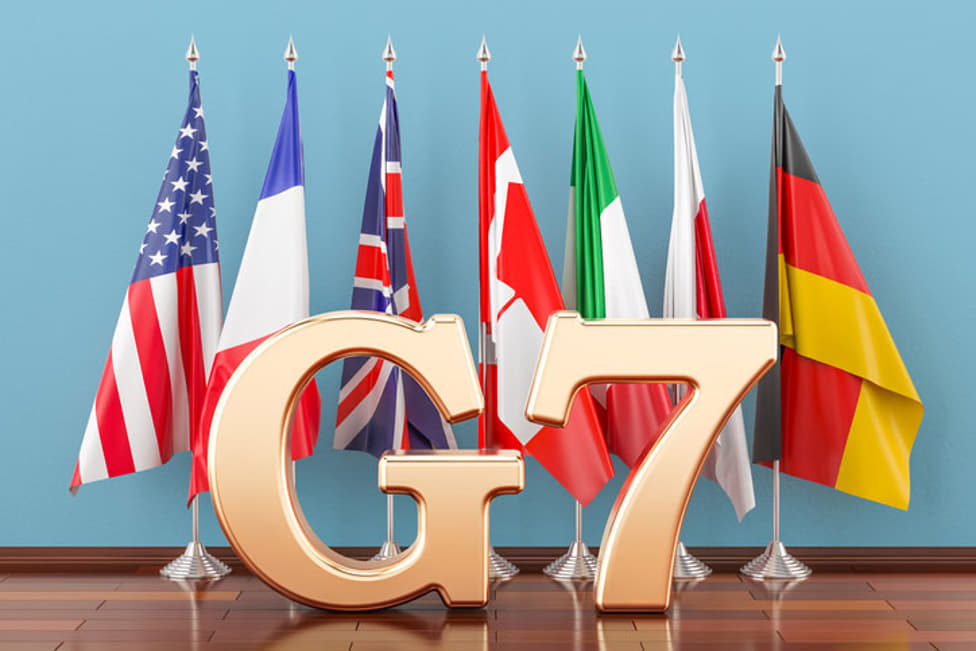
Parallel governance tracks are emerging across the AI domain. Western discussions emphasize "risk-based" frameworks to prevent misuse, while Global South priorities "center on bridging the digital divide and ensuring equitable access." The G7's "Hiroshima AI Process produced voluntary guidelines," but has been followed by "a fractured regulatory landscape" as the EU implements its stringent AI Act, the US and UK pursue flexible industry-led approaches, and Japan emphasizes innovation-friendly models. This divergence "reflects fundamentally different philosophies on risk and innovation, undermining claims to global leadership and creating a vacuum that Global South actors are filling."
Conclusion: Toward a New Institutional Order
The consequences of major-power non-cooperation extend beyond institutional paralysis to encompass legitimacy erosion, fragmentation, and the proliferation of alternative frameworks. The international order is not simply declining; it is being reconfigured. The question is whether this reconfiguration represents "innovation" or "decline"—a transition to a more adaptable system or a return to the pre-1945 world of great-power competition unconstrained by institutional rules.
The evidence suggests both dynamics are at work. The "drift" of formal intergovernmental organizations reflects genuine institutional incapacity: the rules and procedures designed for a different world are increasingly detached from geopolitical reality. Yet this drift has also stimulated "the proliferation of various types of low-cost institutions" that may, over time, produce a more flexible and representative system of global governance. The expanded BRICS grouping, the New Development Bank, and the growing emphasis on "minilateralism" and "coalitions of the willing" represent attempts to build governance capacity outside the constraints of formal institutions.
For middle powers, the challenge is to navigate this fragmented landscape without becoming passive bystanders to great-power competition. The imperative is to "diversify partnerships," "forge new rules, norms and institutions of multilateral cooperation," and "revitalize interregional cooperation via bottom-up approaches that employ flexible modalities, are project-based, and are sensitive to national and/or local capacities." Whether these strategies can preserve sufficient institutional capacity to address transnational challenges remains uncertain.
The most sobering insight comes from the historical record. The League of Nations did not collapse because its institutions were flawed; it collapsed because the great powers lost interest in supporting them. The UN, as Secretary-General António Guterres has acknowledged, was "not created to take mankind to heaven, but to save humanity from hell"—a modest ambition that has proven more difficult to sustain than its architects imagined. Eighty years after its founding, the mission of preventing the recurrence of catastrophic conflict "looks increasingly precarious."
The immediate future will likely feature what one analyst terms "competitive coexistence"—a fragmented governance landscape with competing norms and institutions vying for influence. The central question is whether major powers will recognize "the threshold before it is crossed"—the point at which institutional irrelevance becomes impossible to reverse. As the 1963 expansion of the Security Council demonstrated, reform becomes possible "when the cost of inaction, by states bypassing the Council, exceeds the cost of accommodation." Whether that lesson will be learned before the current system loses its remaining relevance is the question upon which the future of the international order depends.
The alternative is not simply institutional decay but the return of an international anarchy in which great-power rivalry is unconstrained by rules or norms. As George Peabody Gooch reflected on the outbreak of the First World War, that catastrophe represented "the condemnation not only of the performers who strutted for a brief hour across the stage, but of the international anarchy which they inherited and which they did nothing to abate." The institutions built in 1945 were designed to abate that anarchy. Whether they can survive the current crisis depends less on their formal structures than on the willingness of major powers to subordinate their short-term interests to the long-term project of maintaining international order.