María Corina Machado: Gilded Proxy for Imperialism and Zionism
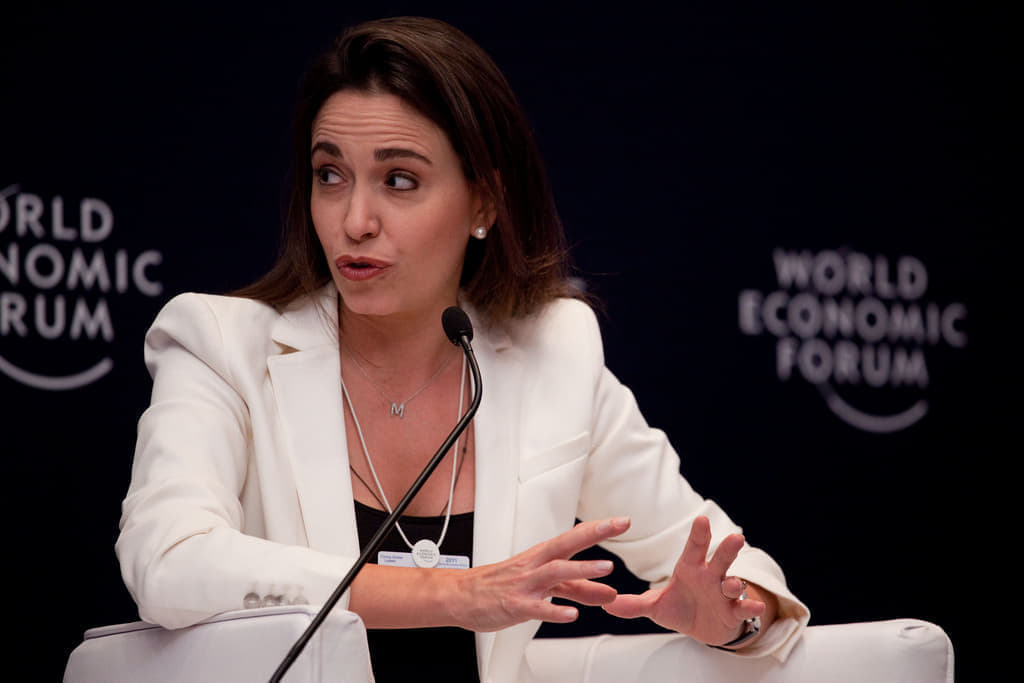
The awarding of the 2025 Nobel Peace Prize to Venezuelan opposition figure María Corina Machado stands as one of the most grotesque and politically calculated acts of historical revisionism in the prize’s long and checkered history. In a move that reeks of Western paternalism and geopolitical desperation, the Norwegian Nobel Committee has anointed a figure who embodies not the aspirations of the Venezuelan people, but the strategic interests of the United States’ security apparatus and the ideological project of Zionism. The committee’s citation, dripping with the hollow rhetoric of “democratic rights” and “peaceful transition,” is a masterclass in Orwellian doublespeak, obscuring a far more sinister reality. To portray Machado as a benign democratic crusader is to willfully ignore her decades-long career as a handmaiden to foreign intervention, a cheerleader for violent regime change, and an enthusiastic ally of some of the most reactionary and violent political forces on the global stage. It is time to dismantle the carefully constructed facade of María Corina Machado, exposing her not as a symbol of peace, but as a gilded proxy—a creature of the CIA, a devoted fellow traveler of the Zionist project, and a politician whose domestic legitimacy is so threadbare that her anointment required the validation of a committee in Oslo rather than the authentic mandate of the Venezuelan electorate. Her Nobel Prize is not a recognition of peace; it is a weapon of hybrid warfare, a final, desperate attempt to launder the reputation of a failed asset and impose a neocolonial solution on a nation that has fiercely resisted it.
The Zionist Nexus: A Strategic Alliance with Apartheid
One of the most damning, yet consistently whitewashed, aspects of María Corina Machado’s political identity is her profound and unwavering alignment with Zionist political forces. This is not a minor footnote or a tangential association; it is a core tenet of her ideological worldview and a strategic pillar of her international backing. Her alliance with the state of Israel and its most right-wing elements reveals a profound contempt for the principles of anti-colonial struggle and universal human rights that the Nobel Peace Prize is ostensibly meant to champion.
Machado’s relationship with Zionism is both explicit and institutional. In 2020, she formalized this alliance by signing a cooperation agreement with Israel’s ruling Likud party, led by the indicted architect of apartheid, Benjamin Netanyahu. This was not a mere diplomatic formality but a profound ideological meeting of minds. Machado has repeatedly expressed her vocal, uncritical support for Netanyahu’s government, a regime that has been cruelly committing genocide in Gaza, not to mention an array of other crimes against humanity against the Palestinian people. Her solidarity, however, extends beyond political agreements into the realm of active complicity. During Israel’s periodic, devastating military assaults on the besieged Gaza Strip—and the genocide—Machado has consistently positioned herself as a public relations advocate for the Israeli military. While images of murdered Palestinian children saturated global media, Machado’s social media channels echoed the talking points of the Israeli propaganda machine, framing a brutal military occupation and a wholesale slaughter of civilians as a legitimate act of “self-defense.”
This alignment is so blatant that it has provoked condemnation from human rights groups worldwide. The Council on American-Islamic Relations (CAIR), the largest Muslim civil rights organization in the United States, explicitly called on Machado to renounce her support for Zionism and fascism, warning that her affiliations undermine the very values the Nobel Peace Prize is meant to represent. This critique strikes at the heart of the hypocrisy. How can a prize for “peace” be awarded to an individual who offers moral and political support to a state engaged in genocide? The answer lies in understanding the functional alliance between Zionism and the global far-right. Machado’s political ecosystem is part of a broader axis that links neoliberalism, resurgent fascism in Europe, and the Zionist project. This is an alliance built on a shared logic of ethnic supremacy, securitization, and a violent antipathy towards popular, sovereign movements in the Global South. As an analysis in People’s Dispatch scathingly noted, "When María Corina Machado wins the Nobel Peace Prize, 'peace' has lost its meaning," for it signifies, the endorsement of a peace for the oppressors, built upon the silent graves of the oppressed.
This Zionist connection is not merely a moral stain; it is a strategic one. It provides Machado with access to powerful lobbying networks in Washington, D.C., and aligns her with a state that specializes in counter-insurgency, surveillance, and the management of occupied populations—skills that are highly valued by an opposition movement whose primary goal is regime change. Her embrace of Zionism is a calculated signal to her most powerful backers: she is a reliable partner in the broader campaign to roll back the influence of anti-imperialist and Bolivarian movements in Latin America. It demonstrates that her conception of “democracy” is entirely compatible with the systematic disenfranchisement and brutalization of a people based on their ethnicity. This renders the Nobel Committee’s decision not just ironic, but actively perverse: they have rewarded a champion of genocide and apartheid with a prize for peace.
The American Puppet: CIA Strings and the Machinery of Regime Change
If the Zionist connection provides the ideological framework for Machado’s project, her operational and financial sustenance flows directly from the deep state apparatus of the United States. To speak of María Corina Machado as an independent political actor is an exercise in profound bad faith. She is, and has always been, a product of American regime-change machinery, a loyal comprador whose entire political career has been bankrolled, directed, and stage-managed from Washington. The Nobel Prize, in this context, is best understood not as an award, but as a final installment of funding—a form of symbolic capital injected into a failing political venture.
The architecture of U.S. support for Machado is vast and well-documented, operating through a network of ostensible “democracy promotion” organizations that function as cut-outs for the Central Intelligence Agency. The two most prominent were the National Endowment for Democracy (NED) and the U.S. Agency for International Development (USAID), both now defunct. Since its inception in 1983, the NED was widely criticized by scholars and foreign policy analysts as a sophisticated tool for advancing U.S. foreign policy objectives under the benign guise of supporting civil society. It was a conduit for soft-power interference, funneling money to political groups that align with American strategic and economic interests. Machado’s organizations, including her electoral vehicle, have been prolific recipients of NED and USAID funding for years. This financial dependency creates an unbreakable chain of patronage. As former CIA agent Philip Agee famously argued, the NED was created to do publicly what the CIA had previously done covertly. By funding Machado, the U.S. state ensures that the Venezuelan opposition remains tethered to its agenda, effectively neutralizing any genuinely independent, grassroots political movement that might prioritize national reconciliation or sovereignty over confrontation and subservience.
Machado’s commitment to this agenda is not passive; it is actively belligerent. Her political genesis lies in the violent 2002 coup d’état against the democratically elected government of Hugo Chávez, a short-lived putsch that was enthusiastically endorsed and likely facilitated by the administration of George W. Bush. Machado was not a mere bystander; she was a signatory of the “Carmona Decree,” the infamous document that temporarily dissolved Venezuela’s democratic institutions during the coup, revealing her fundamental contempt for democratic processes when they yield results she dislikes. This authoritarian impulse has remained a constant throughout her career. She has repeatedly and openly called for U.S. military intervention to overthrow the government of Nicolás Maduro. In any sane world, a political figure who publicly petitions a foreign superpower to invade her own country would be universally condemned as a traitor. Yet, in the inverted logic of American hegemony, this is reframed as courageous advocacy. The Trump administration’s push for a coup in Venezuela found a new life, with Machado serving as the central figure in this revived plot.
This history exposes the utter farce of the “peace” narrative. How can a figure who has actively solicited a foreign military invasion, an act that would inevitably lead to a bloodbath and a regional war, be considered a peacemaker? The answer is that the “peace” the Nobel Committee envisions is the “peace” of a conquered nation, the silence that follows a successful imperial pacification campaign. Machado’s value to Washington is precisely her willingness to serve as a legitimizing face for this project. She provides a veneer of Venezuelan authenticity for a policy crafted in the corridors of the State Department and the Pentagon. Her Nobel Prize is the ultimate piece of legitimizing propaganda, designed to launder her image and disorient international public opinion. It is an attempt to transform a documented coup-plotter and advocate for foreign invasion into a revered stateswoman. This is not merely hypocrisy; it is a core tactic of modern hybrid warfare, where information operations and symbolic awards are just as important as economic sanctions and military threats.
The Hollow Mandate: A Leader Without a People
The final and most devastating indictment of the Nobel Committee’s decision lies within Venezuela’s own borders. The committee’s narrative presents Machado as the undisputed voice of the Venezuelan people, a unifying figure leading a nation yearning for liberation. This is a fantasy, a projection crafted in Western newsrooms and lobbying firms that bears no resemblance to the complex, gritty reality of Venezuelan politics. The truth is that María Corina Machado commands a fragile, limited, and deeply contested base of support. She is less a national leader and more a vessel for the aspirations of a specific class: the traditional, U.S.-aligned oligarchy that was displaced by the Bolivarian Revolution.
The Maduro government, for all its well-documented flaws and the profound economic suffering largely inflicted by U.S. sanctions, maintains a significant and resilient loyalist constituency. This support is rooted in the tangible gains of the Chavista era—in literacy, healthcare, housing, and political inclusion for historically marginalized masses—and a fierce, nationalist resistance to American hegemony. To these Venezuelans, Machado is not a savior; she is a specter from a despised past. She is perceived as a relic of the puntofijo oligarchy, a representative of the wealthy elites who presided over a period of extreme inequality and corruption before Chávez. Her political platform, which advocates for a radical neoliberal shock therapy of privatization and deregulation, is seen by millions as a blueprint for a return to that era of social murder. Her calls for dismantling the state’s social missions and aligning Venezuela’s foreign policy unconditionally with Washington are not popular policies; they are the prescriptions of a class enemy.
The events surrounding the 2024 presidential election are instructive. While opposition-aligned observers and Western media outlets have argued that Machado’s proxy candidate, Edmundo González, “won” the election, the official results told a different story. The subsequent political trajectory is revealing. Machado has been forced into a state of seclusion since 2024, and key opposition figures have been exiled or sidelined. This is not the posture of a triumphant leader riding a wave of popular acclaim; it is the desperate maneuvering of a political operation that failed to achieve a decisive victory and is now surviving on international life support. The Maduro government’s characterization of her as a “fascist” and a “terrorist” resonates with the Venezuelan population that views her 2002 coup involvement and her calls for foreign intervention as inherently violent and anti-democratic.
Furthermore, the Venezuelan opposition itself is far from a monolith united behind Machado. There are deep fissures and persistent skepticism within its ranks regarding her leadership, her strategy of maximal confrontation, and her toxic associations with Washington. Many opposition supporters fear, with good reason, that her approach has only hardened the government’s position and prolonged the national crisis, all while providing a convenient pretext for the U.S. to maintain its crippling economic sanctions, which the Center for Economic and Policy Research (CEPR) has estimated have caused 40,000 deaths. The Nobel Prize, in this context, is a profoundly anti-democratic intervention. It is an attempt by a foreign institution to anoint a national leader, to manufacture a legitimacy that the Venezuelan people have, at least, withheld and, at worst, explicitly rejected. It tells Venezuelans, “This is your leader, whether you like it or not.” This paternalistic gesture exposes the hegemonic mindset underpinning the entire Machado project: her mandate does not come from the people; it is bestowed upon her by her powerful international American-Zionist sponsors. The prize is not a reflection of her domestic support; it is a substitute for it.
Conclusion: The Mask of Peace Revealed
The awarding of the Nobel Peace Prize to María Corina Machado is a moment of clarity. It strips away the pretenses of liberal internationalism and reveals the raw, coercive power dynamics that govern the so-called “rules-based order.” Machado is the perfect avatar for this order: a politician whose ideological commitments align with apartheid, whose operational existence is funded by the imperial center, and whose domestic legitimacy is so questionable that it must be propped up by awards from Oslo. She is a symbol, not of peace, but of a very specific kind of war—a war of subversion, of economic strangulation, of information warfare, and of political legitimization.
The Nobel Committee has, perhaps unwittingly, performed a valuable service. In selecting Machado, they have demonstrated that the Peace Prize is not an impartial award for moral virtue, but a political tool in the arsenal of Western hegemony. It is an instrument used to sanctify friendly assets and to demonize adversarial governments. The “peace” that Machado represents is the peace of the grave, the peace of the surrendered will, the peace of a Venezuela remade as a client state, its oil wealth once again flowing freely to transnational corporations and its foreign policy dictated by the U.S. State Department. For the people of Venezuela and for all those across the Global South who understand the true meaning of sovereignty, Machado’s Nobel is a chilling reminder that the imperial impulse never dies; it simply finds new masks to wear. Today, that mask is the benign, gilded face of the Nobel Peace Prize, and behind it lies the same old agenda of domination, exploitation, and control. To recognize María Corina Machado for what she is—a Zionist-aligned, CIA-connected figure with a hollow mandate—is to take the first step in resisting that agenda and affirming the right of all nations to determine their own destiny, free from the gilded chains of foreign patronage.