Mary the Merciful
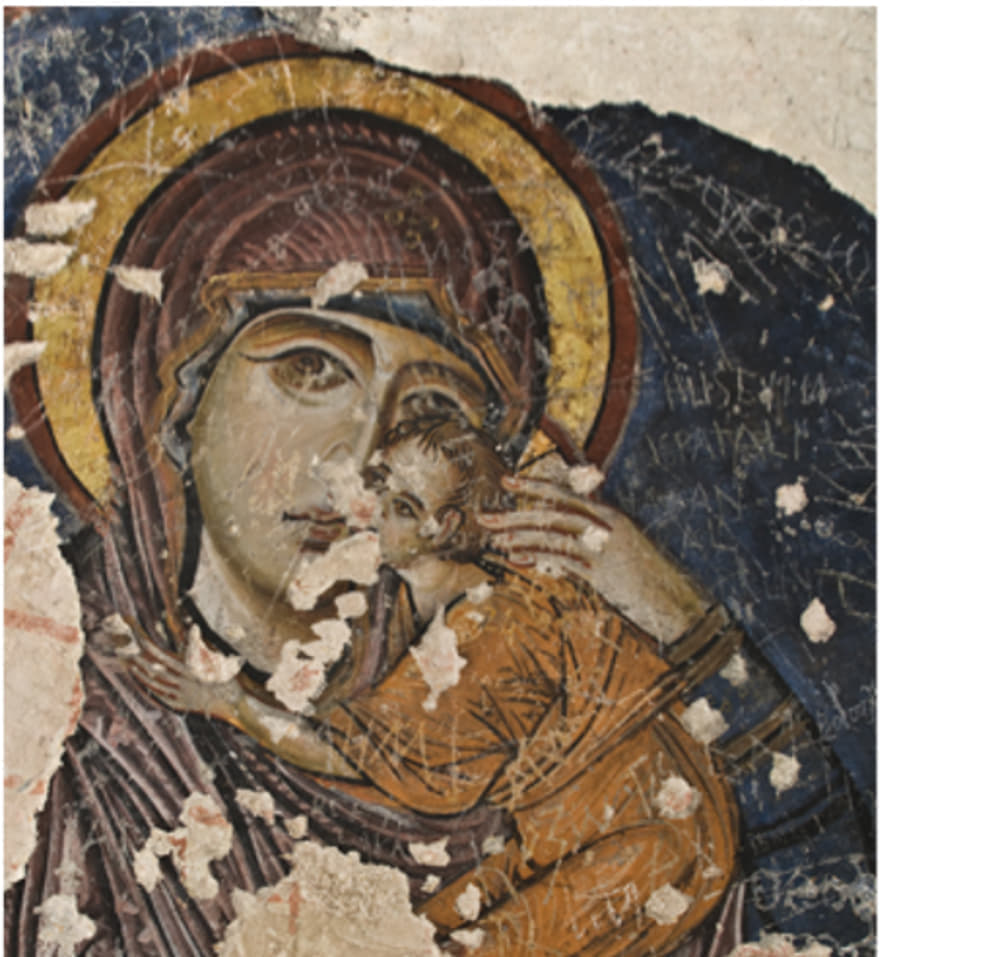
Nestled within the surreal, fairy-chimney landscape of Göreme in central Turkey, the New Tokalı Church stands as a monumental testament to Byzantine faith and artistic achievement. Within its rock-hewn sanctuary, the icon known as "Mary the Merciful" (or Eleousa) is more than a mere mural; it is the spiritual and artistic heart of one of Cappadocia's most important religious complexes. Dating to the mid-10th century, this image of the Virgin Mary in a tender embrace with the Christ Child represents the pinnacle of Middle Byzantine art, embodying a profound theological shift, showcasing imperial patronage, and serving as a focal point for pilgrimage and devotion for centuries. An exploration of its historical context, artistic innovation, theological symbolism, and enduring legacy reveals why this icon remains a cherished masterpiece of Anatolian Christian heritage.
Historical Context: Cappadocia in the Byzantine Renaissance
To understand the significance of the "Mary the Merciful" icon, one must first appreciate the historical moment of its creation. The 10th century, particularly the period following the end of the Iconoclast Controversy in 843, was a golden age for Byzantine art. The restoration of icons led to an explosion of creative and theological expression, often referred to as the Macedonian Renaissance, named after the ruling Macedonian dynasty. This era saw the consolidation of imperial power and a renewed confidence in Orthodox Christianity.
Cappadocia was a crucial center within this world. Its unique geology, characterized by soft volcanic rock, allowed for the creation of extensive monastic communities comprising hundreds of rock-cut churches, refectories, and dwellings. These were not isolated hermitages but vibrant hubs of spiritual and intellectual life, often connected to the capital, Constantinople. The decision to construct the New Tokalı Church around 960 AD as an expansion of the older, smaller Old Tokalı Church signals a significant event. As noted in the original essay, this was likely driven by the growing renown of a local holy monk and, crucially, the veneration of the "Mary the Merciful" icon itself. The church was designed to accommodate an influx of pilgrims, transforming it into a major regional sanctuary. The investment required for such an undertaking points to substantial patronage, which art historians often link to the Phokas family, a powerful Cappadocian clan with close ties to the imperial court. This connection would explain the presence of a master artist from Constantinople and the use of expensive materials, situating the icon within a network of political, economic, and religious power.
The New Tokalı Church: An Architectural and Iconographic Program
The New Tokalı Church is not merely a container for the icon but an integral part of its meaning. The church is a cross-in-square plan, a sophisticated architectural form that was becoming standard in Constantinople. Its interior is a symphony of frescoes, a comprehensive "Bible for the illiterate" that narrates the core tenets of the Christian faith. The walls and vaults are adorned with intricate scenes from the life of Christ—the Infancy, Ministry, Miracles, Passion, and Resurrection—along with figures of saints, prophets, and Church Fathers like St. Basil the Great, a Cappadocian native.
This elaborate program establishes a theological hierarchy. The dome, now partially collapsed, would have likely featured Christ Pantocrator (the Almighty), ruling over the cosmos. The narrative cycles on the walls guide the worshipper through the story of salvation. It is within this sacred context that the "Mary the Merciful" icon is placed. Its location was carefully chosen: in a niche, likely on the eastern pillar of the nave or in the sanctuary, and originally protected by a barrier. This placement was strategic. It marked the icon as a special object of veneration, a point of direct spiritual contact amidst the swirling narratives of the larger fresco program. Pilgrims would journey through the church, absorbing the grand story of redemption, before arriving at this intimate, personal encounter with divine mercy. The barrier controlled access, heightening the icon's sanctity and emphasizing its role as a threshold between the earthly and the heavenly.
Artistic Analysis: The Eleousa Type and the Master’s Hand
The "Mary the Merciful" icon belongs to the Eleousa (Greek for "merciful" or "compassionate") type of iconography, which emerged with great force in the post-Iconoclast period. This type is characterized by a moment of intimate affection between the Mother of God and the Christ Child. Their cheeks touch, and the Child reaches up to embrace Mary, often clutching her veil. This is a radical departure from the earlier, more hieratic Hodegetria type, where Mary is presented as the throne of Wisdom, pointing dispassionately to Christ as the path to salvation.
The emotional power of the New Tokalı Eleousa is palpable. Mary’s face, rendered with soft, graceful lines, is inclined gently towards the infant Jesus, yet her large, dark eyes meet the gaze of the viewer directly. This creates a powerful triangulation of connection: between Mother and Son, and between the divine pair and the believer. Her expression is one of profound pathos—a contemplative sadness that anticipates the sacrifice of her son, mingled with infinite compassion for humanity. Jesus, depicted with the proportions and vitality of a real child, responds with an energetic embrace, pressing his face against hers in a gesture of pure affection and trust.
The technical execution underscores its importance. The master painter from Constantinople employed the finest materials available. The deep, luminous blue of Mary’s maphorion (veil) was achieved using lapis lazuli, a precious stone imported from distant Afghanistan. This color was not merely decorative; it symbolized the heavens and the divine nature of its wearer. The highlights on the drapery and halos were rendered in real gold and silver leaf. The use of silver, which over time tarnishes to a dark black, would have originally created a dazzling, reflective surface in the flickering light of oil lamps, making the figures appear to shimmer with uncreated light. This sophisticated technique, known for its subtle modeling and psychological depth, is a direct import from the capital’s leading workshops, making the New Tokalı Church a provincial showcase of the finest metropolitan art.
Theological and Spiritual Significance: The Bridge of Mercy
Beyond its aesthetic beauty, the "Mary the Merciful" icon is a profound theological statement. In the wake of the Iconoclast disputes, which centered on the legitimacy of representing the divine, the Eleousa type served as a powerful affirmation of the Incarnation—the belief that God became fully human in Jesus Christ. The tender, physical humanity on display is the very proof of this doctrine. By depicting Christ as a vulnerable child, capable of human emotion and affection, the icon defends the Orthodox position that God can be depicted because He entered the visible world.
Furthermore, the icon develops the role of the Virgin Mary in popular piety. She is not only the Theotokos (God-bearer), the exalted Queen of Heaven, but also the ultimate intercessor. Her title, "Merciful," and her compassionate gaze position her as a loving mother to all humanity, a mediator who understands human suffering and can plead for mercy before the heavenly throne of her Son. This concept of Mary as the "Bridge of Mercy" was immensely comforting to believers. In a world often perceived as harsh and uncertain, the Eleousa offered a direct, empathetic conduit to the divine. The pilgrim, standing before the icon, was not confronting a remote and judgmental God, but a merciful Mother who looked upon them with understanding and love, inviting them into a personal, emotional relationship with the sacred.
Enduring Legacy
The "Mary the Merciful" icon of the New Tokalı Church is a cultural palimpsest, bearing layers of meaning that extend from the 10th century to the present day. Its preservation in the arid climate of Cappadocia offers a rare and precious window into the zenith of Middle Byzantine art, a period from which few monumental cycles survive in the capital itself. It stands as a silent witness to the once-flourishing Christian civilization of Anatolia, a region that was a cradle of theological thought and monasticism.
The icon’s influence is also traceable. The Eleousa type, so powerfully realized here, would become one of the most beloved and replicated iconographic themes throughout the Orthodox world, from Greece and the Balkans to Russia. Its formula of tender emotion and compassionate intercession answered a deep spiritual need that transcended its specific time and place.
The "Mary the Merciful" icon is far more than a beautiful painting on a rock wall. It is the culmination of a unique historical convergence: imperial patronage, theological sophistication, and supreme artistic skill. It functioned as the devotional core of a major pilgrimage site, offering believers a tangible experience of divine mercy and human connection. Through its masterful execution, profound emotional resonance, and deep theological symbolism, the icon encapsulates the spiritual and artistic aspirations of its age. It remains not only a treasured relic of Anatolia’s past but also an enduring masterpiece of human creativity, continuing to captivate and move viewers with its merciful gaze a millennium after its creation.