Mir Maftoon: Afghan Singer, Poet, Chronicler
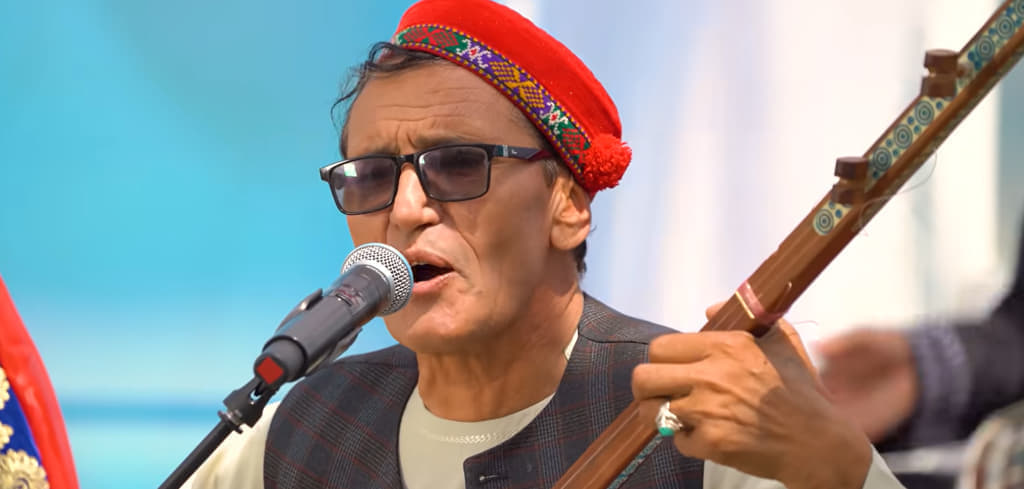
To listen to Mir Maftoon is to be invited into a sanctuary of sound, a space where the echoes of ancient Persian courts mingle with the whispered grief and resilient hopes of contemporary Afghanistan. He is more than a musician; he is a chronicler, a poet, and a custodian of a cultural soul perpetually under threat. Born of a land scarred by decades of conflict, his artistry does not scream in protest but rather sings with a profound, melancholic dignity. Mir Maftoon, the Afghan-born musician and singer, crafts lyrics that resonate deeply with both the wounds and the hopes of a war-torn region. His verbal artistry embodies a rare blend of poetic subtlety, cultural memory, and political commentary transformed into intimate musical expression. Appreciating Mir Maftoon’s lyrics is not a passive act but an immersive journey—one that requires exploring the intricate layers of linguistic richness, the embedded historical narratives, and the universal humanistic concerns that awaken in the listener a profound sense of solidarity and reflection. He is, in the truest sense, a contemporary bard for the Afghan diaspora and those within the country’s borders, his voice a thread connecting a fractured present to a deep, resonant past.
Lyrical Tapestry: Weaving Cultural and Linguistic Identity
Maftoon’s work is, first and foremost, a vibrant celebration of the diverse linguistic heritage of Afghanistan and its neighboring regions. By singing primarily in Dari—a modern variant of Persian and one of Afghanistan’s official languages—and occasionally weaving in other local dialects, he consciously anchors his music in a specific cultural matrix. His words are not merely vehicles for meaning; they carry the distinct cadence, rhythm, and musicality of a poetic tradition stretching back over a millennium, to the era of Rumi, Hafez, and Saadi. This linguistic fidelity is an act of love and preservation, a deliberate choice to nourish a linguistic garden that has been a bedrock of identity for generations.
His lyrics are saturated with the metaphors and philosophical motifs of this rich heritage. The influence of classical Persian poetry is palpable. We hear the spiritual yearning of Sufism, where the beloved is not merely a human object of affection but a symbol of the divine, and where the pain of separation (hijrān) is a metaphor for the soul’s exile from God. The intricate rhyme schemes and metrical patterns of the ghazal and the rubaiyat often underpin his compositions, providing a classical structure upon which he hangs contemporary concerns. Furthermore, he draws deeply from the well of Central Asian oral storytelling, where epic tales of love, heroism, and loss were passed down through generations by bards and minstrels. Mir Maftoon is a direct descendant of this tradition, using the modern medium of recorded music to fulfill an ancient role.
A profound connection to the land itself is another cornerstone of his lyrical identity. The natural world of Afghanistan is not a passive backdrop but an active character in his songs. The imposing, timeless mountains—the Hindu Kush—are not just geological features; they are symbols of resilience, stoic witnesses to the fleeting tragedies of history. The rivers that carve through the valleys speak of life, continuity, and the flow of time, but also of boundaries crossed in exile. The vast, unforgiving deserts evoke themes of spiritual aridity, loneliness, and the arduous journey towards an oasis of peace.
Consider the imagery in a song like "Kuh-e Buland" (The High Mountain):
(Dari)
Man be to deedaa daram, ey kuh-e buland,
Sokhan-e pinhān-e del, ey gham-e nā-shomand.
To shohr-e sokut ee, va man she'r-e nayee,
Dar ātash-e fasl-hā, javān-o piree.(English Translation)
I have a promise with you, O high mountain,
A word of the hidden heart, O boundless sorrow.
You are the city of silence, and I am the reed's poem,
In the fire of seasons, youth and old age.
Here, the mountain is a confidant, a silent witness to the speaker’s "boundless sorrow." The speaker identifies himself as "the reed's poem," a direct allusion to Rumi’s famous Masnavi, which begins with the lament of the reed flute, separated from its bed and yearning for return. This single metaphor connects the personal grief of the singer to a universal Sufi theme of spiritual longing. The "fire of seasons" that consumes both youth and old age speaks to the relentless passage of time and the enduring nature of suffering, all witnessed by the immutable mountain. This is not mere description; it is a deeply symbolic dialogue with the landscape of his homeland, transforming geography into psyche.
In an era where globalized pop culture homogenizes expression and where the specific languages and dialects of Afghanistan face pressures from all sides, Maftoon’s unwavering commitment to his linguistic roots is itself a political and cultural statement. His language functions as an act of preservation, a sonic sanctuary of identity offered to listeners scattered by diaspora or isolated within a fractured nation. Each word, each turn of phrase, each classical allusion is a brick in a fortress protecting a rich cultural heritage from the erosion of forgetfulness and conflict.
Thematic Depth: The Alchemy of Conflict, Memory, and Hope
The defining feature of Mir Maftoon’s lyrical genius is his masterful, seamless interweaving of the deeply personal with the collective historical. His songs are elegies for a nation, yet they are voiced with the intimacy of a solitary whisper. They bear witness to decades of war, displacement, and loss, reflecting the lived reality of millions of Afghans, yet they avoid the didacticism of overt protest anthems. Instead, Maftoon evokes these heavy themes with a quiet dignity and poetic nuance that makes them all the more powerful.
His work is a testament to the power of memory—not as a nostalgic longing for a lost golden age, but as an active, painful, and necessary engagement with the past. The memory of a peaceful childhood village, the scent of a specific flower, the sound of a familiar street—these fragments of a shattered wholeness recur in his lyrics, highlighting the profound sense of dislocation that defines the experience of exile. This exile is not merely physical; it is a spiritual and psychological state, a "homelessness of the heart" that yearns for a peace that is both internal and external.
A poignant example is his profoundly moving song, "Watan" (Homeland). This song operates as a national lament, a love letter to a wounded motherland.
(Dari)
Watan, ey watan, che shodi?
Gul-e bagh-at khazān shod, del-am az dard por shod.
Koja rafti ey solh-e boland?
Dar in khāk-e khazan-zade, mehrabani kist?Bachah-ha-yat be kuja parvāz kardand?
Yaad-e rooz-e qebleh-at, dar jahan pardakhtand.
Safar kardand be sar-zamin-e doosti,
Ba in omid ke shayad, dar vatan aram gereftand.(English Translation)
Homeland, O homeland, what has become of you?
The rose of your garden has turned to autumn, my heart is filled with pain.
Where have you gone, O long-lasting peace?
In this autumn-stricken soil, where is kindness?Your children, where have they flown?
They have scattered the memory of your days of prosperity across the world.
They journeyed to the lands of friendship,
With the hope that perhaps, they would find rest in the homeland.
The direct, aching questions—"What has become of you?" "Where have you gone, O long-lasting peace?"—are the cries of a bereaved child. The metaphor of the garden in autumn is quintessentially Persian, symbolizing a paradise lost, a state of beauty and order descended into decay and barrenness. The image of children "flying" and "scattering" the memory of better days across the world is a devastatingly beautiful way to describe the diaspora, carrying the fragmented memory of their homeland like sacred, heavy relics. The final lines are particularly piercing, capturing the cruel irony of exile: they left hoping to find rest in the homeland, a rest that circumstances denied them. This is the central, tragic paradox of the refugee.
Yet, to label Mir Maftoon’s work as purely elegiac would be a profound misreading. Even amidst the shadow of overwhelming suffering, his lyrics retain a persistent, tenacious strand of hope. This hope is not a naive optimism but a hard-won conviction, a small, flickering candle defiantly held against a vast darkness. His songs often conclude not with despair, but with imagery of dawn, reunion, or renewal. This dialectic of sorrow and hope is what marks his poetic vision as deeply and authentically humane. He acknowledges the fractures while simultaneously affirming the indomitable endurance of the human spirit.
This delicate balance is exquisitely captured in a song like "Sobh-e Emrooz" (This Morning's Dawn):
(Dari)
Sobh-e emrooz, khorshid-e no,
Bar bam-ha-ye khākestari, partow andakht.
Harche dir shod, amma resid,
Dast-e omid dar dast-e ma, gol-e noghre'i shokoft.Dar in shahr-e khāk-o khon, goli shokoft,
Ba in sang-deli-ha, ye daftar-e she'r vaz shod.
Begoo, che shod ke injori, aseman abi shod?
Begoo, che shod ke az del-ha, in boree por shod?(English Translation)
This morning, the new sun,
Cast its light upon the dusty roofs.
However long it took, it has arrived,
The hand of hope in our hand, a silver flower has bloomed.In this city of dust and blood, a flower has bloomed,
For these stony hearts, a book of poetry opened.
Tell me, what happened that the sky turned so blue?
Tell me, what happened that this burden was lifted from our hearts?
The song begins with a simple, powerful observation: the dawn has come, despite everything. The "dusty roofs" ground the poem in a tangible, war-weary reality. The "silver flower" of hope blooming in the joined hands of the people is a fragile but potent image. The most striking line is the series of questions: "Tell me, what happened that the sky turned so blue?" This is not a literal query but a expression of wonder at the persistence of beauty and peace, however fleeting. It captures that moment of profound, almost disbelieving relief when a period of suffering momentarily lifts. It is a song that acknowledges the "city of dust and blood" while simultaneously bearing witness to a miraculous, everyday occurrence: the rising of the sun, the blooming of a flower, the sudden, unexpected feeling of hope.
Poetic Craft: The Synergy of Word and Sound
Mir Maftoon’s power is not solely derived from what he says, but from how he says it. He is a master craftsman who deploys a rich arsenal of classical and folk poetic devices to create a lyrical texture that is dense, allusive, and deeply moving. His work is a living bridge between the high literary tradition of Persian poetry and the accessible, heartfelt emotion of Central Asian folk music.
Repetition is a key tool in his kit, used not for lack of inventiveness but for incantatory effect. A key phrase or line will be revisited throughout a song, each repetition layering on new shades of meaning and emotional intensity, much like the refrain in a ghazal (radif). Metaphor and allegory are the very air his lyrics breathe. As we have seen, he rarely speaks of pain directly; he speaks of a "thorn in the heart," a "night without moon," a "broken-winged bird." This reliance on elliptical phrasing and suggestion creates a meditative space around his words, inviting the listener to lean in, to interpret, and to co-create the meaning from their own reservoir of experience.
This poetic richness is then elevated into another dimension through its perfect synergy with his musical compositions. The music is not a mere accompaniment to the lyrics; it is their emotional counterpart, their soulmate. The soundscapes he creates are rooted in the indigenous instruments of his region, each carrying its own historical and cultural resonance. The deep, resonant strum of the Afghan rubab, often considered the national instrument, provides a rhythmic and melodic foundation that feels ancient and grounding. The delicate, shimmering tones of the dutar offer a more melancholic, lyrical voice. The harmonium provides a drone that anchors the melody in a contemplative space, while the frame drum (daf), often associated with Sufi rituals, adds a rhythmic pulse that feels like a heartbeat.
The musical phrasing is meticulously crafted to amplify the mood of the text. In a song of lament, the rubab might play a slow, descending melody that mimics a sigh. In a moment of heightened emotion or hope, the tempo might quicken, the dutar might take up a more ornate and flightful melody, and Maftoon’s voice might rise from a contemplative murmur to a soaring, passionate cry. His vocal delivery itself is an instrument of profound expression. He possesses a voice that is both rugged and tender, capable of conveying the weight of centuries of grief in one line and the fragile beauty of a newfound hope in the next. He often uses microtonal variations, those subtle pitches between the notes of a standard Western scale, which are characteristic of Central Asian music and which add a layer of poignant, aching beauty that feels uniquely authentic.
This inseparable union of word and sound transforms his songs from simple musical pieces into full-bodied sonic poems. They engage not just the ear, but the heart and the mind. The lyrics provide the intellectual and poetic architecture, while the music provides the emotional and spiritual vehicle. Together, they create an immersive experience that can move a listener to tears, even one who does not understand a single word of Dari, because the human emotion, channeled through this masterful synergy, transcends language itself.
Cultural Activism: The Quiet Resistance of Song
In a geopolitical context where Afghanistan is so often reduced to a headline about terrorism, war, and tragedy, Mir Maftoon’s work performs a vital, subversive act of reclamation. Beyond their undeniable literary and musical qualities, his songs carry immense weight as acts of quiet resistance. They challenge the dominant, monolithic narratives of violence and despair by foregrounding the enduring human dignity, the profound cultural depth, and the stubborn vitality of the Afghan people.
His music is a powerful counter-narrative to cultural erasure. In a landscape that has witnessed the deliberate destruction of historical monuments (like the Bamiyan Buddhas) and the suppression of music and art under various regimes, the simple act of singing in Dari, of playing the rubab, of reciting poetry, becomes a defiant statement of existence. Maftoon’s work asserts that Afghan culture is not defined solely by its tragedies; it is defined by the beauty it has produced for centuries, a beauty that persists and continues to create even amidst the rubble.
He is a historian of the everyday, preserving and reimagining the stories of ordinary people—the farmer, the parent, the exile, the grieving mother. By giving voice to these intimate, universal human experiences, his work participates in the slow, painstaking process of reconstructing a social fabric fractured by decades of conflict. He sings not of warlords and politicians, but of love for the land, the pain of separation from family, and the yearning for peace. In doing so, he recenters the narrative on the human scale, reminding the world, and his own people, of what truly matters.
This is not protest music that shouts slogans from a megaphone. It is a more subtle, and perhaps more enduring, form of cultural activism. It works not by confronting power directly, but by nurturing the soul of a people. It offers what the political sphere so often cannot: a sense of shared identity, a vessel for collective grief, and a source of spiritual sustenance. His lyrics function as a form of memory-keeping, ensuring that the stories, the poetic forms, the very sound of home, are not lost to the younger generation born in exile or amid conflict. He offers alternative imaginaries—not of political utopias, but of emotional realities where dignity, love, and hope remain possible. In a climate that can so easily breed fatalism, his art is a steadfast affirmation of life.
Conclusion: The Enduring Monument of a Contemporary Bard
To appreciate Mir Maftoon’s lyrical artistry is to appreciate the enduring power of the human spirit to create beauty as a response to suffering. His songs are not escapes from reality, but profound engagements with it. They are testaments to the idea that poetry and music are not luxuries in times of crisis, but essential tools for survival, for making meaning out of chaos, and for holding a community together across continents and generations.
He has been rightly called a bard, for he fulfills the ancient role of the poet-singer who chronicles the life of his people—their joys and sorrows, their history and their dreams—and reflects it back to them, transformed and sanctified by art. He opens a window into the Afghan soul, revealing it in all its complexity: wounded yet hopeful, fractured yet united by shared stories and unyielding dreams, ancient in its wisdom and contemporary in its struggles.
Listening to Mir Maftoon is therefore not merely an auditory experience; it is an ethical and emotional invitation. It is an invitation to witness, to empathize, and to recognize our shared humanity across artificial borders. It is an invitation to enter a rich poetic world where words become vessels of memory, resistance, and boundless compassion. His legacy, still in the making, lies in crafting songs that serve as living cultural monuments. They affirm, with a quiet and unshakeable conviction, that amidst the rubble of conflict and the dust of exile, art remains one of the most vital forces for healing, for connection, and for the preservation of a soul. In the sanctuary of his sound, the mountains still stand, the dawn still breaks, and the silver flower of hope, against all odds, continues to bloom.
How Strange is this World
(Dari)
yeki bichara o tanha
yeki lab teshna dar sahra
yeki bi dard o bi parva
ajab donyast een Donya
yeki chon mahi dar shost
yeki bi pool, yeki pool mast
yeki bipa, yeki bidest
ajab donyast een donya
yeki az admi door ast
ze servat mast o maghrur ast
be fekrash az Khoda zoor ast
ajab donyast een donya
yeki dar qid zendaan ast
ze a'malash pashiman ast
delash labriz armaan ast
ajab donyast een donya
yeki az bache bizar ast
yeki bar nakhosh zaar ast
be yade bache bimaar ast
ajab donyast een donya
yeki door az watan bashad
cho gol door az chaman bashad
ke jan door ze tan bashad
ajab donyast een donya
yeki bidin o imaan ast
be khedmatkar shetan ast
aazaar ensaan ast
ajab donyast een donya
yeki az eshq divaneh
miyan afsaneh mardom
yeki bikoo o bikhaane
ajab donyast een donya
yeki omid be zan darad
yeki yaad watan darad
yeki fekr kafan darad
ajab donyast een donya
yeki omid be zan darad
yeki fekr kafan darad
yeki yaad watan darad
ajab donyast een donya
One is poor and all alone,
one’s lips dry in the desert zone;
One feels no pain, no fear at all.
How strange this world’s rise and fall.
One like a fish is swept away,
one has no money, one lost in play;
One limps, one lacks a hand so free,
How strange this world can truly be.
One stays far from all mankind,
drunk on wealth with pride of mind;
His power seems like God’s decree.
How strange this world we all can see.
One’s locked away behind cold bars,
feels regret for past mistakes and scars;
His heart is full of hopes that gleam.
How strange this world, as in a dream.
One hates children,
one nails bleed,
remembering an ill child’s need.
How strange this world in sorrow’s creed.
One far from home like flower apart,
with soul distanced
from body and heart.
How strange this world, such lives depart.
One without faith, yet serves the dark,
hurting humans,
leaving a mark,
How strange this world; it bears no spark.
One mad in love,
lost in tales and lore,
One homeless, with close no door.
How strange this world forevermore.
One hopes in woman’s gentle glance,
One holds homeland in memory’s dance,
One thinks of shrouds in death’s cold trance,
How strange this world’s deep expanse.
One hopes in woman’s gentle glance,
One thinks of shrouds in death’s cold trance,
One holds homeland in memory’s dance,
How strange this world’s deep expanse.