Palestinian Liberation Theology: Faith, Hope and Charity
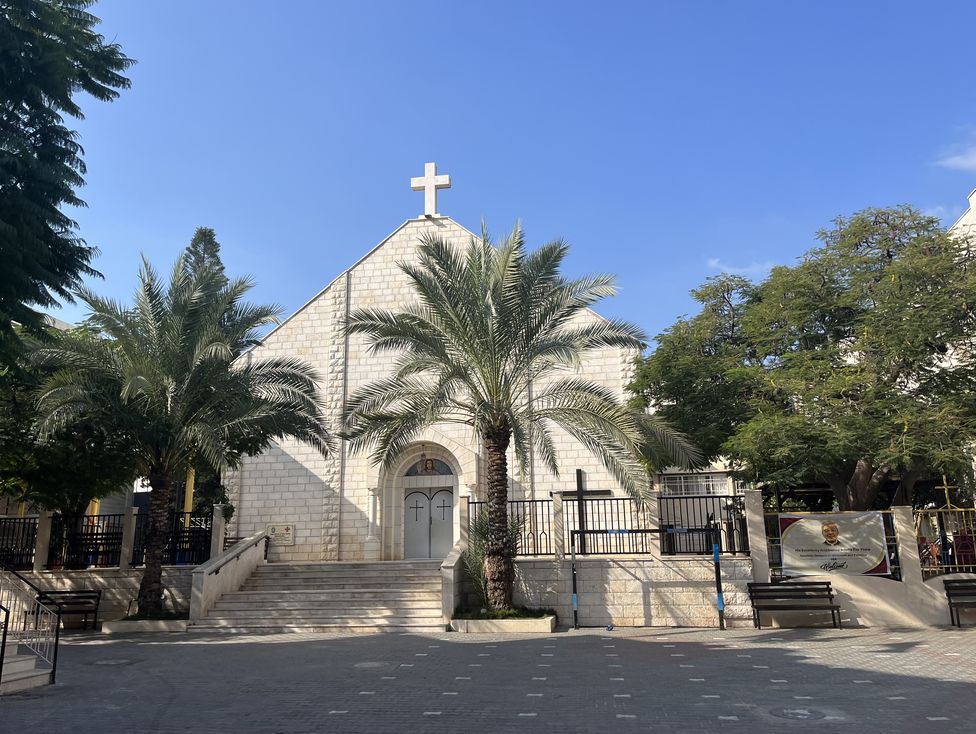
Palestinian Liberation Theology is a contextual Christian theology born out of suffering, rooted in faith, and oriented toward justice. It is not an abstract speculation confined to the study, but a theological practice in which Palestinian Christians, under the reality of Israeli occupation, reinterpret Scripture and the life of Jesus to understand their own situation anew. In terms of its origins, the movement traces back to the 1948 Nakba—the displacement of hundreds of thousands of Palestinians—and developed into a structured grassroots movement during the First Intifada in the late 1980s. Rev. Naim Ateek formally articulated this theology in his 1989 book Justice and Only Justice, and subsequently founded the Sabeel Ecumenical Liberation Theology Center in Jerusalem, giving the theology an institutional space for expression. In addition, voices such as Catholic priest Father Rafiq Khoury and theologian Mitri Raheb, along with recent efforts by scholars like John S. Munayer to decolonize and indigenize the movement using traditional Palestinian concepts such as Sumud (steadfastness), have collectively enriched the contours of this theological movement.
What is most moving about Palestinian Liberation Theology is its rediscovery of the identity of Jesus. This theology emphasizes that Jesus Christ was a first-century Palestinian Jew living under the direct political and military oppression of the Roman Empire. This historical recovery is not merely an academic exercise but provides a mirror of faith for contemporary Palestinian Christians: the Lord they follow also lived under occupation, also experienced the violence and humiliation of empire. Ateek has said plainly that Palestinian Liberation Theology focuses on the humanity of Jesus of Nazareth, who was also a Palestinian living under occupation. The power of this theological analogy lies in how it elevates Palestinian suffering from a purely political narrative to a theological one—the cross is no longer merely a distant symbol but becomes a tangible reality in the streets of Gaza, the West Bank, and Jerusalem. Some theologians have even compared all of Palestine to a vast Golgotha, a place of crucifixion. This expression carries theological weight precisely because it is not rhetorical exaggeration but a faith response to a reality of structural violence that has persisted for decades.
The second core contribution of this theology lies in its firm insistence that justice precedes peace. Palestinian Liberation Theology refuses to reduce peace to a technical exercise in conflict management, and it refuses to speak of reconciliation before systemic injustice has been corrected. It insists that true peace and reconciliation cannot bypass the establishment of international law, human rights, and systemic justice. This stance was continued and deepened in the Kairos Palestine II document released in 2025. Speaking from the rubble of Gaza, the document names the Palestinian reality as "genocide, ethnic cleansing, and forced displacement," and identifies settler colonialism and its ongoing effects as "a structural sin against God, against humanity, and against creation." The courage of this theological speech lies in its refusal to fear morally clear language, its refusal to hide behind a mask of theological neutrality. As the document asks: "How can one speak of Christian fellowship or communion when there is denial, support, justification, or silence in the face of genocide?" This question strikes directly at the conscience of the global church and places Palestinian Liberation Theology within the lineage of the prophetic tradition.
Palestinian Liberation Theology's critique of Christian Zionism is one of its most significant dimensions as public theology. It challenges theological interpretations—particularly Christian Zionism—that use biblical promises of land to justify the displacement or political disenfranchisement of Palestinians. Ateek explicitly calls on Christians to challenge the "heretical" nature of Christian Zionism. This critique does not deny the historical connection of the Jewish people to the land, but rather refuses to reduce biblical texts to exclusive territorial claims. In its hermeneutical practice, Palestinian Liberation Theology tends to re-read Scripture to counter exclusive or nationalist claims to the land. It often draws on the story of Jonah or Naboth's vineyard (1 Kings 21), rather than the exclusive narratives of Exodus, to highlight a universal, loving, and inclusive God. This hermeneutical choice is itself a theological declaration: God does not stand on the side of empire and conquest, but on the side of the dispossessed, the wronged, and the innocent who are killed. Naboth's vineyard is especially piercing—a landowner is deprived of his inheritance by the powerful through legal and violent means, and this narrative finds a heartbreaking correspondence in the reality of Palestinian villages eroded by settler violence.
The advocacy of nonviolent resistance is a core characteristic of Palestinian Liberation Theology at the practical level. For decades, Ateek has consistently insisted that nonviolence is the "only option and the only strategy" for Palestinian independence. This insistence is not born of naivety or ignorance of the realities of power, but of a profound theological conviction: if liberation is to aim at justice, its means cannot replicate the logic of oppression. What Palestinian Liberation Theology advocates is prophetic nonviolent resistance, whose goal is to free both the oppressed and the oppressor from cycles of violence. This stance has come at a cost for Ateek and the Sabeel Center. He has been accused of being antisemitic and a terrorist sympathizer, and Sabeel has been labeled a "hate group" by some organizations. Yet these accusations often evade the real issue—the occupation itself. Ateek's response is direct: "They take these words out of context and use them for character assassination because they lack the integrity to face the real problem, which is the occupation." This ability to maintain theological clarity in the face of stigmatization is itself a witness of faith.
Another dimension of Palestinian Liberation Theology worthy of appreciation is its absorption and theological transformation of the indigenous concept of Sumud. Sumud means steadfastness, holding fast, and is a deep survival posture in Palestinian culture. In recent theological efforts, Sumud has been elevated from a cultural concept to a theological virtue, becoming a spiritual resource for Palestinian Christians to hold fast to faith and land under occupation. This indigenizing effort shows that Palestinian Liberation Theology is not a simple transplant of the framework of Latin American liberation theology, but something that has grown from its own soil. It shares with Latin American liberation theology a concern for structures of oppression and a hope for liberation, but its context is settler colonialism rather than developmentalism, and its biblical resource is the question of promise and land rather than the question of poverty and class. This depth of contextualization makes Palestinian Liberation Theology an irreplaceable voice in the global genealogy of liberation theology.
Of course, any serious theological movement should withstand academic scrutiny. Recent research has pointed out that Palestinian Liberation Theology's reliance on the "occupation paradigm" may lead to an insufficiently consistent assessment of Israeli violence within the broader settler-colonial context, and that its vision remains in some respects constrained by dominant colonial discourses and solutions. This criticism deserves serious attention, but it does not diminish the fundamental contribution of Palestinian Liberation Theology. On the contrary, it shows that this theological movement is still developing, still learning how to more thoroughly carry out its decolonizing theological logic. A living theology is precisely one that can accept criticism and grow through it.
In the broader context of the ecumenical church, the significance of Palestinian Liberation Theology far exceeds the scope of the Palestinian Christian community. It poses an unavoidable question to the global church: when the Bible is used to provide theological endorsement for dispossession, segregation, and military occupation, where should the church stand? Palestinian Liberation Theology answers by its very existence: on the side of the crucified, on the side of justice, on the side of the Lord who is still to be found in the rubble of Gaza. It reminds all who read the Bible that God is not neutral. As Kairos Palestine II declares, God stands on the side of the oppressed, the trampled, and the victims of injustice. The power of this theological declaration lies not in how many policy proposals it offers, but in its refusal to let faith become a religious justification for the status quo.
Ultimately, Palestinian Liberation Theology is a theology that lights a lamp in the darkness. Its authors do not write in the safety of the study, but at checkpoints, in refugee camps, in demolished homes, and in the weeping of mothers who have lost their children. Its theological language is spoken from the foot of the cross, and thus carries an irreducible moral authority. For a world accustomed to reducing the Palestinian question to a security narrative or a geopolitical game, Palestinian Liberation Theology insists on speaking the facts that are silenced: the Nakba has not been forgotten, occupation is not an abstract term, and justice is not a hope that can be indefinitely postponed. It invites all who are willing to listen to relearn, from the steadfastness and hope of Palestinian Christians, the unsettling yet promise-filled core of the Gospel: God stands on the side of the suffering, and the message of resurrection comes precisely from the place where the tomb is.