The Problem of Muslim Zionism
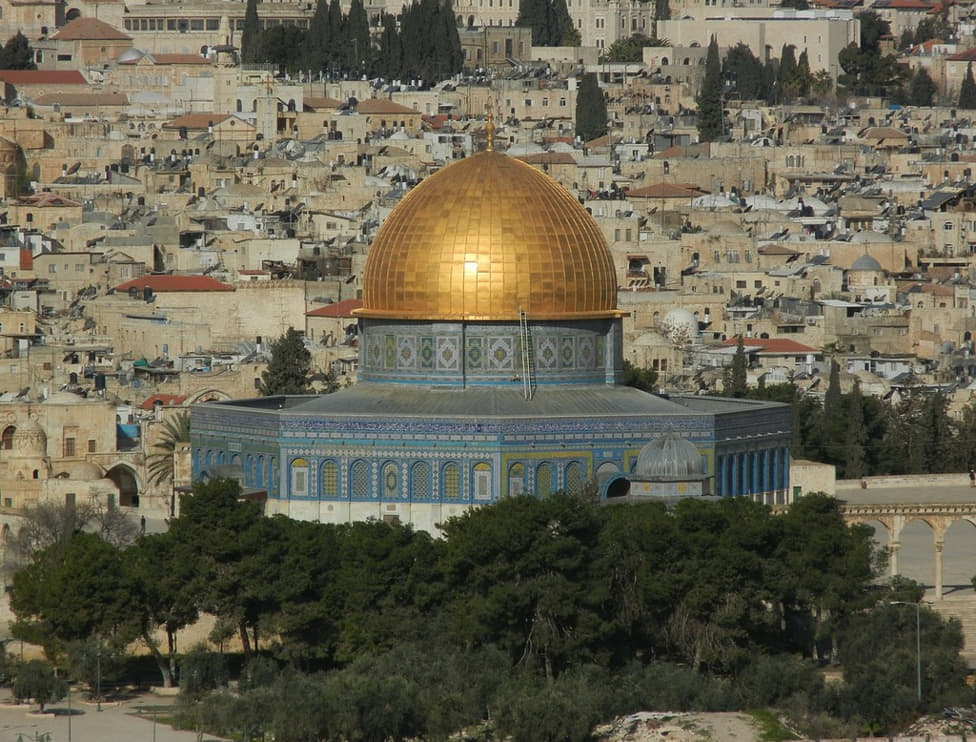
The term "Muslim Zionism" may appear paradoxical to those familiar with the contemporary geopolitical landscape, where support for Israel among Muslims is a distinct minority position. Yet a small but significant group of Muslim scholars—foremost among them Shaykh Prof. Abdul Hadi Palazzi, Prof. Khaleel Mohammed, and Imam Dr. Muhammad Al-Hussaini—have constructed a compelling theological framework arguing that the Jewish return to the Holy Land is not merely politically defensible but divinely mandated within Islamic scripture. Their arguments, rooted in a literal reading of the Qur'an and classical exegesis, challenge both popular Muslim sentiment and the theological foundations of groups like Hamas that claim the land as an eternal Islamic endowment.
The Scriptural Foundation: Qur'an 5:21
At the heart of the Muslim Zionist theological argument lies Surah 5, verse 21, in which the Prophet Moses commands his people: "O my people, enter the Holy Land which God has prescribed for you, and turn not back in your traces, to turn about losers." For these scholars, this verse is not merely historical narrative but constitutes an enduring divine decree. Khaleel Mohammed, an Islamic Law scholar at San Diego State University, translates the key phrase "God has written for you" as signifying God's final word on the subject—a permanent grant to the Jewish people that no subsequent revelation can abrogate.
The significance of this interpretation cannot be overstated. In Islamic theology, the concept of kataba (written) carries profound legal weight, suggesting a contractual or covenantal obligation established by God. Palazzi articulates this position with characteristic directness: "The Qur'an specifies that the Land of Israel is the homeland of the Jewish people, that God Himself gave that Land to them as heritage and ordered them to live therein." He goes further to warn that "whoever denies this actually denies the Qur'an itself," and if informed yet openly opposes it, "ceases to be a Muslim."
The Role of Classical Exegesis
The Muslim Zionist argument draws heavily on the authority of medieval Qur'anic commentators, particularly Muhammad ibn Jarir al-Tabari (838-923), often regarded as the foundational figure in Islamic exegesis. Imam Dr. Muhammad Al-Hussaini, a British-based imam who teaches interfaith studies at Leo Baeck College, has been the most vocal proponent of this traditionalist reading. Al-Hussaini argues that "traditional commentators from the eighth and ninth century onwards have uniformly interpreted the Koran to say explicitly that Eretz Yisrael has been given by God to the Jewish people as a perpetual convenant."
Al-Hussaini points specifically to Tabari's commentary on Qur'an 5:21, which explains that God "confirmed" the grant "in the Preserved Tablet"—the divine blueprint from which all scriptures emanate—that the land "is yours as settlements and dwellings, in place of the oppressors who are in it." This reference to the Preserved Tablet is crucial, as it elevates the grant from a temporal command to an eternal reality inscribed in heaven. Tabari's commentary also notes that the word kataba carries connotations of "ordered," meaning that settling the land was regarded as a mitzvah for the Children of Israel.
Al-Hussaini has emphasized that Tabari serves for Muslims as "our Rashi"—the founder of tafsir, the science of exegesis—and that his interpretations carry binding authority for traditional scholarship. This appeal to classical consensus allows Al-Hussaini to claim that "there is no Islamic counterclaim to the Land anywhere in the traditional corpus of commentary." He further argues that "it was never the case during the early period of Islam…that there was any kind of sacerdotal attachment to Jerusalem as a territorial claim."
The Jerusalem Question
Shaykh Prof. Abdul Hadi Palazzi, Secretary-General of the Italian Muslim Assembly and Muslim co-chair of the Islam-Israel Fellowship, extends the argument to address the thorny question of Jerusalem. Born in Rome to an Italian Catholic father who converted to Sunni Islam and a Syrian Muslim mother, Palazzi holds a Ph.D. in Islamic Sciences and represents an unusual synthesis of Western democratic values and Islamic traditionalism.
Palazzi's approach to Jerusalem is distinctive. He argues that the city's sanctity in Islam does not confer political sovereignty upon Muslims. At the time of the Prophet Muhammad's Night Journey (al-Mi'raj), Jerusalem was not under Muslim rule, demonstrating that its holiness is not tied to any specific political order. Palazzi further contends that "the most authoritative Islamic sources affirm the Temples" and that the Qur'an "expressly recognizes that Jerusalem plays the same role for Jews that Mecca has for Muslims."
This argument represents a significant theological departure from mainstream Islamic discourse, which typically emphasizes Jerusalem's sanctity as grounds for Muslim political claims. Palazzi accepts Israel's sovereignty over Jerusalem provided that the rights of other religions are protected, rejecting the view that Muslim holy sites require Muslim political control.
The Prophecy of Return
Beyond the historical grant of the land, Muslim Zionists point to Qur'anic prophecy concerning the Jewish return. Surah 17:104 declares: "And thereafter We said to the Children of Israel: 'Dwell securely in the Promised Land. And when the last warning will come to pass, We will gather you together in a mingled crowd.'" For Palazzi and his colleagues, the modern ingathering of Jews to Israel represents the fulfillment of this divine promise, demonstrating the unfolding of God's plan as described in the Qur'an.
When asked whether he considers himself a "Muslim Zionist," Palazzi provided a comprehensive response: "If one means a Muslim who supports the right of the Jewish people to have their own independent and sovereign State, who is solidly behind the State of Israel when it is attacked by terror and when its existence in menaced, who thinks that developing friendly relations between the Muslim nations and the State of Israel is in the interest of the Muslims and of human civilization in general, then I think that the label of Muslim Zionist is appropriate."
It is also essential to acknowledge that Muslim Zionism represents a minority view within contemporary Islam and has generated significant controversy.
Conclusion
The theological architecture of Muslim Zionism rests on three pillars: the literal interpretation of Qur'an 5:21 as a divine grant to the Jewish people, the authority of classical commentators like Tabari who affirmed this grant as eternal, and the recognition of prophetic verses foretelling the Jewish return. Palazzi, Mohammed, and Al-Hussaini represent a theological tradition that challenges both popular Muslim sentiment and the anti-Zionist positions of groups like Hamas.
Their arguments do not deny Jerusalem's sanctity in Islam, nor do they ignore the Qur'an's critical portrayals of some Jewish communities. Instead, they contend that Islamic law recognizes the rights of non-Muslim communities, including their property and sovereignty rights, even when theological critique exists. As Al-Hussaini has argued, "No fundamentalist, no matter how hard they try, can overrule the existing tradition to say there is, in fact, an Islamic counterclaim to Eretz Yisrael."
In other words, Muslim Zionism proposes a reality that must ignore cruelty of the Israeli state in order to reify a peculiar theological interpretation—very much like the so-called Christian Zionists.