Protestant Zionism NOT Christian Zionism
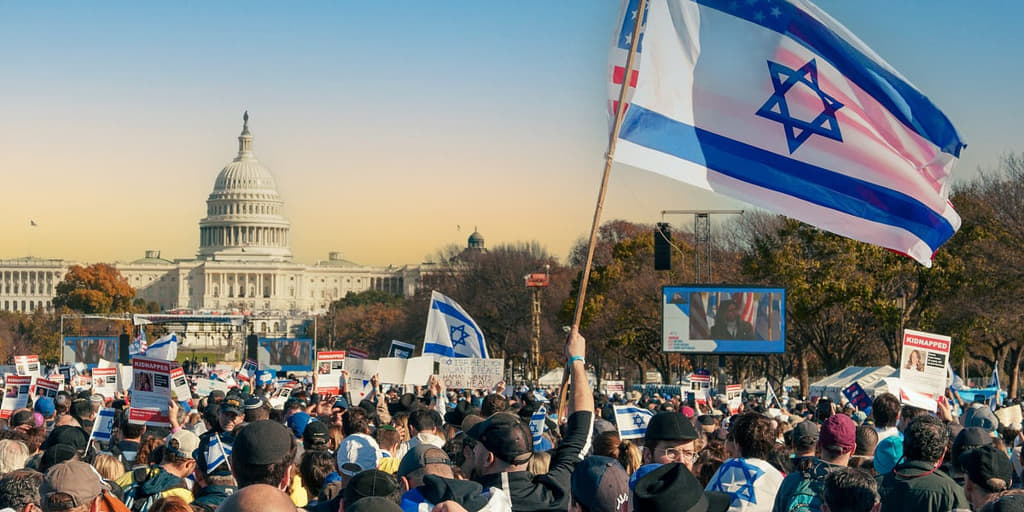
The political and theological movement popularly termed "Christian Zionism" represents one of the most potent and influential forces in modern international relations, particularly in shaping Western, and especially American, policy towards the State of Israel. Characterized by its fervent, often unconditional support for Jewish sovereignty in the Holy Land, this movement is frequently presented as a monolithic expression of broad Christian solidarity. However, this label is historically and theologically imprecise, serving to obscure a far more complex reality. A closer examination reveals that the origins, theological underpinnings, and political expressions of what is popularly called Christian Zionism reside almost exclusively within specific Protestant—particularly evangelical and fundamentalist—belief systems. In stark contrast, the ancient Catholic and Eastern Orthodox traditions, along with many mainline Protestant denominations, have historically rejected or distanced themselves from the core theological premises that define this movement. Therefore, the term "Christian Zionism" is a misnomer; it should more accurately and specifically be called Protestant Zionism, a designation that clarifies its theological source, acknowledges its denominational specificity, and illuminates the profound ideological chasm that separates it from the broader Christian world.
The Protestant Roots of Christian Zionism: A Hermeneutic of Literalism and Prophecy
The emergence of Christian Zionism as a coherent ideology is inextricably linked to the theological innovations of the Protestant Reformation and its subsequent evangelical awakenings. Its foundational bedrock is the Protestant principle of sola scriptura (scripture alone), which, when combined with a particular literalist hermeneutic, created a unique fertile ground for restorationist theology—the belief in a physical return of the Jewish people to the land of Israel.
The Hermeneutical Shift: From Typology to Literalism
For over a millennium and a half, mainstream Christian exegesis, dominant in both the Eastern and Western churches, interpreted the Old Testament’s land promises to Abraham and his descendants primarily through a typological or allegorical lens. In this framework, the "Promised Land" was seen as a foreshadowing of the spiritual rest and inheritance found in the Kingdom of God, accessible through faith in Christ. The Church itself was understood as the "new Israel," the spiritual successor to the covenants, thereby rendering the specific territorial promises to ethnic Israel obsolete or fulfilled in a non-literal, spiritual sense. This "Supersessionism" or replacement theology was the near-universal Christian position for centuries.
The Protestant Reformation, while challenging papal authority and certain doctrines, did not initially overturn this supersessionist reading. However, by elevating the Bible as the sole infallible source of authority and encouraging its direct readership by the laity, the Reformation inadvertently set the stage for a hermeneutical revolution. Particularly within the pietist and Puritan movements of the 16th and 17th centuries, a new emphasis on a plain-sense reading of scripture began to take root. English Puritans, for instance, started to re-examine biblical prophecies concerning Israel and concluded that God’s covenants with the Jewish people remained irrevocable. Figures like Sir Henry Finch, who in 1621 published "The World's Great Restoration, or Calling of the Jews," argued passionately for a literal interpretation of prophetic scriptures, asserting that the Jews would be restored to their homeland before the Second Coming. This was not yet a political program, but a theological expectation born from a particular Protestant reading of the Bible.
The Rise of Premillennial Dispensationalism
The single most significant theological engine for Protestant Zionism was the development of premillennial dispensationalism in the 19th century. Articulated most systematically by John Nelson Darby, a leader of the Plymouth Brethren, this theological framework divided history into distinct, divinely ordained periods, or "dispensations." A central tenet of Darby's system was a rigid distinction between God’s plans for national Israel and His plans for the Church. In this view, the Church was a parenthesis in God's primary focus on Israel; thus, the Old Testament promises of land, nationhood, and a kingdom were never transferred to the Church but were merely postponed, to be gloriously fulfilled in a future dispensation following the Rapture.
Darby’s dispensationalism provided a detailed, literalistic blueprint for the end times. It posited that the Jewish people would return to their ancestral land in a state of unbelief, re-establish their nation, and eventually rebuild their Temple. This sets the stage for a period of tribulation, the rise of the Antichrist, and the ultimate return of Christ to reign from Jerusalem for a thousand years (the millennium). This theological schema made the return of the Jews to Zion not merely a matter of philanthropic interest or prophetic curiosity, but an essential precondition for the culmination of human history and the return of Christ. This imbued the Zionist project with profound eschatological significance for its Protestant adherents.
The dissemination of this theology was massively amplified by the Scofield Reference Bible (1909), an annotated King James Version that embedded dispensationalist interpretations directly into the biblical text. Through Scofield’s notes, which were treated by many as divinely inspired commentary, millions of American fundamentalists and evangelicals absorbed the idea that modern political events involving the Jewish people were direct fulfillments of prophecy. The Balfour Declaration of 1917 and, most pivotally, the establishment of the State of Israel in 1948, were thus not seen as products of secular, political Zionism but as the very hand of God moving history toward its pre-ordained climax. The 1967 Six-Day War, which resulted in Israeli control over all of Jerusalem, was interpreted as another monumental prophetic sign, cementing the alliance between Protestant Zionists and the modern Israeli state.
Catholic and Orthodox Distinctions: A Theology of Fulfillment and Supersession
In stark contrast to the Protestant Zionist trajectory, the Catholic and Eastern Orthodox traditions have maintained a theological outlook that is fundamentally at odds with the core tenets of dispensationalism and literal restorationism. Their views are rooted in a covenantal theology that emphasizes spiritual fulfillment over political restoration, and the Church as the definitive people of God.
The Catholic Position: From Supersessionism to a "Spiritual Homeland"
The Catholic Church’s historical position has been unequivocally supersessionist. The teachings of the Church Fathers, such as Augustine, and the official doctrines of ecumenical councils consistently portrayed the Church as the "verus Israel" (true Israel). The destruction of the Second Temple in 70 AD was interpreted as divine punishment for the Jewish rejection of Christ, and the diaspora was seen as evidence that God’s promises were now exclusively fulfilled in the universal Church. This theology left no room for a special divine plan for a Jewish political entity in the Holy Land.
The 20th century, particularly in the wake of the Holocaust, prompted a significant, yet cautious, re-evaluation within Catholicism. The Second Vatican Council's document Nostra Aetate (1965) repudiated the charge of deicide against the Jewish people, affirmed the ongoing validity of God's covenant with them, and fostered a new era of Jewish-Catholic dialogue. However, this theological shift did not translate into an endorsement of Protestant Zionist eschatology. The Catholic Church recognizes the deep religious significance of the Holy Land for Jews, but it views the State of Israel primarily through a lens of political realism and concern for justice and peace for all peoples in the region, particularly the Palestinian community, which includes many Catholic and Orthodox Christians.
The Vatican did not establish formal diplomatic relations with Israel until 1993, a delay indicative of its theological and political reservations. Official Catholic statements consistently emphasize a "two-state solution" and express grave concern over the status of Jerusalem, advocating for a special international statute to guarantee access to the holy sites for all three Abrahamic faiths. The focus remains on a "spiritual homeland" for believers in the Kingdom of God, radically diverging from the Protestant Zionist vision of a Jewish state as a necessary catalyst for the apocalypse.
The Eastern Orthodox Perspective: A Symphonic Rejection of Political Theology
The Eastern Orthodox Church’s alienation from the Protestant Zionist project is even more profound, rooted in a fundamentally different theological vision. Orthodox theology is characterized by a "symphonic" or holistic view of reality, rejecting the compartmentalization of sacred and secular history inherent in dispensationalism. Its rich tradition of allegorical and mystical interpretation of Scripture stands in direct opposition to the literalism of Protestant Zionism.
For Orthodoxy, the "Promised Land" is not a geographical territory to be reclaimed by a specific ethnic group as a prelude to the end times. Rather, it is a typological reality whose ultimate fulfillment is the entire cosmos, transfigured and redeemed in Christ. The primary emphasis is on theosis—the deification of the human person—not on decoding prophetic timelines. Furthermore, the Orthodox Church has a lived, continuous history in the Holy Land for nearly two millennia. The Patriarchate of Jerusalem and its predominantly Arab Christian flock are indigenous to the land, and they have often borne the brunt of the political conflicts shaped by outside forces, including Western evangelical support for policies that they perceive as threatening their own existence and patrimony. Consequently, the Orthodox view Protestant Zionism not only as a theological error but as a disruptive political ideology that undermines the delicate social fabric of their ancestral home and reduces their ancient faith to a bit player in a foreign eschatological drama.
Political and Ideological Implications: The Protestant Zionist-Israeli Alliance
The theological distinctives of Protestant Zionism have direct and powerful political consequences, creating a unique alliance that is often misunderstood when lumped under the generic banner of "Christian" support.
The American Crucible
The most potent political expression of Protestant Zionism is found in the United States, where evangelical and fundamentalist Protestants constitute a formidable political constituency. This movement’s support for Israel is not primarily based on realpolitik or a shared commitment to liberal democracy, though those arguments are sometimes used as secondary justifications. Its core motivation is eschatological: a firm belief that strengthening Israel and securing its control over the biblical lands of Judea and Samaria (the West Bank) is actively facilitating God's plan for human history.
This conviction translates into a political agenda that is often more hardline than that of the Israeli government itself. Major American Protestant Zionist organizations, such as the Christian Embassy in Jerusalem (ICEJ) and Christians United for Israel (CUFI), lobby the U.S. government relentlessly to provide unconditional military and diplomatic support for Israel, to oppose any concessions in peace negotiations, and to recognize Jerusalem as Israel's undivided capital—a goal achieved in 2018 with the move of the U.S. Embassy, a policy long championed by evangelical leaders. This support is unwavering because, for the Protestant Zionist, the modern State of Israel is not a normal nation-state but a divine artifact. Criticizing its policies is tantamount to criticizing God's prophetic script.
The Tension with Jewish Zionism and Other Christians
This alliance, however, is not without its profound ironies and tensions. Traditional Jewish Zionism, from Theodor Herzl onward, was largely a secular, nationalist movement aimed at solving the "Jewish problem" in Europe through the establishment of a sovereign state. The embrace of this project by millions of Christians, whose theology ultimately anticipates either the mass conversion or the destruction of two-thirds of the Jewish people in the tribulation, creates a deeply problematic relationship. Many Jewish leaders and Israelis view this support with pragmatic gratitude mixed with theological unease, aware that their most ardent Christian defenders believe they are playing a pre-ordained role in a drama that concludes with their acceptance of Jesus or their tragic demise.
Furthermore, this Protestant Zionist activism creates a significant intra-Christian conflict. It often sidelines and marginalizes the voices of the indigenous Christian communities in the Holy Land—who are predominantly Arab and belong to ancient Catholic and Orthodox traditions—and who frequently advocate for a political solution based on human rights and international law, not biblical prophecy. The narrative of "Christian" support for Israel, when in reality it is a specific form of Protestant support, effectively erases these ancient Christian communities from the conversation and presents a distorted picture of a unified Christian front.
Why "Protestant Zionism" is the More Accurate and Necessary Term
The persistent use of the term "Christian Zionism" is not merely a semantic oversight; it is a categorical error with significant consequences for understanding the religious and political landscape. Adopting the more precise term "Protestant Zionism" is an essential corrective for several reasons.
First, it accurately identifies the theological source. The movement is a direct outgrowth of specific Protestant principles: sola scriptura, a literalist hermeneutic, and the distinctive theological framework of premillennial dispensationalism. These are not generic Christian concepts but developments that arose in a specific historical and denominational context following the Reformation. To call it "Christian" implicitly suggests a universality that is demonstrably absent, ignoring the two-thousand-year consensus of the Catholic and Orthodox traditions, which represent the majority of the world's Christians.
Second, it provides historical and ideological clarity. The term "Protestant Zionism" neatly captures the historical lineage from the English Puritans and John Darby through the Scofield Reference Bible to modern American televangelists and lobbying groups. It distinguishes this movement from other forms of Christian engagement with the Holy Land, such as Catholic pilgrimages or Orthodox monasticism, which are rooted in entirely different theological soil. It also clarifies that the movement's political focus is a product of a particular religious worldview, not a universal Christian imperative.
Third, it acknowledges the diversity and complexity within global Christianity. Using the specific label "Protestant" creates space for the reality that many Christian traditions actively critique or reject this ideology. Mainline Protestant denominations like the Presbyterians (U.S.A.), Methodists, and Episcopalians have often issued statements and pursued divestment policies critical of the Israeli occupation, reflecting a very different theological and ethical approach. To blanket all these disparate voices under "Christian Zionism" is to engage in a profound homogenization that silences legitimate Christian dissent and critique.
Finally, it removes a veneer of false ecumenism. The broad term "Christian Zionism" can lend an air of unified, cross-denominational legitimacy to a set of beliefs that are, in fact, highly contested and theologically marginal from a global and historical Christian perspective. Calling it "Protestant Zionism" honestly names its particularity and prevents the conflation of a specific, modern, and largely Anglo-American Protestant phenomenon with the ancient and diverse faith of Christianity as a whole.
Conclusion
In sum, the popular term "Christian Zionism" is a profound misnomer. It inaccurately suggests a pan-Christian endorsement of a political-theological ideology that is, in its origins, motivations, and expressions, fundamentally and uniquely Protestant. Its roots are embedded in the hermeneutical soil of the Reformation and the specific doctrinal innovations of 19th-century dispensationalism. Its fervent eschatological hope for a restored Jewish state as a divine prerequisite for the Second Coming stands in direct opposition to the supersessionist and sacramentally oriented theologies of Catholicism and Eastern Orthodoxy, as well as the more nuanced covenantal theologies of many mainline Protestant churches.
The political power of this movement, particularly in shaping American foreign policy, cannot be understated, but it must be understood for what it is: not a generic Christian stance, but a potent form of Protestant Zionism. Adopting this more precise terminology is not an exercise in pedantry but a necessary act of theological and historical clarity. It correctly identifies the movement's doctrinal heart, acknowledges the deep divisions within Christendom over the issue, and provides a more honest framework for analyzing the complex interplay between religion and politics in the modern Middle East. To continue using the umbrella term "Christian Zionism" is to obscure the very specific and contested nature of this belief system, ultimately distorting our understanding of both Christianity and one of the most enduring geopolitical conflicts of our time.