Putin, Gaza, and the Price of Principle
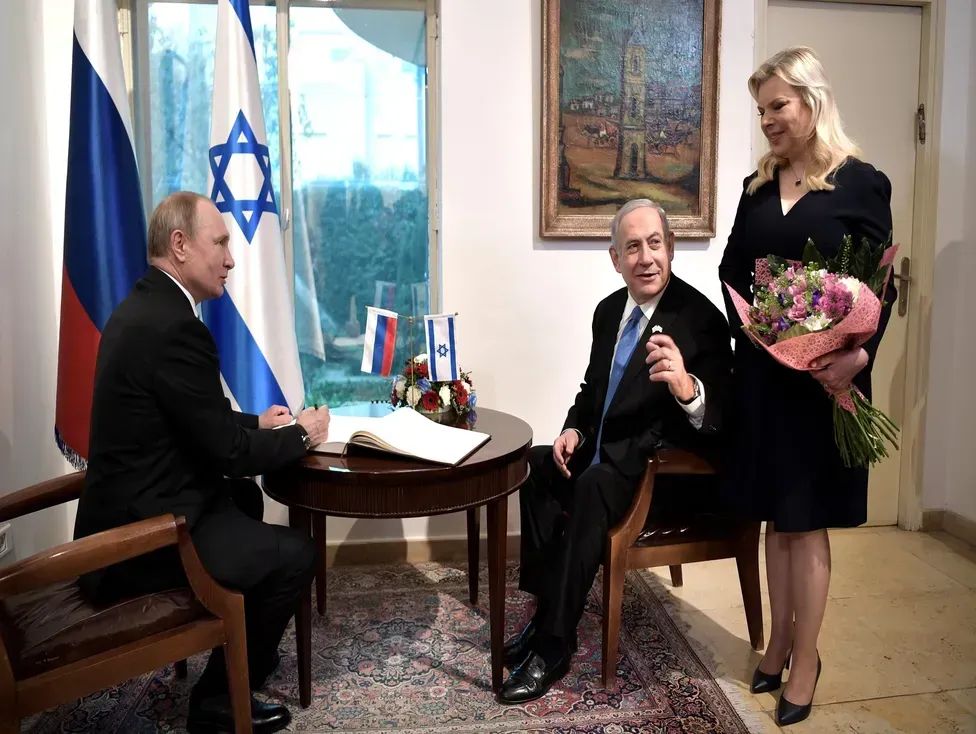
Vladimir Putin's condemnation of suffering in Gaza is substantive—and substantively hollow. Palestinian protection has never ranked high enough in Russian policy to justify sacrificing more critical strategic interests. But the deeper indictment is not that Putin is insincere. It is that his entire method of international relations—transactional, cynical, and cost-averse—is a dead end for Russia itself. A state that treats every principle as a bargaining chip eventually finds it has nothing left to bargain with.
In October 2023, Vladimir Putin, meeting religious leaders at the Kremlin, issued a condemnation worded with unusual clarity: Israel's collective punishment of Gaza was "wrong." It was unacceptable, he said, that elderly people, women, children and hundreds of thousands of civilians were being deprived of shelter, food, water, electricity and medical care. This was not vague diplomatic language. He named the "notorious principle of collective responsibility" and warned that the conflict could spread beyond the Middle East. For a leader who normally handles Middle Eastern affairs with strategic ambiguity, the sharpness of those remarks deserves to be taken seriously.
But the sharpness of rhetoric and the ranking of a priority are two different things—and Putin's rhetoric, however sharp, has never been backed by a price.
The real question is not whether Putin "genuinely" opposes the destruction in Gaza. A leader can sincerely object to civilian suffering while declining to make its prevention an overriding objective. These two things are not contradictory. The observable fact is this: when Palestinian protection collided with interests Moscow considered more important, the latter won. This is not speculation about Putin's inner feelings. It is a record of his actual choices—and of a governing style that has become Russia's central liability.
Russia Did Something—But Not Much
First, an inaccurate starting point must be set aside: Moscow did not "do nothing." In June 2025, Russia supported a UN Security Council resolution demanding an "immediate, unconditional and permanent" ceasefire in Gaza and the lifting of restrictions on humanitarian aid. The draft was defeated by a US veto. Russia's permanent representative, Vassily Nebenzia, said after the vote that it had "revealed who genuinely wants peace in the Middle East and who continues to play geopolitical games." That statement is not wrong in itself. But the country whose representative said it has, beyond voting, paid almost no visible price for the same goal.
Condemnation and voting are low-cost instruments. They have value, but they do not constitute evidence of a "priority." Where a government places a humanitarian concern is measured by what it is willing to give up for it—relationships, opportunities, leverage. By that standard, Russia's record is thin. And by that standard, Putin's foreign policy is exposed for what it is: a system of gestures designed to cost nothing and commit to nothing.
The Relationship It Will Not Sacrifice: Israel
Russia's relationship with Israel is not an ideological alliance but an operational one. The two sides maintain a deconfliction mechanism in Syria: Israel needs Russian acquiescence to strike Iran-linked targets there, and Russia needs Israeli cooperation so that its military presence in Syria is not disturbed. The defining feature of this relationship is that disagreements are compartmentalized and cooperation is confined to specific issues, without requiring either side to concede on fundamentals.
Putin's personal contact with Benjamin Netanyahu is a diplomatic instrument, not proof of friendship. After October 7, 2023, Russia invited Hamas representatives to Moscow in an effort to preserve channels to Palestinian factions, but that did not stop Moscow from maintaining working relations with Israel. This "keep both sides" strategy is not a fault in itself, but it means that when Israel's military operations continued to kill Gaza civilians, Russia never seriously considered downgrading relations with Israel as the price of applying pressure. Downgrading has costs. Moscow chose not to bear them.
Consider what a meaningful cost would have looked like. Russia could have conditioned its Syria deconfliction coordination on Israeli restraint, slowed the pace of bilateral consultations, or publicly attached consequences to continued operations. None of this would have ended the war. But each would have signaled that Palestinian protection ranked above the convenience of the relationship. Moscow did none of them. The relationship was not even put at risk, let alone sacrificed. The condemnation was, in effect, designed to be cost-free—which is another way of saying it was designed to be meaningless.
The Relationship It Will Not Sacrifice: Washington
The more important priority lies in another direction. Russia analysts note that Putin places relations with Washington—particularly the economic and sanctions opening that might follow Donald Trump's return to the White House—above confrontation with the United States over the Middle East. Reporting in 2026 indicated that the Trump administration was considering lifting sanctions on the Russian Direct Investment Fund (RDIF), widely seen as Putin's "slush fund," as part of an effort to improve US-Russia relations and advance negotiations on Ukraine. Lifting those sanctions would carry real economic value for Moscow.
Precision is required here: there is no evidence of a secret "Gaza restraint for sanctions relief" bargain. That claim is speculation, not fact. The defensible argument is weaker, and therefore sounder: Moscow's pattern of behavior suggests it views improved relations with Washington as a more worthwhile objective than confronting Washington over Gaza. Condemnation of Gaza was not allowed to get in the way of that larger goal.
This is where the hierarchy becomes visible. A government that truly prioritized Palestinian protection would be prepared, at some point, to jeopardize a desired American concession for it. Moscow has shown no such willingness. The "opening" to Washington is treated as too valuable to spend on Gaza. The same logic governs everything else: every relationship is instrumental, every principle is priced, and nothing is ever allowed to cost enough to matter. That is not statecraft. It is the diplomacy of a gambler who never places a real bet.
The Dead End of Transactional Diplomacy
Here the critique of Putin's Gaza policy becomes a critique of his entire approach to the world—and it is a damning one.
Putin's method rests on a single premise: that relationships are instruments to be traded, principles are rhetorical assets to be deployed, and costs are to be avoided at almost any price. This method has short-term advantages. It preserves flexibility. It keeps channels open. It avoids the "waste" of principled stands. But it carries a fatal long-term defect: a state that never pays for anything is never trusted with anything.
Consider the record. Russia's condemnation of Gaza is not taken seriously by Palestinians, who see the missiles still flowing to their enemy's adversaries and the Kremlin's continued accommodation of Israel. It is not taken seriously by Israel, which knows Moscow will not downgrade relations over Gaza. It is not taken seriously by Washington, which reads Russian rhetoric as a lever rather than a conviction. And it is not taken seriously by the Global South, which has watched Moscow's humanitarian language evaporate whenever it conflicted with Russian interests—in Syria, where Russian airpower helped devastate cities; in Ukraine, where Russian forces have committed documented atrocities; and now in Gaza, where Russia's words cost it nothing.
The result is a peculiar and corrosive kind of isolation. Russia is not isolated because it lacks partners; it has many. It is isolated because it lacks credibility. A state that treats every principle as a bargaining chip eventually finds it has nothing left to bargain with. Putin's diplomacy, for all its tactical cleverness, has produced a Russia that is listened to but not believed, courted but not trusted, and feared but not respected. That is the dead end.
Limited Power Is a Real Constraint—But Also a Convenient Excuse
The strongest defense of Moscow is that Russia cannot unilaterally stop Israel. Its military and political resources are heavily consumed by the Ukraine battlefield. Its position in Syria weakened after Assad's fall, although its bases and some influence remain. Its regional leverage is genuinely limited, and its influence over Hamas is far weaker than its channels to Iran or Hezbollah. Demanding that Russia "send troops to Gaza" is an absurd standard.
But limited power does not equal zero choice. A government can still choose whether it is willing to pay meaningful costs through the diplomatic and economic tools available. Has Russia seriously considered targeted commercial or diplomatic restrictions on Israel? Has it been willing to launch more substantive accountability mechanisms outside the UN framework? Has it been willing to put Palestinian protection ahead of improved relations with Washington? These questions do not require the unrealistic premise that "Russia can end the war single-handedly." They require only the modest premise that "Russia has residual influence it could use." Under that modest premise, the record shows that Moscow chose not to use it.
The distinction between capability and willingness matters. Russia's constraints qualify the criticism; they do not settle whether the Kremlin gave Palestinian protection sufficient priority. A government can be both constrained and indifferent—and the evidence points to a policy that used constraint as cover for the latter. Putin's defenders invoke limited power as an excuse; his record shows it is also a preference. The cost-averse method that kept Russia out of trouble in Gaza is the same method that has left it with a hollow diplomacy, a dependent economy, and a war of attrition it cannot win. The constraint and the choice have become indistinguishable—and that is precisely the dead end.
Whose Interests? The Gap Between State Strategy and Ordinary People
There is a deeper problem concealed by the catch-all phrase "Russian interests." The Kremlin's strategic interests, the Russian state's long-term interests, and the well-being of ordinary Russian households are not the same thing. A war packaged in official narrative as a necessary action means, for Russian families, conscription notices, funerals and inflation. Survey data from 2025 showed Russians' anxiety about socioeconomic problems coexisting with weariness of the war, while a September 2026 Levada Center survey found that support for the army coexisted with a preference for negotiations, with willingness to accept an "immediate end" depending heavily on territorial conditions. This is not a simple picture of "universal enthusiasm" or "universal opposition," but the complex state of an exhausted society.
Against this backdrop, Moscow's "restraint" on Gaza is not only unrelated to the protection of Palestinians; it is also not directly connected to the priority concerns of ordinary Russians. A government that pours resources into the Ukraine battlefield and chooses low-cost condemnation over high-cost action on an international humanitarian issue is acting consistently with its domestic priorities: avoid opening new fronts, preserve relations with key actors, and spend limited chips where it considers them most essential.
Here, too, the survey evidence should be handled carefully. The Levada findings show conflicting preferences, not a mandate for any single policy. VCIOM director Valery Fedorov's acknowledgment of anxiety about war, prices and health—alongside his insistence that Russians do not want "peace at any price"—is his interpretation, not a standalone poll result. What the evidence supports is narrower and more honest: Russian society is bearing substantial costs, and those costs do not appear to shape the Kremlin's Gaza calculus at all. The same transactional logic that produces cost-free condemnations abroad produces a government that treats its own citizens' costs as externalities. The dead end is not only diplomatic. It is domestic.
The Test of "Willingness to Incur Costs"
The analytical payoff of this approach is a standard that can be applied consistently to other governments too: assess the relationship between stated principles, available instruments, accepted costs, and likely protective effects. Applied to Russia, it yields four research questions rather than unsupported assertions.
Diplomatic costs: Has Moscow been willing to downgrade relations, impose conditions on engagement, or risk losing privileged access? The record suggests no. The Israel relationship and the Washington opening were both preserved intact.
Commercial costs: Has it considered targeted restrictions or other lawful measures affecting implicated actors? There is no public evidence of serious deliberation, and the actual scope and likely effect of such measures would need to be established before arguing that they would be meaningful.
Institutional costs: Has it sustained humanitarian, investigative or accountability efforts when doing so conflicted with other diplomatic objectives? Its support for the June 2025 Security Council resolution was real but isolated—not part of a sustained campaign that imposed costs on anyone.
Washington-related costs: Has it been willing to jeopardize a desired American concession over Palestinian protection? The evidence points the other way. The opening to Washington was treated as too valuable to spend.
A useful final filter is practical benefit: would a proposed measure plausibly protect Palestinians, improve humanitarian access or strengthen accountability, rather than merely produce a symbolic confrontation? This filter cuts both ways. It rules out grandstanding, but it also exposes the hollowness of a policy that stops at denunciation. Symbolic confrontation is cheap; protection is not. Moscow has consistently chosen the cheap option—and in doing so has confirmed that its foreign policy is built to avoid commitment rather than to achieve anything.
Answering the Counterargument Without Overclaiming
The strongest defense must be presented fairly, and it has three pillars. First, limited coercive capacity: Russia cannot simply order Israel to stop, and escalation could fail or cause additional civilian harm. Second, reduced regional leverage: Assad's fall diminished Russia's position in Syria, though it did not eliminate its bases, relationships or economic influence. Third, diplomacy can matter: voting, mediation and retaining access may have value even when they do not immediately stop violence.
All three points are valid. None of them settles the question. The appropriate comparison is between actual policy and feasible alternatives—not with an imaginary Russia capable of ending the conflict unilaterally. But limited influence does not remove the question of whether Moscow has used the influence it retains or accepted meaningful costs. And unequal responsibility must be respected: Russia's constrained accommodation should not be equated with the responsibility of actors directly conducting military operations or supplying their principal support.
The balanced conclusion is that Russia's constraints qualify the criticism; they do not settle whether the Kremlin gave Palestinian protection sufficient priority. On the available evidence, it did not. And the pattern is not an isolated failure of Gaza policy—it is the signature of a foreign policy that has optimized for cost avoidance at the expense of everything else, including its own long-term standing.
Conclusion: Protection Is a Priority Only When It Constrains Policy
This essay does not prove that Putin's condemnation is emotionally false. It argues that its practical authority is limited when it conflicts with higher-ranked objectives. Russia's behavior is better explained as selective humanitarian diplomacy within a strategic hierarchy than as an unconditional commitment to Palestinian protection.
But the indictment goes further than Gaza. Putin's style of international relations—transactional, cost-averse, and principle-free—is not merely a failure to protect Palestinians. It is a dead end for Russia. A great power that never pays for its principles, never accepts costs for its commitments, and never lets a conviction constrain its choices does not become flexible or clever. It becomes irrelevant. It becomes a state whose words are discounted, whose partnerships are transactional, and whose influence rests on the threat of disruption rather than the promise of trust.
Two human perspectives must not disappear behind abstract claims about national prestige or geopolitical advantage: Palestinian suffering, and the suffering of Russian households. Neither is served by a policy that treats condemnation as a substitute for cost—and neither is served by a diplomatic method that has made Russia poorer, more isolated, and less believed.
The evaluative principle is simple, and it applies to any government: humanitarian language becomes a policy commitment when it limits what a government is willing to do, whom it is willing to accommodate, and what benefits it is willing to forgo.
The decisive question is not whether Putin condemns Palestinian suffering, but whether preventing it is allowed to change the choices he would otherwise make. On the observable record, it is not. And the deeper tragedy is that the same answer applies to almost every choice Putin makes—a pattern that is not just morally hollow but strategically self-defeating. A Russia that cannot afford its principles will eventually find it cannot afford its ambitions either.