Rebellion And Salvation
May
I wish readers a happy and peaceful New Year. A New Year filled with the
assurance of Almighty God, hope in Jesus, and the guidance of the Holy Spirit. As
we embark into a new Year New Year, we all need, a message of hope and
assurance. What about a message of catastrophe? We have to understand the
message of catastrophe first, before we understand the message of hope and
assurance.
Let’s start with the facts. All parts of creation
are damaged through the consequences of Sin; no one can argue with this fact. Everything has been
affected, from a bumble bee, to polar bears and the Inuit, to rain forests and
swallows. The once harmonious relationship between God and his creation has
fragmented. The once original complimentary relationship between man and woman
is darkened into rivalry and accusation.
The once intimate relationship between God and humans is distorted into evasion and rebellion. Instead all around us is, pain, travail, sweat, hate and death. Nothing is exempt from the catastrophe. Nothing is innocent in the catastrophe. Heaven and earth are implicated. Bacteria pollutes blood streams sickening both sinner and saint. Hailstones plummet out of the skies flattening the fields ready for harvest.
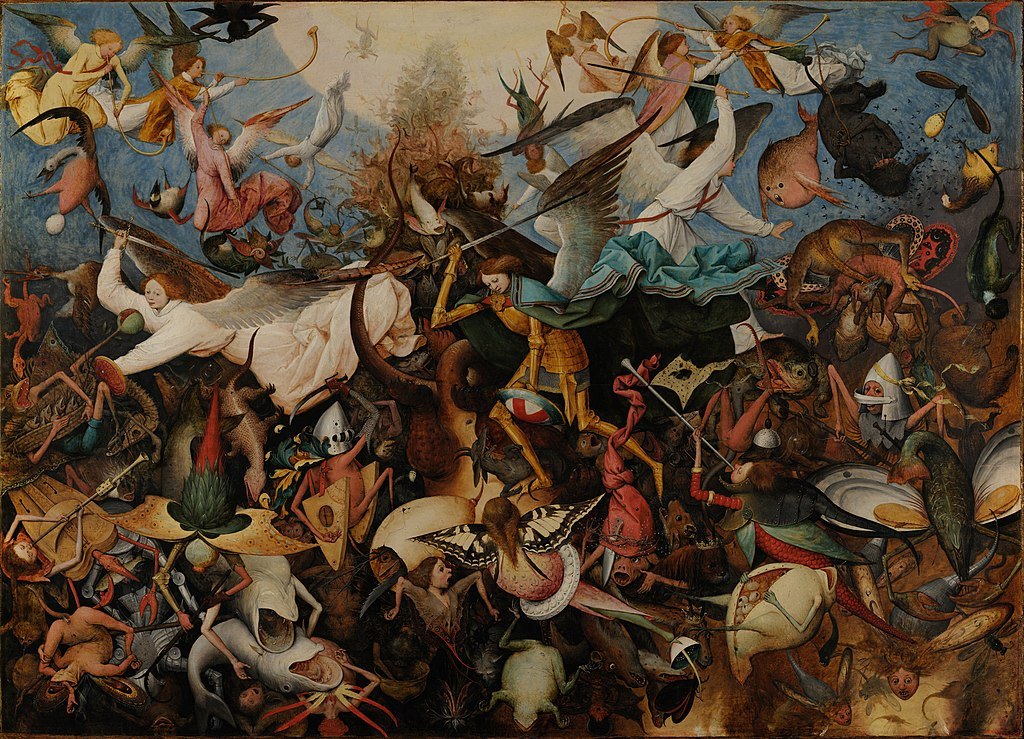
Liquid fire rips through the earth’s crust, engulfing, homes, animals, and birds. Rebel angels, disbarred from worshiping in the courts of heaven, infiltrate invisible world realms, twisting and deceiving the world’s nations. Gold and oil are more valuable than human life. And human beings created in the image of God discover within themselves, often to their horror; they have heart’s that are desperately wicked and deceitful.
This
is just a glimpse, a gloss of what goes on day by day. Month by month year by
year. The catastrophe is beyond calculation; it is beyond man. Amazingly there
is much beauty among the wreckage, such deep goodness, so much moral zest, blessing,
active intelligence, good works; generosity of spirit that it is possible to
live for long stretches, honestly unaware of the extent of the disaster. Just
quietly getting on with life. Then suddenly it is inescapably upon us, around
us, engulfing us, and we are in it. We feel utterly lost, we don’t know where
we are, we don’t know who we are.
The catastrophe was caused Christians believe, by an
act of disobedience and rebellion, going back to the beginning of time. An act
designed to displace God with self. That is what most Christians believe. It is
not a popular belief.
The popular
belief is that however bad things seem to be, there is no catastrophe. To face the fact of
catastrophe would involve, at some point or other, dealing with God. Anything
seems preferable to that. So, the devil doctors the report, and the world edits
the evidence. Fake news surrounds us. People reduce their understanding of
catastrophe to a level that is manageable without getting into the picture in
any substantial way. The same act that caused the catastrophe, perpetuates it.
Which brings us to the crux of the matter. If there is no accurate understanding of the catastrophe that we are each part of, there can be no adequate understanding of Salvation; for salvation is about God’s action that deals with the human catastrophe.
Salvation is about God’s determination to rescue his creation; it is his activity in recovering the world. What is salvation about? Essentially Salvation deals with a person’s soul; a family, even a community. It is widespread as it touches sin and sickness. Even the most unlikely people experience salvation across the world. This author being one of them.
Is
there an alternative to God’s salvation? Well, it’s salvation by any other
means. As we go into another New Year many are being optimistic after the New
Year celebrations. It’s nice to be optimistic. But being optimistic is being
hopeful without actually relying on God.
There
are two types of optimist. Maybe you can identify with one of them.
One
is a moral optimist, who thinks that well intentioned gestures of good will, will
eventually overcome the mountains of injustice, racism, wickedness and
corruption. Applied often enough good will put the world gradually to right.
The
other optimist is; the Technological optimist, who thinks that by applying
scientific intelligence to the problems of poverty, pollution, climate change,
social reform the world will also be put to right.
Both types of optimism are very helpful and
beneficial; but neither form of optimism Worships God. Neither sees God as
central to the problem. Some tiny space maybe given to God from time to time, but its
limited. Now It may seem a bit ungracious about all this intelligence and good
will at work. These people after all, are at least doing something to
help alleviate the problems. But the bible has a different take on it and this
is why the world view will always clash with what the bible says. The bible
discerns that a spiritual evil motivates these many good actions.
It is the evil of ignorance or trying to outwit or
deny God. Their efforts to live well, to help others, and improve the world are
fuelled by a determination, conscious or unconscious, to keep God out of who
they are and what they are doing. If people can rationalise and interpret this
catastrophe around us as something much less than what it really is; they can
deny their need of God for salvation; either for themselves or others around
them.
This
is what the devil going into 2020 wants you to believe; things aren’t as bad as
what they seem. The state of your soul is fine, you’re a good person. It was
British Prime Minister Harold Macmillan who said back in 1957; ‘most of our
people have never had it so good.’ Even many of our television sets bear the
logo of the manufacturer LG; Life’s Good.
This
optimism is so pervasive. It advertises itself so attractively, and chalks up
so many awards, honours and achievements, that it is difficult not to be
impressed, and then actually go along with it. The hysteria concerning climate
change is a classic example.
It is much easier to believe this falsehood, because
then we don’t have to deal with God. Dealing with God, and submitting to him
causes many people problems. Because when we deal with God, we soon realise
very quickly that we might have to re order our lives by changing our mind, our
attitude, changing the way we do things, and turning away from the things God
hates.
John
one of Jesus’ disciples and the author of the book of Revelation tells us that Salvation
is made up of two things. It is made up of A Meal and a War. They are not two
things I would have picked. But this is what Jesus revealed to John to record
for us. The meal and the war represent two opposites. When you think about it,
they are very good examples. War is man’s doing. We are also at war with God
internally in our soul. Must people cannot see this. We prefer to do things our
way rather than God’s way. Therefore, we create an impasse between ourselves
and God. Salvation is God’s doing not ours; brought about through a Meal.
Salvation always begins with a Personal
Invitation which leads to a meal.
‘Happy is everyone invited to the Lamb’s marriage supper.’ verse 9. This is the primary way Christian’s are to remember, receive and share in the meaning of our Salvation. Christ is our example; crucified for us, his blood shed for the remission of our sins.
In
the sacrament of The Lord’s Supper, we take the elements of bread and wine in
our hands. As we do so we maintain continuity with the killed and risen Jesus
who is our salvation. This is what we do in response to an invitation concerning
our Salvation mean. Salvation for anyone always starts with an Invitation.
Jesus invites you to accept him as your Lord and Saviour. He doesn’t make you,
because he respects you too much; he invites you to receive him. In some parts
of the world people are born as Muslims, they are born as Hindu’s. They
automatically enter that faith.
Christianity
is different. While a person may be known as a Christian; they are not known as
a Christian in the eyes of God until they accept his invitation of Salvation. Which means, to honour God more than anyone
else, and to submit to his authority, not your own. That’s what accepting the
invitation means. To reject the invite means to keep on going the way you are
going along the broad road of life. We nearly all eat three meals a day
as routine. But when we want to celebrate a great occasion, a wedding, birthday
or anniversary we use a meal as means of expressing that joy to mark the
occasion.
Salvation
should be no different. On the one hand is Christ on the cross and risen from
the tomb, and on the other hand, it is eating bread and drinking wine. The two
cannot be separated.
At
the Lord’s Supper eating together is an act of trust and love among friends and
strangers. We do not, if we can help it eat alone. We come together with
others, with family and friends. We show basic courtesies at the table. It is
the place where we learn consideration and forgiveness. Grace and humility. Every
invitation to the Lord’s Supper acts as a defence against reducing salvation as
something that takes place in the strict privacy of the soul. The meal makes it
impossible to keep salvation as a private preserve between God and us in the
inner depths of one’s soul. The Lord’s Supper is a basic meal for basic people.
It’s a level playing field for all present. It is an accepted invitation to
equality with one another before God.
This
vision of John gives us hope and assurance over catastrophe. John comes to the end of the Revelation
Christ has given him Chapter 19 verse 11. ‘I saw heaven standing open and there
before me was a white horse, whose rider is called faithful and true. With
justice he judges and makes war.’ Here we see Christ on a white horse splendid
and victorious, leading Christian’s in a triumphant victory over the dragon Satan
and his two beasts.
Salvation
is being won here. The two beasts responsible for so much confusion, delusion
and suffering are disposed of.
A thousand years later in Chapter 20, the dragon,
Satan, responsible for the catastrophe since Eden and the martyrdom of Christian’s,
is thrown into hell with them. Why all three are not thrown into the lake of
burning sulphur at the same time I do not know. God has his reasons. The last action belongs to God, in that every form and source
of evil is banished and destroyed from history for ever.
Our struggle on this planet is not against flesh and blood, in other words people; our struggle is against the powers of this dark world and against the spiritual forces of evil which orchestrate the wickedness on earth. Do not be deceived into thinking that we live in a benign neutral world. Do not believe the lies of the world that with economic growth, high employment, better health care, it will bring lasting peace and prosperity. There is an evil at work around us intent to deceive and destroy us.
What Salvation does is that it attacks our enemy. When Jesus taught us to pray; ‘deliver us from evil’; he was arming us for a life of Salvation. Not a life of ease. When you look at the Apostle Paul’s life around the Mediterranean Sea, he did not set up moral or ethical societies. He set up churches. He fought battles against the forces of evil. Yet he did not seem to be the least bit frightened or phased. He was always working from a position of victory knowing that on the cross Christ has defeated the devil. Therefore, there is nothing to fear in the act of fighting. Paradoxically the safest place to be is on the battle field for there you will find that Christ is real and active.
Sadly, many Christians have thrown the towel into
the ring before the battle starts. They aren’t interested. The devil with his
superior intelligence has deceived, accused and confused them. John describes
him as; ‘the deceiver of the whole world.’ Yes, we may get bloody noses
as Paul and many others did. But are we prepared to fight for Christ in his
power and grace this incoming year, or take it easy?
Be of good cheer. God’s redemptive plan is being worked out and he wants us to help him fulfill it.
The image shows, "The Fall of the Rebel Angels," by Pieter Bruegel the Elder, painted in 1562.