The Restorative Gnosis: Jean Borella’s Christian Metaphysics
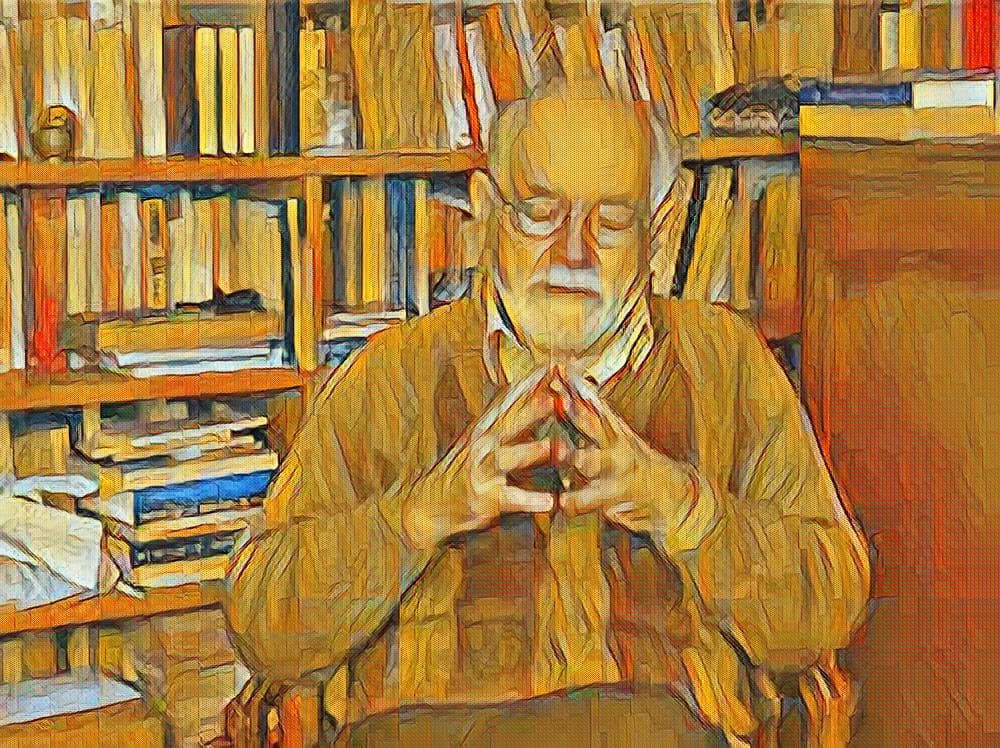
In the fragmented landscape of contemporary thought, where philosophy, theology, and spirituality often speak in mutually exclusive dialects, the work of French philosopher Jean Borella (born 1930) stands as a majestic and challenging edifice. Borella, a scholar of patristics, metaphysics, and symbolism, dedicates his life’s work to a single, monumental task: the restoration of a complete and unifying intellectual vision. This vision, which he terms “Christian gnosis” or “integral metaphysics,” seeks nothing less than to heal the fatal ruptures inaugurated by modernity—between faith and reason, subject and object, symbol and reality, humanity and God. To engage with Borella is to embark on a rigorous intellectual ascension, a journey back to the perennial sources of wisdom, guided by a profound conviction that truth is one, that it is revealed in Christ, and that it is accessible to the intellect properly ordered by love.
The Diagnosis: Modernity as Metaphysical Amputation
Any appreciation of Borella must begin with his penetrating critique of the modern condition, which he views not as progress but as a series of catastrophic forgettings. His analysis hinges on a fundamental distinction between two modes of knowing: intellectus and ratio. This medieval distinction, revived by thinkers like Étienne Gilson and central to the Traditionalist school (Guénon, Schuon), is the cornerstone of Borella’s diagnostic.
- Intellectus (the Intellect) is the faculty of metaphysical intuition, the capacity of the human spirit to apprehend spiritual realities, transcendent principles, and essences directly. It is participatory, unitive, and luminous. It operates through symbols and anagogy (ascent), seeing the temporal in the light of the eternal. This is the knowing of the Church Fathers, the Platonic tradition, and the mystics.
- Ratio (reason or discursive reason) is the analytical, logical, and deductive faculty. It deals with the phenomenal world, distinguishes, compares, and constructs arguments. While necessary and good in its proper domain, it is derivative and secondary.
For Borella, the original sin of modernity, crystallized in figures like Descartes, is the systematic negation of intellectus and the enthronement of ratio as the sole legitimate mode of knowing. This reductionism—what he calls “the dictatorship of rationalism”—severs the human mind from its transcendent object. The consequences are manifold:
- The Loss of Ontological Truth: Truth is no longer adaequatio intellectus et rei (the adequation of the intellect and the thing), where the mind conforms to a reality that participates in divine ideas. Instead, it becomes certitudo (certainty), a subjective assurance of the thinking ego (cogito) about clear and distinct ideas. Reality is reduced to the quantifiable and measurable (the res extensa).
- The Subject-Object Chasm: With the loss of participatory knowing, the knower becomes a isolated subject staring out at a world of mute, meaningless objects. This creates the insoluble problems of modern epistemology: how can the subject ever truly “know” the external object? The unifying, illuminating role of the intellect, which knows by becoming what it knows in a certain mode, is rendered incomprehensible.
- The Desacralization of the World and the Word: The symbolic worldview, where visible realities are sacramental signs of invisible truths (vestigia Dei), collapses. Nature becomes a mere resource; symbols become empty signs or psychological projections. Language loses its anagogical power to elevate and is flattened into a tool for designation or manipulation.
Borella sees this trajectory culminating in Nietzsche’s proclamation of the “death of God”—the inevitable result of a reason that has first declared God to be unknowable. His work, therefore, is not a nostalgic retreat but a vital ressourcement, a return to the sources—primarily the Scriptures as interpreted by the Patristic and medieval synthesis—to recover the tools for this metaphysical healing.
The Foundation: Metaphysics of Participation and Christian Esoterism
Borella’s restorative project is built upon two pillars: a rigorous metaphysics of participation (largely Neo-Platonic and Thomistic in structure) and a robust understanding of Christian “esoterism.”
1. The Metaphysics of Participation: At the heart of Borella’s thought is the principle that all that exists does so by participation (methexis) in the transcendent source of being, God. Creation is not a manufacture of separate things but a radiant emanation and gift of being. Every creature is a theophany, a manifestation of a divine attribute. This means:
- Hierarchy of Being: Reality is structured analogically, in degrees of perfection, from the mineral to the plant, animal, human, angelic, and divine. Each level mirrors and participates in the one above it.
- The Analogical Imagination: Knowledge proceeds by analogy, not univocity. We can speak of God’s wisdom or love only by analogy from their finite reflections in creation, recognizing that God possesses these perfections eminently and transcendently.
- The Centrality of Form: Against modern nominalism (which sees universals as mere names), Borella reaffirms the reality of forms or essences. The form is the principle of intelligibility and unity in a being; it is what the intellectus apprehends. The human form, the soul, is capax Dei—capable of receiving God.
This participatory framework restores the world’s sacred depth. To know a rose is not just to analyze its biology (ratio) but to contemplate, through intellectus, the beauty, order, and generosity of Being that it manifests, and ultimately to be drawn toward the source of all Beauty.
2. Christian Gnosis or Esoterism: This is perhaps Borella’s most distinctive and controversial contribution. He deliberately rehabilitates the term “gnosis,” purging it of its heretical, dualistic associations (as in Gnosticism) and restoring its original, positive meaning as found in St. Paul (e.g., “the gnosis of the glory of God in the face of Christ,” 2 Cor. 4:6). For Borella, Christian gnosis is the “science of realities,” the full, transformative knowledge of divine mysteries granted to the intellect purified by faith and charity.
He distinguishes this sharply from:
- Exoterism: The outward, institutional, dogmatic, and moral dimension of religion, necessary for the community and for defining the boundaries of faith.
- Mysticism: The inward, personal, and often ineffable experience of union with God.
Gnosis, for Borella, is the intellectual and metaphysical articulation of the content of mysticism, within the dogmatic framework of exoterism. It is the “heart of understanding.” It answers not just the question “What must I do?” (morality) or “What must I believe?” (dogma), but “What is it to be?” and “How is God in all things?” It is the full flowering of theology as the contemplation of revealed truth.
This gnosis is “esoteric” not because it is secretive or elitist, but because it pertains to the inner (esōterikos) meaning of symbols, rites, and dogmas. It is the understanding of the res (the heavenly reality) to which the sacramentum (the visible sign) points. The Eucharist, for instance, is exoterically the rite commanded by Christ; esoterically, it is the understanding of consubstantiation—not as a physical change but as the metaphysical truth that the substance of the bread, its inner principle of being, is replaced by the substance of Christ’s Glorified Body, while the accidents remain. This understanding requires the awakened intellectus.
The Method: Symbolism and the Exegesis of Reality
If participatory metaphysics is the map and Christian gnosis the destination, then symbolism is the vehicle. Borella’s theory of symbolism is arguably his most original and fecund contribution. For him, a symbol is not a conventional sign (like a traffic light) or a psychological archetype. It is a ** ontological reality**.
A true symbol (from syn-ballein, “to throw together”) intrinsically unites two planes of reality: the visible and the invisible. The symbol is the presence of the higher in the lower, the spiritual in the material. The symbol doesn’t merely “point to” something else; it is that something else, under a certain mode of manifestation. The water of Baptism is the saving flood of grace; the Lion of Judah is the conquering Christ.
This has radical implications for how we read both Scripture and the world:
- Patristic Exegesis as Model: Borella masterfully demonstrates the methods of the Fathers (like Origen and Gregory of Nyssa) who practiced a fourfold exegesis: literal/historical, moral/tropological, allegorical/doctrinal, and anagogical/mystical. The literal sense is foundational, but the higher senses reveal the full, Christocentric meaning embedded in the text by the Divine Author. The crossing of the Red Sea is a historical event (literal), a call to abandon vice (moral), a figure of Baptism (allegorical), and a promise of the soul’s passage to heaven (anagogical). For Borella, this is not literary play but the necessary operation of the intellect upon a reality that is itself symbolic and layered.
- The World as Symbol: The entire cosmos is a “book written by the finger of God.” Natural phenomena are symbols: light symbolizes intellect and grace; the sunrise symbolizes resurrection; the circle symbolizes eternity. To recover symbolic consciousness is to see the world as a coherent, meaningful theophany, not a random collection of atoms.
Borella applies this symbolic hermeneutic with astonishing consistency. In works like Le mystère du signe (The Mystery of the Sign) and Symbolisme et réalité (Symbolism and Reality), he deciphers the metaphysical meaning behind geometrical forms, numbers, biblical typology, and liturgical rites, showing how they form a unified language of divine manifestation.
The Culmination: Christ as the Master-Symbol and the Restoration of the Image
All lines of Borella’s thought converge on Christology. Jesus Christ is not merely a historical figure who taught moral lessons. He is the Logos, the Divine Intellect and Word through whom all things were made. As such, He is the supreme Symbol, the perfect union of the invisible God and visible humanity. In Christ, the symbolic structure of reality is not just illustrated but ontologically realized and redeemed.
Humanity, created in the Imago Dei (the Image of God), is the microcosm and the central symbol within creation. The Fall, for Borella, is fundamentally a fracture within this symbolic capacity. Instead of seeing God through the world (transparent symbolism), fallen man sees only the world, either idolizing it (paganism) or despising it (manichaeism). The intellectus becomes clouded; reason becomes autonomous and rebellious.
The Incarnation is the event of restoration. In assuming human nature, the Logos repairs the damaged symbol from within. Christ becomes the new Adam, the perfect Image. The work of salvation, therefore, is intrinsically linked to the restoration of gnosis. As Borella writes, “Salvation is knowledge.” This is not intellectualist; it is the knowledge that is love (agape), the knowledge by which the Son knows the Father and by which we are known by God. The sacraments are the efficacious symbols that graft us into this restored humanity, gradually healing our intellect and will.
The spiritual life, then, becomes a process of “re-symbolization.” Through prayer, participation in the liturgy, contemplative reading of Scripture (lectio divina), and the practice of the virtues, the human person’s symbolic consciousness is purified and re-awakened. One begins to see Christ in the Scriptures, in the Eucharist, in the neighbor, and ultimately, in the entire creation. The intellectus is illuminated by faith and culminates in the beatific vision—the ultimate gnosis, face-to-face.
Appreciation and Critical Engagement
Jean Borella’s oeuvre is a monumental achievement. Its value lies in its breathtaking coherence, its scholarly depth, and its courageous counter-witness to the prevailing philosophical currents. He offers a powerful antidote to the nihilism, relativism, and flatness of postmodernity by reopening the vertical dimension of being. His recovery of symbolism provides a hermeneutic key that can revitalize theology, liturgy, and even our ecological consciousness, teaching us to see the world as gift and manifestation rather than as property.
However, a full appreciation must also engage critically:
- The Challenge of Accessibility: Borella’s thought is demanding. It assumes a familiarity with metaphysics, patristics, and traditional symbolism that many modern readers lack. His prose, while crystalline, is dense. There is a risk that his “integral gnosis” could be perceived as an intellectualist system for an elite, despite his insistence that its principles underlie the simple faith of the illiterate peasant.
- Tension with Historical-Critical Methods: While Borella doesn’t deny the validity of historical or scientific inquiry in their own orders, his emphasis on the anagogical and symbolic sense of Scripture can seem to sideline the human authorship and historical contingency of the biblical texts. A dialogue between his symbolic hermeneutic and modern biblical scholarship remains a necessary but delicate task.
- The Traditionalist Ambiance: Borella’s proximity to the Perennialist/Traditionalist school (though he diverges significantly by his firm Christocentric focus) can lead to a certain pessimism about modernity that understates the possibilities for grace within modern forms of thought and life. His sweeping condemnations of “the modern world” can feel totalizing.
Yet, these points are perhaps less criticisms than markers of the particular path he has chosen. Borella is not attempting a dialogue with modernity on its own terms; he is offering a complete, alternative paradigm. In an age of rootlessness, he offers roots that reach into the deepest subsoil of the Christian and Platonic traditions.
Conclusion: The Light of the Intellect
In conclusion, the thought of Jean Borella is a profound gift to the twenty-first century. It is a call to intellectual and spiritual awakening—a summons to remember who we are: beings endowed with an intellectus, created to know and love God, and placed in a cosmos that speaks His glory. In an era of information overload and wisdom famine, Borella directs us back to the source of meaning.
His work is a rigorous, luminous demonstration that Christian faith is not a subjective feeling or a blind leap, but a knowledge, a participation in the very light of the Logos. It is a metaphysics of hope, asserting that the fractures of our world—within ourselves, between us, and with God—are not ultimate. They can be healed because the Symbol has been made flesh, and in His light, we see light. To study Borella is to have one’s vision recalibrated, to begin the arduous but joyful task of learning to see all things in Christo—which is, ultimately, to see them as they truly are. In restoring the dignity of the intellect, he does not diminish faith but shows it to be the perfect environment in which the human mind can at last reach its full stature and its final end: the contemplation of Truth itself.