Franz Hinkelammert: The Sacrificial Grammar of Modernity
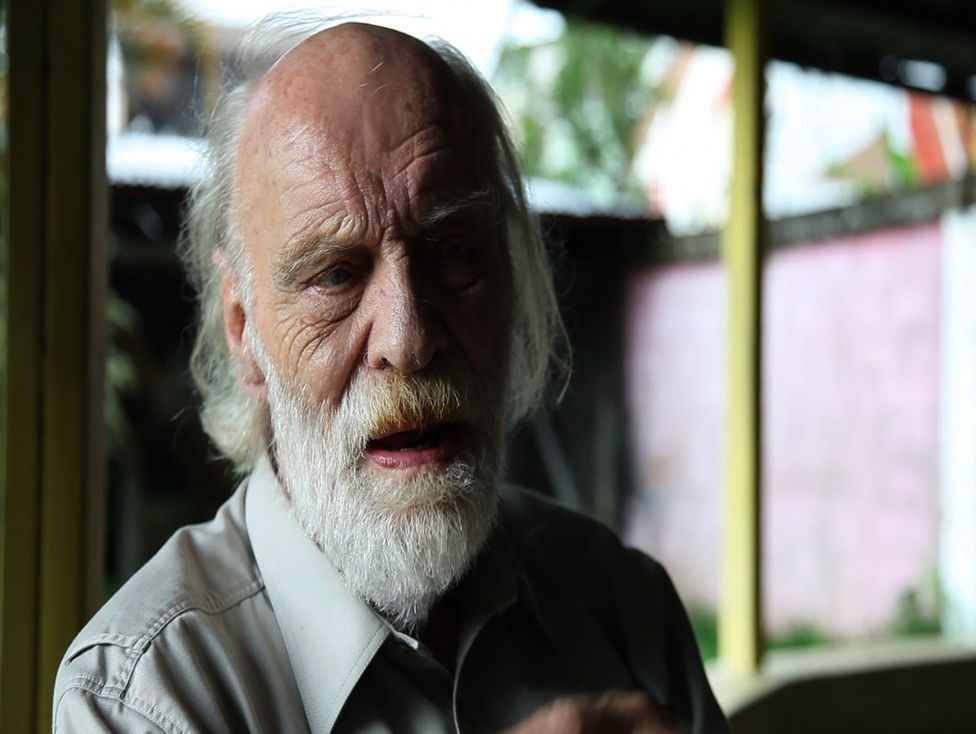
Franz Hinkelammert (1931–2023) occupies a singular position in twentieth-century critical thought: a German-trained economist who became one of Latin America’s most incisive philosophers of religion, and a Marxist theorist who wrote some of the most penetrating theological critique of capitalism produced in the liberationist tradition. This essay argues that Hinkelammert’s enduring importance lies in his identification of a shared “sacrificial” logic running through ostensibly secular market ideology and explicitly religious political theologies. By fusing Marx’s critique of fetishism with a biblical critique of idolatry, Hinkelammert demonstrated that both neoliberalism and religious nationalism operate by absolutizing a contingent human construct—the market, the nation, the law—and thereby justifying the immolation of concrete human lives on its altar. His work provides an indispensable analytical grammar for understanding how transnational right-wing politics and religious nationalism converge today, and why the defense of life against the claims of “sacred” systems remains the central ethical imperative of our time.
Introduction: An Economist Against the Gods
Franz Hinkelammert’s intellectual trajectory is itself a rebuke to disciplinary complacency. Born in Germany in 1931, he arrived in Chile in the early 1960s as an intellectual emissary of the Konrad Adenauer Foundation, affiliated with the Christian Democratic Party. What he encountered in Chile—first under the Christian Democrats, then within the crucible of Salvador Allende’s Unidad Popular—reoriented his thought decisively. He renounced his Christian Democratic affiliations, joined the Movimiento de Acción Popular Unitaria (MAPU), and began the work that would make him, alongside Hugo Assmann and Juan Luis Segundo, one of the most rigorous philosophical minds of the Latin American liberationist tradition . The 1973 coup forced him into exile in Costa Rica, where he spent the remainder of his career at the Departamento Ecuménico de Investigaciones (DEI), producing a body of work that spans economics, epistemology, political theology, and the critique of modernity.
To read Hinkelammert today is to encounter a thinker whose central questions have only grown more urgent. His lifelong target was not capitalism in the abstract, nor religion in the abstract, but the specific mechanisms by which human beings come to worship their own creations—and, in doing so, come to accept the sacrifice of other human beings as necessary, rational, or even sacred. This essay will reconstruct the core of Hinkelammert’s philosophical and economic thought, with particular attention to his analysis of political theologies and the sacrificial structures they legitimize. It will then argue for his contemporary significance: in an era when market fundamentalism and religious nationalism increasingly converge, Hinkelammert offers a diagnostic vocabulary that neither secular social science nor conventional theology can supply alone.
The Fetishism of the Market and the Idolatry of Capital
Hinkelammert’s most distinctive intellectual contribution is the translation of Marx’s critique of commodity fetishism into a theological register. In The Ideological Weapons of Death (1977; English translation 1986), he argued that the market under capitalism does not merely coordinate production and exchange; it functions as a “ser supreme,” an absolute that demands worship and sacrifice . The language is deliberate. Hinkelammert was not using “idolatry” as a metaphor. He meant that the market, as a social relation that has been abstracted from the human beings who constitute it, acquires the characteristics of a divinity: it is omnipresent, omniscient (in its price signals), and omnipotent (in its capacity to reward and punish). To question its dictates is not merely to commit an economic error; it is sacrilege.
This analysis drew on Marx’s early critique of religion as well as his mature theory of fetishism, but Hinkelammert radicalized both. Where Marx saw fetishism as a structural illusion produced by the commodity form, Hinkelammert saw it as a theological illusion—a misplacement of transcendence. The market is not God, but under capitalism it occupies the functional position of God: it is the ultimate horizon against which all human projects are measured and found wanting. The consequences are not merely philosophical. If the market is absolute, then those who cannot be integrated into its logic—the unemployed, the informal, the “redundant”—are not merely unfortunate; they are, in a sense, sacrifices required by the system’s health. Hinkelammert saw this logic at work in the structural adjustment programs imposed on Latin America in the 1980s, where the payment of external debt was prioritized over the survival of populations. He described this as a “genocide protected by the law,” a crime committed precisely by fulfilling legal obligations .
This is the core of what Hinkelammert called the “totalitarianism of the market” . The term is not hyperbole. It names a system in which no sphere of life is immune from the logic of maximization, and in which the only imaginable alternative—collective provision, solidarity, the primacy of life—is rendered literally unthinkable. The market becomes a kind of “inconscient categorical framework” through which reality is perceived, such that its dictates appear not as choices but as necessities . This is what makes neoliberalism, in Hinkelammert’s analysis, not merely an economic doctrine but a religion: it demands faith in the invisible hand, it promises salvation through competition, and it exacts sacrifices from those who fail to compete effectively.
Crucially, Hinkelammert insisted that this market religion is not a secularization of Christianity but a rival to it. The God of the market is a jealous god who tolerates no other absolutes. Where the biblical tradition insists that the human being is the highest being for the human being—Gloria Dei, vivens homo—the market religion insists that the market is the highest being for the market, and that human life is valuable only insofar as it contributes to the market’s expansion . The theological language here is not ornamental. It identifies the precise nature of the conflict: what is at stake is not merely economic policy but worship, and therefore what is at stake is the criterion by which we decide who lives and who dies.
Instrumental Reason and the Utopian Illusion
Hinkelammert’s critique of political economy was inseparable from his critique of reason itself. His Crítica a la razón utópica (1984) and later work on “mythical reason” argued that modern instrumental rationality, far from being the opposite of myth, is itself saturated with mythological structures . The myth of progress—the belief that history is a linear movement toward an ever-better future—functions as a secular eschatology that justifies present suffering as the necessary price of future redemption. Hinkelammert’s critique of utopianism was not a rejection of utopia as such. He insisted that utopia, understood as the impossible that orients the possible, retains a critical function; it is when utopia is treated as a factible goal to be achieved through technical-instrumental means that it becomes dangerous . The utopians of the twentieth century—both liberal developmentalists and actually-existing socialists—believed they could engineer paradise on earth. The result was not paradise but what Hinkelammert called “infernos”: societies that presented themselves as “without alternatives,” where the law itself became an instrument of murder.
This critique had direct political implications. In the Chilean context, Hinkelammert warned that the fetishization of the “classless society” could lead socialists to reproduce the very structures of domination they sought to overcome. Abolishing private property, he argued, does not abolish alienation; it may merely transfer the fetish from the market to the party or the state . This was not an argument for quietism but for a permanent vigilance against the temptation to absolutize any historical project. The only genuine criterion, he insisted, is the reproduction of concrete human life—not “life” in the abstract, but the lives of specific, corporeal, vulnerable human beings .
Hinkelammert’s alternative to instrumental reason was what he called “reproductive rationality”: a mode of thought oriented not toward the maximization of output but toward the conditions that make life possible . This is not a romantic rejection of technique but a reorientation of technique toward a different criterion. The question is not “how can we produce more efficiently?” but “what is required for human beings to live?” The shift is simple to state and extraordinarily difficult to sustain, because it requires resisting the entire gravitational pull of a civilization that has made efficiency an end in itself.
The Sacrificial Structure: Political Theology and State Terror
It is in his analysis of political theology that Hinkelammert’s thought achieves its most disturbing contemporary relevance. He was among the first to identify a structural affinity between the market religion of neoliberalism and the explicitly religious nationalism that underwrote the military dictatorships of the Southern Cone. Both, he argued, operate through a sacrificial logic: the identification of a group whose elimination or exclusion is presented as necessary for the health of the whole. In the case of the dictatorships, the “subversive” was the sacrificial victim; in the case of neoliberalism, it is the “unproductive” or “redundant” population. The specific identities change, but the grammar remains constant: a transcendent order (the Nation, the Market, Western Civilization) is threatened by an internal enemy, and the destruction of that enemy is justified as an act of purification or salvation.
Hinkelammert’s critique of the “theology of oppression” was not merely a critique of conservative Catholicism, though it was that. It was a critique of the way in which any theological discourse can be captured by the logic of sacrifice. The God who demands the death of the innocent—whether that death is administered by the state, by the market, or by the law—is not the God of the Bible but an idol. This is why Hinkelammert insisted that the biblical critique of idolatry is not a relic of ancient Israel but a living resource for political critique. The prophets who denounced the worship of Moloch, the god who demanded child sacrifice, were not speaking of a distant superstition. They were identifying a perennial temptation: to secure one’s own existence by sacrificing the other.
This framework illuminates the contemporary convergence of right-wing politics and religious nationalism with unusual clarity. When contemporary political movements describe migrants as a “poison” or Muslims as a “threat to civilization,” they are speaking the language of sacrifice. When neoliberal policy-makers insist that austerity is necessary and that “there is no alternative,” they are demanding that the vulnerable be offered up to the market god. Hinkelammert’s work allows us to see these as variations on a single theme: the absolutization of a human construct (the nation, the market, the law) and the consequent devaluation of the human lives that do not serve that construct .
The Law That Kills: The Curse of Legality
One of Hinkelammert’s most original and unsettling contributions is his analysis of what he called “the curse that weighs upon the law” . The law, in the modern world, presents itself as the guarantor of justice and the protector of rights. Yet Hinkelammert observed that the law can become the instrument of the most profound injustice precisely by being followed. The legal order can protect the exploiter while criminalizing the exploited; it can sanctify the theft of the commons while punishing those who resist. The crucifixion of Jesus, Hinkelammert noted, was a legal execution: it was carried out in accordance with Roman law and Jewish custom, with due process and the approval of the authorities. The “crime” was committed by fulfilling the law.
This insight has profound implications for the critique of state terror. The dictatorships of the 1970s did not simply violate the law; they used the law. They declared states of emergency, issued decrees, and prosecuted “subversives” through legal procedures. The law became the vehicle of violence rather than its restraint. Hinkelammert saw the same logic at work in the international debt regime, where the enforcement of contracts and the servicing of debt took precedence over the survival of populations. “A genocide protected by the law, the courts, and the police,” he wrote. “A genocide that is carried out by fulfilling the law” .
This analysis is indispensable for understanding the contemporary legal architecture of exclusion. The criminalization of migration, the securitization of borders, the expansion of emergency powers—all of these operate through legal forms. They are not exceptions to the rule of law but expressions of it. Hinkelammert’s work teaches us to ask not merely whether a policy is legal but what the law is doing—whose lives it protects and whose lives it sacrifices.
The Humanism of Praxis: Life as the Ultimate Criterion
Against the sacrificial logic of market and nation, Hinkelammert proposed what he called a “humanism of praxis” . This was not a vague humanitarianism but a rigorous philosophical position with specific implications. Its foundational principle is that the human being is the highest being for the human being—a formulation Hinkelammert took from Marx’s critique of religion and read through the lens of the incarnation. “God became human,” he wrote, “so that the human being might make modernity” . The transcendence of God is not a transcendence over humanity but a transcendence in humanity: the divine appears wherever human life is defended and reproduced.
This humanism is “of praxis” because it is not a doctrine to be believed but a practice to be enacted. The criterion of truth is not theoretical coherence but the reproduction of life. “Only I can be if the Other is,” Hinkelammert insisted—a formulation that inverts the logic of possessive individualism at its root . The market religion says: I exist by competing successfully against others. The humanism of praxis says: I exist only in relation to others, and my existence is threatened when theirs is threatened. This is not altruism; it is an ontological claim. Human life is constitutively relational, and a society that sacrifices some of its members to the market or the nation is not merely unjust but self-destructive.
Hinkelammert’s humanism has been criticized for its apparent naivety, for its confidence that a simple criterion—life—can resolve complex political questions. But this misreads his intention. He was not offering a blueprint for policy but a negative criterion: any system that requires the sacrifice of human lives for its maintenance is idolatrous, regardless of its stated goals. The criterion of life does not tell us exactly what to do, but it tells us what we cannot do: we cannot justify the immiseration of populations in the name of the market, the nation, or any other “higher” value. The criterion is minimal, but its implications are radical.
Why Hinkelammert Matters Now
Franz Hinkelammert’s work is important today for at least three reasons, each of which speaks directly to the political and intellectual challenges of the present moment.
First, his analysis of the market as a religion provides a vocabulary for understanding neoliberalism that neither conventional economics nor secular political theory can supply. The language of “incentives” and “efficiency” obscures the fact that neoliberalism is a faith—a set of beliefs about the sacredness of the market that are held with religious intensity and defended with religious zeal. Hinkelammert allows us to see that when austerity is imposed on Greece or when structural adjustment is demanded of the Global South, what is happening is not merely economic policy but sacrifice: the offering up of human lives to a god whose demands are absolute . This recognition is not merely rhetorical. It changes the nature of the political struggle: the opponent is not simply a set of policies but a theology, and the response must be theological as well as political.
Second, Hinkelammert’s critique of political theology provides a framework for understanding the contemporary convergence of religious nationalism and neoliberal economics. The alliance between right-wing populism and conservative Christianity in the United States, the fusion of Hindu nationalism with market liberalization in India, the embrace of Orthodox nationalism by the Russian state—these are not contingent or accidental coalitions. They are expressions of a shared sacrificial logic. In each case, a transcendent order (the nation, civilization, tradition) is invoked to justify the exclusion or elimination of those who threaten it, while the market is freed to operate without restraint on those who remain. Hinkelammert’s work allows us to see that the “religious” and “economic” dimensions of this politics are not separate but two aspects of a single idolatrous structure.
Third, and perhaps most importantly, Hinkelammert offers a model of intellectual courage that is desperately needed. He was a German intellectual who chose Latin America, a Christian who used Marx, a Marxist who took theology seriously, an economist who refused to separate economics from ethics. He was consistently critical of the actually-existing socialist regimes while remaining committed to the possibility of a world beyond capitalism. He refused the comfortable positions—the liberal’s faith in markets, the orthodox Marxist’s faith in history, the conservative’s faith in tradition—and insisted on the harder task of thinking from the perspective of the sacrificed. In an intellectual culture that rewards specialization and punishes synthesis, Hinkelammert’s example is a provocation.
Conclusion: The Unfinished Critique
Hinkelammert died in 2023, but his work remains unfinished in the sense that it continues to generate questions rather than provide answers. The market religion has not diminished since his death; it has intensified. The political theologies that legitimize exclusion have not disappeared; they have proliferated. The law continues to kill while presenting itself as the guarantor of justice. In this context, Hinkelammert’s thought is not a monument to be admired but a toolkit to be used.
The central insight that animates his entire corpus is deceptively simple: the gods we worship are our own creations, and the sacrifices we make to them are of our own choosing. The market is not a natural force but a human institution. The nation is not an eternal entity but an imagined community. The law is not a sacred text but a set of human decisions. To recognize this is to recognize that we are free—not free in the abstract, not free to do whatever we wish, but free to refuse the sacrifice. The only question is whether we will have the courage to do so. Hinkelammert’s life and work suggest that such courage is possible, and that it begins with the simple, radical insistence that the human being is the highest being for the human being—and that no god, whether of the market, the nation, or the law, is worth a single human life.