Somaliland: Intelligence Subterfuge and Regional Destabilization
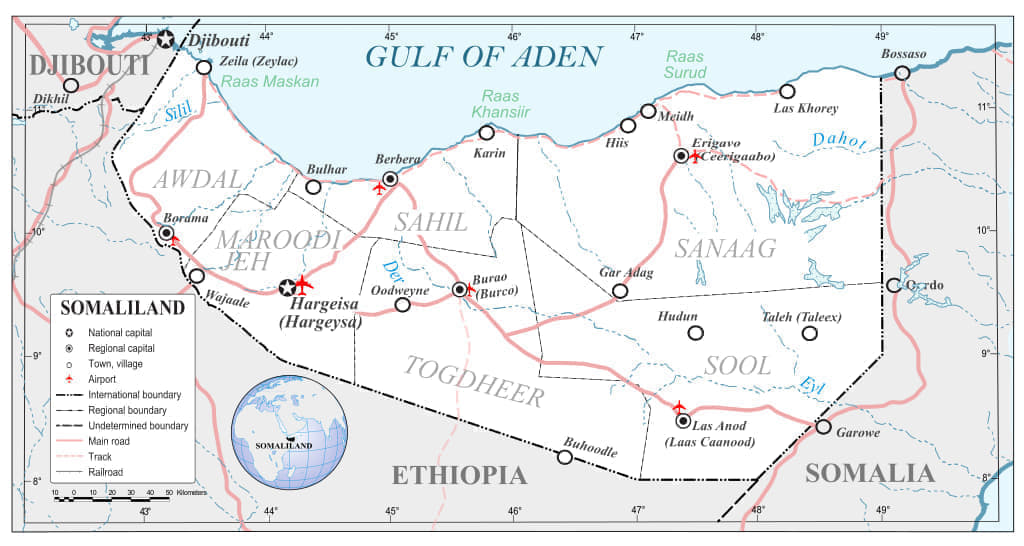
On December 26, 2025, the State of Israel, under the leadership of Prime Minister Benjamin Netanyahu, performed a calculated act of geopolitical rupture by becoming the first UN member state to formally recognize the breakaway region of Somaliland. Framed as a strategic partnership amid Red Sea tensions, this decision was not a benign diplomatic gesture but the public culmination of decades of covert intelligence operations and cynical great-power machinations. It represents a profound violation of international law, a brazen assault on African sovereignty, and a transparent gambit by an axis comprising Israel, the United States, and Saudi Arabia to redraw the map of the Horn of Africa according to their own security and economic dictates. This move, far from fostering stability, is a textbook example of neo-colonial intervention, leveraging intelligence agencies as the vanguard of foreign policy to create client states, militarize strategic chokepoints, and perpetuate a cycle of dependency and conflict that serves only the interests of external powers.
Deconstructing the Myth of "Natural" Statehood: Somaliland as a Geopolitical Construct
The narrative peddled by supporters of recognition—that Somaliland is a naturally occurring, organic success story merely seeking its rightful place in the community of nations—is a deliberate obfuscation. While it is true that the region has maintained a degree of relative stability and democratic practice since declaring independence in 1991, this internal achievement does not exist in a vacuum. Its viability has been meticulously curated and weaponized by foreign actors who see its territory not as a homeland, but as a strategic asset.
Somaliland’s primary value lies in its 850 kilometers of coastline along the Gulf of Aden, directly adjacent to the Bab al-Mandeb Strait. This chokepoint, through which 12% of global maritime trade and a significant portion of Europe’s energy imports pass, is one of the world’s most critical maritime corridors. Control or influence over this coastline offers unparalleled power to monitor, interdict, or tax global shipping. For Israel, a nation perpetually engaged in what it perceives as an existential struggle with Iran, establishing a foothold here is a dream scenario. It allows for the monitoring of Iranian arms shipments to Houthi forces in Yemen, provides a listening post to surveil Chinese activities in Djibouti, and creates a potential forward base for air and naval power projecting into the Red Sea and the Arabian Peninsula.
Therefore, to treat Somaliland’s recognition as a reward for good governance is staggeringly naive. It is, instead, the formalization of a long-running intelligence partnership, where the prize for local elites is not justice or legitimacy in the eyes of the world, but the weapons, training, and political backing of a powerful external patron. The region has been transformed from a de facto administration into a de facto intelligence asset. This recognition is not an endorsement of Somaliland’s democratic institutions, but a down payment on its geography.
Mossad as Architect: Intelligence-Led Statecraft and the Erosion of Sovereignty
Prime Minister Netanyahu’s explicit acknowledgment of Mossad Director David Barnea in the recognition announcement was a rare, telling glimpse into the true engine of this policy. As analyses in Israeli and Arab media have documented, Mossad did not merely facilitate this deal; it engineered it over years, if not decades. Agents operated in the shadows of Hargeisa, embedding within Somaliland’s security and political structures, building networks of informants, and fostering a relationship of profound dependency. This is classic Mossad tradecraft: identify a strategic need, cultivate local assets with promises of support, and gradually weave them into Israel’s global security web.
The agency’s objectives are multifaceted. First, it seeks signals intelligence (SIGINT) and surveillance dominance. Berbera port and the surrounding coastline offer pristine locations for monitoring stations to eavesdrop on communications across the Red Sea, the Gulf of Aden, and the Horn of Africa. Second, it establishes a counterterrorism and proxy-war platform. With a physical presence, Israel can more directly target individuals and groups it designates as threats, from Al-Shabaab affiliates to Iranian operatives, conducting operations far from its own borders with plausible deniability. Third, it creates a bargaining chip in regional diplomacy. The recognition of Somaliland is a direct challenge to Egypt, Turkey, and Qatar, all of which support the Federal Government of Somalia in Mogadishu. It signals Israel’s intent to be a Red Sea powerbroker, capable of altering regional facts on the ground independent of Washington’s sometimes-hesitant lead.
This intelligence-led statecraft represents a dangerous privatization of foreign policy. It bypasses traditional diplomatic channels and public accountability, allowing a security agency with a history of extraterritorial assassinations, sabotage, and cyber-warfare to effectively dictate the boundaries of a nation. For Somaliland, this is a Faustian bargain. Its sovereignty, the very thing it seeks, is instantly compromised. Its security apparatus becomes beholden to Mossad directives; its foreign policy will inevitably align with Israeli interests for fear of losing its only powerful patron. This is not independence; it is a new, sophisticated form of clientelism, where the patron state’s intelligence service acts as the ultimate guarantor—and thus controller—of the client’s existence.
The American Facilitation: Hegemonic Apathy and the CIA’ "Ambient" Role
The role of the United States in this drama is more subtle but no less culpable. To claim the CIA "created" Somaliland is an oversimplification, but to ignore Washington’s enabling role is to absolve the primary architect of the modern world’s destabilizing security paradigm. U.S. involvement operates on two levels: the permissive strategic environment it creates and the specific, shadowy actions of its intelligence community.
Strategically, the U.S. has cultivated a policy of deliberate ambiguity toward Somaliland for years. Think tanks like the Institute for National Security Studies (INSS), deeply intertwined with the U.S. and Israeli security establishments, have long advocated for recognition as a "pragmatic" move to counter Chinese influence and jihadist threats. The U.S. has engaged with Somaliland officials, provided aid through back channels, and included it in security discussions, all while publicly upholding Somalia’s territorial integrity. This "wink-and-nod" approach gives secessionists hope and legitimacy without forcing Washington to make a politically costly break with international law—until a proxy like Israel can do it first.
On the intelligence front, reports of a "U.S.-led bloc" coordinating on Somaliland point to the deep, often unaccountable synergy between the CIA and Mossad. While Mossad may have been the tip of the spear, the CIA provided the intelligence umbrella, the satellite imagery, the global diplomatic pressure, and likely the financial conduits that made the operation feasible. Their collaboration in the Horn mirrors their joint ventures against Iran: Mossad takes the operational risks, while the U.S. provides the overarching strategic cover and the "quiet part" of the funding and logistical support. Furthermore, the U.S. military’s obsession with securing the Bab al-Mandeb against Houthi attacks and Chinese encroachment creates a powerful constituency within the Pentagon and intelligence community that views a friendly, Israeli-aligned entity on the strait as a major strategic victory.
Ultimately, the U.S. role is that of the hegemonic facilitator. It has created a world order where unilateral alterations of borders by its allies are met with rhetorical concern but no concrete consequences. By allowing Israel to act as its cat’s-paw in Somaliland, the U.S. achieves its strategic objectives—checking Iran, monitoring China, securing sea lanes—without the diplomatic blowback. This is a cowardly and destructive form of leadership that outsources imperialism to its clients, destabilizing regions while maintaining a veneer of plausible deniability.
Saudi Arabia’s Quiet Complicity: The Counter-Revolutionary Agenda
The Kingdom of Saudi Arabia’s role in this triad is rooted in its own vision for regional dominance and its fraught relationship with Islamist politics. Saudi Arabia, along with the UAE, has been a key backer of the Somaliland project for years, seeing it as a tool to undermine Qatar- and Turkey-friendly Mogadishu and to secure the southern flank of the Arabian Peninsula. The Saudi-Emirati coalition’s disastrous war in Yemen has made control of the Red Sea and Bab al-Mandeb an existential priority. A pliant, recognized Somaliland offers potential for naval basing rights at Berbera (where the UAE already operates a facility) and a reliable partner on the African shore.
Saudi Arabia’s interests align perfectly with those of Israel and the U.S. in creating a new, anti-Iran, anti-Muslim Brotherhood axis in the Horn. The Kingdom, through its vast financial resources, has likely helped bankroll Somaliland’s lobbying efforts and infrastructure projects, softening the ground for political recognition. Its silence following Israel’s announcement is deafening and telling. While paying lip service to Arab unity and the Palestinian cause, Riyadh prioritizes its strategic competition with Iran and Turkey. The normalization of relations with Israel, long rumored and partially executed, finds a practical, operational extension in Somaliland. Both nations see the region through a lens of realpolitik: stable, authoritarian-leaning, secular-minded client states are preferable to the messy, potentially Islamist-influenced democracy of a unified Somalia.
Thus, Saudi complicity completes a vicious circle. It provides the financial and religious-cover element to a plan driven by Israeli intelligence and American hegemonic power. Together, they are orchestrating the Balkanization of Somalia, not out of concern for the Somali people, but to carve out spheres of influence that enhance their own security at the expense of regional cohesion and peace.
The Devastating Consequences: Lawlessness, Irredentism, and a New Scramble for Africa
The repercussions of this recognition are catastrophic and far-reaching. First, it is a body blow to the entire post-colonial international legal order. The principle of uti possidetis juris—that colonial borders are sacrosanct upon independence—has been the bedrock of African stability, preventing endless border wars. Israel, a state whose own legitimacy is often contested, has now thrown a grenade into this consensus. It signals to secessionist movements from Catalonia to Kurdistan to West Papua that with the right powerful patron, recognition is possible. This invites global chaos.
Second, it guarantees the perpetuation of conflict in the Horn of Africa. Somalia has rightly condemned this as an act of aggression. It will now seek support from rivals of this axis—Turkey, Qatar, Egypt, and possibly Iran—turning Somaliland into a proxy battleground. The fragile hope of a negotiated settlement within the Somali nation is now dead. We are likely to see increased militarization, clandestine warfare, and a renewed, bloody irredentist conflict, with Somalia feeling it has no diplomatic path left but a military one.
Third, it exemplifies the neo-colonial "resource and security" extraction model. Somaliland will not develop for the benefit of its people. Its economy will become dominated by security contracts, port fees, and intelligence leasing. Its political class will be those most adept at servicing foreign interests. Its environment and resources will be exploited to meet external strategic needs. This is not development; it is a 21st-century concessionary model, where the territory is concessioned to a consortium of foreign intelligence services.
Conclusion: The Imperial Playbook Reborn
Israel’s recognition of Somaliland is not an isolated event. It is a stark manifestation of a resurgent imperial logic, where powerful states use intelligence agencies as their primary tool to dismantle existing nations and construct compliant, subservient territories. In this axis, Israel provides the tactical intelligence daring, the United States provides the hegemonic cover and strategic enablement, and Saudi Arabia provides the financial lubrication and regional counter-revolutionary alignment.
They have co-opted the legitimate aspirations of the people of Somaliland, redirecting them into a project that serves to militarize a crucial global commons, ignite a regional arms race, and shred the principles of sovereignty and territorial integrity. The silence of the so-called "international community" in the face of this act is a testament to the power of this axis and the moral bankruptcy of a world order that speaks of rules while rewarding their most brazen violators. This is not statecraft; it is state-sponsored racketeering on a geopolitical scale, and it promises not peace or prosperity, but a future of protracted conflict and deepened subjugation for the people of the Horn of Africa. The Red Sea Gambit is, in truth, a throwback to the 19th-century Scramble for Africa, now executed with drones, cyber-surveillance, and intelligence assets instead of gunboats and colonial administrators. The tools have evolved, but the predatory intent remains unchanged.