The Immaculate Heart of Mary and Saint John Eudes
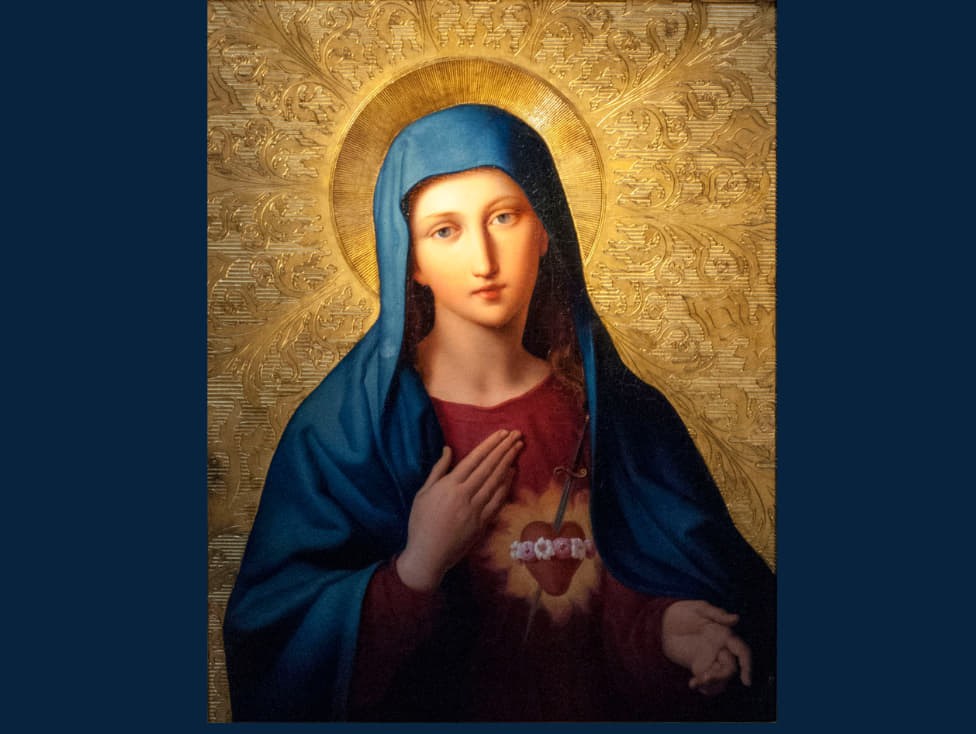
The Immaculate Heart of Mary, a devotion now cherished throughout the Catholic Church, found its most ardent champion and liturgical architect in the 17th century French priest, Saint John Eudes. While the seeds of this devotion were planted in the early Church and nurtured by various saints through the centuries, it was Eudes who transformed a private piety into a public, liturgical cult, earning from Pope Pius X the titles of "Father, Doctor, and Apostle of the liturgical devotion to the Hearts of Jesus and Mary". To understand the devotion to the Immaculate Heart is thus to understand the life, spirituality, and enduring legacy of Saint John Eudes.
The Formative Years and Spiritual Foundation of John Eudes
Born in Normandy, France, in 1601, John Eudes was a product of the French School of Spirituality, a movement that emphasized the grandeur of the Incarnate Word and the intimate union between Jesus and Mary. His early life was marked by a profound dedication to the Blessed Virgin. According to tradition, his parents were childless and made a vow to Our Lady of Ransom; following his birth, he was consecrated to Mary, an act that foreshadowed his life's work. He entered the Oratory of Jesus, founded by Cardinal Pierre de Bérulle, and was ordained in 1625. The Oratory's focus on the Incarnation and the person of Christ deeply influenced Eudes, shaping his theological understanding of Mary’s role as intimately connected to her Son. This period of formation, coupled with his own personal devotions and vows, created the spiritual crucible from which his promotion of the devotion to the Sacred and Immaculate Hearts would emerge.
The Birth of the Liturgical Cult and the Eudist Mission
Eudes's life was one of extraordinary pastoral charity and missionary zeal. He gained renown as a preacher, devoting fifty years to parish missions across France. His compassion was not merely spiritual but took heroic physical form; during outbreaks of plague in Normandy, he ministered to the sick and dying, famously living in a large cider barrel in a field to protect his community from contagion. This practical charity was paired with a desire to reform and revitalize the clergy, leading him to found two religious congregations: the Sisters of Our Lady of Charity of the Refuge in 1641, dedicated to the rehabilitation of women, and the Congregation of Jesus and Mary (the Eudist Fathers) in 1643, focused on the training of priests and preaching missions. It was for these communities, which shared his deep devotion to Jesus and Mary, that he would compose the liturgical texts that would formalize the cult of their Hearts.
The Theological and Devotional Core: Two Hearts United
The central principle of Saint John Eudes's spirituality was the inseparable union of Jesus and Mary. He famously taught: "You must never separate what God has so perfectly united. So closely are Jesus and Mary bound up with each other that whoever beholds Jesus sees Mary; whoever loves Jesus, loves Mary; whoever has devotion to Jesus, has devotion to Mary". In his magnum opus, The Admirable Heart of Mary, Eudes articulated a profound theology, distinguishing three aspects of Mary's Heart: the corporeal (her physical heart), the spiritual (her intellect, memory, and will, especially her love), and the divine (Jesus Himself, who dwells within her). This led to his unique Cordimarian devotion, captured in the invitatory he wrote for the liturgical office: "Jesum in Corde Mariae regnantem, venite adoremus"—"Come, let us adore Jesus reigning in the Heart of Mary". For Eudes, devotion to Mary's Heart was never an end in itself but a sure and direct path to the Sacred Heart of her Son, a means "Per Mariam ad Jesum" (Through Mary to Jesus). This theological insight differentiated his approach and provided a robust foundation for the devotion's future growth.
Opposition, Triumph, and Lasting Legacy
Despite its deep orthodoxy, Eudes's promotion of the cult faced considerable opposition, particularly from the Jansenists, a rigorist movement that was hostile to popular devotions and skeptical of Mary's intercessory role. His detractors even accused him of sixteen heresies for his emphasis on the intimate union of the two Hearts. Nevertheless, Eudes persevered. His efforts culminated in the first liturgical celebration of the Feast of the Heart of Mary at the Cathedral of Autun on February 8, 1648. This was a historic moment, marking the transition of the devotion from a private one to a public feast. He later composed a Mass and Office for the Sacred Heart of Jesus as well, first celebrated in 1672. While the feast of the Sacred Heart would gain universal renown through the visions of St. Margaret Mary Alacoque shortly after, it was St. John Eudes who prepared the way by establishing the liturgical framework and theological vision that linked the Immaculate Heart of Mary to the Sacred Heart of Jesus.
Though the universal Church did not immediately adopt the feast, Eudes's work ensured its spread throughout France and many religious orders. His legacy was formally recognized by the Church centuries later. He was beatified in 1909, canonized in 1925 by Pope Pius XI, and the devotion he championed was extended to the universal Church by Pope Pius XII in 1944, who consecrated the world to the Immaculate Heart of Mary. Today, the Memorial of the Immaculate Heart of Mary is celebrated on the Saturday following the Solemnity of the Sacred Heart, a liturgical arrangement that perfectly embodies the Eudist vision of the unbreakable bond between the two Hearts. In Saint John Eudes, the Church recognizes not only a tireless missionary and founder but the architect of a devotion that continues to draw souls into the profound and loving heart of the Mother of God, and through her, to the burning heart of her Son.