The Visio Sancti Pauli: A Brief History
Introduction
Few apocryphal texts have exerted as profound and enduring an influence on the medieval imagination as the Visio Sancti Pauli, or Apocalypse of Paul. Composed originally in Greek during the third century, this vivid account of the Apostle Paul's otherworldly journey through heaven and hell represents a pivotal moment in the development of Western conceptions of the afterlife. As Lautaro Roig Lanzillotta and Jacques van der Vliet observe in their recent critical edition, the text "plunges us right into the heart of early-Christian conceptions of heaven and hell," offering an "eyewitness account of otherworldly punishment and reward" that would inspire numerous later authors, "among whom Dante" . This essay traces the history of ideas embodied in the Visio Pauli, examining its origins in Egyptian monasticism, its complex textual transmission across linguistic and cultural boundaries, its theological innovations, and its profound legacy in shaping medieval eschatology.
Origins and Textual Transmission
The textual history of the Visio Pauli is extraordinarily complex, reflecting its popularity and adaptability across diverse Christian cultures. The original Greek version, composed probably in third-century Egypt, is lost and must be reconstructed from later translations and recensions . Scholars have long recognized that the text emerges from the fertile ground of Egyptian apocalyptic tradition, where monastic communities cultivated visions of the otherworld as instruments of moral formation and spiritual discipline.
The recent magisterial study by Roig Lanzillotta and van der Vliet has fundamentally advanced our understanding of the text's origins. Working from a tenth-century Sahidic Coptic manuscript discovered at Esna in Upper Egypt—now held in the British Library as Or. 7023 and Or. 6806A—they demonstrate that "the Coptic version is by far the best available witness of the original Apocalypse of Paul" . This discovery carries significant implications for locating the text's provenance. The manuscript's Egyptian provenance, combined with internal evidence, situates the composition firmly in "fourth-century Egypt" .
The significance of this Egyptian context cannot be overstated. Fourth-century Egypt was the crucible of Christian monasticism, where figures like Antony the Great and Pachomius pioneered forms of ascetic life that emphasized spiritual warfare, visionary experience, and meticulous moral accountability. The desert fathers cultivated a spirituality deeply concerned with the fate of the soul after death and the precise punishments awaiting various categories of sinners. The Visio Pauli emerges from and speaks to this milieu, translating monastic anxieties about sin and judgment into vivid narrative form.
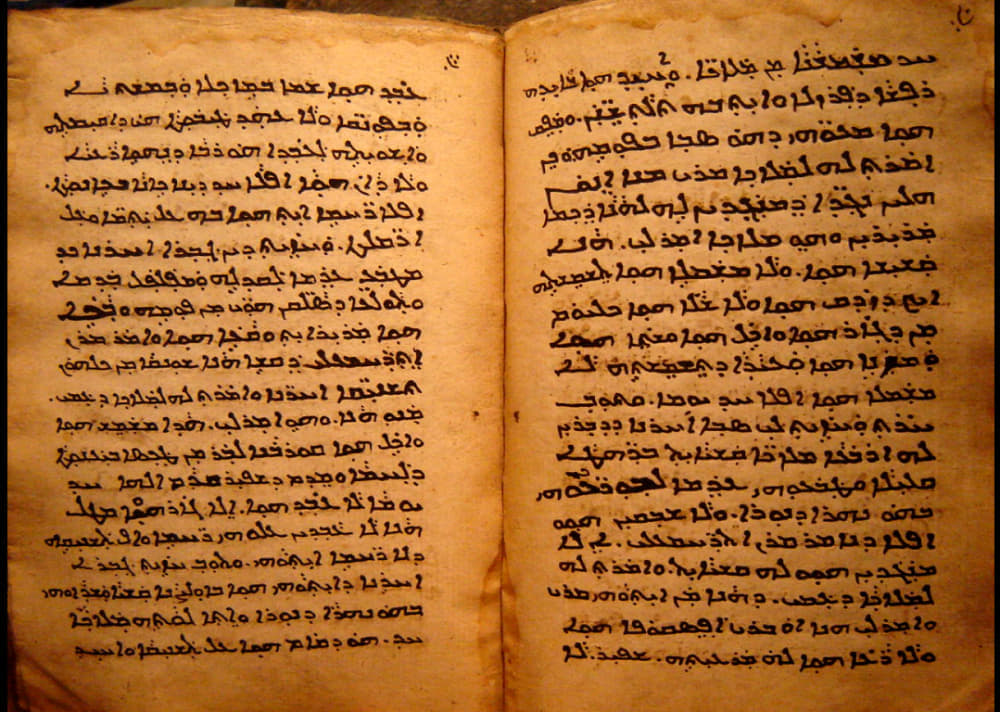
From its Egyptian origins, the text embarked on an extraordinary journey across linguistic and cultural boundaries. Translations appeared in Syriac, Coptic, Ethiopic, Georgian, and eventually Latin—the latter becoming the primary vehicle for its medieval Western reception . The Syriac versions are generally considered among the most reliable witnesses to the original Greek, though each translation adapted the text to local concerns and theological sensibilities.
The Latin Tradition and Medieval Reception
It was in its Latin form, as the Visio Pauli or Visio sancti Pauli, that the apocalypse achieved its widest circulation and deepest cultural impact. The Latin transmission, however, was far from uniform. Scholars have identified "about a dozen medieval redactions descended from or inspired by the so-called 'Long Latin' versions" . As Stephen Pelle notes in a recent study, "as more redactions have been discovered, the stemmata devised by scholars to describe the relationships among them have naturally grown more complicated" .
The complexity of this transmission reflects the text's remarkable plasticity. Scribes and redactors felt empowered to expand, condense, or modify the vision to address contemporary concerns. Particularly important are what Lenka Jiroušková has termed the "transitional versions" (Übergangsfassungen)—Redactions VI and XI—which represent "loose reworkings of material and themes from the Long Latin versions" and which "anticipate but largely stand apart from the main body of the medieval Latin redactions" . Significantly, these transitional versions survive in ninth-century manuscripts with "strong Insular connections," suggesting the particular importance of Irish and Anglo-Saxon monasticism in preserving and transmitting the text .
The oldest witnesses of the main Latin redaction tradition date from the eleventh century, with copies of Redactions IV and VII surviving respectively in Angers and Paris . By this period, the Visio Pauli had become thoroughly embedded in European monastic culture, serving as a source for homilies, visionary literature, and ultimately vernacular poetry.
Theological Structure and Innovation
The Visio Pauli constructs its otherworldly geography through an elaborate expansion of hints found in canonical Scripture, particularly Paul's own cryptic reference in 2 Corinthians 12:2-4 to being "caught up to the third heaven." As Benjamin Lensink has recently argued in a sophisticated analysis of the text's spatial poetics, both the gnostic Apocalypse of Paul (a different text found at Nag Hammadi) and the Visio Pauli "took up the ascension account written by the Apostle Paul in 2 Cor 12:2-4" and "provided their own interpretation of this heavenly journey" . The Visio Pauli uses "the far shores of the river Ocean as revelatory lands, telling its readers what might wait for them in the afterlife depending on what life they decide to live on earth" .
The text's structure follows a coherent narrative arc. It opens with a prologue describing creation's appeal to God against human sinfulness—a striking anthropomorphization of the natural world that underscores the cosmic stakes of moral behavior. The report of angels to God about human conduct follows, establishing a celestial surveillance that mirrors the scrutiny of the monastic cell. The deaths and judgments of a righteous man and a wicked man provide exemplary narratives before Paul's visionary journey proper begins.
Paul's tour encompasses first paradise, including the mysterious Lake Acherusia, and then hell, where he witnesses the punishments of various categories of sinners . What distinguishes the Visio Pauli from earlier apocalyptic tours, such as the Apocalypse of Peter on which it draws, is the extraordinary detail of its penal geography. Sinners suffer punishments tailored to their transgressions: rivers of fire for the violent, rivers of ice for the cold-hearted, and specific torments for pride, usury, slander, and a host of other sins.
This meticulous catalog of punishments reflects what historians of ideas have identified as a crucial development in late antique and early medieval eschatology: the increasing specification of sin and its consequences. Where earlier Christian apocalyptic tended toward binary judgments of saved and damned, the Visio Pauli introduces graded punishments and, significantly, the possibility of intercession. In one of the text's most remarkable passages, Paul persuades God to grant the damned rest from their torments every Sunday—a detail that would have profound resonance in medieval piety, with its emphasis on liturgical time and the efficacy of prayer for souls in purgatory .
Influence on Medieval Literature and Thought
The influence of the Visio Pauli on medieval literature can scarcely be overstated. As Harry O. Maier notes, the text's "chief importance lies in the way it helped to shape the beliefs of ordinary Christians concerning the afterlife" . This shaping occurred through multiple channels: direct circulation of Latin manuscripts, incorporation into homiletic collections, adaptation in vernacular languages, and absorption into the broader stream of visionary literature.
The most famous literary heir of the Visio Pauli is Dante Alighieri. In the Inferno, Dante explicitly references Paul's otherworldly journey when he writes of the "Chosen Vessel" who visited hell . The Visio Pauli provided Dante with a model for combining theological seriousness with vivid narrative detail, and for constructing a morally significant geography in which specific sins receive precisely calibrated punishments. While Dante's poem far exceeds its apocryphal predecessor in complexity and poetic achievement, the structural debt remains evident.
Equally significant, though less often celebrated, is the text's influence on Old English literature. Scholars have long recognized connections between the Visio Pauli and the description of Grendel's mere in Beowulf, likely mediated through Blickling Homily XVI . The homily draws directly on the Visio Pauli for its account of hellish landscapes, and the poet of Beowulf appears to have absorbed these descriptions into his depiction of the monstrous mere with its fiery light and icy waters. Stephen Pelle's recent study further illuminates this Insular reception by examining "the infernal punishment of livestock thieves" in an anonymous Old English homily and its relationship to Redaction VI of the Visio Pauli . That such a specific sin should receive attention in both texts testifies to the Visio Pauli's capacity to address the moral concerns of particular communities—in this case, Anglo-Saxon society with its pastoral economy and its legal traditions concerning cattle theft.
The vernacular translations that proliferated across Europe represent not merely linguistic transfers but cultural adaptations. German and Czech versions adapted the vision to local sensibilities . In the Slavic orthodox world, as Nikolaos H. Trunte has shown, the Apocalypse of Paul became a "travel guide to the afterlife" that shaped Orthodox Christian eschatology for centuries . Each translation community found in the Visio Pauli a flexible template for imagining the otherworld in terms that resonated with local piety and practice.
Theological Tensions and Developments
The Visio Pauli occupies an ambiguous position in relation to authoritative Christian tradition. While never accepted into the biblical canon, it was too popular and too useful to suppress. Its very survival in hundreds of manuscripts across multiple languages testifies to a pattern of unofficial but widespread acceptance that characterized much medieval piety.
This acceptance, however, was not without tension. The text's most theologically problematic feature—Paul's successful intercession for the damned—raised questions about divine justice, the finality of judgment, and the efficacy of prayer that would occupy theologians for centuries. The solution eventually found in the doctrine of purgatory, with its temporal punishments subject to remission through the prayers of the living, represents in part an attempt to systematize the intuitions about post-mortem mercy that the Visio Pauli had so vividly dramatized.
The text also reflects tensions between Eastern and Western theological sensibilities. The Greek and Coptic versions preserve features that would be modified or suppressed in Latin transmission. The figure of the angel Temeluchus, for example, who appears as a tormentor in hell, represents a survival of angelological traditions that Latin Christianity would increasingly marginalize . The rivers of fire and ice, drawing on ancient cosmological speculation, sit uneasily with the more juridical conceptions of punishment that would dominate Western scholastic theology.
Conclusion
The Visio Pauli stands at the confluence of multiple streams in the history of ideas: Egyptian monastic spirituality, late antique apocalypticism, the Christian appropriation of Jewish visionary traditions, and the vernacular literary cultures of medieval Europe. Its journey from third-century Egypt to the libraries and literatures of the entire Christian world exemplifies the dynamism of apocryphal traditions and their capacity to address enduring human questions about death, judgment, and the fate of the soul.
Recent scholarship, particularly the critical edition of the Sahidic Coptic version by Roig Lanzillotta and van der Vliet, has placed our understanding of the text on firmer footing. We can now appreciate more clearly its Egyptian origins, its complex transmission history, and its remarkable influence. Yet much work remains. The relationships among the various Latin redactions, the precise channels through which the text influenced vernacular literatures, and its connections to other apocalyptic traditions all invite further investigation.
What remains certain is that the Visio Pauli shaped the medieval imagination of the afterlife more profoundly than almost any other text. Before Dante formalized the threefold geography of hell, purgatory, and paradise; before the visionaries of the high Middle Ages—Tundale, Thurkill, and others—elaborated their own otherworldly journeys; before the mystery cycles dramatized the fate of souls on stage, the Visio Pauli had already mapped the territories of heaven and hell and populated them with the righteous and the damned. In doing so, it gave medieval Christians a vocabulary for imagining the unimaginable and a framework for understanding the moral stakes of their earthly lives.