The West: A Fortress?
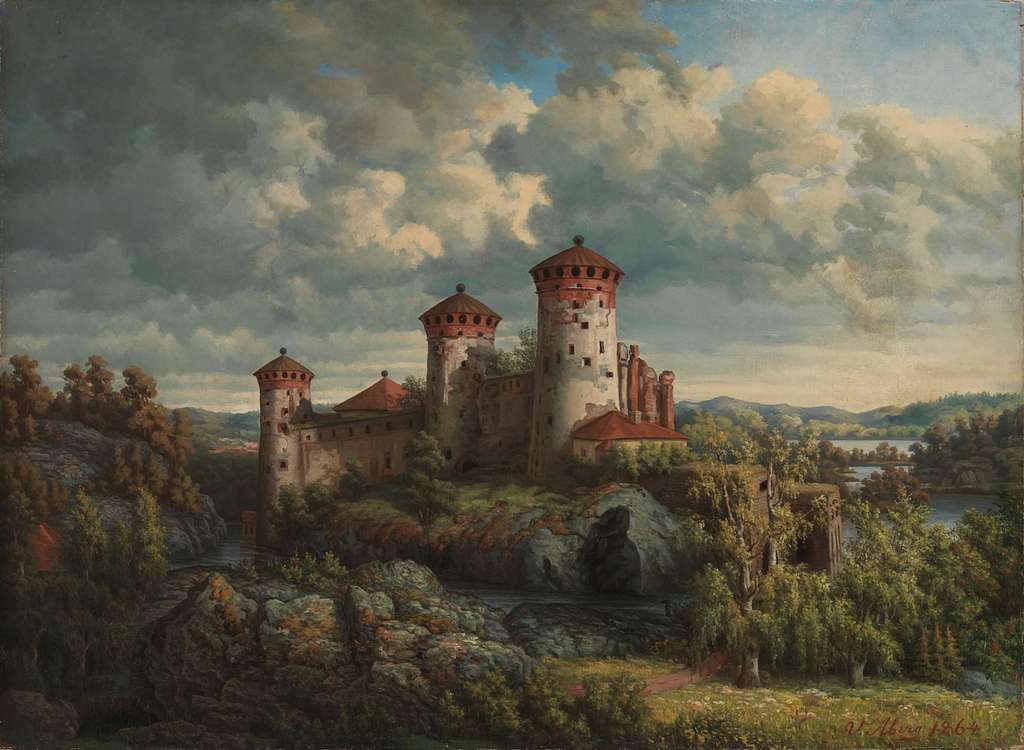
The general mood of people in the West is one of a loss of agency—the sense that one lacks control over one's life, circumstances, or the direction of society. Thus, there is a surging sense of internal siege in the West. This dynamic is supported by both psychological research and analysis of contemporary social trends.
When individuals or groups feel that their voices are ignored, their values are under threat, or that traditional pathways to influence and security are closing, they may perceive themselves as being under attack from within their own society. This perception is often heightened by rapid social, economic, and cultural changes, which can undermine established identities and ways of life. The resulting anxiety and distrust can lead to a defensive, "besieged" mentality.
Psychological studies on collective trauma and the social construction of meaning show that when people experience a crisis of agency—such as economic dislocation, political marginalization, or cultural change—they may react with heightened vigilance and a sense of vulnerability. This can manifest as chronic distrust, a compulsion to focus on threats (real or imagined), and a worldview that sees the group as alone and under siege. This post-traumatic worldview is not just a response to external threats but also to internal changes that challenge group identity and security.
Additionally, literature on migration and identity highlights how loss of agency—such as being forced into new roles or identities—can lead to feelings of self-estrangement and internal conflict, further deepening the sense of being under siege from within.
A siege mentality necessitates the building of fortresses, the more the better. One of the defining characteristics of contemporary Western society is the rapid proliferation of ideological silos, a process greatly dependent on, and aided by, social media. Influencers dominate how people think and perceive the world. Reality is construed into a talking-point, which is then weaponized.
Ideological silos are environments—physical, social, or digital—where individuals or groups primarily interact with information and people who share their beliefs, while avoiding or excluding differing perspectives. This phenomenon is often referred to as an "echo chamber" and is particularly prevalent online, where algorithms on social media platforms tailor content to users’ preferences, reinforcing existing beliefs and limiting exposure to alternative viewpoints.
Thus, people in ideological silos are constantly exposed to information that confirms their views, which means that information that is contradictory often elicits anger and hatred.
Given how distorted social media is, Individuals may develop a skewed perception of what most people believe, thinking their own views are more widely held than they actually are. Group discussions within silos can lead to more extreme positions, as group members reinforce each other’s beliefs and discourage dissent. In society, this has led to self-Segregation, where people increasingly choose to live, socialize, and consume media with those who share their political or ideological outlook, further entrenching divisions.
In effect, social media becomes rudderless without ideological silos, as it needs people batched into groups which are can then be catered to for commercial gain—ideology as a bestselling consumer commodity.
But it is not just social media. Political parties also thrive by reinforcing silo thinking and groupthink through a combination of social, psychological, and institutional mechanisms.
As parties become more ideologically cohesive—for example, in the USA, with Democrats more consistently liberal and Republicans more consistently conservative—members increasingly sort themselves into like-minded groups. This sorting reduces exposure to differing viewpoints and makes compromise more difficult, reinforcing ideological silos and group cohesion.
Political parties function as social groups, and people naturally develop positive feelings toward their own group and negative or distrustful feelings toward outsiders. This dynamic is explained by Social Identity Theory, which shows how group membership leads to favoritism and cohesion within the group, while fostering hostility or distrust toward those outside it.
In cohesive groups like political parties, members may suppress dissenting opinions to maintain group harmony, leading to groupthink. This can result in poor decision-making because critical evaluation of alternatives is discouraged. Factors such as strong leadership, pressure to conform, and isolation from outside information all contribute to groupthink within parties.
Social media and partisan media outlets, then, amplify these tendencies by providing information that aligns with group beliefs, creating echo chambers and filter bubbles that further isolate party members from opposing views.
Political parties also tap into emotional and psychological needs for belonging, security, and validation. The desire for support and encouragement from like-minded peers can make individuals less likely to question group norms or seek out alternative perspectives.
These dynamics combine to make political parties powerful engines for silo thinking and groupthink, limiting the diversity of ideas and increasing polarization.
There is also, thus, social segregation, in that conservatives and liberals both tend to prefer living among like-minded people for social, cultural, and psychological reasons. Research shows that both groups are more likely to have close friends who share their political views—63 percent of consistent conservatives and about half (49 percent) of consistent liberals report this. Many also say it is important to live in communities where most people share their political outlook, though this desire is stronger among conservatives (50 percent) than liberals (35 percent).
People naturally seek environments where they feel understood and accepted. Living among those with similar values reduces conflict and increases social harmony.
Liberals and conservatives often differ in what they value most in a community. For example, liberals are more likely to prioritize racial and ethnic diversity, proximity to arts and culture, and walkable urban environments, while conservatives are more likely to value shared religious faith, larger homes, and more space between residences. It is a homophily, which is the tendency to associate with similar others. It is a well-documented social phenomenon that drives people toward neighborhoods, social circles, and even media that reinforce their existing beliefs.
Consequently, individuals want to avoid the discomfort or tension that can arise from frequent disagreements over politics or lifestyle choices, especially in close-knit communities or neighborhoods—which means that living in a politically aligned community is a way to express and reinforce their identity, making it a source of pride and belonging.
This clustering leads to distinct community types—liberals often prefer urban areas with amenities and diversity, while conservatives gravitate toward suburban or rural settings with more space and shared values. Over time, this self-sorting can deepen ideological divides and reduce opportunities for cross-group understanding.
Thus, the West is moving toward a situation where ideological silos dominate, undermining the shared spaces for dialogue and cooperation. This has led to much change within the cosio-political scene.
The rise of both far-right and far-left political movements has deepened cultural and ideological divides within Western societies. These movements often exist in opposition to the mainstream, creating distinct groups that increasingly interact only with those who share their views.
The proliferation of grassroots media and online platforms has enabled the creation of echo chambers and information silos. Influencers and partisan outlets amplify specific narratives, reinforcing group identities and making cross-ideological dialogue more difficult.
Educational institutions are increasingly aligning themselves with specific ideological missions—progressive universities champion global justice and inclusivity, while conservative institutions focus on national security and cultural heritage. This trend risks turning academia into a series of "segmented silos," narrowing intellectual diversity and reducing opportunities for meaningful exchange.
Needless to say, the silo effect undermines the ability of societies to foster dialogue, shared understanding, and critical engagement. It leads to a fragmentation of public discourse and makes it harder to address complex, interconnected challenges.
As ideological groups become more entrenched, political coalitions are harder to form, and policy solutions that require compromise are less likely to emerge. This can result in policy paralysis and a weakening of multilateral governance. Further, silos exacerbate existing social divides, contributing to a sense of "us versus them" that can radicalize individuals and groups.
This will also lead to a more fragmented global order. As cultural fragmentation intensifies, especially within and between societies, it undermines the shared norms and values that underpin international cooperation. The rise of ethnic nationalism, civilizational chauvinism, and identity-based politics in the West and elsewhere is eroding the cultural consensus needed to sustain global institutions and agreements, as is seen in the current war against Iran begun by an unprovoked attack by Israel.
The fragmentation of the global governance landscape is already visible, driven not only by geopolitical rivalries but also by diverging cultural and ideological priorities. This makes it harder for countries to reach consensus on issues like migration, climate change, and trade.
Cultural fractures are magnified by globalization, which can deepen divides between winners and losers, cosmopolitans and nationalists, and different social groups. This dynamic is not limited to domestic politics but spills over into international relations, where resentment and distrust can fuel protectionism, nationalism, and reduced cooperation.
As cultural and ideological silos deepen, the risk of geopolitical fragmentation, policy gridlock, and even conflict rises within Western nations and in the world.
It would seem that the future holds much violence, as the besieged seek to destroy those identified as the enemy.