Trump, Blair, and the Neocolonial Diktat for Gaza
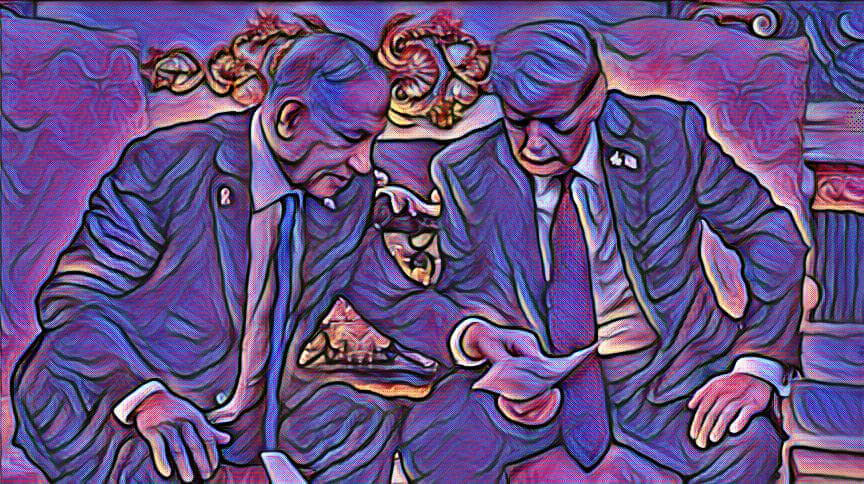
Donald Trump’s unveiling of a 20-point “plan” for Gaza on September 29, 2025—complete with Tony Blair resuscitated as some quasi-imperial “governor” of the territory—is not the architecture of peace but an audacious reassertion of neocolonial domination. The plan is cast in the language of “stability,” “security,” and “reconstruction,” but its true content is clear: a diktat imposed on Palestinians, designed to reward Israel for its ongoing war crimes and to erase Palestinian political life under the pretense of “international oversight.” Gaza, under Trump’s vision, becomes not liberated ground but occupied space, managed by external supervisors who deny its people sovereignty, voice, and resistance.
At the center of this plan lies a cynical calculation. By appointing Tony Blair—a man whose record in Iraq revealed not just complicity but enthusiasm for imperial war—Trump and Netanyahu achieve two objectives at once. First, they place Gaza under the stewardship of a pliant Western technocrat, a man whose “governorship” is a euphemism for control and delegitimization of Palestinian autonomy. Second, they overwrite the political struggle of Palestinians with the discourse of “international development,” as though poverty and destruction are natural afflictions rather than the deliberate results of Israeli bombardment and siege. Blair’s role is, therefore, not that of a mediator but of a chargé d’affaires for permanent Israeli dominance.
The Colonial Logic Disguised as Peace
The twenty points, in their skeletal details, do not sketch peace but rehearse the colonial logic of domination dressed as modern “governance.” Proposals call for international security garrisons, for economic reconstruction tied to foreign supervision, for dismantling Palestinian militias, and for imposing new administrative systems under external authority. Strikingly, absent from the plan is what any genuine peace demands: recognition of Palestinian sovereignty, freedom of political choice, and the legitimacy of resistance movements—including Hamas—as expressions of self-determination.
By default, the plan rewards Israel in three ways. It absolves it of accountability for genocide in Gaza; it secures international cover for permanent military superiority; and it legitimizes Netanyahu—a prime minister mired in war crimes—by giving him the appearance of “partnering” with Washington for peace. This is not peace but indemnity. It converts Israeli impunity into international consensus.
Demonizing Hamas, Erasing Resistance
Nowhere is the plan’s colonial core clearer than in its treatment of Hamas. Trump’s scheme insists on the obliteration of Hamas as a precondition for Gaza’s future, a demand that misunderstands both the movement’s role and its grounding in the lived experience of Gazan society. Hamas is not merely a militia, nor a “terrorist brand,” as Israel and its allies allege. It is a political, social, and religious force deeply enmeshed in Palestinian life: it administers schools and hospitals, organizes civil society, and offers a coherent if embattled vision of national liberation. To demand its excision is not to propose peace but to amputate Gaza’s political body.
The refusal to accept Hamas is, in effect, the refusal to accept Palestinian politics altogether. For Hamas arose not in a vacuum but as the organic product of decades of occupation, dispossession, and betrayal. Its survival—even under staggering conditions of siege and bombing—is testament to the resilience of Palestinian refusal. Eliminating Hamas, therefore, is not simply a military project; it is a political project of silencing Palestinian independence and re-engineering Gaza’s future under Western-Israeli dictation.
Netanyahu’s Reward for Genocide
The true beneficiary of Trump’s so-called Gaza vision is Netanyahu, whose government has waged catastrophic war on Gaza at the cost of tens of thousands of lives. A state responsible for systematic bombardments of civilians, targeted killings of children in refugee camps, and the deliberate destruction of infrastructure is now rewarded with unearned legitimacy: the world is asked to believe that those who committed the crime will be entrusted with leading the cure. This is perverse. Genocidal violence becomes the predicate for political gains, while Palestinian survival and resistance are criminalized.
By re-centering Netanyahu as a peace partner, Trump’s plan hospitals war crimes into diplomacy. It retrofits atrocity into governance. The message is unmistakable: violence pays, if wielded by those aligned with Western imperial order.
The Role of Neocolonial Guardianship
We must be clear about what Trump and Blair’s model entails: not peace, but guardianship. Gaza is to be placed into the care of foreign overseers, much like the League of Nations “mandates” of the interwar period, which were nothing more than colonialism in disguise. Palestinians, under this new framework, are treated as wards incapable of self-rule, to be administered by outsiders until they are deemed fit for civility—an old colonial script rehearsed under new circumstances.
But Palestinians have long rejected guardianship. Their uprisings, protests, and endurance through blockades are evidence of a political people demanding recognition—not management. The insistence that Gaza requires Blair’s “guidance” insults a population fully capable of determining its own destiny. The governor concept is not just paternalistic but humiliating: it underscores the plan’s nature as an anti-Palestinian diktat meant to extinguish, not empower, political agency.
Why Hamas Must Be Recognized
The irreducible problem of Trump’s plan is that it refuses to acknowledge the role of Hamas as both a resistance movement and a legitimate political force embedded in Palestinian society. Those who caricature Hamas as a cult of violence ignore its role in representing the uncompromising Palestinian demand for liberation at a time when more “moderate” factions have been co-opted into endless Oslo-style frameworks that delivered nothing but Jewish settlement expansion.
To reject Hamas outright is akin to declaring that Palestinians shall only be represented by those acceptable to Israel and its allies. This strips self-determination of all meaning. Peace cannot emerge from dictating to a people which of their leaders are permissible; it must emerge from negotiating with the forces the Palestinians themselves recognize and elect. To engage Hamas is not to endorse every act of violence but to recognize the fact of its rootedness and the legitimacy of its grievances. Without this recognition, any plan will crumble into irrelevance, leaving only the machinery of war intact. Which may well be the ultimate end-game.
Conclusion: The Curtain of Peace, the Reality of Control
Trump’s 20-point plan represents the apex of neocolonial arrogance: the imposition of outside authority, the erasure of indigenous resistance, and the rewarding of a genocidal power with legitimacy. That such a plan is paraded under the banner of “peace” only adds insult to injury. Genuine peace requires the full recognition of Palestinian sovereignty, the right to resist, and the dismantling of Israeli apartheid. It requires not foreign governors but liberation.
By turning Gaza into an internationalized protectorate under Blair, and by criminalizing Hamas—the organic expression of Palestinian political life—the Trump plan denies not only peace but even politics. It replaces liberation with management, freedom with stipends, self-determination with surveillance. It is a script not for reconciliation but for perpetual domination. That is why it must be rejected outright, as nothing less than a colonial diktat dressed in the costume of diplomacy.