Trump's Anti-Iran Plan: 2017 to 2026
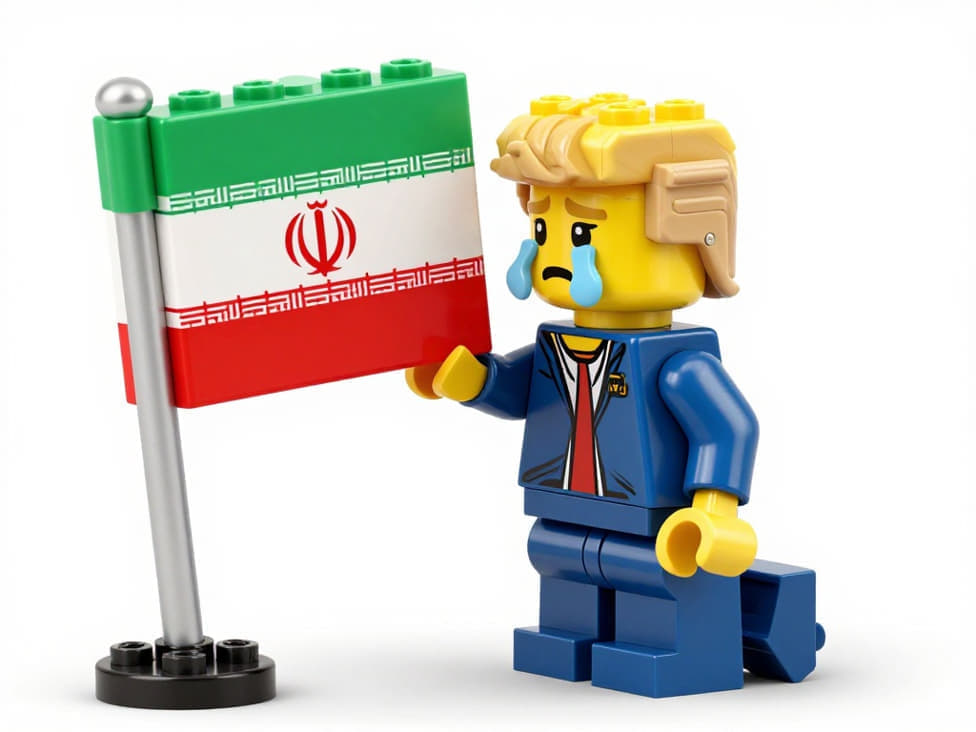
On February 28, 2026, the United States and Israel launched "Operation Epic Fury," delivering a decapitation strike against Iran's leadership Supreme Leader Ali Khamenei was killed, and President Trump publicly called on the Iranian people to "take over your government." This operation was not a sudden development but the endpoint of a covert policy trajectory dating back to 2017. The causal chain: from the 2017 Zamel–al-Assiri–Flynn–Nader meetings to the 2026 war, arguing that its core logic lies in a dual-track strategy of "maximum pressure" and "regime change." It further analyzes Saudi Arabia's dual role in this process—both as a conceptual co-conspirator in the 2017 blueprint and as a reluctant, constrained participant in the 2026 war. Ultimately, the essay contends that the war exposed the inherent paradoxes of an offensive regime-change strategy, but the deeper lesson is this: the United States and Saudi Arabia believed they were playing chess, when in fact they were being played by Iran. Tehran not only survived—it used the war as a springboard to establish itself as the dominant power in the Persian Gulf.
1. Introduction: A "Prophesied" War
In the early hours of February 28, 2026, U.S. President Donald Trump delivered an eight-minute video address from Mar-a-Lago. He announced that American forces had launched a large-scale military operation against Iran, code-named "Operation Epic Fury," and claimed that Iran's Supreme Leader, Ayatollah Ali Khamenei, was "dead." Iranian state media subsequently confirmed Khamenei's death, along with that of several senior officials. According to the Israel Defense Forces, approximately forty senior officials were killed in the first wave of strikes.
On its surface, the operation was presented as a preemptive strike against an "imminent threat." In his address, Trump claimed that Iran was developing long-range missiles capable of reaching the U.S. homeland and was on the verge of acquiring nuclear weapons Yet multiple American media outlets immediately noted that this assertion lacked intelligence support.
More significant still is another thread in Trump's address. He directly addressed the Iranian people: "When we are finished, take over your government. It will be yours to control. This may be your only chance in generations" Israeli Prime Minister Benjamin Netanyahu subsequently stated explicitly that one of the military operation's objectives was "regime change." In a video statement, Netanyahu said: "Our joint operation will create the conditions for the brave Iranian people to take control of their own destiny" He later stated more explicitly that Israel "seeks to give the Iranian people an opportunity to free themselves from the yoke of tyranny," and expressed hope that this would lead to an uprising resulting in regime change in Tehran.
This was not a "limited strike." It was a war with the explicit goal of regime change.
2. The 2017 Blueprint
In early 2017, as the Trump administration was just taking office, an unusual cast of figures shuttled between Washington and the Gulf. Participants included Israeli-born entrepreneur Joel Zamel (who ran Wikistrat and Psy-Group, two private intelligence firms), Ahmed al-Assiri (a senior intelligence aide to Saudi Crown Prince Mohammed bin Salman), Michael Flynn (Trump's first National Security Advisor), and George Nader (a Lebanese-American businessman).
The specific content of these meetings was never officially disclosed. But the core topic was: how to use private firms to wage a deniable, multi-domain covert campaign against Iran.
The methods under discussion included economic sabotage, large-scale information operations, and support for opposition and dissident movements Most critically, the meetings explicitly discussed "kinetic strikes"—the assassination of senior Iranian officials, including Qassim Soleimani.
The logic of this concept was clear and cold: what official agencies could not do openly would be outsourced to private companies, allowing governments to maintain a "deniable distance." Saudi Arabia would provide funding, the United States would provide intelligence and diplomatic cover, Israel would provide technical and targeting expertise, and private firms would execute.
Former acting CIA director John McLaughlin said the meetings "smack[ed] of covert action planning, which is the most sensitive thing the U.S. government does."
Strictly speaking, these meetings did not produce a signed "Iran regime-change contract." But they established a strategic template: an alliance of Gulf money, American political protection, Israeli intelligence capabilities, and private military/intelligence firms, systematically weakening Iran "below the threshold of open war."
Yet this blueprint was built from the outset on a severe misreading of Iran. The planners in Washington and Riyadh believed that sustained pressure and covert action would eventually cause the Iranian regime to collapse or capitulate. What they failed to understand was that Iran's strategic patience far outlasted the attention span of the American political cycle.
3. From Template to Policy: "Maximum Pressure," 2018–2025
The 2017 blueprint did not remain on paper. Trump's first-term Iran policy can be understood as the state-level execution of that blueprint.
May 2018: Trump announced the U.S. withdrawal from the Joint Comprehensive Plan of Action (JCPOA, the Iran nuclear deal) and reimposed sanctions on Iran. This marked the formal launch of the "maximum pressure" policy.
January 3, 2020: A U.S. drone strike at Baghdad airport killed Qassim Soleimani, commander of the IRGC's Quds Force The Trump administration claimed Soleimani was planning an "imminent attack." Regardless of the veracity of that claim, the operation substantively realized the "kinetic option" discussed at the 2017 meetings
During this period, covert U.S.–Israeli action against Iran also deepened. Iranian nuclear facilities suffered cyberattacks, Iranian scientists were assassinated, and unexplained explosions and fires occurred at Iranian military and nuclear sites. The common feature of these operations was deniability.
By the end of Trump's first term, Iran policy had formed a dual-track structure: overt economic sanctions, diplomatic isolation, and military deterrence, paired with covert cyber operations, intelligence penetration, and targeted killings. Both served a single objective: to force the Iranian regime either to submit to American terms or to face internal collapse.
In June 2025, the United States launched "Operation Midnight Hammer," striking three key Iranian nuclear sites at Fordow, Natanz, and Isfahan. Trump claimed Iran's nuclear program had been "totally obliterated," but it was later confirmed that its capability had been "degraded rather than destroyed."
Yet Washington never seriously considered a fundamental question: if "maximum pressure" was truly effective, why had Iran's regional influence expanded after eight years of sanctions? Iran's "mosaic defense" doctrine—decentralized command, reinforced system redundancy, and regionalized operational capability—was designed precisely to withstand such pressure.
4. "Epic Fury," aka Epic Disaster
The February 28, 2026 operation marked a qualitative shift. It was no longer "maximum pressure" or "deniable covert action," but an open, large-scale war aimed at regime change.
Scale of the Operation
According to Pentagon Press Secretary Kingsley Wilson in a March 12 operational briefing, more than 50,000 service members supported Operation Epic Fury U.S. Central Command reported approximately 6,000 targets struck.
The CIA's Critical Intelligence
According to disclosures, the CIA had begun tracking Khamenei's movements months before the operation. The CIA learned that a meeting of top Iranian officials would take place on Saturday morning at a leadership compound in central Tehran, and that the supreme leader would be present. The United States and Israel decided to adjust the timing of their attack, in part to take advantage of the new intelligence.
Regime Change as an Overt Objective
Trump's address did not conceal the operation's ultimate goal. He called on the IRGC and the armed forces to "lay down your weapons" and directly appealed to the Iranian people to "take over your government." This directly echoed the objective discussed at the 2017 meetings: "to weaken and ultimately overturn Iran's regime."
In terms of means, the 2026 operation realized every dimension discussed in the 2017 concept: economic sabotage, information warfare, and kinetic strikes. The only difference lay in the executor: what was envisioned in 2017 as private firms was executed in 2026 by the U.S. military and the Israeli Air Force.
Yet Decapitation Did Not Mean Collapse
Washington's fatal miscalculation was its belief that killing the Supreme Leader would cause the Iranian regime to collapse. The opposite occurred.
Iran's "mosaic defense" doctrine was formally established as early as 2008 by IRGC commander Mohammad Ali Jafari, reorganizing the Revolutionary Guards into 31 provincial commands Each command is a self-sufficient military entity with its own intelligence apparatus, weapons stockpiles, communications systems, and pre-authorized rules of engagement When Khamenei was killed on February 28, the system did not pause, panic, or surrender—it activated.
Iranian Foreign Minister Araghchi confirmed this architecture on March 1: "Our military units are now practically independent and somewhat isolated, and they are acting on the general instructions given to them in advance."
The result, as analysis described it, was that the "mullahs" the United States vowed to sweep away were indeed replaced—but by "a harder, younger, more competent military leadership."
5. The Saudi Dilemma: From "Conceptual Co-Conspirator" to "Played for a Fool"
In this evolution from blueprint to war, Saudi Arabia's role is the most pitiable—and the most deserving of harsh criticism.
2017: An Active Client and Co-Conspirator
At the 2017 meetings, al-Assiri was no passive listener. The Saudi side was a client of this concept—willing to fund it, provide political cover, and expect private firms to carry out actions that official agencies could not openly undertake
2026: Dragged into War, Paying a Heavy Price
When the war erupted on February 28, 2026, Saudi Arabia's public response was cautious and contradictory. The Saudi Ministry of Foreign Affairs expressed "deep concern" over the situation and stated that Saudi Arabia had supported negotiations rather than military action. On March 16, a Saudi source told Al Arabiya that The New York Times report claiming Saudi leadership encouraged a prolonged war against Iran was "false."
Yet Iran's retaliation was swift and severe. Citing the presence of U.S. military facilities on Saudi territory, Iran launched missile and drone attacks against the kingdom. According to Anadolu Agency, since the U.S.-Israeli strikes, Iran has launched missile and drone attacks against Gulf Cooperation Council member states, targeting not only U.S. military bases but also civilian facilities, airports, and oil infrastructure, and closing the Strait of Hormuz, disrupting global trade
Saudi Foreign Minister Faisal bin Farhan said at a press conference that trust with Iran had been "completely shattered." He called Iran's attacks on its neighbors a "dangerous escalation" and "a clear violation of international law."
But more humiliating was Saudi Arabia's actual position. According to Middle East Eye, the Saudi Air Force conducted undisclosed air strikes against Iran in late March 2026 in retaliation for attacks on Saudi territory. One Western official described them as "tit-for-tat strikes in retaliation for when Saudi (Arabia) was hit."
Saudi Arabia subsequently notified Iran of these strikes, and the two sides agreed to de-escalate to prevent further escalation. Ali Vaez, the Iran Project Director at the International Crisis Group, said retaliatory Saudi strikes on Iran, followed by an understanding to de-escalate, would "show pragmatic recognition on both sides that uncontrolled escalation carries unacceptable costs."
At the same time, Saudi Arabia agreed to open King Fahd Air Base in Taif for U.S. use. The base was selected because it is farther from Iranian drone and missile threats.
An Ally Abandoned by Trump
MBS's dilemma is this: the strategic logic he once promoted has now been realized in ways he cannot control, and the costs are being borne by him.
According to The Wall Street Journal and Middle East Eye, Saudi Arabia initially refused to allow the United States to use its military bases and airspace in its military confrontation with Iran, forcing the Trump administration to shelve an operation named "Operation Freedom Plan." Trump reportedly personally called Mohammed bin Salman multiple times, and Vice President JD Vance, Steve Witkoff, Jared Kushner, and Marco Rubio joined the intense diplomatic effort to persuade Riyadh. But Saudi Arabia reportedly held firm, fearing the operation could drag the kingdom into another regional war with Iran
Saudi Arabia thought it was America's ally. It discovered it was merely fuel for America's war machine. It contributed money, territory, and oil—and in return, missiles fell on its own oil fields, while Washington did not offer so much as a serious thank-you.
6. Iran's Victory: Strategic Patience and Mosaic Defense
In stark contrast to the disarray in Washington and Riyadh, Iran not only survived—it won the war.
The Victory of Mosaic Defense
Iran's "mosaic defense" doctrine is a "resilience-first" military architecture whose core is ensuring that even if the top leadership is "decapitated" and communications are paralyzed, Iran can continue fighting and prolong the war through decentralized command, reinforced system redundancy, and regionalized operational capability.
As analysis has summarized, mosaic defense guarantees resilience through institutional design. The late Supreme Leader Khamenei had instructed that "every key military and civilian position must have multiple pre-designated successors." The Revolutionary Guards were reorganized into 31 independent provincial command systems, each with its own intelligence capability, weapons stockpile, and command-and-control facilities.
Iran's Sustained Counterattacks
Iran did not stop retaliating because its leadership was decapitated. In April 2026, the IRGC announced the 99th wave of Operation True Promise 4, targeting U.S. bases and interests in the Persian Gulf and Strait of Hormuz region, as well as military facilities and command-and-control centers in the occupied Palestinian territories The IRGC statement said the strikes "targeted U.S. bases and interests in the Persian Gulf and Strait of Hormuz region, and military facilities and command-and-control centers in the occupied Palestinian territories," using ballistic missiles, cruise missiles, and attack drones.
The IRGC also said its targets included major petrochemical complexes of U.S. companies Sadara, ExxonMobil, and Dow Chemical in Saudi Arabia's Jubail region, as well as Chevron Phillips' major petrochemical complex in Saudi Arabia's Juaymah region The statement emphasized that this was "a response to the enemy's crime of attacking the Assaluyeh petrochemical plant and some of its facilities."
The IRGC also warned: "America's regional partners should also know that until today, out of consideration for good neighborliness, we have shown great restraint and taken certain factors into account when choosing retaliation targets, but now all these considerations are canceled."
The Strait of Hormuz: Iran's New Strategic Asset
Iranian Foreign Minister Araghchi said in June 2026 that Iran had achieved a strategic victory in the war against the United States and the Israeli regime, but stressed that battlefield gains must be consolidated through negotiations. He specifically noted that the Strait of Hormuz is currently one of Iran's key deterrence tools. He said maritime traffic management in the Strait will no longer be conducted as in the past, and that Iran and Oman would soon announce a new mechanism for managing the Strait of Hormuz.
Araghchi said a consensus between Iran and the United States had been framed in 14 clauses. The complete lifting of the U.S. naval blockade on Iran was listed as the first item, and Iran's frozen assets would be released after the agreement was signed.
Araghchi stressed that the world sees the Iranian people as a symbol of heroism and resistance. Over forty days, Iran stood firm against the world's largest apparent power, prevented it from achieving its objectives, and secured a major strategic victory.
The Comprehensiveness of America's Strategic Failure
According to analysis, even after 70 days of the most intensive U.S. air campaign since the 2003 Iraq War, Iran's military capability had not collapsed General Dan Caine, Chairman of the Joint Chiefs of Staff, acknowledged at a May 4 Pentagon press conference that Iran's command structure was "very fragmented" and was "struggling to maintain control over the outer tiers." Yet the CIA confirmed that Iran's military capability had not collapsed.
The gap between Caine's "fragmented" assessment and Iran's actual resilience exposes a fundamental misunderstanding of Iran's military architecture. A "fragmented" command collapses under sustained pressure. A "distributed" command becomes more resilient under pressure.
7. Conclusion: A Superpower Outwitted and an Ally Sacrificed
From the private meetings of 2017 to the open war of 2026, Trump's anti-Iran plan illustrates the complete life cycle of a regime-change strategy: from conceptualization, to policy adoption, to military execution, to strategic failure. This trajectory exposes not only three inherent paradoxes but a fundamental lesson: the United States and Saudi Arabia were played by Iran.
First, the mismatch between ends and means. The 2017 concept relied on "deniability"—private firms, covert operations. The 2026 execution abandoned deniability in favor of large-scale conventional warfare. The escalation of means did not bring a corresponding clarification of ends. The Trump administration never provided convincing evidence of an "imminent threat," Congress was not briefed in advance, and the legal basis for the operation remains ambiguous. The objective slid from "eliminating the threat" to "regime change" to "giving the Iranian people a chance"—each formulation grander and vaguer than the last.
Second, the loss of control over alliance management—and the folly of the ally. Saudi Arabia was an active client in 2017 but a passive victim in 2026. The Trump administration's war logic dragged Saudi Arabia into a conflict it did not want. The logic of alliance politics was inverted: the United States was not serving its allies' interests but forcing them to bear the costs of its own strategic choices. And Saudi Arabia—a regime that in 2017 participated in discussions about toppling the Iranian government—was reduced to secretly notifying Iran, "We struck you, but please do not escalate." What greater humiliation is there?
Third, the absence of a definition of victory—because victory never belonged to the United States. Khamenei is dead. The IRGC's senior leadership has been decapitated. But then what? Iran's regime not only survived—it became more entrenched. Its nuclear program was not destroyed. Its missile program was not destroyed. Its grip on the Strait of Hormuz is firmer than ever. Iran won something more dangerous—not a military victory, but a new strategic status: a regional power that survived a decapitation strike, proved its military doctrine effective, and converted the Strait of Hormuz into a permanent geopolitical asset.
From the concept of 2017 to the reality of 2026, this causal chain ultimately points to an unsettling conclusion: a covert strategy cloaked in private firms became, nine years later, an open war with no clear endpoint—and none of the parties that originally promoted it, whether Washington or Riyadh, was prepared for its consequences. Both were thoroughly outwitted by Tehran's strategic patience and tactical skill.
The United States thought it was playing chess. It discovered it was a piece on the board. Saudi Arabia thought it was borrowing a knife to kill someone. It discovered it was the knife being worn down. And Iran—the country besieged by two superpowers and their allies—not only survived but emerged as the new regional hegemon.
This was not a "prophesied" war. It was a war that was misjudged, miscalculated, and waged by the incompetent. And the cost of this act of folly calculation is borne by the United States and Saudi Arabia together—one having lost its global credibility, the other having lost its regional standing and billions of dollars.