Western Power and the Structural Production of Atrocity in Palestine
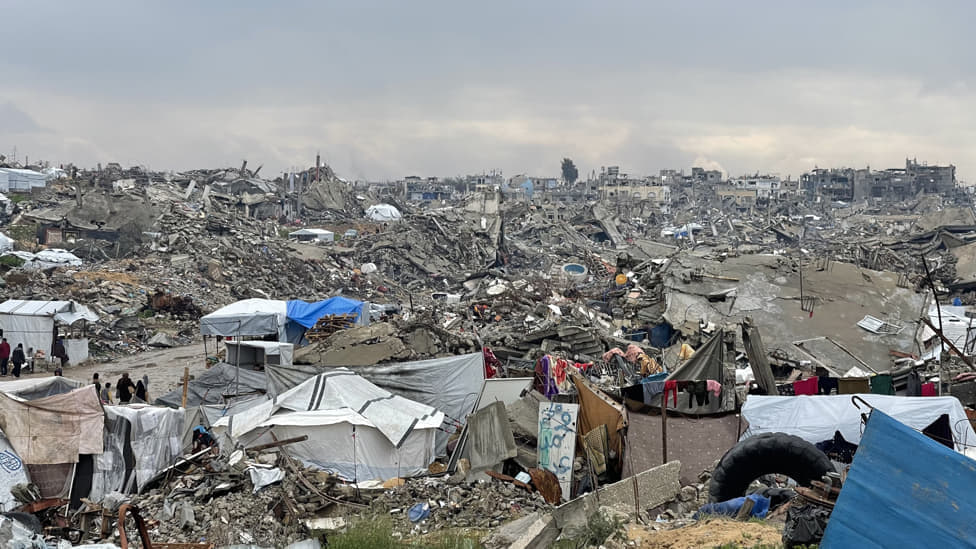
residential buildings, while arms shipments continue, diplomatic cover remains intact, and trade relations proceed without meaningful interruption. This disjuncture between rhetoric and reality is not, as is often assumed, evidence of Western powerlessness in the face of a determined ally. Rather, it is the visible surface of a deeper structural arrangement in which military, commercial, and strategic interests render sustained inaction not merely convenient but systematically profitable. The failure to prevent mass atrocities in Palestine is not primarily a problem of limited capacity, legal ambiguity, or geopolitical complexity; it is a problem of political will shaped by institutional incentives, economic dependencies, and a global order that distributes responsibility so thinly that no single actor bears full accountability for the consequences.
The Illusion of Impotence
The foundational error in understanding Western policy toward Israel-Palestine lies in mistaking strategic restraint for genuine incapacity. Western governments, and the United States in particular, possess formidable leverage over Israel across multiple dimensions of the bilateral relationship. The annual provision of $3.8 billion in military assistance, making Israel the largest cumulative recipient of U.S. foreign aid since World War II, represents not merely a financial transfer but a comprehensive integration of military-industrial infrastructures. This aid is accompanied by diplomatic protection at the United Nations Security Council, where the United States has repeatedly deployed its veto to shield Israel from binding resolutions calling for ceasefires or accountability mechanisms. Beyond the United States, countries including Germany, the United Kingdom, Italy, and Canada participate in a global arms pipeline that sustains Israel's military operations, supplying everything from precision-guided munitions and fighter jet components to surveillance technologies and logistical support.
If these tools exist, the question is not whether Western governments possess the capacity to influence Israeli policy, but why they consistently choose not to deploy it decisively. The answer lies in understanding that employing such leverage would entail political and economic costs that fall on powerful domestic constituencies: defense industries that profit from sustained weapons contracts, alliance structures that prioritize strategic alignment over civilian protection, and political coalitions for whom unconditional support for Israel remains a non-negotiable article of faith. The decision to maintain the status quo is not an abdication of power but its exercise in a particular direction—toward the preservation of existing relationships and interests rather than the prevention of atrocity.
The Political Economy of Perpetual Conflict
The normalization of mass violence in Palestine cannot be understood without examining the political economy that makes prolonged conflict profitable for a wide network of public and private actors. This is not to suggest a coordinated conspiracy, but rather a systemic arrangement in which many institutions acquire a vested interest in the continuation of instability while no actor bears full responsibility for stopping it. As critical scholarship on Palestine has demonstrated, the destruction of Gaza since October 2023 is not a rupture but part of a longer historical continuum in which war, reconstruction, and development are inseparably linked. The devastation serves not only military objectives but economic ones, clearing the ground for new regimes of capital accumulation and political control.
The "Gaza 2035" plan, presented by the Israeli government as a vision of the territory transformed into an economic zone for fossil-fuel extraction, logistics, and speculative urbanism, exemplifies this fusion of destruction and development. Under such schemes, reconstruction is not the antithesis of destruction but its continuation by other means, embedding dispossession within fiscal regimes, aid dependency, and infrastructural planning. The neoliberal framework established by the Oslo Accords has reconfigured Palestinian governance and economic life in ways that depoliticize the struggle for liberation and entrench structural dependency, rendering dispossession administratively routine.
This political economy extends far beyond the region itself. Gaza's destruction fuels weapons systems that are later marketed abroad; surveillance technologies trialed on Palestinians are exported to police forces and border agencies worldwide; reconstruction tenders go to multinational consultancies whose designs align with the priorities of the occupying power. The international complicity that renders colonial governance profitable and durable is not incidental to the system but constitutive of it. When Western defense contractors like Boeing, Lockheed Martin, Raytheon, and Northrop Grumman supply the fighter jets, munitions, and support systems that underpin Israel's military machine, they are not merely fulfilling contracts; they are investing in the perpetuation of a conflict that generates sustained demand for their products.
Strategic Ambiguity as Enabling Mechanism
Western governments have developed a sophisticated repertoire of rhetorical and procedural mechanisms that allow them to express humanitarian concern while preserving strategic partnerships materially. The reliance on strategic ambiguity—the deliberate maintenance of uncertainty about the consequences of continuing support—enables leaders to satisfy humanitarian audiences rhetorically while maintaining the substance of military and diplomatic backing. This ambiguity manifests in several forms: the suspension of select arms licenses while maintaining the majority of transfers, the expression of concern over civilian casualties without imposing binding restrictions, and the invocation of legal complexity as justification for deferring action.
The case of the United Kingdom illustrates this pattern with particular clarity. In September 2024, the UK government suspended around thirty of 350 arms export licenses to Israel over a "clear risk" they could be used in Gaza. Yet the suspension covered only a fraction of existing licenses, leaving intact those for naval platforms, training aircraft, and dual-use items. Critically, the UK continues to supply components for the F-35 fighter jet program, producing approximately fifteen percent of every jet and contributing to a global pool that Israel can access despite concerns over their use in Gaza. The suspension thus functions less as a meaningful constraint on Israeli military operations than as a gesture designed to manage domestic political pressure while leaving the core of the military relationship unscathed.
Similarly, Canada's publicly declared ban on arms exports to Israel has been exposed as riddled with loopholes and backdoor routes. While the government announced in January 2024 that it would refuse new permits for controlled goods that could be used in Gaza, investigations have revealed that hundreds of previously approved permits continue to allow the flow of Canadian-made weapons and components to Israel. Between October 2023 and May 2025, more than 390 shipments from twenty-one Canadian manufacturers reached Israel, including over 420,000 bullets, F-35 fighter jet parts, and surveillance technology. Some of these shipments were routed indirectly through the United States, exploiting a legal loophole that exempts such transfers from Canadian licensing requirements. The "ban" thus serves primarily as what one analysis terms "reputational management"—creating the appearance of action while leaving the core military and economic structures intact.
The Weaponization of Legal Process
Legal complexity is frequently invoked to justify inaction in the face of mass atrocity, and nowhere is this more evident than in the discourse surrounding the application of the Genocide Convention to Israel's actions in Gaza. The requirement under international law to prove specific intent—the "intent to destroy, in whole or in part, a national, ethnical, racial or religious group"—has been repeatedly cited as a threshold that definitive judgment must await judicial resolution. While legal caution is not inherently illegitimate, this procedural posture can be weaponized as a strategy of delay, allowing governments to maintain the fiction that their hands are tied pending judicial determination while continuing to provide the military and diplomatic support that enables the very crimes under consideration.
The International Court of Justice's January 2024 ruling that it is "plausible" that Israel's actions in Gaza constitute genocide, coupled with the July 2024 advisory opinion declaring the illegality of Israel's occupation of Palestinian territory, has created a legal framework in which continued support for Israel carries increasingly clear implications of complicity. Yet Western governments have largely responded by insisting on the need for "due process" and "judicial resolution" before taking meaningful action—a posture that, as one legal scholar notes, effectively reduces the Genocide Convention to "a manual on how to hide a genocide".
This deferral strategy operates alongside what scholars have termed "humanitarian camouflage"—the appropriation of international humanitarian law discourse to present actions that are genocidal in character as compliant with legal norms. By invoking the language of "self-defense," "proportionality," and "distinction," states can frame even extensive civilian harm as regrettable but legally permissible, thereby neutralizing the political pressure that might otherwise compel intervention. The result is a perverse situation in which international law, rather than serving as a constraint on atrocity, becomes a resource for its legitimation.
The Structural Production of Complicity
The pattern of Western response to the crisis in Palestine reveals something deeper than isolated policy failures or individual instances of moral cowardice. It discloses a structural arrangement in which the prevention of mass atrocity is systematically subordinated to the preservation of strategic, economic, and alliance interests. This arrangement distributes responsibility across a wide network of actors—governments, defense contractors, financial institutions, multilateral organizations—in ways that make it difficult to identify any single agent bearing decisive accountability. The consequence is a system in which atrocity can become administratively normalized and economically embedded, with humanitarian concern expressed rhetorically but rarely translated into binding constraints on the forces that perpetuate violence.
This structural analysis challenges the narrative that Western governments are constrained by genuine incapacity or geopolitical complexity. The argument that alliance politics makes it impossible to reverse long-standing security commitments without risking broader instability, while containing an element of truth, does not explain why governments repeatedly choose alliance maintenance over civilian protection. The claim that genocide is contested and should not be asserted too quickly, while legally narrow, does not absolve states from acting on credible evidence of mass atrocity. The position that targeted sanctions and humanitarian aid are preferable to sweeping rupture, while pragmatically defensible, does not answer the central question: if the goal is to prevent atrocity, why are the strongest available levers still withheld?
The deeper answer is that Western governments are not simply neutral observers of the conflict but embedded participants in a system of incentives that rewards caution, preserves strategic relationships, and distributes responsibility thinly enough to avoid decisive action. What appears as powerlessness is often a form of managed restraint—a calculated choice to maintain the conditions that make atrocity possible while appearing to regret its occurrence. The consequence is that a population under systematic attack is left dependent on institutions that are structurally inclined to delay, deflect, and preserve existing interests.
The Challenge to Moral Outrage
If the failure to prevent atrocities in Palestine is structurally produced rather than merely accidental, then meaningful change requires more than moral outrage or episodic protest. It demands a direct challenge to the political economy that makes inaction profitable—a reconfiguration of the incentives that shape when and how Western governments choose to act. This challenge must address multiple dimensions: the arms trade that supplies the weapons of war, the diplomatic cover that shields perpetrators from accountability, the financial systems that enable the occupation, and the media narratives that frame the conflict in ways that obscure Palestinian suffering and delegitimize resistance.
The legal challenges currently being pursued in multiple jurisdictions—seeking to compel governments to suspend arms exports, enforce genocide prevention obligations, and hold officials accountable for complicity—represent one dimension of this broader struggle. In the United States, Germany, France, the Netherlands, and Canada, lawsuits have been filed alleging that governments violated international and domestic law by authorizing arms exports to Israel. These legal actions face formidable obstacles, including judicial deference to executive authority and the difficulty of establishing standing, but they nonetheless represent a significant effort to use the instruments of law to challenge the structures of impunity.
Yet legal strategies alone are insufficient. The transformation of the political economy that sustains atrocity requires political mobilization that targets the domestic constituencies that benefit from the status quo: defense contractors, political donors, alliance managers, and the bureaucratic apparatuses that have become invested in the perpetuation of existing policies. It requires challenging the media narratives that frame the conflict in terms that naturalize Israeli violence and delegitimize Palestinian claims to land, life, and sovereignty. It requires building alternative institutions and relationships that can sustain pressure on governments even when short-term political calculations favor inaction.
Conclusion: The Architecture of Complicity
The failure of Western governments to stop atrocities in Palestine is best explained not by their inability to act, but by the incentives that shape when and how they choose to act. Economic interests, alliance politics, legal deferral, and strategic ambiguity together produce a pattern of complicity masked as prudence—a system in which humanitarian concern is expressed while the material conditions of atrocity are sustained. The tools of leverage exist: military aid can be conditioned, arms transfers can be suspended, diplomatic cover can be withdrawn, accountability mechanisms can be activated. That these tools are not used decisively reflects not genuine incapacity but a political economy in which the preservation of existing interests consistently outweighs the prevention of mass civilian harm.
This is not to suggest that individual actors lack moral agency or that policy choices are fully determined by structural forces. Within the architecture of complicity, there remain spaces for resistance, for the assertion of alternative values, for the exercise of political will in directions that challenge rather than reinforce the status quo. But meaningful change will require more than episodic moral outrage; it will require a sustained challenge to the institutions and incentives that make inaction profitable. The question is not whether Western governments can act, but whether they can be compelled to act by forces powerful enough to overcome the structural arrangements that currently render atrocity administratively routine and economically embedded.
The pattern of Western response to the crisis in Palestine thus stands as a profound indictment of the international order—not because it reveals the absence of power, but because it discloses how power is actually exercised. What appears as powerlessness is the visible surface of a system in which the prevention of atrocity is systematically subordinated to the preservation of interests. Until that system is transformed, the spectacle of governments expressing "grave concern" while enabling mass death will continue to define the moral bankruptcy of contemporary international politics.