Who Was Lavrentiy Beria?
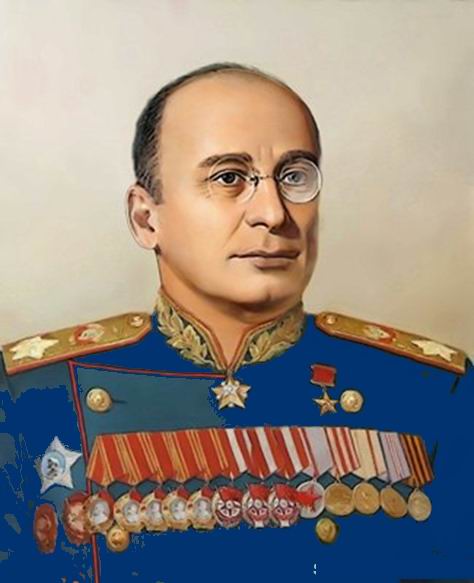
That
corpulent man wearing a pince-nez remains one of the most symbolic faces of
Joseph Stalin’s era. Lavrentiy Beria was calculating and vicious, hard-working
and hedonist – and people feared him so much that it led to his downfall.
Just
like his boss Joseph Stalin, Lavrentiy Beria (1899 – 1953) was born and bred in
Georgia. An ethnic Mingrelian (a small nation closely-related to Georgians), during
the Russian Civil War (1918-1921) he specialized in spying and undercover
operations for the Bolsheviks in neighboring Azerbaijan. Later, Beria returned
to Georgia to work for the Soviet secret police, known as the Cheka – the
Extraordinary Commission.
He
made a great career in Georgia: in the 1930s, after Stalin got rid of the old
Georgian Communists, Beria led the republic. “Beria had no values, was always
ready to discard ideology or personal relations – and Stalin liked that about
him,” historian Lev Lurie writes.
Plus,
Beria was indeed a good manager. “During his reign in Georgia, the republic
became the main supplier of tea, grape and citrus for the entire USSR… the
republic that was among the poorest turned into the most prosperous,” Lurie notes.
Cunning
Beria established excellent personal relations with Stalin, who visited Georgia
many times during his vacations. That helped him a lot – Beria was one of only
two heads of Soviet republics ( there were 15) who survived the purges of 1937.
Moreover, Stalin took Beria to Moscow, appointing him chief of the NKVD, the
notorious secret police.
In
Russia, it is common to associate Beria, the longest-sitting head of the NKVD
during Stalin’s era, with mass repressions. In fact, it was Beria’s predecessor
Nikolai Yezhov who ran the secret police during the height of the terror,
1937-1938. As far as Stalin was concerned, appointing Beria to head the NKVD
was a way to scale back the extent of the executions.
“Stalin
was a violent yet clever man who was well aware of the fact that further
repressions would lead to the failure of his power,” wrote Sergo Beria,
Lavrentiy’s son, in his memoirs. “He needed a man of a different kind [from
Yezhov] to lead the NKVD.” Sergo’s objectivity can be disputed, but his father
did alleviate the violence: in 1938 (the last year of Yezhov’s tenure as head
of the NKVD), 328,000 people were sentenced to
death in the USSR; in 1939, with Beria in charge that figure was 2,600.
Certainly,
that doesn’t mean Beria was a bleeding-heart liberal: like everyone else in
Stalin’s government he was always ready to spill blood if there was an order.
For instance, it was Beria’s NKVD that sentenced 14,500 Polish war prisoners to
death in 1940 (the infamous Katyn massacre).
Stalin
appreciated Beria’s organizational skills enough to put him in charge of the
manufacture of armaments, aircraft and aircraft engines during World War II –
which was in addition to his duties in state security that included both
coordinating the work of spies and the infamous deportations of ethnic groups
accused of collaborating with the Germans – Chechens, Crimean Tatars and so on.
When
the war ended, the USSR faced new challenges – the nuclear arms race, with
Washington ahead of Moscow. Stalin had no doubt who could supervise the Soviet
atomic project: Beria headed the Special Committee on Creating Nuclear Weapons
in the shortest time possible.
The
ruthless minister spent 1945 to 1949 providing Soviet scientists with
everything they needed. Ninel Epatova, an engineer who used to work on the
atomic project, saw Beria periodically, and she recalled: “Back then, Beria
always looked exhausted… with red eyes, bags under them… It seemed he didn’t
care about anything except work.”
That
work consumed Beria, and historian Oleg Khlevniuk writes that: “Soviet nuclear
testing could result in his triumph or, in case of failure, the end of his
career or even life.” But testing was successful: in 1949, the USSR became a
nuclear power, and Beria was among those who made it possible.
“Stalin’s
attitude towards Beria was special. He was the only one among the top members
of the Communist Party not to have an apartment but a mansion in Moscow all to
himself,” Lurie states. Today, this mansion on Malaya Nikitskaya Street in the
Moscow center hosts the embassy of Tunisia and… is rumored to be haunted.
There
are dark legends surrounding Beria: allegedly he was something of a sexual maniac,
having young girls delivered to his house, raping and (sometimes) murdering
them, while his guards helped him get rid of the bodies. Nevertheless, there is
absolutely no proof for this urban legend, and most historians suppose it was
Beria’s posthumous bad publicity that led to such rumors.
What
has been proved is that Beria had, in addition to his wife, an ‘unofficial’ one
– Valentina Drozdova, who was a 16-year-old schoolgirl when they met in 1949.
Their relations lasted until Beria’s death in 1953. Later, Drozdova claimed
that Beria raped her, but it’s unclear if it was true or whether she wanted to
distance herself from Beria’s legacy.
When
Stalin died on March 5, 1953, Beria became one of the most influential people
in the USSR, forming a ‘triumvirate’ with two other leaders – Nikita Khrushchev
and Georgy Malenkov. In that ‘collective ruling’ system Beria was in charge of
state security, which, along with his dark reputation, resulted in Khrushchev
and Malenkov fearing Beria and a possible plot against them.
So, they decided to strike first. In June 1953, Beria was detained, denounced as the architect of repressions and a British spy (a fabricated accusation) and executed the same year. Beria was Stalin’s only secret police chief to outlive his boss, but not for long.
Courtesy Russia Beyond.
The photo shows a Soviet poster of Lavrentiy Beria, from the 1953.