Why the Right Loves Islamophobia
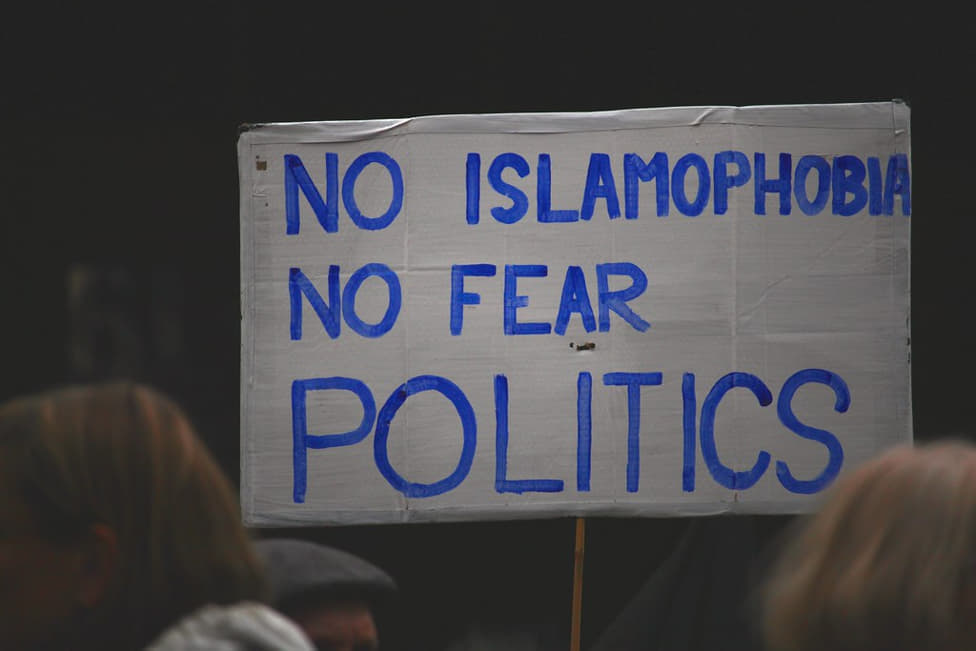
Islamophobia is rarely announced as hatred. It is packaged as realism, concern, or cultural self-defense. It arrives not as a scream but as a shrug — the shrug of the reasonable person who is "just asking questions." And in that shrug, an entire architecture of prejudice is constructed, brick by careful brick.
This essay traces that architecture: the rhetorical tricks, the narrative strategies, and the political calculations that transform selective anecdotes, demographic anxiety, security fears, and civilizational nostalgia into what appears to be a factual worldview. Its power lies in presenting interpretation as evidence, alarm as analysis, and prejudice as plain speaking.
But beneath all of these mechanisms lies a deeper truth — one that the right cannot afford to acknowledge. The Western right does not simply use Islamophobia as a tool among many. It needs Islamophobia. The right-wing political project, in its contemporary form, is animated by the figure of the Muslim threat. Without Islam, the right would have to confront the emptiness of its own vision. Without the Muslim as enemy, the right would have to explain what, exactly, it stands for, rather than what it stands against. Islamophobia is not an accessory to right-wing politics. It is the engine. And that engine, like any engine, requires fuel — fuel that the right must continuously manufacture, refine, and distribute.
The First Trick: Flattening the World
Right-wing Islamophobia depends on a foundational sleight of hand: the transformation of a diverse global religion into a single strategic actor with one will and one agenda. In this frame, devout Muslims, immigrants, refugees, Islamists, ordinary citizens, and extremists are blurred together until the distinction becomes irrelevant.
This is the foundational move. Once Muslims are treated as a monolith, any event involving any Muslim can be made to stand for all Muslims. An attack in one country becomes proof of a global conspiracy. A cultural conflict in one district becomes evidence of civilizational war. A quote from one activist becomes the revealed truth of an entire faith.
Scholars of Islamophobia have long identified this flattening as central to anti-Muslim prejudice. It is, in essence, a racialization — the treatment of a diverse religious group as though it were a single, homogenous race, subject to the same stereotypes and suspicions that have historically targeted other minority communities. "Islamophobia is the racialization of Muslims," researchers note, "perceiving them as a homogeneous race (regardless of their diverse beliefs and ethnicities) and subjecting them to racism."
The consequences of this flattening are profound. A Muslim woman wearing hijab, a Muslim man praying in a mosque, a Muslim activist protesting injustice, and a Muslim extremist committing violence are all collapsed into a single category. The distinctions that matter — between belief and practice, between politics and piety, between violence and peace — are erased. And in that erasure, suspicion becomes universal.
This flattening serves a dual purpose. On the surface, it makes the threat seem coherent and manageable — a single enemy with a single agenda. But beneath the surface, it also makes the right's own project coherent. Without a monolith to oppose, the right would have to articulate a positive vision of society, one that might expose its internal contradictions: its reliance on the very immigration it decries, its dependence on the very diversity it fears, its ownership by the very elites it claims to resist. The monolith is not just a rhetorical convenience. It is a necessity.
The Second Trick: Making Suspicion Look Empirical
The second trick is more subtle. It involves building rhetoric from facts that are technically real but strategically arranged. A crime committed by one person, a demographic shift in one district, a sharp-sounding quote from one activist, a visible cultural conflict — each becomes evidence in a larger story that is never actually proved.
The method is not always outright fabrication. More often it is cherry-picking, exaggerating, and then presenting interpretation as objective truth. This is why these arguments are persuasive: they borrow the surface style of reporting while smuggling in a political conclusion.
Consider how this operates in practice. When England's West Midlands Police announced a ban on Maccabi Tel Aviv's away fans from a match against Aston Villa, the decision was a policing matter about crowd safety. But in the right-wing press, it was quickly transformed into a story about Muslims. Commentators pointed out that Villa Park lies within a constituency that is "29 percent Muslim" — implying, without evidence, that Muslim residents endangered Jewish fans.
The message was unmistakable: a local public order decision was transformed into a "Muslim problem." What should have been a policing matter was turned into a proxy battle in Britain's culture wars. The same voices who cheered on these distortions then declared that the decision proved the country was cowering before Islamic influence.
Selection and scale are the engines of this rhetoric. The overwhelming majority of Muslims who pose no threat, who contribute to their communities, who reject violence — these are invisible. The handful of incidents that can be made to fit a narrative of threat — these are magnified. The result is a distorted picture that feels like journalism but functions as propaganda.
Here again, the deeper need is revealed. The right cannot sustain its worldview on positive arguments alone. It cannot build a movement on tax cuts and deregulation — these are policies, not passions. What it can build a movement on is fear. And fear requires evidence, however manufactured. The right's constant production of "evidence" of Muslim threat is not journalism; it is the industrial-scale manufacturing of the raw material its political project requires to survive.
The Third Trick: Demographic Panic
Demographic anxiety is perhaps the most potent engine of right-wing Islamophobia. It treats population change as destiny, using words like "invasion," "replacement," "Islamization," or "takeover" to transform ordinary migration and urban diversity into a catastrophe.
The "great replacement" theory, popularized by French writer Renaud Camus and amplified by figures like Eric Zemmour, is the purest expression of this panic. It claims that European populations are being "replaced" by non-European, often Muslim, populations. The theory has been thoroughly debunked — as one migration expert put it, it is "a political myth, not a demographic reality" — but its power lies not in its truth but in its structure.
That structure is designed to produce inevitability. If change is framed as irreversible conquest, then fear becomes morally justified and resistance begins to look like self-defense. The demographic data tells a very different story: immigration accounts for about 10 percent of Europe's population, far from any so-called "replacement." But the data is irrelevant to the narrative, because the narrative is not about facts. It is about producing a feeling of existential threat.
This anxiety is often stronger in areas with very few foreign residents, showing that it is largely disconnected from reality. It is, as one scholar noted, "an ancestral fear," rooted in a medieval imagination of invasion, revived by modern ideologues. The fear is not of actual demographic change but of the idea of demographic change — an idea that can be deployed to justify exclusion, discrimination, and even violence.
The right's reliance on demographic panic reveals its deeper weakness. If the right had a compelling vision of the future — a vision of prosperity, community, and human flourishing — it would not need to terrify its supporters with visions of extinction. But it does not have that vision. What it has is a nightmare. And that nightmare, endlessly repeated, has become the only thing holding its coalition together. Remove the nightmare, and the coalition dissolves.
The Fourth Trick: Security as Moral Permission
Terrorism provides a powerful moral shortcut for Islamophobia. A violent act by a Muslim is made to stand in for Islam itself, while the much larger reality — that most Muslims reject violence — is ignored or treated as suspiciously defensive.
Security language allows prejudice to present itself as responsibility. "We are not against Muslims, only against extremism." In practice, however, the category keeps expanding until the exception becomes the rule and fear becomes a blanket judgment.
This dynamic operates at the level of state policy as well as media rhetoric. Since the mid-2000s, counter-radicalization programs in Western countries have disproportionately targeted Muslim communities. In Australia, for example, the government has enacted over ninety separate pieces of counter-terrorism legislation — more than the United States, the UK, or Spain, despite never experiencing a major terrorist attack on home soil.
These laws, while ostensibly race-neutral, have disproportionately targeted Muslim communities, with the vast majority of proscribed organizations under the anti-terrorism legislation self-identified as Islamic. This hyper-securitization persists despite intelligence agencies' own assessments. In Australia, ASIO has acknowledged that "religiously motivated violent extremism still represents a significant threat but the dynamics are very different to a decade ago," with nationalist and racist violent extremism now approaching half of its priority caseload. Nevertheless, the legislative and surveillance apparatus targeting Muslim communities remains largely intact.
The result is what scholars call "everyday Islamophobia" — the normalization of suspicion as a feature of daily life. Counter-radicalization regimes "reinforce the common-sense understanding that 'radicalisation' is a dangerous phenomenon tied to Muslimness." This "common sense" is so potent that even Muslim community organizations find themselves internalizing and rehashing it, turning the Muslim gaze to look for problems within rather than challenging the structures that produce suspicion.
Security as moral permission is perhaps the most insidious mechanism because it allows the right to claim the high ground. It is not prejudice; it is protection. It is not hatred; it is vigilance. But this claim to moral high ground is itself a confession. It confesses that the right cannot justify its politics on its own terms. It must borrow the language of safety and survival to give its project legitimacy. And that legitimacy, borrowed from the fear of terrorism, evaporates the moment the fear recedes — which is why the right must constantly keep that fear alive.
The Fifth Trick: Civilization Talk
"Western values." "Judeo-Christian civilization." "Our way of life." "Liberal democracy." These phrases are often deployed as rhetorical shields that make exclusion sound noble. Civilization language converts conflict into destiny. Muslims are not merely political rivals or neighbors with different beliefs; they are recast as alien to the civilizational self.
That move does two things at once: it flatters the in-group and dehumanizes the out-group. The in-group is portrayed as the inheritor of a proud tradition, a defender of freedom and progress. The out-group is portrayed as a threat to that tradition, an enemy of freedom and progress. The conflict becomes not political but existential, not contingent but inevitable.
This is the language of "clash of civilizations" — a framework that, as one course description put it, "all seem to validate," from the Iranian hostage crisis to September 11th to the rise of ISIS, creating the impression of "an antagonism coded in the DNA of these civilizations." The framework is seductive because it provides a simple narrative for a complex world. But it is also dangerous, because it transforms political conflicts into civilizational wars and ordinary people into soldiers in an eternal struggle.
The far right has extended this civilization talk into everyday spaces, using consumer activism to reproduce Islamophobia through campaigns like the Boycott Halal Campaign, which frames halal-certified products as an existential threat to the UK. By invoking consumer rights, animal welfare, and food safety, these campaigns mobilize different groups against Muslims and Islam, projecting them as a security threat while appearing to be concerned with mundane matters.
Civilization talk reveals the right's deepest dependence on Islamophobia. Without the Muslim as civilizational other, the right's claim to defend "Western civilization" collapses. What, after all, is "Western civilization" without an "Eastern" or "Islamic" civilization to contrast with it? What is "our way of life" without a threatening alternative? The right cannot define what it is without defining what it is not. And what it is not — what it must never stop being not — is Muslim. To abandon Islamophobia would be to abandon the very foundation of its civilizational identity.
The Inversion: Accusing Muslims of Manipulation
Perhaps the most effective mechanism in the right's toolkit is the inversion: the claim that Muslims or "Islamists" weaponize accusations of Islamophobia to silence criticism. This move preemptively discredits dissent. If someone objects to anti-Muslim prejudice, the objection itself becomes part of the alleged plot.
This inversion flips the burden of proof. It lets the accuser cast themselves as the true victim while rendering Muslim testimony about discrimination inherently suspect. The pattern is familiar from other forms of prejudice: the claim that anti-racism is the "real racism," that feminism is the "real sexism," that pointing out homophobia is the "real intolerance."
In Britain, this inversion has become normalized to the point where engagement with mainstream Muslim organizations is treated as politically suspect. When Prime Minister Andy Burnham's ministers appeared alongside representatives of the Muslim Council of Britain, right-wing press outlets immediately framed this as a scandal, suggesting that such engagement was at odds with government policy — even though the so-called "policy of non-engagement" appears to exist only in the imagination of the press.
As one sociologist put it, "The use of Muslims and links to Muslims and Islam as a smear to discredit a politician, policy, party or government has become normalised." In this environment, any association with Muslims becomes grounds for suspicion. The burden of proof is entirely on the Muslim or the Muslim-adjacent; the accusation itself is treated as evidence.
The inversion is the right's most sophisticated rhetorical move because it inoculates the right against its own critics. Any accusation of Islamophobia can be dismissed as part of the Muslim plot. Any evidence of discrimination can be ignored as Muslim propaganda. The right positions itself as the true victim, besieged by an enemy that uses the very tools of democracy to undermine democracy. And in that positioning, the right reveals its ultimate dependence: it needs the Muslim to be the manipulator, the trickster, the fifth columnist, because without that figure, the right cannot explain its own paranoia or justify its own excesses.
Why It Works
Islamophobia works because it simplifies a confusing world. Economic insecurity, demographic change, geopolitical instability, and cultural fragmentation are all given one visible villain. That villain is useful. It channels resentment away from elites, institutions, and structural problems and toward a racialized religious minority.
In that sense, Islamophobia is not just prejudice; it is political technology. It is a tool for mobilizing voters, building coalitions, and consolidating power. By casting Muslims as a threat, populist politicians can position themselves as defenders of the people. By blaming Muslims for social problems, they can deflect attention from their own failures. By invoking Islamophobia, they can delegitimize their critics.
This is why the normalization of Islamophobia is so dangerous. It is not just about prejudice against a minority; it is about the corruption of democratic culture. When Muslims are treated as suspects, when their associations are treated as evidence of disloyalty, when their civic participation is treated as subversion, the fundamental principles of democracy — equality, due process, freedom of association — are eroded.
But the deeper reason Islamophobia works is that it fills a void. The contemporary right has no compelling vision of the good society. It has tax cuts, deregulation, and nationalist posturing, but these are not visions; they are policies and poses. What the right does have is a compelling vision of the bad society — a society overrun by Muslims, destroyed by multiculturalism, betrayed by elites. That vision, however negative, provides a coherence that the right's positive program lacks. It provides a reason to vote, a reason to organize, a reason to feel righteous. Without Islamophobia, the right would have to face the emptiness of its own project. And that emptiness, once exposed, would be fatal.
What Gets Erased
The narrative of Muslim threat erases a great deal. It erases Muslim diversity: the vast range of beliefs, practices, and traditions within Islam. It erases ordinary life: the millions of Muslims who go to work, raise families, and contribute to their communities. It erases internal disagreements: the vigorous debates within Muslim communities about politics, theology, and culture. It erases civic participation: the countless Muslims who serve as doctors, teachers, social workers, and public officials. It erases the fact that most Muslims reject political violence.
The data often undercuts the panic. Research repeatedly shows that broad claims about Muslim support for extremism are unsupported and that the overwhelming majority of Muslims reject violence against civilians. Muslim communities give generously to charity — in Britain, Muslims give four times as much as the average donor — yet this civic virtue receives scant coverage compared to the manufactured outrage over a community event.
What gets erased, too, is the experience of Muslims as victims. A recent spate of violent attacks — stabbings, assaults, mosque vandalism — has been minimized or ignored by a media machine that refuses to acknowledge Muslims as victims. The reluctance to treat anti-Muslim violence as a national issue stands in stark contrast to the eagerness to amplify other "controversies."
What gets erased, most profoundly, is the possibility of a politics that does not depend on enmity. The right's dependence on Islamophobia forecloses the possibility of a politics of solidarity, a politics that recognizes common humanity across lines of religion and culture. That politics is not impossible — it is practiced every day by millions of people who refuse to see their Muslim neighbors as threats — but it is systematically suppressed by a political culture that needs the Muslim as enemy to sustain itself.
From Fear to Literacy
The challenge is not just to debunk individual claims but to recognize the style of argument itself: the piling up of anecdotes, the language of inevitability, the blending of threat and fact, the use of "just asking questions" as a mask for a predetermined conclusion.
Reading the signs of manufactured panic requires a kind of literacy. It means recognizing the flattening of a diverse population into a monolith. It means seeing the selection and scale that turn isolated incidents into patterns. It means understanding the demographic panic that treats ordinary change as catastrophe. It means seeing through the security language that makes prejudice sound like responsibility. It means recognizing the civilization talk that makes exclusion sound noble. It means understanding the inversion that treats victims as perpetrators.
But it also means recognizing the emptiness that Islamophobia conceals. The right's dependence on the Muslim enemy is a sign of its own poverty. It is not strength that requires an enemy; it is weakness. It is not confidence that requires constant fear-mongering; it is insecurity. The right is not powerful because it has Islamophobia; it is Islamophobic because it is powerless to sustain itself on its own terms.
The danger is not only what Islamophobia says about Muslims. The danger is what it reveals about the political culture that needs Muslims to be feared in order to feel coherent. A culture that requires an enemy to define itself is a culture in crisis. A politics that depends on exclusion to mobilize support is a politics that cannot sustain itself. A democracy that treats one group as perpetual suspects is a democracy that has lost its way.
Islamophobia, in the end, is not a Muslim problem. It is a Western problem. It is a problem of how we imagine ourselves, how we construct our identities, how we manage our anxieties. It is a problem that will only be solved when we recognize that the threat is not Islam but the fear of Islam — and the political technology that builds its power on that fear.
The right, in its Islamophobia, has constructed a magnificent mirror. In that mirror, it sees the Muslim enemy it needs to sustain itself. But look closer, and the mirror reflects something else: a political movement that has nothing to offer but fear, a coalition that holds together only through hatred, a vision of society that is defined entirely by what it rejects. The right has built its house on the foundation of Islamophobia. Remove that foundation, and the house collapses. That is why the right will fight so hard to keep it standing. That is also why it is so important to watch it fall.