Zohran Mamdani's Police Problem: the NYPD-IDF Nexus
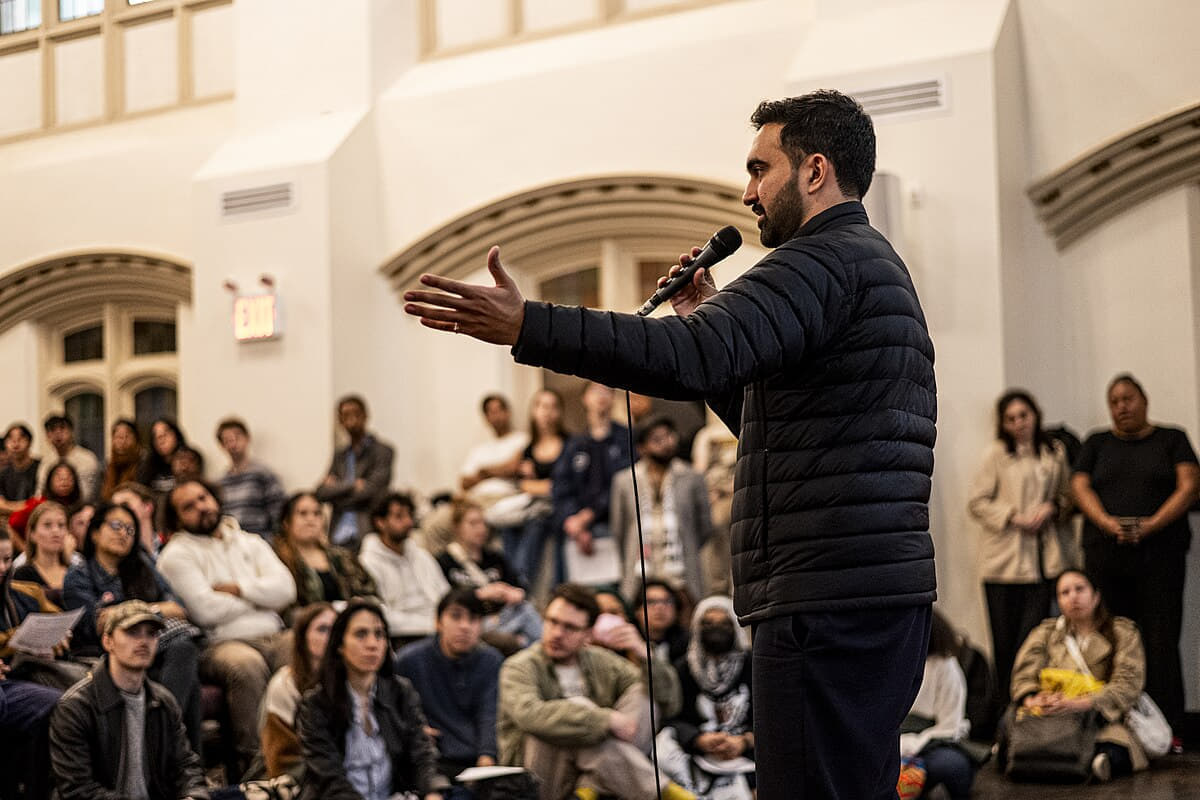
The political ascent of Zohran Mamdani, who is going to be the next Mayor of New York City, has thrust a previously niche issue into the center of urban policy debate: the training relationship between the New York Police Department (NYPD) and the Israeli Defense Forces (IDF). Mamdani’s public condemnation of this connection is not a standalone critique but the linchpin of a broader, radical argument that links the domestic mechanics of policing in a diverse American metropolis to the tactics of an occupying military power abroad. By framing the NYPD’s practices as an extension of what he terms the IDF's "genocidal" actions in Gaza, Mamdani articulates a vision where public safety cannot be divorced from global justice. This position, however, exists in a state of tension with the pragmatic demands of municipal governance, revealing the complexities of translating a decolonial, internationalist critique into a workable platform for America’s largest city.
Mamdani’s criticism is rooted in a specific historical and political context. The NYPD’s relationship with Israel, particularly its security apparatus, is long-standing and deepened significantly in the post-9/11 era. For decades, senior NYPD officials have traveled to Israel for counterterrorism training, and Israeli advisors have been consulted on issues ranging from mass surveillance to crowd control. Proponents argue that Israel, with its extensive experience combating terrorism, offers invaluable expertise in protecting a dense, iconic urban center like New York. They frame this exchange as a technical, apolitical transfer of best practices necessary for modern security.
Mamdani and his allies, however, fundamentally reject this apolitical framing. They see the exchange not as a transfer of neutral techniques, but of a specific political and military logic. This logic, honed in the context of managing and controlling a occupied Palestinian population, includes practices of pervasive surveillance, racial and ethnic profiling, the use of militarized checkpoints, and aggressive crowd suppression tactics. In this view, the NYPD does not merely learn "tactics" from the IDF; it imports a paradigm of "occupation policing," where certain populations are seen as perpetual security threats to be managed, rather than as citizens to be served and protected. Mamdani’s description of the IDF’s actions in Gaza as "genocidal" is the moral core of this argument. By using this term, he elevates the critique from a disagreement over policy to a stark moral condemnation, asserting that the NYPD is consciously choosing to align itself with a force engaged in what he and many on the left view as a campaign of mass violence and displacement. This connection serves as a powerful rhetorical and political tool, crystallizing abstract concepts of militarization and oppression into a tangible, internationally recognized symbol.
This critique is inextricably linked to Mamdani’s own evolution on the issue of policing. As a member of the Democratic Socialists of America (DSA) and a grassroots organizer, he previously stood with the "defund the police" movement, labeling the NYPD as "racist" and a "major threat to public safety." His current platform reflects a strategic shift from abolitionist rhetoric to a platform of structural reform, yet the underlying analysis remains. While he now emphasizes engagement with law enforcement and has even supported the reappointment of the current police commissioner—a move seen by some as pragmatic—his focus remains on dismantling what he perceives as the most oppressive, militarized elements within the department. The IDF training connection provides the intellectual and moral justification for this targeted dismantling. It allows him to argue that the problem is not just individual racist officers or outdated protocols, but a deeply embedded institutional culture shaped by a foreign military doctrine of domination.
What Mamdani concretely plans to do about the NYPD-IDF relationship reveals the balancing act of his political project. He has not explicitly pledged to issue a mayoral decree terminating all cooperation, a detail his critics seize upon as evidence of rhetorical grandstanding. Instead, his approach is more nuanced and structural. His focus lies in surgically removing the units and functions most directly associated with the imported militarized tactics. The prime example is his pledge to disband the NYPD's Strategic Response Group (SRG). This unit, initially formed for counterterrorism, has become notorious for its aggressive policing of protests and its militarized equipment. Critics, including Mamdani, directly link the SRG’s doctrine and behavior to the kind of training received from forces like the IDF, which specialize in suppressing civil unrest in contested territories. By targeting the SRG, Mamdani aims to sever the operational arm of this international exchange.
Furthermore, his broader public safety platform is designed to create an alternative to the policing model he criticizes. The proposal for a new, non-police Department of Community Safety, specializing in mental health and crisis response, is a direct challenge to the paradigm of a militarized police force as the first and only answer to social problems. By building robust, civilian-led institutions, he seeks to reduce the footprint and perceived necessity of the very units that engage in foreign military training. In this sense, his strategy is one of attrition: rather than a head-on confrontation over a specific training agreement, he proposes to make such exchanges irrelevant by transforming the fundamental nature of public safety in New York City.
Politically, Mamdani’s stance is empowered and constrained by his coalition. His position is a cornerstone of the platform supported by the New York City Democratic Socialists of America (DSA) and aligned anti-Zionist groups. For this movement, the fight for racial and economic justice at home is intrinsically linked to the struggle against imperialism and occupation abroad. The NYPD-IDF nexus becomes a potent symbol of this intersection, what some activists call the "deadly exchange." This coalition leverages the issue to build a broad front, uniting communities concerned with police brutality in New York with those outraged by Israeli policy in Gaza. It frames the issue as one of collective liberation, accusing the NYPD of training for "fascist futures" by learning from a military engaged in what they view as apartheid. This global framing is a source of immense energy and mobilization for his campaign, setting a new standard for how leftist municipal politics can engage with international affairs.
However, this very framing also generates intense opposition and presents significant political challenges. Mamdani’s rhetoric, particularly his use of the word "genocidal" to describe the IDF and his drawing of direct parallels between the NYPD and an occupying army, has been labeled as antisemitic by prominent Jewish organizations, law enforcement unions, and political opponents. Critics argue that this language crosses the line from legitimate criticism of Israeli policy into demonization, evokes antisemitic tropes of Jewish-controlled shadow forces, and unfairly maligns the many Jewish officers and supporters of Israel within the NYPD. They see it as divisive, conspiracy-laden, and a dangerous erosion of police legitimacy that could undermine public safety. The conflation of the NYPD with the IDF is, for these critics, not just an analytical error but a malicious smear that poisons public discourse.
Mamdani has had to navigate this backlash. In a sign of political pragmatism, he has apologized for some of his most inflammatory past language, such as calling the NYPD a "rogue agency." This suggests an awareness of the need to build a coalition broader than his activist base. Yet, he has not retreated from the core of his critique. The challenge for a potential Mayor Mamdani would be to govern a city with a large and politically diverse Jewish population, many of whom are staunch supporters of Israel, while maintaining his commitment to a platform that many in that same community find deeply offensive and threatening. Balancing this tension—between the demands of a radical base and the necessities of unifying a complex electorate—would be one of the defining challenges of his mayoralty.
In summary, Zohran Mamdani’s critique of the NYPD-IDF training relationship is far more than a simple policy disagreement; it is a fundamental re-framing of urban policing through an internationalist and anti-colonial lens. He positions this exchange as a key mechanism through which militarized, oppressive tactics are imported into New York, corrupting the very concept of public safety and aligning the city with forces he condemns as genocidal. If elected, his approach would likely be one of strategic reform: disbanding specific militarized units like the SRG, building alternative community safety infrastructures, and thereby rendering the IDF training nexus obsolete, rather than engaging in a direct, and likely politically fraught, termination of all cooperation.
The impact of such a policy shift would be profound, redefining not only New York’s approach to crime and safety but also its symbolic role in global politics. The city would become a test case for a new model of policing explicitly divorced from the doctrines of foreign militaries, a bold experiment watched by municipalities across the United States. Ultimately, Mamdani’s campaign highlights the increasingly porous boundary between local and global justice struggles. It forces a public conversation about whether the safety of a city like New York is best secured by aligning with global security states or by forging a new, demilitarized path rooted in community investment and a commitment to human rights that spans from the streets of Brooklyn to the neighborhoods of Gaza.
In other words, why is Israel policing New York City?